Among Egypt’s most strategic tools against Ethiopia, in its historical effort to secure dominance over the Nile, is Eritrea. Throughout the 20th century, when Eritrea was still part of Ethiopia, the oppositions and insurgencies that developed there were useful to Cairo. An Ethiopian government preoccupied with state-building, Egypt had reasonably calculated, would not turn its attention to the Nile waters, something it had suspected Addis Ababa had plans to do since the rule of Emperor Haile Selassie. The Eritrean People’s Liberation Front (EPLF), which now stands the ruling People’s Front for Democracy and Justice (PFDJ), undermined Ethiopia’s stability over the course of its long insurgency and, alongside other rebellions in the country, contributed to the overthrow of the Ethiopian government and, more consequentially, to Eritrea’s secession. This gave way to the geography of the region as it stands today, including a landlocked Ethiopia.
Since then, the politics of the Nile have changed dramatically. Ethiopia has built a major dam along the Blue Nile, which accounts for 85 percent of the total flow of the main river, the longest in the world. Although this dam, the Grand Ethiopian Renaissance Dam (GERD), is hydroelectric in nature and, in Ethiopia’s telling, has little bearing on the volume of water reaching Sudan and Egypt downstream, it is understood to have shifted the balance of power over the resource, challenging the comfortable hegemony Egypt had long held and worked to preserve by undermining its “natural rival,” Ethiopia.
Egyptian strategy failed to alter the course of the GERD’s construction over the fourteen years it took to build. Diplomatic pressure, and even lobbying against the international financing Ethiopia needed, failed to deter Addis Ababa, which completed the dam last year, and then announced plans to build three more along the Blue Nile, defying Egyptian pressure to commit to a deal favouring Cairo. More boldly still, over the past few years the Ethiopian government has set out ambitions to reverse what it regards as a historical conspiracy to push Ethiopia away from the Red Sea, asserting a right to return as a coastal state along a globally critical waterway.
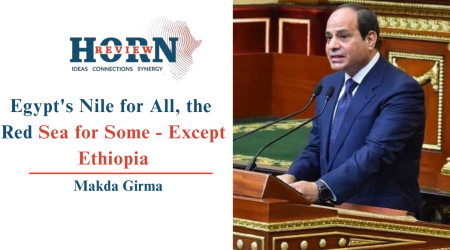
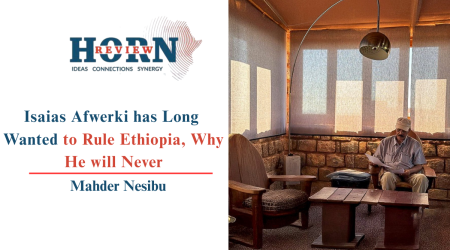
In Cairo, meanwhile, frustration with Ethiopia has been a matter of public record. Egypt’s Foreign Minister, Badr Abdelatty, has been increasingly vocal about the lack of talks between the two countries, and as that frustration has grown, Egyptian diplomacy has taken on a more aggressive and increasingly destabilizing character. Amid all this, Eritrea and its president, Isaias Afwerki, have re-emerged as a useful node in this new Egyptian approach.
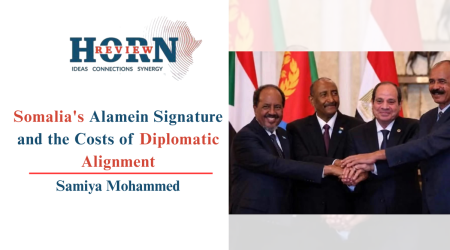
This alignment has taken several forms. In 2024, when Ethiopia moved to sign a deal with breakaway Somaliland for sea access in exchange for recognition, Egypt and Eritrea brought Somalia into what became a “tripartite alliance” against Ethiopia’s sea-access ambitions. More recently, Egyptian and Eritrean diplomats and leadership have been making a show of alignment, with meetings in Cairo and Asmara occurring at regular intervals and deals concerning ports, including the port of Assab, reported to have been signed.
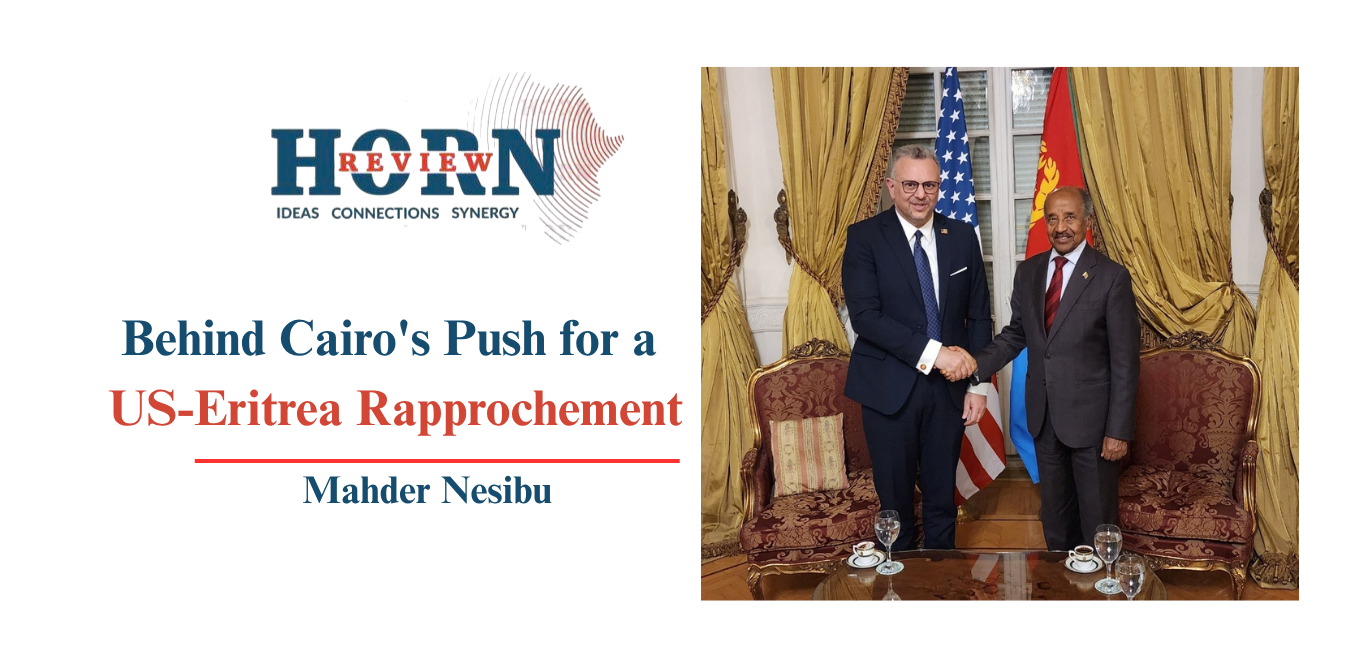
More significantly, part of what has been called Egypt’s “grand strategy” on Ethiopia involves Cairo pushing for something consequential for the Horn of Africa, a possible rapprochement between the United States and Eritrea.
Throughout the dispute over the GERD, the United States has been notably sympathetic to Egypt. As part of its Middle East strategy, Egypt has always outranked Ethiopia in importance to American interests in the region. In that light, the United States, including during the Biden administration between the two Trump presidencies, pursued a strategy of pressuring Ethiopia to move closer to Egyptian demands. This has made Washington, despite its favourable standing in Addis Ababa, a biased mediator unable to broker a workable solution.
At Egypt’s diplomatic urging, the Trump administration has repeatedly weighed in on the dispute, this time openly favouring Egypt’s narrative of victimhood, to the discomfort of Ethiopian diplomats, who have given Washington the cold shoulder and largely ignored President Trump’s rhetoric on the matter.
Where Egypt has instead made progress, as part of its more aggressive strategy, is in emboldening the Eritrean regime and its own hostile approach toward Ethiopia. Alongside this has been an effort to thaw the US-Eritrea relationship, which had been strained for decades as Washington isolated Isaias Afwerki, judging his regime unworkable and inherently destabilizing.
This has held despite the strategic position Eritrea occupies along the Red Sea, one Washington made use of in the past, particularly at the height of the Cold War, through port installations and a substantial military base in Asmara. The same Red Sea considerations, now significantly more critical for the United States and its allies amid heightened regional instability, combined with a Trump foreign policy more accommodating of authoritarian governments, are considered the driving factors behind the effort by Massad Boulos, the top US diplomat for the Middle East and Horn of Africa, to engage the Eritrean leadership.
More significant still is that Cairo’s strategy against Ethiopia appears to be what is really pushing the United States toward Asmara. When Isaias Afwerki made a five-day visit to Cairo in October last year, it came on the heels of an Ethiopian parliamentary session in which the prime minister discussed the flawed manner of Eritrea’s secession and the way his country became landlocked as a result. During that visit, though only revealed months later in an April Wall Street Journal report, Isaias held a secret meeting with Massad Boulos, in which the easing of sanctions was proposed to “kick-start” the engagement process.
The broader aim within US foreign policy in the Horn of Africa is, as stated, preventing a new war from breaking out. Washington has likely been troubled by the strong rhetoric from Ethiopia about the necessity of regaining sea access, which makes the annexation of the port of Assab by Ethiopian forces a real possibility, given Asmara’s unwillingness to accommodate Ethiopia’s interests. The manner in which Washington is pursuing this goal, bringing Eritrea in from the cold while reworking its historically rich but recently strained relationship with Ethiopia, may appear sustainable, Egypt’s role and interests, however, are likely limiting the United States’ ability to see the broader picture and secure genuine peace in the region.
There are similarities with Massad Boulos’s approach to Sudan. Motivated in part by the interests of US allies and constrained by them in another, Washington’s efforts there have struggled to influence events on the ground or bring about a pause in the fighting. As with Sudan, Washington’s approach to Ethiopia and Eritrea, and to preventing conflict over Assab, fails to account for the broader picture at play and aligns American diplomatic weight with reasoning that originates in Cairo. Yet far from the hypothetical war over Assab that appears to be animating American diplomacy, a much larger and more catastrophic conflict is already taking shape, driven not by Addis Ababa but by Egypt and Eritrea against it.
Part of this Egyptian grand strategy, reminiscent of Cold War-era thinking developed in Cairo, involves building an array of forces capable of challenging Ethiopian sovereignty and weakening the assertive position it has taken on the Nile and the Red Sea. At the helm of this strategy sits Isaias Afwerki’s Eritrea, which, drawing on its regime’s intimate knowledge of and history within Ethiopia’s political space, has cultivated relationships with insurgencies it now supports. This strategy is being triangulated through Sudan, whose war Egypt and Eritrea have used as a means to further integrate proxy forces, develop logistical chains, and more.
Washington appears to be missing the true drivers of conflict between Ethiopia and Eritrea. Its diplomacy, diluted by Egyptian interests in the Horn of Africa, is now reopening the Eritrean file and attempting a new chapter with Isaias Afwerki, even as structural gaps make genuine engagement highly unlikely, and even as Eritrea, at Cairo’s behest, mobilizes a proxy apparatus that is increasingly driving the region toward a catastrophic war.
By Mahder Nesibu, Researcher, Horn Review