After more than a year of strained relations, Kenya and Sudan’s Armed Forces aligned government have resumed diplomatic engagement. In November 2026, Sudan lifted its 20 month ban on Kenyan tea imports, reopening a major commercial relationship disrupted by Nairobi’s decision to host political meetings involving the Rapid Support Forces and their allies in February 2025. The decision marks a shift in bilateral relations, but the political disagreements behind the rupture remain unsettled.
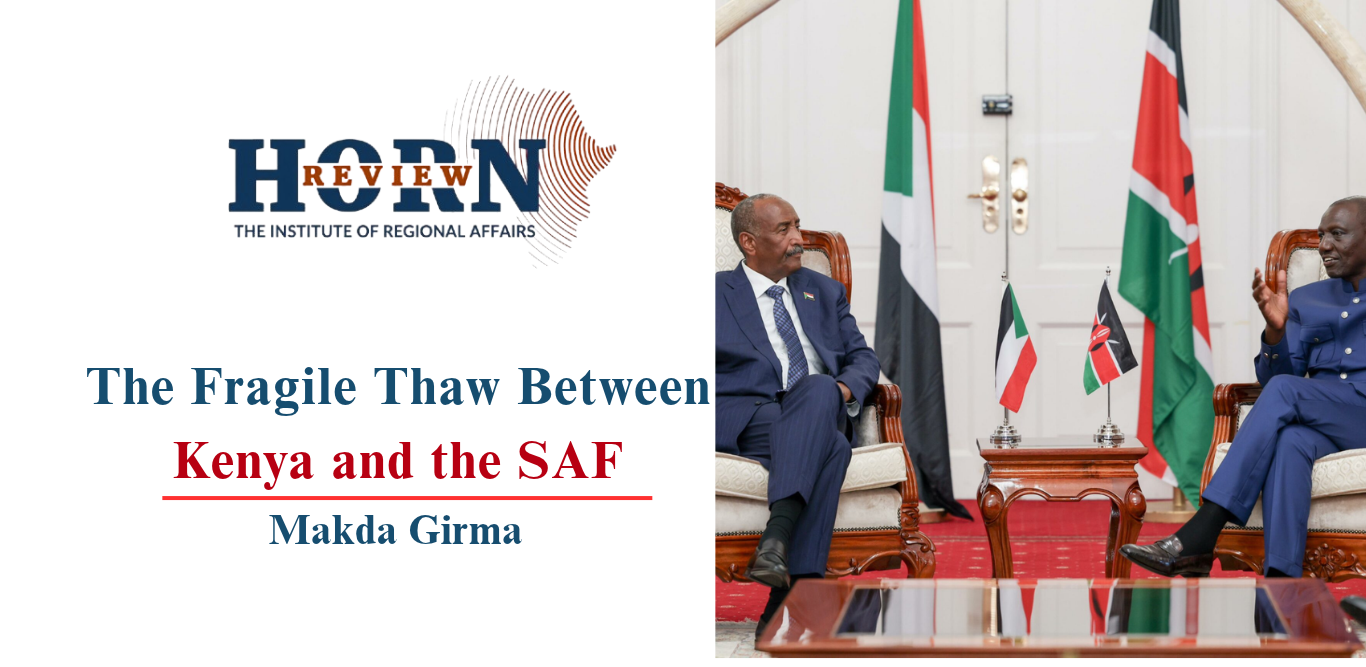
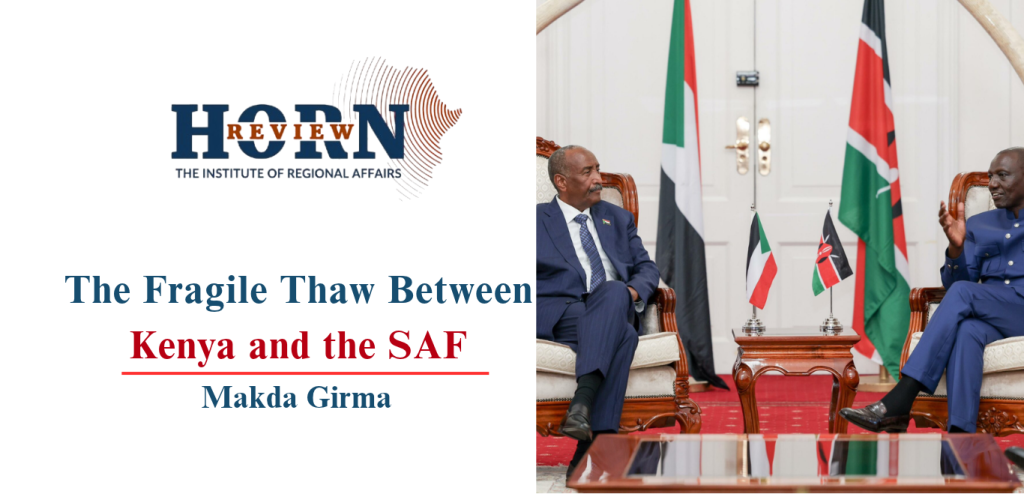
The diplomatic opening gathered momentum in October 2026, when Kenyan President William Ruto met Sudanese Prime Minister Kamil Idris on the sidelines of the COMESA summit in Harare, Zimbabwe. Their talks focused partly on restoring trade. Kenya also turned to a less conventional channel: National Intelligence Service Director General Noordin Haji met SAF commander Abdel Fattah al Burhan in Sudan. Following these high level engagements, Sudan lifted its ban on Kenyan tea imports through Ministerial Order No. 25 of 2026, signed on November 8.
Haji’s involvement is particularly important given the nature of the dispute. A disagreement rooted in Kenya’s relationship with the RSF could not be settled entirely through commercial negotiations. By involving its intelligence chief, Nairobi opened a direct channel to al Burhan, potentially allowing both sides to address security concerns away from public diplomacy. The initiative was described as economic and intelligence led diplomacy. What Haji discussed with al Burhan remains undisclosed, however, including whether Kenya offered assurances regarding its continued engagement with the RSF.
Economic considerations also help explain the SAF’s change of position. By August 2026, Sudanese officials had signalled their willingness to reconsider the ban if Kenya approached the matter through formal diplomatic channels. The restrictions had not only deprived Kenyan exporters of an important market; they had also affected more than 50 Sudanese importing companies, which resorted to purchasing Kenyan tea indirectly through markets such as the United Arab Emirates and China at higher prices. Sudan had previously purchased Kenyan tea worth approximately $70 million annually in peak years, while the disruption left 207 containers stranded at the Port of Mombasa. Yet Ministerial Order No. 25 addressed Kenyan tea specifically, leaving the status of other restricted Kenyan products unclear. For the SAF, reopening this market relieved pressure on domestic traders without requiring a change in its political position toward Nairobi.
The tensions between Kenya and SAF began well before the 2025 restrictions. Kenya initially supported Sudan’s political transition, with Ruto endorsing the December 2022 Political Framework Agreement between military and civilian actors. After war broke out between the SAF and RSF in April 2023, Nairobi sought a greater role in regional mediation. Ruto met Malik Agar, deputy chairman of Sudan’s Transitional Sovereignty Council, in May, but the relationship soon became contentious. In June, the SAF rejected Kenya’s leadership of the IGAD Quartet, accusing Nairobi of favouring the RSF. The disagreement did not prevent further diplomacy. Al Burhan visited Nairobi in November 2023, where he and Ruto agreed to pursue a ceasefire, humanitarian assistance and political dialogue.
That understanding weakened in January 2024 when Ruto received RSF leader Mohamed Hamdan Dagalo, commonly known as Hemedti. Sudan’s SAF aligned authorities recalled Ambassador Kamal Gubara for consultations, objecting to the diplomatic reception given to their military rival. Kenya maintained that bringing both parties into dialogue was essential to ending the war. Although Gubara returned to Nairobi in May 2024, the issue remained a source of disagreement.
In January 2025, the two governments appeared ready to move past another period of tension. Sudanese Foreign Minister Ali Youssif visited Kenya and reported receiving assurances from Ruto that Nairobi would not recognize an RSF led parallel government. A month later, however, Kenya hosted RSF representatives and their political allies, who signed the Sudan Founding Charter on February 22, setting out plans for a rival governing authority. The SAF condemned the gathering as interference in Sudan’s sovereignty, recalled its ambassador again on February 20, and imposed restrictions on Kenyan imports the following month. Nairobi argued that hosting political discussions did not amount to recognizing the proposed administration. For the SAF, however, the conference called into question the assurances received only weeks earlier.
The dispute has also unfolded against a wider struggle for influence in Sudan involving Gulf states. The SAF has repeatedly accused the United Arab Emirates of supporting the RSF, allegations Abu Dhabi denies. Saudi Arabia, meanwhile, has maintained engagement with the SAF and participated in diplomatic efforts to end the conflict. The competing interests of Gulf powers have complicated Sudan’s external relations, particularly as the warring parties seek international support.
Kenya’s expanding commercial and investment ties with the UAE have consequently attracted attention in discussions about Nairobi’s position. The SAF’s accusations against Abu Dhabi give this relationship a wider political context, although Kenya’s economic partnerships do not establish any involvement in supporting the RSF. Nairobi has pursued its own commercial interests in the Gulf while maintaining diplomatic contacts with Sudan’s rival factions. The scrutiny surrounding Kenya’s regional diplomacy illustrates how the war has made even ordinary bilateral partnerships politically sensitive.
Nor has Nairobi abandoned those contacts. In April 2026, the United Nations Secretary General’s Personal Envoy for Sudan, Pekka Haavisto, met Hemedti in Kenya to discuss efforts to reduce hostilities. British and Japanese representatives also met RSF affiliated officials in Nairobi in September to address humanitarian access. The SAF protested these engagements, arguing that dealings with institutions associated with the RSF’s parallel administration risked granting them political legitimacy. British officials insisted that the discussions concerned humanitarian assistance, not recognition of a rival government.
For Kenya, maintaining access to the RSF serves a practical diplomatic purpose. International mediators and humanitarian organizations need channels of communication with the armed groups controlling territory in Sudan, and Nairobi has offered a venue for such exchanges. The SAF’s objections are more specific: it distinguishes between engaging the RSF to end the fighting and allowing political activities that could strengthen the group’s claim to govern. This distinction lies at the heart of the recurring disagreement. Kenya has defended its approach as a contribution to peace negotiations, while the SAF remains unwilling to treat every form of engagement with its rival as politically neutral.
The dispute has already affected regional mediation. In 2023, the SAF’s rejection of Kenya’s leadership complicated IGAD’s efforts to bring the warring parties into negotiations. Renewed communication between Nairobi and al Burhan may ease that obstacle, but restored trade does not automatically translate into acceptance of Kenya as a mediator. IGAD and the African Union still face the difficult task of engaging both armed parties without appearing to endorse competing claims to Sudanese state authority. Kenya’s experience shows how quickly questions of sovereignty and political legitimacy can disrupt an otherwise necessary diplomatic process.
The latest rapprochement follows a familiar pattern. Previous efforts to restore cooperation in November 2023 and January 2025 gave way to renewed tensions over Nairobi’s engagement with the RSF. This time, however, economic pressures and direct discussions with the SAF leadership have produced a concrete agreement, even as the original dispute remains unresolved. The SAF has chosen to reopen trade without publicly accepting Kenya’s approach to the RSF, while Nairobi continues to defend its role as a venue for dialogue. The durability of this arrangement will depend on whether both governments can maintain cooperation without allowing their differences over Sudan’s political future to provoke another rupture.
By Makda Girma, Researcher, Horn Review