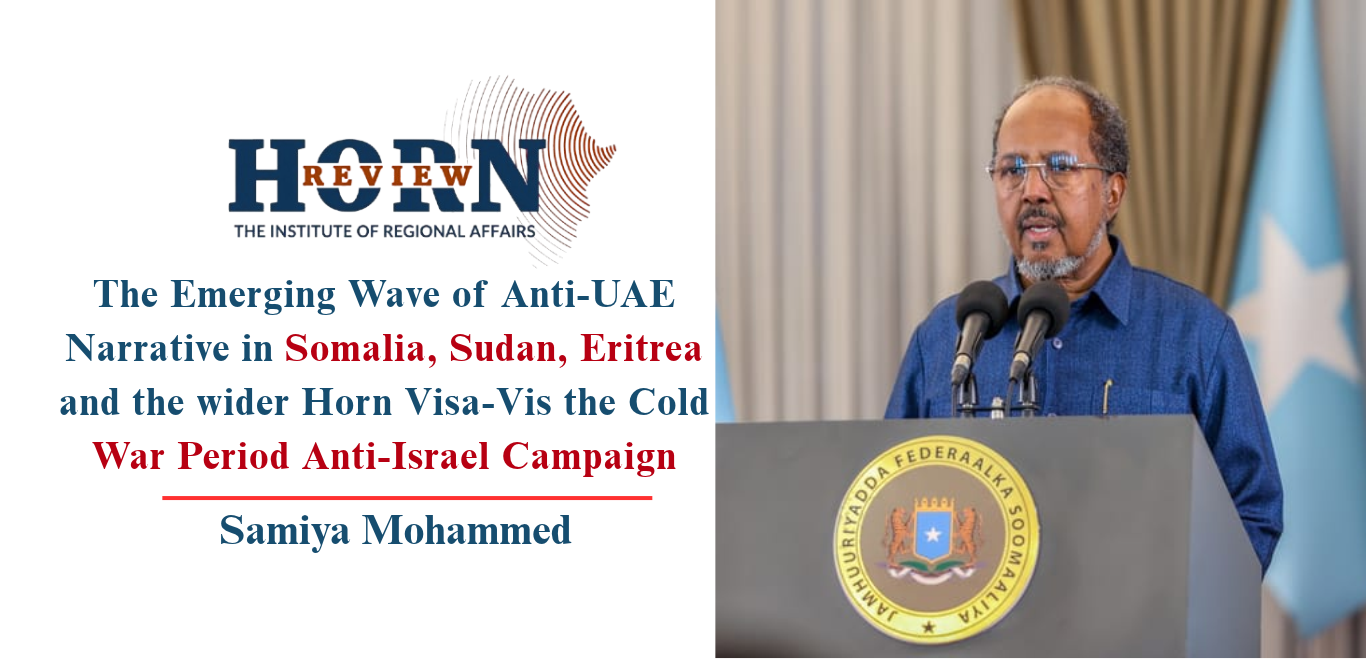
The recent decision by the Federal Republic of Somalia to publicly accuse the United Arab Emirates of interference and divisive actions is the latest chapter in a coordinated narrative campaign of geopolitics in the Horn of Africa and Somalia has now joined a growing list of states in the region including Sudan, Eritrea and Djibouti that have officially and publicly assigned blame to the UAE for internal instability and regional splitting which shows a shift in the narrative system of regional contentions and moves the competition from the Red Sea directly into the Horn. These accusations reveal a consistent pattern in which the UAE is cast as the new disruptive outsider power functioning as the modern equivalent of the role Israel played in older regional narratives and the alignment of these accusations suggests that the UAE is being utilized as a point for the externalization of domestic crises and the projection of an anti Israel posture by autocratic or pressured regimes.
The historical parallel is instructive because during the Cold War era Israel occupied a distinctive structural position in the political narratives of the region routinely portrayed as a foreign entity orchestrating division and instability among Arab states to maintain its own dominance and serving as a convenient external explanation for internal failures and that narrative function did not depend on the accuracy of every individual claim but rather on the usefulness of the outsider as a receptacle for blame. What has changed is not the function but the identity of the actor assigned to it since the UAE now occupies this structural position in the narratives of Horn states driven by its port deals, proxy ties and its links to Israel’s recognition of Somaliland and the accusations are not necessarily grounded in an objective assessment of actions but rather serve a specific political and rhetorical function for the accusing governments, meaning the pattern is about how these regimes narrate crisis rather than about adjudicating the facts.
The older Cold War narrative worked because Israel was structurally distant enough to serve as a stable external referent in which a fixed point against which domestic legitimacy could be measured and reinforced and the rhetorical economy of that arrangement was relatively simple because the accused party was not deeply woven into the economic fabric of the accusing states. The contemporary narrative operates under different conditions and this difference is central to understanding why the UAE occupies a comparable rhetorical position while facing a fundamentally different set of constraints.
The specific claims made by Eritrean President Isaias Afwerki illustrate the depth of this narrative construction since Afwerki has repeatedly accused the UAE of being the main destabilizing force in Sudan with funding and weapons, smuggling weapons through Libya, recruiting mercenaries from Chad and attempting to destabilize Blue Nile state and he further claimed that the UAE’s ultimate goal is to build a port empire controlling a series of ports from Suez, Jeddah, Port Sudan, Hodeidah, Djibouti, Assab, Aden, Berbera to Mogadishu, Mombasa and Dar es Salaam. The mention of Yemen in this context is telling because it signals Eritrea’s alignment with the Saudi position and further highlights how the narrative is being shaped by regional bloc politics rather than purely factual adjudication and by casting the UAE as the planner of regional instability these leaders divert attention from their own governance failures and externalize the sources of their domestic crises.
The port empire claim is particularly revealing because it converts commercial investment into a narrative of domination reframing economic presence as encirclement and this reframing is useful precisely because the UAE’s visible economic presence provides a tangible basis for accusations even when the motivations attributed to it are exaggerated or distorted. In the older Cold War narratives, the outsider was accused of orchestrating division without necessarily having the visible commercial presence that could be pointed to as evidence and the rhetorical work was therefore more abstract and ideological. The contemporary narrative can draw on concrete infrastructure, port concessions and investment flows which gives the accusations a material texture that the older narrative lacked even as the underlying political function remains similar.
Similarly Djiboutian President Ismail Omar Guelleh has conducted interviews naming the UAE as a destabilizing force forming a consistent pattern of multiple Horn leaders independently scapegoating the UAE and when analyzing these accusations the practice of scapegoating becomes obvious because Hassan Sheikh, Isaias Afwerki, Guelleh and the SAF all have domestic crises or long records of externalizing blame and in each case in Eritrea, Djibouti and now Somalia the accusing government is either autocratic or under pressure and it externalizes its crisis onto the UAE. The narrative being constructed is that of the external patron blamed for division and the expansion of this rivalry from the Red Sea into the Horn proper evidenced by Somalia joining the list demonstrates how the UAE is being utilized as a functional scapegoat.
The convergence of these accusations across different governments with different orientations suggests that the narrative is not simply a series of isolated rhetorical choices but a broader structural phenomenon, one in which the UAE has come to occupy a position in regional discourse that transcends the specific grievances of any single state. This is what makes the comparison with Cold War Israel analytically useful because Israel similarly occupied a structural position that was larger than any individual accusation and the narrative function persisted across different governments and different conflicts because the position itself was structurally useful.
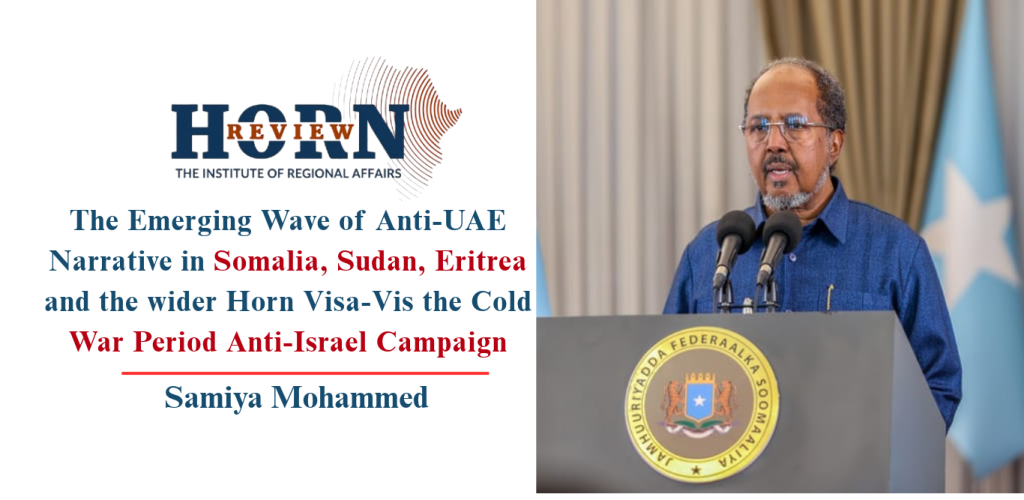
The Somali case provides a clear demonstration of how the anti Israel posture is being weaponized since President Mohamud explicitly accused the UAE of playing a role in Israel’s recognition of Somaliland referring to the northern regions of Somalia and noted that the UAE refused to sign Arab and Islamic statements condemning this move which ties directly into a broader anti Israel posture that is becoming a defining feature of the positioning used against the UAE. Reports indicate that Somalia is the third African country in eighteen months to sever relations with the UAE following similar actions by Sudan and Algeria and the Somali case is particularly illustrative because it explicitly names Libya and Yemen as precedents inviting a Saudi or pro Arab reading of the geopolitics and signaling alignment with the Saudi position rather than the UAE one and by framing the UAE in this manner Mohamud is able to present his government as a defender of national sovereignty and Islamic solidarity while simultaneously distracting from his own domestic political challenges.
The explicit linkage of the UAE to Israel’s recognition of Somaliland is a particularly effective rhetorical move because it combines two highly charged issues into a single narrative tying the UAE to a foreign policy position that is deeply unpopular in the Arab and Islamic world while simultaneously framing the Somaliland question as a matter of external interference rather than internal political contestation. This is a more sophisticated narrative operation than the older Cold War accusations against Israel which tended to operate at a higher level of abstraction and it demonstrates how the narrative function has evolved to incorporate more specific and more locally resonant grievances.
The role of the UAE as the new disruptive outsider power is thus a construct of the geopolitical rivalry in the Horn of Africa but one built on a different foundation than its historical predecessor and the accusations are not primarily about adjudicating the facts of involvement in these conflicts but rather about how the rivalry is being narrated. The UAE is being utilized as the functional equivalent of Israel in older regional narratives and the expansion of this rivalry into the Horn proper ensures that the UAE will remain a central figure in the region’s political discourse, cast as the external patron responsible for division and instability yet the comparison has limits because the older narrative rested on an outsider that was structurally distant while the contemporary narrative rests on an outsider that is structurally present and that difference shapes how the story develops and suggests that the narrative function may persist even as the practical consequences diverge from the historical template.
The cost dimension is the key variable because it determines whether the narrative function can be sustained over time and whether the accusing governments can bear the consequences of their rhetorical positioning. In the Cold War era, the cost was low and the narrative was stable. In the contemporary Horn, the cost is higher and the narrative is more contested and the UAE’s deep economic embeddedness means that the accusations cannot be separated from the material relationships that bind the accusers to the accused.
By Samiya Mohammed, Researcher, Horn Review