Sudan’s war has brought together numerous regional and international actors, yet diplomatic efforts continue to struggle to translate negotiations into meaningful progress. The Quad, comprising Egypt, Saudi Arabia, the United Arab Emirates and the United States, has concentrated on securing a humanitarian truce and ending hostilities, while the Quintet, consisting of the African Union, IGAD, the Arab League, the European Union and the United Nations, has worked toward an inclusive civilian political process. The challenge is ensuring that these efforts move in the same direction.
The need for closer coordination was acknowledged during the first joint Quad and Quintet meeting on 23 September 2026. The African Union called for a common roadmap linking humanitarian assistance, a cessation of hostilities and civilian political dialogue. A ceasefire negotiated without a corresponding political agreement may temporarily halt the fighting without resolving the struggle over Sudan’s future government. Similarly, civilian political consultations cannot advance effectively while the military conflict continues unchecked.
Egypt has already expressed interest in assuming this responsibility. During the UN Security Council meeting on 16 October 2026, its representative, Ihab Awad, announced Cairo’s willingness to play a primary role in coordinating between the Quad and Quintet. However, no definitive public decision accepting or rejecting that proposal has been established. The subsequent Geneva consultations on 21 October continued under the chairmanship of Switzerland and UN Personal Envoy Pekka Haavisto, with the existing coordination arrangements remaining in place. Egypt’s request has therefore not resulted in a publicly confirmed appointment.
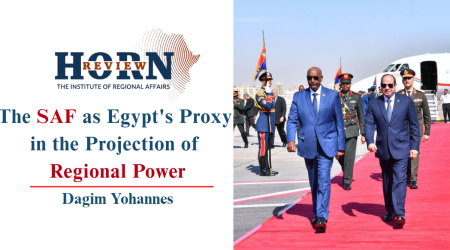
Egypt’s proposed role must also be considered in light of its interests in Sudan. Cairo maintains close political and security relations with the Sudanese Armed Forces (SAF), including regular engagement with General Abdel Fattah al Burhan. Beyond this relationship, Sudan occupies an important place in Egypt’s Nile water security calculations. The future position of Sudanese authorities on the Grand Ethiopian Renaissance Dam directly affects Egypt’s wider regional interests. These overlapping strategic concerns raise questions about how Cairo would manage competing priorities if entrusted with coordinating a process involving Sudanese military actors, civilian representatives and countries with differing regional interests.
Egypt’s economic interests in Sudan further complicate its proposed role. Research published by Chatham House in March 2025 documented the expansion of Sudanese gold smuggling into Egypt since the outbreak of the war, estimating that more than 60 tonnes entered Egypt through illicit channels between April 2023 and the end of 2024. Egyptian gold markets have become an important destination for gold originating from SAF controlled territories, sustaining commercial networks that generate revenue within Sudan’s war economy. Combined with Cairo’s close political and security ties to the SAF, these economic interests present a potential conflict of interest that raises questions about Egypt’s ability to coordinate the peace process impartially.
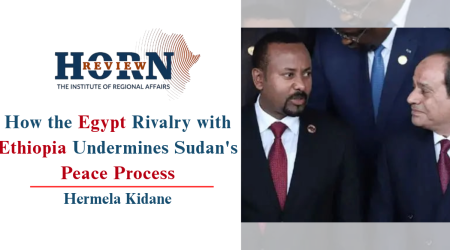
Ethiopia’s position, by contrast, rests on an existing diplomatic foundation directly connected to Sudan’s political process. Addis Ababa hosts the African Union headquarters and has already served as a venue for the Quintet’s consultations with Sudanese civilian and political stakeholders. Between 3 and 5 June 2026, the Quintet held discussions in Addis Ababa to explore establishing a preparatory committee for an inclusive political dialogue, with further consultations taking place in subsequent months. Ethiopia’s experience also extends to the 2019 Sudanese transition, when Prime Minister Abiy Ahmed and Ethiopian envoy Mohamoud Dirir worked alongside the African Union to facilitate negotiations between military and civilian representatives. Although that transition ultimately collapsed, Ethiopia’s participation established experience in African diplomatic efforts involving competing Sudanese political actors.
These institutional connections provide the foundation for Ethiopia’s proposed role as a focal point. Ethiopia would not mediate Sudan’s political settlement, negotiate on behalf of the parties or replace the responsibilities of either mechanism. Instead, it would serve as the operational link between the Quad’s ceasefire and humanitarian efforts and the Quintet’s civilian political process. This role would involve maintaining communication, aligning priorities and ensuring that developments in one mechanism inform the work of the other. Ceasefire and humanitarian stabilization would create conditions for civilian political dialogue, while progress toward an inclusive political settlement would give those security arrangements a lasting purpose. Addis Ababa’s existing involvement in civilian consultations and its access to the African Union provide an institutional setting for carrying out these responsibilities.
Ethiopia’s national security interests further reinforce its involvement. Sudan’s instability has driven refugee movements, increased insecurity along Ethiopia’s western border and created risks of armed networks expanding across the Horn of Africa. These consequences give Ethiopia a direct stake in restoring stability and ensuring that diplomatic efforts produce practical results. Its geographical proximity also keeps the humanitarian and security implications of Sudan’s conflict closely connected to its regional diplomatic priorities.
The main obstacle remains Ethiopia’s strained relationship with the SAF. However, separating technical coordination from political mediation provides a practical way to address this difficulty. Ethiopia would not determine negotiating positions or impose political outcomes. Under an AU and UN supervised arrangement, substantive mediation would remain with the authorized negotiators, while Ethiopia would manage communication, meeting preparation and the monitoring of agreed commitments. This separation limits opportunities for unilateral influence and reduces the extent to which bilateral mistrust can obstruct the wider process, although renewed diplomatic engagement with the SAF would remain necessary.
Ethiopia should pursue a standing focal coordination office in Addis Ababa, linked to the existing technical task force and operating under joint AU and UN oversight. The office would prepare joint agendas, circulate assessments, track commitments and identify disagreements requiring diplomatic intervention. Rather than creating another mediation initiative, this arrangement would give the existing mechanisms a consistent operational link and ensure that developments in ceasefire negotiations inform the civilian political process.
Ultimately, Ethiopia’s institutional capacity, established participation in Sudanese political consultations, previous mediation experience and direct interest in regional stability provide a strong foundation for serving as the focal point between the Quad and Quintet. Addis Ababa already connects African diplomatic institutions with an active Sudanese civilian consultation process. Under AU and UN oversight, Ethiopia can support the two mechanisms without assuming responsibility for Sudan’s political settlement, ensuring that efforts to end hostilities remain connected to the civilian political process needed for lasting peace.
By Makda Girma, Researcher, Horn Review