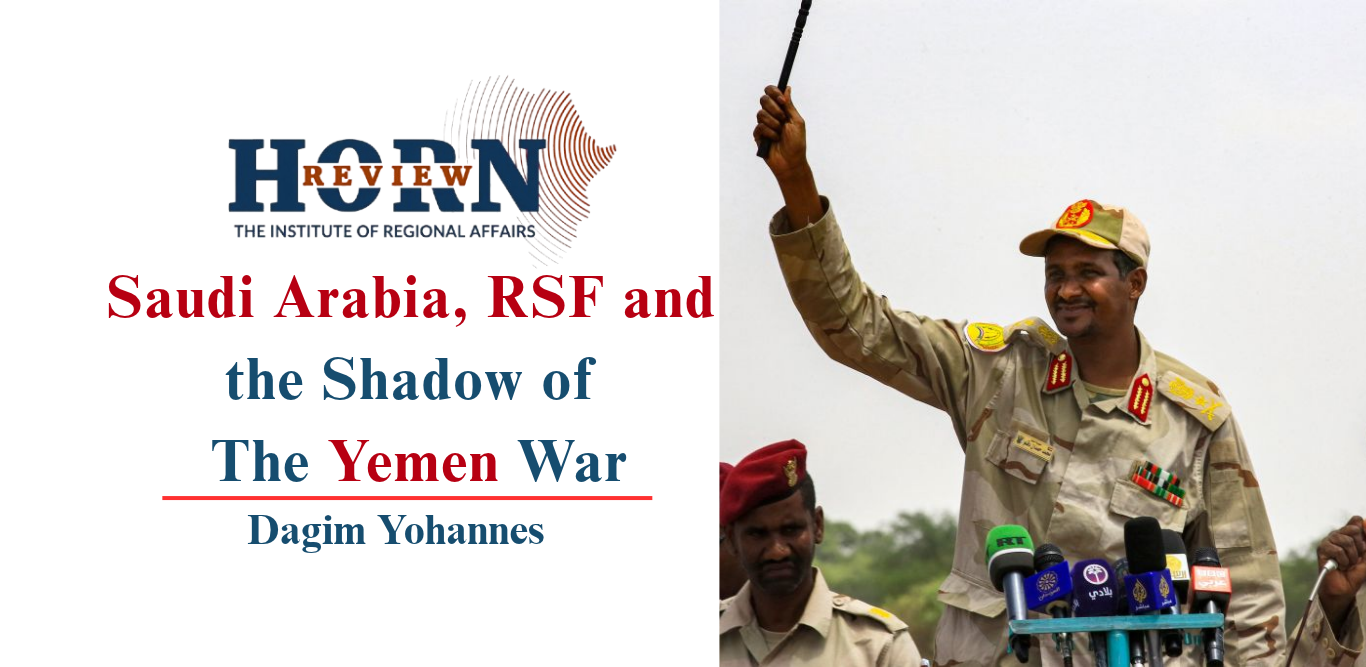
A chain of high-profile defections has begun to fray the Rapid Support Forces from within. Senior field commanders who once directed RSF operations in Darfur and Kordofan have crossed to the Sudanese Armed Forces, bringing hundreds of fighters, more than a hundred combat vehicles, tactical intelligence, and public denunciations of Mohamed Hamdan Dagalo’s leadership. The pace accelerated through 2026. Maj. Gen. al-Nour Ahmed Adam (al-Gubba or al-Qubba) defected in April with a substantial force and combat vehicles. Brigadier Ali Rizqallah (al-Safana or Savannah) followed in May, holding a press conference in SAF uniform. Others: Mohamed Azraq al-Fangari with roughly 300 fighters, Ahmed Hasab Al-Rasoul in North Darfur, and additional officers have continued the pattern into November.
These switches are not solely the product of battlefield frustration or tribal grievance. Reporting indicates that monetary incentives, facilitated in part by Saudi Arabia, have played a decisive role in several of the most valuable defections. According to reports circulating in Sudanese media and military circles, figures such as al-Safana and al-Gubba received payments in the range of $800,000 to $2.5 million to switch sides and relocate their forces. SAF intelligence operations and pre-war personal networks between officers on both sides have amplified the effect. Army chief Abdel Fattah al-Burhan has publicly offered a form of amnesty: “Anyone who leaves the fighting and joins the side of the state may have his case reviewed,” while integrating defectors with ranks and operational roles.
The timing is not accidental. It coincides with Riyadh’s renewed pressure on two fronts: the need to degrade the RSF (and the United Arab Emirates’ influence in Sudan) and the kingdom’s acute requirement for experienced foreign ground forces. Houthi advances in southern and western Yemen have exposed the limits of Saudi-backed local proxies. Riyadh-aligned Yemeni forces have recently retreated from positions near the Bab al-Mandab Strait to fortify Aden, while the Houthi re-imposition of the siege on Taiz has further stretched coalition lines. Saudi Arabia has even dismissed the commander of its coalition forces amid these setbacks. Local Yemeni units, including fractured elements of the Southern Transitional Council, have underperformed or remained politically divided, leaving Riyadh short of reliable infantry capable of holding contested ground.
The historical precedent is direct. From 2015 onward, Sudanese forces including a large RSF contingent formed a substantial part of the Saudi-led coalition’s ground presence in Yemen. At peak, tens of thousands of Sudanese troops served, with RSF units often taking frontline roles in the north and west. The arrangement was transactional: Gulf salaries and political support flowed to Khartoum and to Hemedti personally, while the RSF gained combat experience, equipment, and external patronage networks that later underwrote its autonomy inside Sudan.
That earlier contribution has largely dried up. The outbreak of full-scale war between the SAF and RSF in April 2023 fractured the pipeline. Residual RSF elements in Saudi border areas have faced withdrawal orders from Hemedti’s command. Meanwhile, other potential contributors have proven limited or cautious. Riyadh’s discussions with Syria over advisers, trainers, and possibly limited special forces have surfaced publicly, but large-scale, reliable ground reinforcements remain scarce. Sudanese fighters, mobile, desert-adapted, and already familiar with the Yemeni theater represent a known quantity.
The strategic logic for Riyadh is therefore layered. Financing defections weakens the RSF on the Sudanese battlefield and undercuts a UAE-aligned actor without requiring Saudi boots on the ground. At the same time, absorbing experienced commanders into the SAF hierarchy creates a reservoir of battle-hardened fighters under nominal national authority. This preserves the option for Riyadh to fund, equip, and, if conditions allow, redirect them toward border defense or the Yemen theater as Houthi pressure intensifies. Public evidence of any large-scale redeployment remains thin, and the move from facilitation of defections to organized expeditionary use would still require deliberate policy choices in both Riyadh and Port Sudan.
Burhan still faces real constraints: a multi-front war at home, finite manpower, and residual reluctance among Islamist-aligned factions inside the army. Integrating officers linked to atrocities in places such as El Fasher also carries domestic political costs. Yet Port Sudan has clear incentives to cooperate. Making these commanders available for Saudi-directed operations would allow the SAF to secure urgently needed financial and military backing. Sudan’s existing military and diplomatic ties with Saudi Arabia, and the broader regional security framework symbolized by the Makkah Joint Defense Agreement, create a favorable political environment in which any future arrangement could be framed as collective defense rather than a purely transactional deal.
The manpower paradox is real, but it is not decisive. Burhan may calculate that certain defectors remain politically unreliable or tribally independent inside Sudan. Sudanese military circles remain acutely aware of the precedent set by Abu Aqla Keikal, who shifted back and forth between the SAF and RSF in Gezira. Rank-and-file soldiers and Islamist-aligned brigades often view recent arrivals with deep suspicion, fearing sleeper agents or future defections. Exporting these commanders to a Saudi-supervised theater in Yemen would therefore serve a dual purpose: it would remove potentially disruptive elements from Khartoum and Port Sudan, reduce the risk of fratricidal clashes within SAF ranks, and still allow the army to collect Saudi financial and military support. In this reading, export becomes a form of controlled utilization rather than a pure loss of combat power.
Deeper structural factors reinforce both the opportunity and the limits. The RSF’s internal cohesion has long rested on a narrow set of Arab tribal networks, particularly branches of the Rizeigat, combined with the Dagalo family’s control of resources and appointments. Commanders from the Mahamid clan, including al-Gubba and al-Safana, have cited favoritism, denial of post-victory spoils, and external direction (often framed as UAE control) as reasons for leaving. Musa Hilal’s rival networks have been leveraged by the SAF side to accelerate these fractures. Saudi facilitation exploits existing fault lines rather than creating them from nothing.
At the same time, the Gulf rivalry itself is not static, and it contains a revealing two-theater contradiction. While Riyadh and Abu Dhabi back opposing sides in Sudan, intensifying Houthi territorial gains along the Red Sea coast have forced an awkward, partial convergence of interest in Yemen, with the UAE facing pressure to re-engage against the Houthis. That Riyadh is simultaneously poaching commanders long associated with alleged UAE patronage in Sudan, even as both Gulf states confront a shared Houthi threat across the water, underscores how compartmentalized and transactional Gulf statecraft has become.
Whether this develops into an organized pipeline will depend on several variables still in motion: the scale of further defections, Burhan’s willingness and capacity to spare forces, the accountability pressures surrounding commanders linked to mass atrocities, and the intensity of Houthi operations against Saudi territory. What is already clear is that the defections are not a purely Sudanese story. They sit at the intersection of an internal civil war, a Gulf contest for influence, and Riyadh’s enduring preference for allied foreign manpower over exclusive reliance on its own ground forces. The commanders crossing the lines are bringing more than vehicles and intelligence. They are carrying with them the unresolved question of whether yesterday’s coalition fighters can be reconstituted as tomorrow’s allied contingents, this time under a different flag, but responding to many of the same incentives.
By Dagim Yohannes, Researcher, Horn Review