Launched in early 2025 as the successor to ATMIS, the African Union Support and Stabilization Mission in Somalia (AUSSOM) continues the established model of multinational peacekeeping. The mission’s primary objective is to strengthen Somali security forces in their fight against al-Shabaab while facilitating a phased transition toward full national authority. At its core, AUSSOM is built on the principle of impartial intervention, designed to provide the stability necessary for political reconciliation and institutional state-building.
The mission operates under a unified mandate that prioritizes Somali ownership over the individual agendas of donor states. However, the participating nations currently including Uganda, Kenya, Ethiopia, Djibouti, and recently Egypt—enter the framework with a complex array of motivations. These range from genuine regional security concerns and the desire for seasoned military experience to the pursuit of financial reimbursements and increased diplomatic influence within the African Union.
For long-standing contributors like Uganda and Kenya, participation serves the dual purpose of containing transnational threats and maintaining combat-ready expeditionary forces. Ethiopia’s role remains particularly critical. With a deployment of approximately 2,500 troops, its involvement is driven by the immediate necessity of securing its direct border with Somalia. For Addis Ababa, the mission is a vital tool for preventing extremist infiltration into its own territory, particularly in regions sensitive to internal instability. While funding gaps and logistical transitions continue to challenge the mission’s cohesion, AUSSOM remains the central framework for collective security in Somalia and the wider region.
Djibouti’s smaller contingent aligns with its strategic location and history of balancing multiple external relationships in the Horn. These actors, despite their individual interests, have generally operated within a framework where counterterrorism gains, however incremental, remain tethered to the mission’s stated goals of stabilization rather than outright geopolitical repositioning. The presence of multiple neighbors fosters a certain degree of mutual accountability, even amid inevitable coordination challenges and occasional accusations of overreach by one party or another.
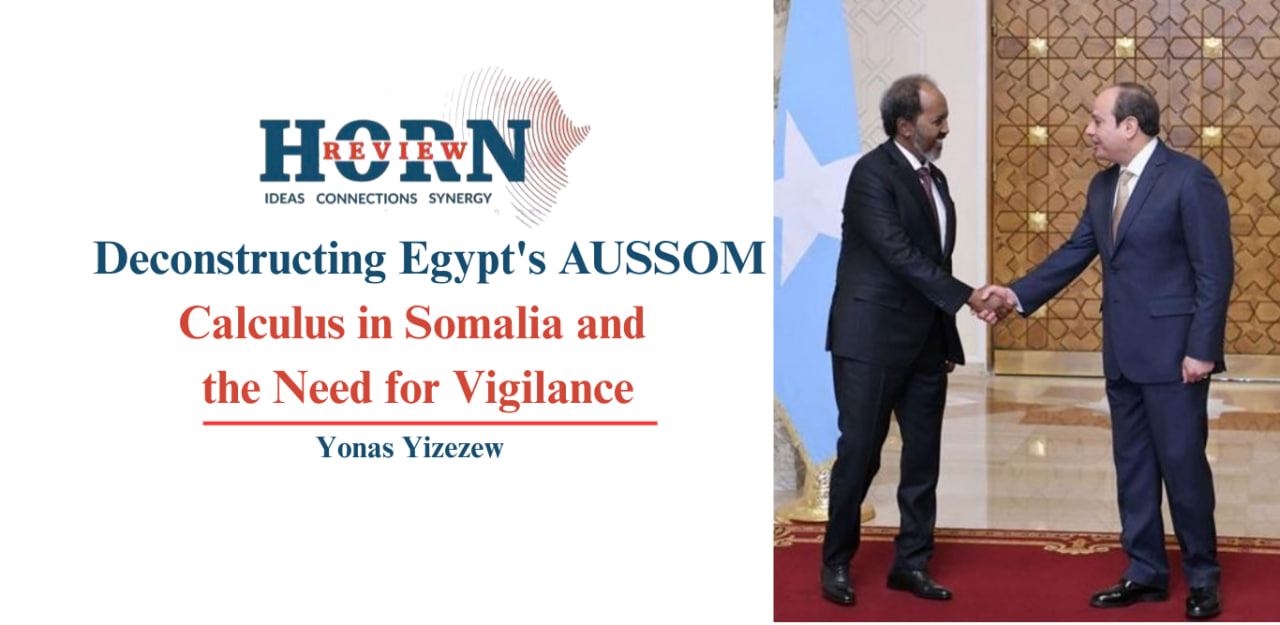
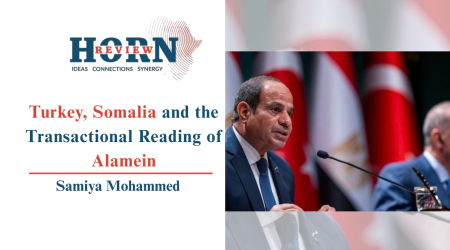
Egypt’s entry into this structure, contributing roughly 1,091 troops under AUSSOM alongside bilateral training and equipment support, marks a notable evolution, one framed publicly around capacity-building for the Somali National Army and joint efforts against extremists. Yet the timing and broader context reveal a deeper strategic calculus extending far beyond the immediate demands of peacekeeping. One must ask why Egypt, if its primary concern were truly combating extremism in Somalia, remained largely absent from the heavy lifting of earlier missions like AMISOM and ATMIS over more than a decade of intense operations.
During the Cold War, Cairo provided military support to Somalia during periods of heightened confrontation with Ethiopia, including in the lead-up to the 1977–78 Ogaden War, when Somalia launched a full-scale invasion of Ethiopian territory. Nearly five decades later, Egypt’s large-scale arms transfers to Somalia—the first of their kind since 1977—have emerged at a moment when tensions between Mogadishu and Addis Ababa had reached their highest level in years following the Somaliland MoU. This historical parallel raises questions about whether the current engagement is driven solely by counterterrorism and state-building objectives or whether it also reflects a recurring tendency to leverage Somali-Ethiopian tensions in pursuit of broader strategic goals.
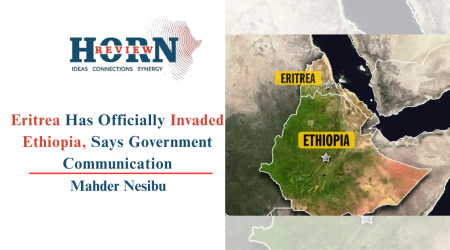
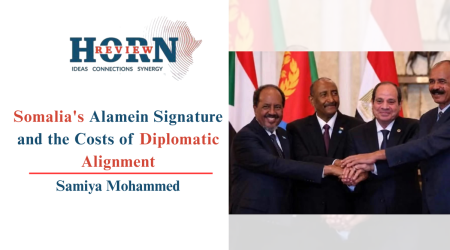
The timing of its arrival, coinciding with escalating tensions in the region, indicates that wider geopolitical calculations have played a role alongside humanitarian and counterterrorism objectives. Egypt actively exploited the peak of Somalia-Ethiopia tensions in 2024 by working to forge a structured anti-Ethiopian front by including Eritrea. Even though Somalia and Ethiopia mend their relations after the Ankara agreement, Egypt’s pattern signals motives rooted less in impartial stabilization and more in leveraging the mission for external strategic advantage.
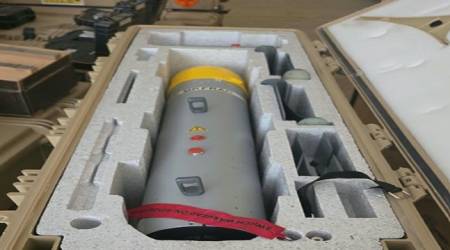
This approach begins to diverge from peacekeeping’s foundational ethos in subtle but meaningful ways. Traditional missions emphasize impartiality and de-escalation among local parties, with troop contributors expected to subordinate national foreign policy aims to the collective mandate. Here, Egypt’s broader posture evident in heavy arms deliveries immediately after Ethiopia-Somalia tension, independent training programs, and reported interest in placements near sensitive border areas—carries the imprint of using the AU framework as a vehicle for strategic encirclement and deterrence vis-à-vis Addis Ababa. Cairo has methodically pursued a containment strategy across the region by deepening ties with Eritrea, backing Sudan’s SAF in ways that keep pressure on Ethiopia’s western flank, attempting without much success to draw Kenya and Uganda into its orbit, and losing its military station in South Sudan. With those avenues limited, Somalia emerges as the most exploitable opening, where longstanding federal-regional tensions and disputes over Somaliland can be amplified to position Egyptian assets closer to Ethiopia’s eastern border in a zone of particular security sensitivity due to porous frontiers, clan dynamics, and historical infiltration routes. Deploying tremendous quantities of weapons and equipment through these channels, while useful on paper for Somali units, introduces fresh risks that weapons could slip into the hands of extremist groups amid Somalia’s fragmented command structures and persistent corruption challenges, potentially arming the very threats AUSSOM is meant to suppress.
Forward Egyptian positioning, combined with arms flows, enables not only capacity-building claims but also closer situational awareness of Ethiopian activities along these frontiers. Egyptian troops are expected to assume responsibility for Sector Five in the Middle Shabelle region, replacing Burundian troops. However, available reporting suggests that the transition remains phased, and the full transfer of operational responsibilities may not yet be complete.
In addition, following Israel’s increasing foothold in the region particularly through its recognition of Somaliland and advancing security, diplomatic, and potential logistical cooperation there—Egypt could also use its deepening presence in Somalia to closely monitor Israel’s moves. This introduces yet another layer of rivalry and regional intelligence competition that risks further shifting attention and resources away from the core task of countering terrorism toward broader strategic maneuvering in the Red Sea and Horn.
The recent engagement between Somalia’s army chief and Egypt’s defense attaché in Mogadishu, focused on training, capacity support, and AUSSOM coordination, fits this incremental pattern. It signals deepening operational ties without immediate dramatic shifts, yet it also demonstrates how bilateral channels can layer atop multilateral ones.
From a regional perspective, particularly for Ethiopia, these developments suggest a need for cautious observation. While the professionalization of Somali security forces remains a shared necessity in the collective fight against al-Shabaab, the involvement of a geographically distant power with its own external strategic priorities introduces new complexities. The primary risk is that if such assistance is perceived as prioritizing regional geopolitical competition over objective counter-insurgency goals, it could undermine the mission’s neutrality. Such a shift would not only erode trust among long-standing troop-contributing nations but could also inadvertently complicate Somalia’s internal political stability and its delicate federal-regional balance.
The current situation serves as a critical test for the structural resilience of the AUSSOM framework. Effective peacekeeping relies on external partners aligning their support with measurable security goals and political reconciliation. But if they are used with objective of utilizing the mission as a platform for geopolitical competition, it will undermine peacekeeping efforts. While Egypt’s provision of equipment and training may offer immediate tactical advantages for Somali units, the long-term benefit of this assistance depends on whether it fosters genuine national self-reliance or creates new forms of strategic dependency.
Furthermore, a significant presence in Somalia provides Egypt with a vantage point to more closely observe Ethiopian regional activities—an intelligence dimension that may sit in tension with the neutral objectives of an African Union mission. Consequently, regional stakeholders, including Ethiopia, have a legitimate interest in ensuring high levels of transparency. This can be achieved by utilizing AU reporting structures and diplomatic channels to monitor troop deployments, rules of engagement, and the end-use of supplied military hardware.
Ultimately, the challenge for the Horn of Africa is to ensure that initiatives intended for stabilization do not inadvertently exacerbate regional volatility. Adhering to a steady, pragmatic approach within established institutional frameworks remains the most effective way to navigate these competing strategic interests while maintaining focus on Somalia’s security and governance.
By Yonas Yizezew, Researcher, Horn Review