A Containment Front Against Ethiopia
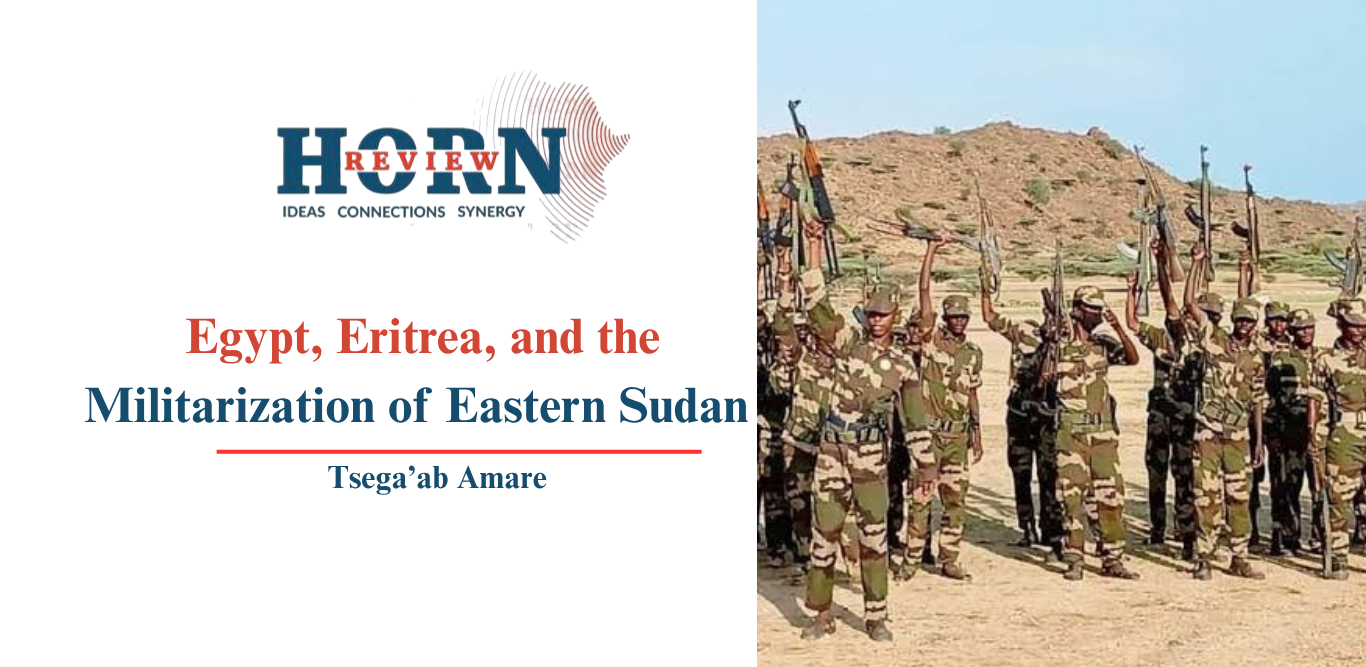
Recent accusations that SAF-aligned tribal militias have received military training in Eritrea with the knowledge of Port Sudan authorities represent more than a footnote in Sudan’s already fractured conflict landscape. A civil alliance representing eastern Sudan has warned of the growing presence of armed tribal militias in the region, saying some groups had received military training in Eritrea in coordination with the Port Sudan authorities loyal to General Abdel Fattah al-Burhan’s SAF.
This point towards the emergence of an externally supported paramilitary architecture in eastern Sudan that serves the strategic interests of actors well beyond Khartoum. The beneficiaries of that architecture are not difficult to identify. Egypt and Eritrea, for distinct but convergent reasons, have each invested in a SAF-aligned Sudanese order. The cumulative effect of that investment, whether it constitutes direct operational coordination, is a containment pressure directed squarely at Ethiopia.
Sudan in this configuration is not simply a passive victim of external interference. It is simultaneously the primary theatre of a war that has killed hundreds of thousands and displaced millions, and the instrument through which two regional powers are pursuing strategic objectives that have little to do with Sudanese sovereignty or civilian welfare. That duality deserves sustained analytical attention. Eastern Sudan’s communities like the Beja and the Rashaida under the civil coalitions now are warning publicly about militia proliferation and are experiencing in immediate and material terms what elsewhere registers only as geopolitical abstraction.
The Civil Forces Alliance for Eastern Sudan’s warning that SAF-linked armed groups trained abroad are now active inside the region, and that their involvement in local disputes would deepen the crisis, is not political posturing. It reflects a genuine structural vulnerability: a region already strained by displacement, resource competition, and political marginalization from Port Sudan is absorbing the operational footprint of an external proxy network. Any settlement that bypasses eastern Sudan’s communities, as the Alliance has noted, will produce new instabilities. The militia presence makes that outcome significantly more likely.
Eritrea’s role in this architecture is the most direct and the least surprising. Isaias Afwerki has been among the most consistent external backers of SAF since the war began in April 2023. His calculus is not difficult to reconstruct. An RSF consolidation in Sudan would place a hostile and UAE-aligned force on Eritrea’s western flank, threatening the relative strategic depth Asmara has maintained since the Tigray war. A Burhan-led order, by contrast, is compatible with Eritrean interests; predictable, militarily dependent on external support, and unlikely to pursue policies that challenge Asmara’s regional position. The facilitation of tribal militia training on Eritrean soil, fits a pattern of low-cost proxy investment that allows Isaias to shape the Sudanese battlefield without formal military commitment. It also fits Eritrea’s broader operational culture: the use of deniable irregular force as a tool of peripheral influence is consistent with Asmara’s documented behavior across multiple Horn theatres.
Egypt’s connection to this layer of the conflict operates at a different register. Cairo’s military and financial support for SAF is well-documented and Egyptian interests in a Burhan-aligned Khartoum are structural and longstanding. It is an established fact that Egyptian and Eritrean strategic interests in Sudan are currently convergent to a degree that makes formal coordination largely unnecessary. Both want SAF to prevail. Both want a post-war Sudanese state that is dependent, westward-looking in its regional alignments, and hostile to any expansion of Ethiopian influence toward the Red Sea. The pattern of Egyptian support and Eritrean facilitation, taken together, constitutes an emerging containment architecture one that functions as a coherent strategic project regardless of whether its components are directly coordinated. For analytical purposes, the distinction between intentional joint strategy and structurally convergent parallel action matters less than the cumulative effect on the ground.
Egypt’s response to declining leverage has not been accommodation but strategic balancing.
On Ethiopia’s eastern flank, the Egypt-Somalia defense cooperation protocol of August 2024 introduced Egyptian troops and military equipment into Somalia, positioning Cairo as an increasingly important security actor in the Horn of Africa.
On Ethiopia’s northern flank, Egyptian engagement with Eritrea intensified starting from 2024 through a series of military and diplomatic exchanges focused on Red Sea security and regional affairs.
On Ethiopia’s western flank, Egypt’s deepening relationship with the SAF has expanded Cairo’s influence inside Sudan and also positioned Sudan central to the architecture.
Viewed individually, each of these relationships serves distinct objectives. Viewed collectively, however, they form a regional network that has the practical effect of constraining Ethiopia’s strategic room for maneuver and limiting the geopolitical benefits that could emerge from Ethiopia’s growing economic and infrastructural capabilities. Sudan being the central hinge of this architecture.
More broadly, Sudan’s civil war continues to attract external actors whose strategic priorities often have little connection to Sudanese welfare. Rather than encouraging a negotiated settlement, outside involvement risks prolonging the conflict and accelerating state fragmentation.
The central question raised by Egypt’s Sudan policy is not whether Cairo possesses legitimate security concerns. It is whether those concerns are increasingly being pursued through a broader strategy designed to preserve influence within a regional order transformed by the GERD and Ethiopia’s rise. If that is the case, Sudan moves from merely being a neighboring crisis. It becomes a key arena in the struggle over the future distribution of power in both the Horn of Africa and the Nile Basin.
What makes the eastern Sudan dimension analytically distinctive is its geography. The militias being cultivated are not positioned for the Khartoum front or the Darfur area. They are being embedded in the region that borders Ethiopia’s Amhara and Tigray peripheries, and that sits astride potential Ethiopian access corridors to Port Sudan.
That cumulative effect lands most heavily on Ethiopia. Addis Ababa is not a passive object of this encirclement logic. Ethiopian foreign policy under the current government has sought, with varying success, to navigate the Sudan conflict without foreclosing options maintaining working relations with SAF while avoiding the kind of public alignment that would trigger Egyptian or Eritrean escalation.
Ethiopia’s interest in a stable Sudan is genuine and multidimensional. The western border is already a point of tension over Al-Fashqa, and a militarized, politically fragmented eastern Sudan creates a hostile periphery at precisely the moment when Addis is managing the residual instabilities of the Tigray post-conflict period and the ongoing Amhara crisis. The prospect of SAF-aligned tribal militias embedded along that periphery, with Eritrean training and at least the passive endorsement of Port Sudan, constrains Ethiopian options in ways that extend well beyond the immediate conflict. Ethiopia’s efforts toward Red Sea access become structurally harder to pursue if eastern Sudan is locked into a hostile alignment. Its ability to position itself as a Horn stabilizer is weakened if its western flank is subject to proxy pressure it cannot easily address without triggering a wider confrontation. Ethiopian agency in this context means recognizing the architecture being constructed and making deliberate choices about whether to engage the Sudan peace process, deepen ties with eastern Sudan’s civil society, or seek external partnerships that rebalance the regional equation.
The significance of eastern Sudan therefore extends far beyond the immediate dynamics of Sudan’s civil war. What is emerging is not simply another localized security challenge, but a geopolitical arena increasingly shaped by external actors seeking to influence the future balance of power in the Horn of Africa. Whether through direct coordination or convergent strategic interests, Egypt and Eritrea have found common ground in supporting a Sudanese order that limits Ethiopia’s strategic options. Eastern Sudan is consequently becoming more than a peripheral theatre of Sudan’s conflict. It is increasingly a frontier in the wider contest over influence, access, and regional order in the Horn of Africa and the Nile Basin.
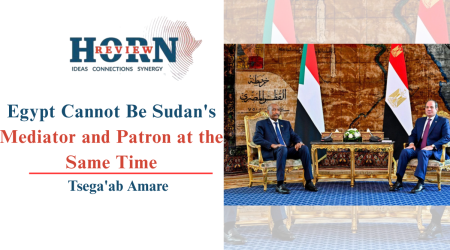
By Tsega’ab Amare, Researcher, Horn Review



Comment (1)
[…] It has gained backing in this regard from other neighbouring states with stakes in the war, such as Egypt and Eritrea, both of which back its military on the ground. That has not been the case with […]