The Juba and Shabelle river basins like the Blue Nile clarify a challenge in international river governance on how to reconcile the developmental aspirations of upstream states with the legitimate water security concerns of downstream users. In both cases the geographical realities are clear. The share of river flows originates within Ethiopian territory before crossing international boundaries to support downstream populations. Such asymmetrical arrangements have historically generated political friction and competing legal claims. However interactions between Ethiopia and Somalia demonstrate these realities that cooperation based on mutual interests and recognition of shared dependence can offer a more constructive path. This experience carries implications for debates surrounding the Blue Nile and questions regarding the continued viability of Egypt’s approach to upstream water development.
The Juba and Shabelle basins remain eminent for the absence of a comprehensive bilateral water sharing agreement. No treaty establishes fixed allocations, notification procedures, dispute settlement mechanisms or joint management institutions. Instead, interactions concerning these rivers have largely been guided by general principles of international law and political engagement conducted on a case by case basis. This gap is particularly important given Somalia’s downstream dependence and Ethiopia’s upstream position as the primary source of river flows. Under such circumstances many would expect persistent disputes and opposition to upstream utilization.
Meanwhile the route of relations between Ethiopia and Somalia suggests a different pattern. While historical tensions, periods of state collapse and regional instability complicated efforts to establish formal arrangements, engagement between the two countries reflects a growing recognition that shared challenges require sustained consultation and cooperative management. Political understandings reached between the two governments show a commitment to reducing tensions, communication and addressing issues through negotiation rather than confrontation. Although these developments do not constitute a basin specific water agreement, they nevertheless indicate an important shift in approach. Somalia has shown a willingness to engage Ethiopia as a partner despite clear asymmetries in geography and hydrological dependence.
This development deserves closer attention because it challenges a common assumption in trans boundary water politics that downstream states must necessarily oppose upstream initiatives in order to protect their interests. Somalia’s conduct suggests the opposite. As a downstream country who depends substantially on rivers originating in Ethiopia, Somalia possesses strong incentives to seek predictability and water security. However it has not sought to advance claims that would effectively subordinate Ethiopian development to downstream approval. Nor has it insisted upon interpretations of international law that would grant it an indefinite veto over upstream utilization. This position is consistent with the evolution of contemporary international water law. Legal and scholarly consensus has moved away from doctrines that privilege either absolute territorial sovereignty or absolute territorial integrity. In their place international practice has increasingly emphasized equitable and reasonable utilization, the obligation to prevent harm, prior notification where appropriate, information exchange and cooperation among basin states.
These principles recognize that no state possesses exclusive entitlement to the benefits of an international watercourse. Upstream states retain the right to pursue development within their territories while downstream states retain legitimate interests that must be considered and accommodated through cooperative processes. The objective is not the preservation of historical patterns at any cost but the management of shared resources under changing economic, demographic, and environmental conditions.
Somalia’s approach to its shared rivers with Ethiopia reflects this understanding. Rather than framing the issue as a contest between competing sovereign rights, it has shown greater willingness to pursue arrangements that acknowledge both upstream development needs and downstream water security concerns. This does not imply indifference to national interests. On the contrary it reflects recognition that long term security is better achieved through predictable engagement and institutional cooperation than through uncompromising legal positions that are unlikely to produce durable outcomes. Somalia’s conduct therefore provides a useful example of how a downstream state can seek to protect essential interests without attempting to constrain legitimate upstream development.
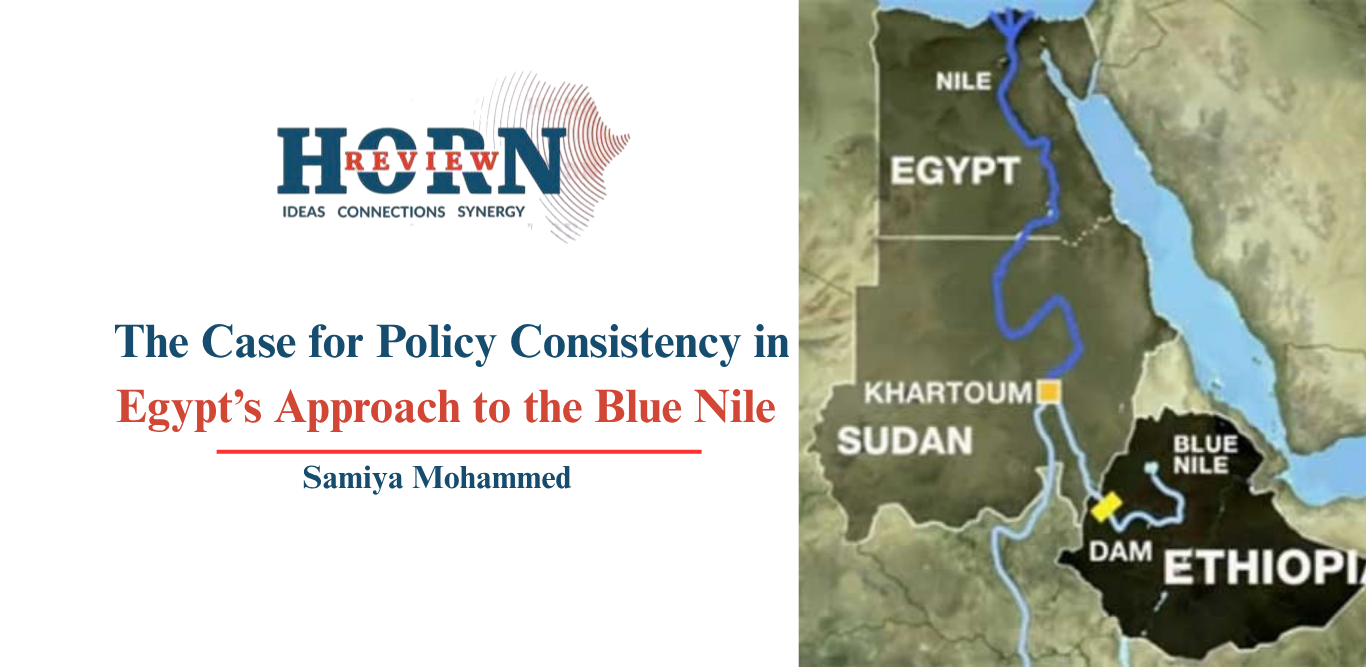
The relevance of this example becomes evident when considering the Blue Nile. The hydrological realities are closely comparable. The majority of Blue Nile waters originate in the Ethiopian highlands before flowing downstream toward Sudan and Egypt. Egypt’s dependence on Nile waters is well documented. However is Ethiopia’s position as the principal source state and its corresponding interest in utilizing water resources to support national development objectives. The challenge therefore resembles that found in the Juba and Shabelle basins on how to reconcile upstream utilization with downstream security in a manner consistent with contemporary international law.
Viewed through this comparative important contrasts come. Somalia despite facing developmental constraints and institutional challenges has demonstrated willingness to engage Ethiopia through consultation and political accommodation. Egypt by contrast has often continued to frame Blue Nile governance through the language of historical entitlements and acquired rights that originated under different political circumstances. Reliance upon historical claims as the primary basis for contemporary river governance risks creating an approach that is increasingly disconnected from prevailing legal norms and regional realities.
The problem arises when interests are interpreted in a manner that effectively limits the developmental rights of upstream states irrespective of changing circumstances or evolving legal standards. Such positions are difficult to reconcile with the principle of equitable and reasonable utilization which requires consideration of multiple factors including geography, hydrology, population needs and the availability of alternatives. Contemporary international water law does not grant any state permanent control over the future utilization decisions of another sovereign state just because historical patterns of use have existed for extended periods.
In this respect Somalia’s conduct offers an important point of comparison. As a downstream state, Somalia could plausibly have advanced arguments emphasizing dependence, vulnerability and historical reliance on flows originating outside its territory. However its engagement with Ethiopia suggests recognition that sustainable outcomes depend not on preserving unilateral advantages but on establishing mechanisms capable of managing shared interests. This approach reflects a realistic assessment of contemporary trans boundary water governance. Security is strengthened not by resisting all upstream development with mutual consideration.
The absence of formal arrangements in the Juba and Shabelle basins remains a deficiency and both Ethiopia and Somalia would benefit from establishing structured mechanisms for information exchange, technical consultation and joint monitoring. Nevertheless political willingness to pursue cooperative engagement provides a foundation upon which such institutions can be built. In the Blue Nile context by contrast persistent disputes over legal principles and historical claims have often overshadowed opportunities to develop practical arrangements capable of addressing shared concerns. If Somalia a downstream state with dependence on rivers originating in Ethiopia can pursue engagement based on consultation and accommodation of competing interests there is little justification for Egypt to remain anchored to approaches that place disproportionate emphasis on historical claims. The realities of the Blue Nile are unlikely to be managed effectively through legal maximalism or efforts to preserve inherited patterns of utilization indefinitely. Such approaches risk disputes while offering limited prospects for achieving durable water security.
The persistence of institutional uncertainty on the Blue Nile is no longer sustainable. Population growth, economic transformation requires arrangements capable of managing rather than reproducing historical disputes. Egypt should therefore draw lessons from Somalia’s conduct and commit itself to structured cooperation based on reciprocity, predictability and recognition of the legitimate interests of all basin states. Such an approach would place them within a framework more consistent with contemporary international law and regional realities.If Somalia can acknowledge the developmental rights of upstream Ethiopia, why should Egypt be exempt from the same standard. The comparative evidence suggests that downstream security and upstream development are not mutually exclusive objectives. The challenge is whether Egypt is prepared to embrace this reality or whether it will continue to rely upon legal positions that place historical preference above equitable utilization. The future of the Blue Nile will depend on whether Egypt chooses to follow that example.
By Samiya Mohammed, Researcher, Horn Review