A lot of policy writing still returns to a familiar storyline: resource-rich countries slide into crisis because wealth intensifies competition, competition drives instability, and instability invites external interference. It is a tidy explanation, but it doesn’t really hold when you look closely at the Democratic Republic of the Congo. What is unfolding there goes beyond the usual resource curse framing. It is a slower and more structural shift in how authority is exercised and contested, shaped by the global rush for strategic minerals and playing out inside a state whose control has never fully reached its own territory or economy.
In policy circles, we often lean on a tired script when discussing resource-rich states: wealth triggers greed, greed sparks instability, and instability invites the world to meddle. But that lens is far too blunt for the modern reality of the Democratic Republic of the Congo. What we are witnessing in the DRC isn’t just a story of exploitation or the resource curse. It is a profound, structural reorganization of power. The global hunger for strategic minerals is essentially rewriting the rules of political authority within a state that has never fully commanded its own land or economy. This is precisely where the comparison to Sudan becomes so vital. The risk isn’t necessarily that Congo will mirror Sudan’s exact collapse; rather, both cases expose a dangerous phenomenon: when intense external economic demand hits fragile institutions, it doesn’t just extract wealth, it rewires the very foundations of sovereignty. It transforms the state from a governing body into a platform for competing global and local interests, fundamentally altering what it means to be a “sovereign” nation in the 21st century.
To truly grasp the DRC’s current reality, we have to look past the oversimplified foreign mining headlines and examine the sophisticated architecture through which these interests operate. While mineral wealth has always been the heartbeat of Congo’s political economy, the last two decades have witnessed a tectonic shift in the strategic value of these assets. Cobalt, copper, and coltan are no longer just commodities; they are the fundamental fuel for the world’s transition to green energy and digital dominance.
This shift has effectively promoted Congo from a mere extraction site to a critical node in a global geopolitical space. It is now a high-stakes arena where the foreign nations compete for influence, surrounded by a complex web of multinational giants, private contractors, and financial power brokers. The result is a country whose soil doesn’t just hold wealth, but defines the technological future of the entire planet.
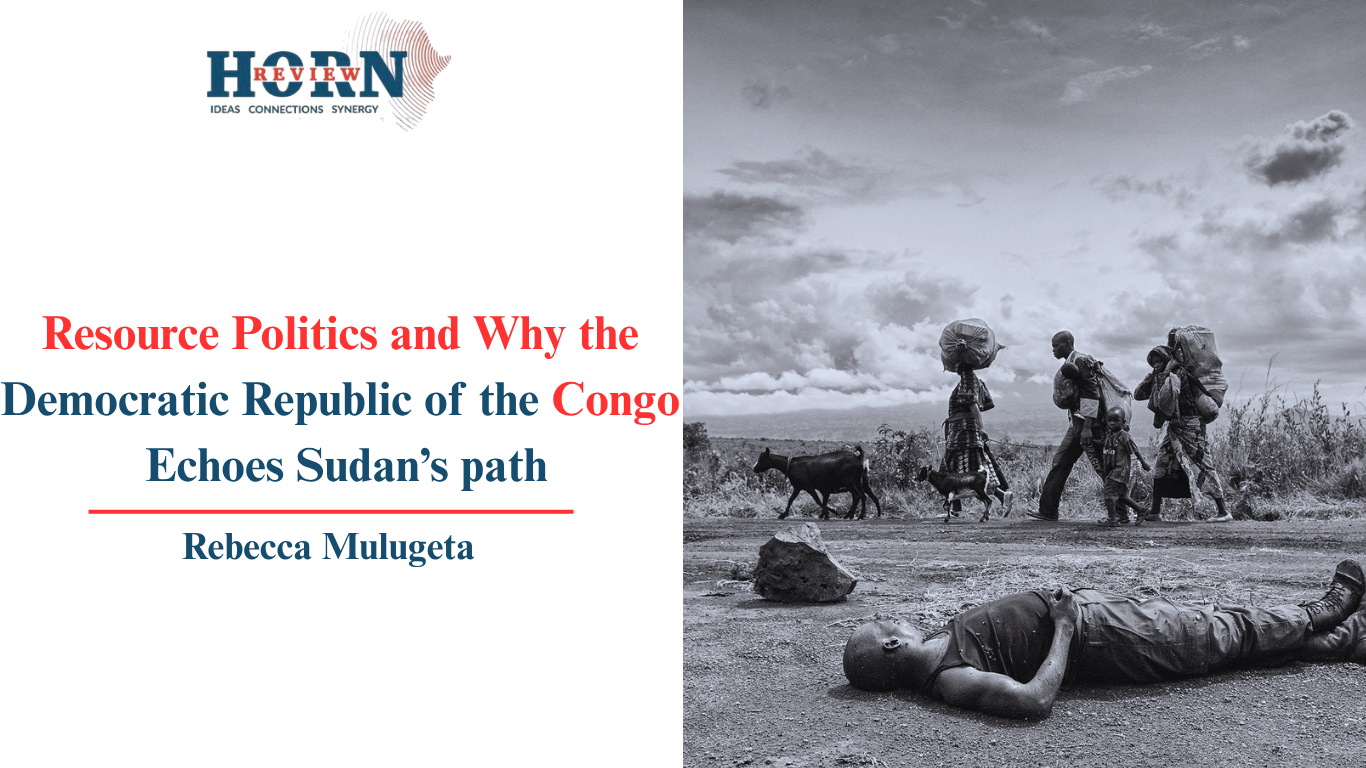
The surge in global interest hasn’t centralized Congolese power; instead, it has created a fragmented, hybrid system of authority. While Kinshasa formally holds the pen on mining contracts, real control on the ground especially in provinces like North Kivu and Ituri is sliced up between armed groups, local elites, and cross-border networks. In these regions, power isn’t measured by law, but by proximity to mineral flows.Foreign actors have adapted to this chaos with cold efficiency. Their goal isn’t to fix the fragmentation, but to navigate it.
Control over mines and trade routes has birthed parallel systems of authority that rival the state, fragmenting sovereignty by dividing control over money and muscle. This mirrors the tragedy in Sudan, where the 2019 Revolution failed because it didn’t dismantle the business of war. Armed groups, like the RSF, maintained independent gold revenues, allowing them to fund private armies and cut foreign deals that bypassed the state entirely. In both cases, economic autonomy for armed actors makes a stable political transition nearly impossible.
External actors, pursuing their own strategic and economic interests, engaged Sudan through a pragmatic lens. They supported the transition in principle while maintaining relationships with the actors who controlled economic assets on the ground. This dual engagement was not inherently destabilizing in the short term. On the contrary, it contributed to a semblance of stability by ensuring that key stakeholders remained invested in the system. However, it also had a less visible effect: it lowered the cost of non-compliance with formal authority. Military actors could retain their economic bases without fully subordinating themselves to civilian oversight, confident that their external relationships would remain intact.
The Sudanese case illustrates how a system can appear stable while its internal coherence is gradually eroding. Authority was formally centralized but materially dispersed. When tensions between the army and the RSF escalated into open conflict, the state lacked the capacity to impose a unified response. The fragmentation that had been managed through informal arrangements became the fault line along which the system fractured.
Congo and Sudan both grapple with the tension between formal authority and dispersed economic power, but the structure of that fragmentation differs. While Sudan’s power was concentrated in a few national-level rivals leading to a violent, binary rupture Congo’s power is far more diffuse, spread across various local and regional actors embedded in the mining sector. This diffusion makes a sudden, Sudan-style collapse less likely but creates a more complex governance challenge. Congo’s true risk is a “slow-motion” institutional dilution. As fragmented networks continue to manage economic flows, the state is gradually hollowed out. The result is a government that participates in the global economy but cannot set the terms, functioning more as a spectator than a sovereign regulator.
Foreign involvement shapes incentives by prioritizing access over stability. When external actors adapt to fragmented power structures, they inadvertently reinforce them. Every opaque contract or logistical workaround bypasses formal oversight, incrementally dispersing state authority. However, domestic dynamics are equally decisive; elite competition for mining rents often makes fragmentation more profitable than centralized governance. This creates a self-reinforcing loop: external actors adapt to chaos to secure resources, while domestic actors maintain it to keep control.
Historically, this builds on a legacy of weak institutions from Leopold’s exploitation to Cold War politics. Sudan’s gold-driven crisis offers a parallel, proving that the governance of wealth, not the wealth itself, determines a state’s fate. Centralized, accountable revenue builds states; autonomous, dispersed revenue destroys them.
Fixing the DRC requires a high-stakes political pivot toward centralization. This means strengthening mining institutions, making contract transparency the baseline, and bringing all security forces under a single, unified command. Externally, global partners must stop cutting side-deals and start linking resource access to strict accountability. Since this demands a massive redistribution of power, those profiting from the current chaos will inevitably resist. However, without this shift, the hollowing out of Congolese sovereignty will become permanent. The state will be reduced to a formal shell, a name and a flag used to front for private interests.
The comparison with Sudan serves as a cautionary lens through which to view this trajectory. It highlights how systems that appear stable can mask underlying vulnerabilities, and how the interaction between economic autonomy and political fragmentation can produce outcomes that are both gradual and abrupt. Congo’s situation is distinct, but the structural pressures it faces are similar in kind, if not in degree.
What ultimately distinguishes Congo’s future from Sudan’s past will be the degree to which it can align its economic transformation with institutional consolidation. The country’s central role in global supply chains provides an opportunity to leverage external interest for domestic strengthening. Whether that opportunity is realized depends on the choices made by both Congolese leaders and their international partners.
The stakes are not limited to economic performance or political stability. They extend to the very definition of sovereignty in a globalized economy. Congo’s experience raises a broader question about how states can maintain control over their resources in a context where those resources are deeply embedded in transnational networks. The answer will not be found in isolation from global markets, but in the ability to shape the terms of engagement with them.
Sudan’s path demonstrates the consequences of failing to do so. Congo stands at a different point along a similar structural path, where the lines between opportunity and risk are still being drawn. The outcome will not be determined by a single decision or a single actor, but by the cumulative effect of choices made across the system. Those choices will determine Congo’s mineral wealth becoming a foundation and catalyst for its gradual erosion.
By Rebecca Mulugeta, Researcher, Horn Review