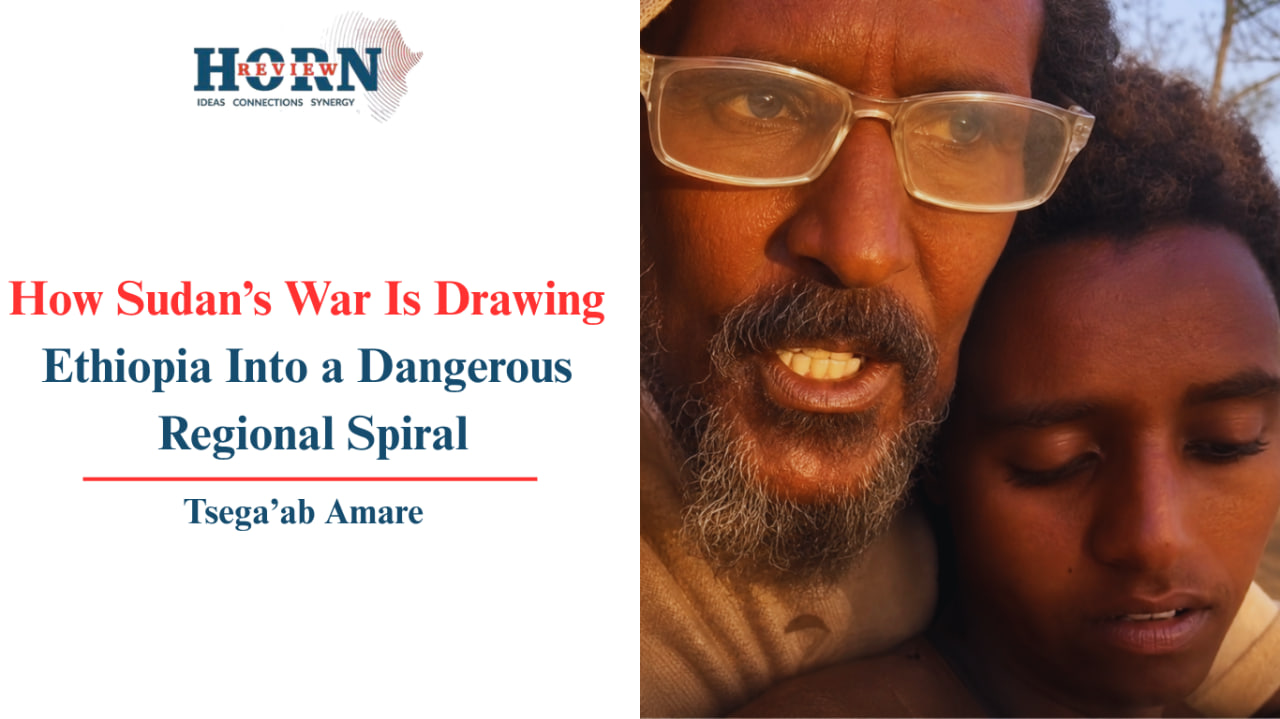
In late April 2026, forces belonging to the Sudan Founding Alliance (TASIS), a coalition comprising the RSF and elements of the SPLM-N, reported the capture of several foreign combatants during high-intensity clashes near Kurmuk and Al-Kili in Blue Nile state. Among those detained was a fighter of alleged Tigrayan origin, whose interrogation suggests a recruitment pipeline tracing back to remnants of the Tigray People’s Liberation Front (TPLF) and unemployed ex-combatants from the 2020–2022 Ethiopian Tigray war.
The capture provides rare, albeit propagandized, insight into the Sudanese Armed Forces (SAF) strategy under General Burhan. Facing recruitment shortfalls and a perceived lack of domestic legitimacy in peripheral regions, the SAF appears to be increasingly reliant on external fighters and auxiliary networks to sustain its military operations.
The internationalization of the Sudanese conflict is an emerging operational reality shaped by cross-border recruitment and battlefield outsourcing.
A key dimension of this dynamic involves Tigrayan ex-combatants who sought refuge in Sudan during Ethiopia’s war. For the SAF, these battle-hardened fighters offer a ready-made pool of experienced infantry. For the fighters, this arrangement provides a vital rear base, income, protection, and political leverage in exchange for frontline service.
This documented capture of Tigrayan mercenaries is not an isolated incident; previous records by the Rapid Support Forces (RSF) confirm a recurring presence of these fighters in the conflict. This burgeoning transactional relationship risks exporting Ethiopia’s internal vulnerabilities directly into the Sudanese theater, forging a dangerous cross-border loop of instability.
Beyond the region, the conflict is also drawing from the global market for private military labor. Reports suggest the presence of Colombian mercenaries, veterans of counterinsurgency operations who are recruited for specialized urban warfare and technical roles. This pattern reflects developments observed in conflicts such as Ukraine, where private contractors have been used to compensate for conventional military weaknesses. Their presence signals a shift toward a professionalized, yet unaccountable, war economy where high-tier combat skills are auctioned to the highest bidder.
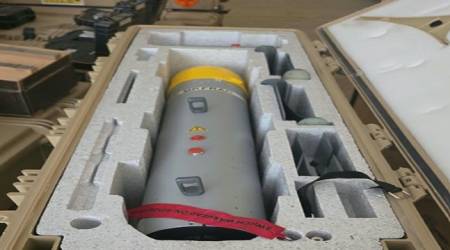
At the same time, the SAF’s attempts to counter the RSF’s high mobility appear to rely in part on external technological support. Iranian drone systems, reportedly supported by technical advisors, have enhanced surveillance and precision strike capabilities. This shift not only alters the tactical balance but also embeds Sudan within broader Middle Eastern geopolitical rivalries, sustaining the conflict through external inputs.
This incident frames the Blue Nile as a critical shifting front, where the SAF’s attempts to drag Ethiopia into the conflict, either as a co-belligerent or a scapegoat, are becoming increasingly transparent.
The Sudan conflict is evolving into a war sustained by external inputs rather than purely domestic mobilization. Both sides are increasingly reliant on networks that extend beyond national borders. While the SAF is reported to be training and engaging Tigrayan elements, the RSF has also pursued external linkages. Allegations persist regarding informal support networks and possible training activities near the Ethiopian border, though these claims remain difficult to verify.
While Addis Ababa has maintained a posture of neutrality, leveraging its position as host of the African Union to frame itself as a regional mediator, this stance is becoming increasingly difficult to sustain. The porous nature of the Ethiopian border allows armed actors to exploit cross-border space and the possibility that the RSF could use adjacent territory as operational depth creates significant security concerns. For Ethiopia, even the perception of involvement carries risks that outweigh any short-term tactical advantage.
At the same time, there are growing indications that the conflict is becoming progressively regionalized. The danger lies in the symmetrical interference. If the SAF continues to support TPLF-linked elements to pressure Ethiopia’s border regions, Addis Ababa may face incentives to respond in kind by deepening tacit engagement with opposing forces. These dynamic risks create a feedback loop in which Sudanese factions and Ethiopian sub-state actors reinforce each other, eroding state control on both sides of the border.
Existential Risks to the Horn
The increasing reliance on foreign fighters is generating a broader zone of instability across the Horn of Africa. One of the most immediate risks is the eventual return of Tigrayan ex-combatants currently engaged in Sudan. These individuals are unlikely to return as demobilized civilians. Instead, they may re-enter Ethiopia with enhanced combat experience, external linkages, and limited prospects for reintegration. This creates a tangible risk of renewed instability in regions such as Tigray and Amhara.
In parallel, the growing dependence on militias and non-state actors is eroding the principle of centralized authority. Coalitions such as TASIS are not structured for long-term political settlement. Their legitimacy is derived from battlefield effectiveness and external backing rather than institutional governance. This dynamic complicates any future civilian-led transition and increases the likelihood of fragmentation.
There is also a humanitarian dimension. The involvement of foreign fighters, often operating outside local accountability structures, contributes to patterns of violence that are more difficult to regulate or contain. This accelerates the deterioration of civilian protection.
The April 15, 2026, Berlin Conference was intended to mark a turning point. However, the continued existence of foreign combatants shortly afterward highlights a persistent gap between diplomatic commitments and operational realities. While international actors endorse de-escalation in formal settings, parallel channels appear to sustain the flow of personnel and equipment. This inconsistency undermines the credibility of mediation frameworks and reduces incentives for local actors to negotiate in good faith.
For General Burhan and the SAF, reliance on foreign fighters reflects deeper structural challenges. The inability to secure key areas such as Khartoum or the Blue Nile through national forces points to constraints in recruitment, cohesion, and legitimacy. Externalizing the fight may provide short-term relief but also exposes institutional fragility.
Conversely, the RSF has used such developments for strategic messaging. By portraying SAF as aligned with external extremist or ideological networks, it seeks to shape international perceptions, particularly among Western security actors. At the same time, this framing diverts attention from the RSF’s own conduct. In this environment, civilians remain largely unprotected.
To prevent further escalation and contain the effects of cross-border militarization, a shift in diplomatic and security strategy is required.
First, Ethiopia should prioritize enhanced border intelligence. This includes supporting a joint IGAD and African Union monitoring mechanism along the Benishangul-Gumuz and Blue Nile corridor to independently track movements and reduce reliance on contested narratives.
Second, international efforts should focus on disrupting the infrastructure that enables foreign fighter recruitment. This requires targeting logistical networks, private security intermediaries, and financial channels rather than focusing solely on individual commanders.
Finally, any future peace framework should incorporate a structured disengagement plan for foreign fighters. This includes monitored repatriation, disarmament, and reintegration mechanisms.
The reported capture of a Tigrayan fighter in Blue Nile is not an isolated incident but an indicator of a broader transformation in the Sudanese conflict. The war is increasingly shaped by cross-border networks and external participation.
If diplomatic initiatives are to remain credible, they must address these underlying dynamics. For Ethiopia, the stakes are immediate. Strengthening border control and prioritizing reintegration efforts are essential to preventing the spillover of Sudan’s conflict into its own fragile political landscape.
By Tsega’ab Amare, Researcher, Horn Review