
The Mafi Case and Eritrea’s Shadow Corridor – Why the FBI Must Look Beyond Woodland Hills
The federal criminal complaint unsealed by the United States District Court for the Central District of California in April 2026 appears at first glance to be the story of a single sanctions violation. It names Shamim Mafi, a 44-year-old Iranian-born woman residing in Woodland Hills, California, and accuses her of conspiring to broker the sale of weapons, weapons components, and ammunition on behalf of the Government of Iran in violation of the International Emergency Economic Powers Act and the Arms Export Control Act. Nevertheless, the deeper one reads into the findings assembled by the Federal Bureau of Investigation, particularly by the Iran Counterintelligence Squad in Los Angeles, the less this becomes a narrow criminal prosecution. Instead, it begins to resemble the exposure of a transnational covert supply architecture stretching from Tehran to Sudan through a web of intelligence assets, front companies, intermediary states, and maritime transit points. Therefore, Shamim Mafi is not merely the subject of a sanctions case; she is the visible node of a much larger clandestine mechanism.
Based on the report and the findings of the FBI and CBP (Customs and Border Control) between September 2021 and December 2024, Mafi was interviewed approximately ten times by federal personnel. Those interviews, combined with phone records, financial tracing, and communications intercepts, allowed investigators to reconstruct not simply a businesswoman’s suspicious transactions but the profile of an individual deeply embedded in the operational culture of the Islamic Republic’s intelligence apparatus. Born in Iran in 1981, Mafi lived there until approximately 2013 before relocating first to Istanbul and later establishing residency in the United States, where she obtained lawful permanent resident status. On paper, this appears to be a familiar immigrant success trajectory. In intelligence terms, however, it provided precisely the sort of low-visibility Western positioning that Iran’s Ministry of Intelligence and Security has historically valued.
The Ministry of Intelligence and Security, known in Farsi as VEVAK or simply Vezarat, is not an ordinary civilian ministry. Established in the immediate post-revolutionary years of 1983 and 1984, it evolved into the principal surveillance, counterintelligence, and foreign covert operations institution of the Islamic Republic. It is among the most secretive and heavily financed organs in Tehran’s security state, with thousands of personnel distributed across domestic repression, external espionage, procurement operations, and influence management. Its operatives are often described inside Iran as the “Unknown Soldiers of Imam Zaman,” a title bestowed by Ayatollah Khomeini to describe intelligence servants who move unseen in defense of the revolution. The term is not rhetorical ornament; instead, it reflects a doctrine. Specifically, MOIS has long specialized in using individuals who appear socially integrated, commercially credible, and politically unremarkable to perform tasks that advance state objectives beyond Iran’s borders.
Because of the institution’s working structure, federal prosecutors increasingly believe that Shamim Mafi fit precisely within that doctrine. Their allegation is not merely that she violated sanctions laws but that she functioned as a managed intelligence-linked procurement conduit. The indicators are difficult to dismiss as coincidence. For example, she was previously married to an MOIS officer. In addition, investigators documented more than sixty direct bidirectional communications between Mafi and an Iranian intelligence handler between 2022 and 2025. Furthermore, after Iranian authorities confiscated inherited family property in 2020, prosecutors say MOIS used the restoration of those assets as leverage, instructing her to establish a U.S.-based business vehicle through which she could repurchase influence with the regime while simultaneously serving its external procurement needs.
Most importantly, Mafi and her co-conspirator own and operate an Omani company, Atlas International Business LLC, also known as Atlas Global Holding and Atlas Tech LLC. The investigation report clearly indicates that in early 2025, Mafi brokered weapon deals on behalf of the Iranian government through the company. She even helped Sudanese delegations travel to Iran, in addition to her role in facilitating weapons transfers for the Minister of Defense of the Republic of Sudan. Consequently, the company was not merely a commercial registration in the eyes of investigators; it was the kind of front architecture frequently used in intelligence-financial operations: respectable enough to open doors, opaque enough to mask end users. Mafi, at no time tried to engage with the U.S. Department of State or the Directorate of Defense Trade Controls for her activities. This matters because it transforms Mafi from an opportunistic broker into something more consequential: possibly a deep-cover intermediary with state direction.
Prosecutors further note that Mafi acknowledged communicating with an officer of Iran’s Ministry of Intelligence and Security. She explicitly told Iranian handlers that she believed she was more useful to Tehran while operating outside Iran, particularly from the United States, than she would be from within the country. That statement is perhaps one of the most revealing in the entire complaint. It suggests strategic self-awareness, not incidental involvement. She understood the value of her geography. A U.S. green card holder can move through commercial systems, approach Western executives, establish front-end legitimacy, and travel to hubs such as Turkey and Oman with a level of procedural normalcy unavailable to sanctioned Iranian officials. Thus, her residency was not background information; it was operational capital.
Her political positioning inside Iran reinforces this interpretation. In June 2024, she was allegedly appointed to lead the women’s headquarters for ethnic, tribal, and religious affairs in the presidential campaign of Mohammad Bagher Ghalibaf, one of the regime’s most entrenched insiders and a figure deeply connected to both the Islamic Revolutionary Guard Corps and the conservative state establishment. Such appointments are not handed to detached expatriate entrepreneurs with no trust value. Campaign management in Iranian elite politics is relationship-based and ideologically filtered. Therefore, to be inserted into that ecosystem suggests not merely loyalty but recognized usefulness. It indicates that by that year, Mafi was no longer simply proving her value to Tehran; she had become a politically trusted operative within circles aligned with state power.
The criminal complaint’s references to Mafi’s earlier engagement in 2018 with a retired Iraqi general and a U.S. technology CEO are therefore crucial. That meeting may seem chronologically detached from Sudan, but it establishes the operational continuity of her role. According to federal investigators, the purpose of that engagement was to help Iran circumvent sanctions by using an Iraqi military intermediary as a plausible end user and a U.S. executive as the supplier of restricted machinery and electronics. The method is classic sanctions laundering: obscure the Iranian beneficiary behind legitimate third-country demand and commercial respectability. For prosecutors, this 2018 incident demonstrates that Mafi was already functioning as a high-level broker years before Sudan’s civil war intensified. She had already shown Tehran that she could bridge sanctioned regimes and Western suppliers without appearing to be an Iranian state actor, essentially acting as a “sleeper agent”.
According to the FBI’s criminal complaint, the engagement with a retired Iraqi general and a U.S. technology CEO before the Sudan civil war was part of a broader, long-term operation to establish illicit procurement channels for Iran. Even before the war broke out, Mafi and her co-conspirators worked to create a network of shell companies, such as Atlas International Business in Oman and entities in Turkey and the UAE. These methods was designed as a blueprint for Iran to exert influence by using established military networks to bypass international monitoring.
That previous experience becomes decisive when placed against the outbreak of the Sudan war in April 2023. Once civil conflict erupted between Abdel Fattah al-Burhan’s Sudanese Armed Forces and Mohamed Hamdan Dagalo’s Rapid Support Forces, Iran saw an opportunity to recover a strategic client in the Red Sea basin. Sudan had historically oscillated in Tehran’s regional calculations, but the war reopened a demand environment. Drones, munitions, ammunition, anti-aircraft systems, and military components were urgently needed by a Sudanese army under pressure. According to the U.S. complaint, Mafi moved into precisely this space, allegedly brokering deals valued at roughly $70 million involving drones and ammunition destined for Sudan through Iranian channels. As a result, this is the point at which the indictment ceases to be a domestic sanction matter and becomes a window into wartime supply logistics.
The use of intermediary geography was central to this machinery. Mafi reportedly explained during interviews that Turkish defense firms often acquired Iranian military products and reverse engineered them for broader industrial replication. Whether this was self-serving disclosure or operational boasting, it aligns with an increasingly documented pattern in regional defense procurement. Turkish companies and Iran have both been accused of using layered commercial routes, transshipment hubs, and indirect technology acquisition to bypass restrictions and accelerate domestic weapons development. U.S. sanctions in March 2026 against three Turkish companies which are accused of serving Iran’s drone and missile programs reinforced the credibility of these pathways. Likewise, Ankara’s own 2025 directive warning defense firms about Iranian-linked transit channels revealed that Turkish territory had become a contested financial and logistical middle ground in sanctions evasion schemes. In such systems, Turkey does not have to be ideologically aligned with Iran; it only has to function as a commercially useful corridor.
This is where Mafi’s repeated movement through Turkey and Oman gains significance. Third countries provide two indispensable services in illicit procurement: currency washing and end-user ambiguity. Payments routed through non-sanctioned intermediaries become harder to trace, and hardware transferred through layered customs jurisdictions becomes easier to relabel. The complaint makes clear that these countries were not random travel destinations but transactional platforms. They formed part of the invisible commercial skin wrapped around Iranian military exports.
The most strategically important limitation in the FBI case is that the investigation relied primarily on paperwork, strictly focusing on digital and financial records while Ignoring the physical “long journey” the weapons had to make. As a result, it failed to fully account for the real routes connecting the smuggling nodes and the actual movement of the shipments themselves. The investigation therefore must go beyond documents and trace how the weapons were physically transported, because Procuring drones and ammunition is one thing; physically sustaining their delivery into Sudan’s active battlefield is another
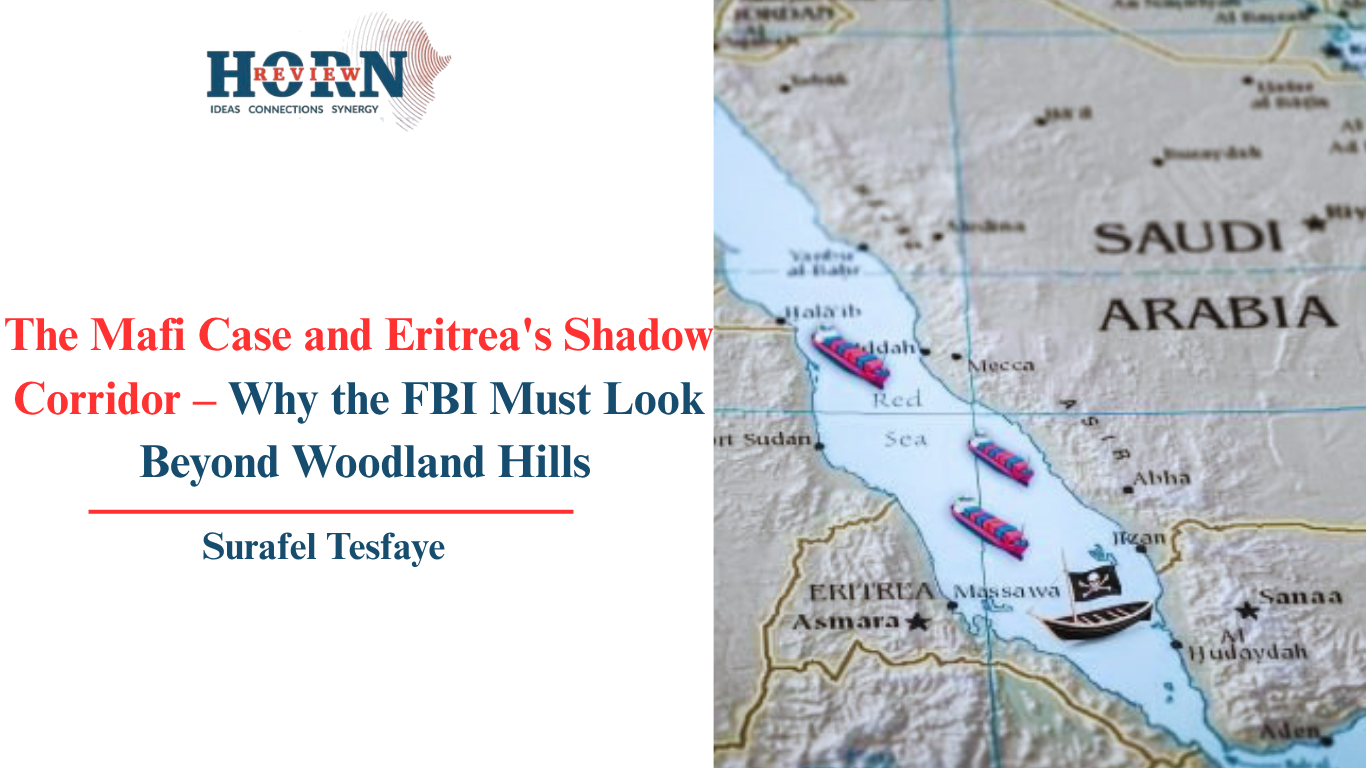
That is the logical chain: Iran needs to move drones and ammunition to Sudan but direct shipping from Iranian ports is too risky because the U.S. Fifth Fleet and Israeli naval intelligence monitor the Strait of Hormuz and the Red Sea. For that reason, transiting through a third country with plausible deniability is essential. Such a country would need ports capable of handling military cargo, a government willing to look the other way or actively facilitate the transfer, little or no effective international inspection presence, and a history of cooperation with Tehran. In this sense, Eritrea checks every box. By contrast, Oman is too transparent and too aligned with Western maritime security, Sudan’s own ports are largely in SAF-controlled areas but remain subject to scrutiny, Djibouti is too heavily monitored because of the U.S., French, Chinese, and Japanese bases, Saudi Arabia is openly hostile to Iran, and Yemen is a war zone with no functioning port authority. On that logic, Eritrea emerges as the most plausible candidate.
Why Eritrea? Look at the map and the politics. Eritrea offers three things no other Red Sea state can provide in combination. First, its ports of Massawa and Assab are already heavily militarized, guarded by an army that answers directly to President Isaias Afwerki with no parliamentary or judicial oversight. Second, Eritrea operates largely outside international inspection regimes: no IAEA monitors, no Western customs audits, no standing invitation for outside observers to verify cargo manifests.
Third, the Eritrean government has a long history of transactional security relationships with Iran, dating back to the 1990s when Tehran supplied weapons to Eritrea during its border war with Ethiopia. Those ties never fully disappeared; they just went quiet. Building on that historical precedent, Eritrea is organically well situated to receive shipments from Iranian vessels and facilitate the transfer of such cargo across the border into Sudan’s eastern front (Kassala and Gadaref).
This is critical because, since the SAF withdrew from Khartoum to Port Sudan, their operational footprint has become increasingly confined. While the RSF has consolidated control over three major supply corridors through South Sudan, Chad, and Libya, the SAF needs alternative and more dependable logistical routes. In this context, Eritrea emerges as a more viable strategic option: it is geographically well-positioned, politically aligned, and less exposed to the same degree of international scrutiny, disruption, and aerial bombardment. It serves as a quieter transit point and a more practical conduit for sustaining SAF supply lines.
The case of Shamim Mafi ends here, at least for now, with her indictment and eventual trial. But the real questions remain. Where are the weapons that Mafi allegedly brokered? They are not sitting in a warehouse in Tehran. Who receives them at the other end? Which port is both willing and able to receive Iranian military cargo without inspection? Why, logically, would Eritrea be the only state in the region capable of serving as that safe haven? Could it be that Massawa and Assab are functioning today as the invisible rear bases for Iran’s Sudan war effort, ports so heavily militarized and so far, outside any international inspection that cargo can be unloaded, repackaged, and transferred to Sudanese territory without a single Western observer noticing? These should not be addressed as rhetorical questions; rather, they should be seen as investigative imperatives
If Eritrean territory, ports, military handlers, or financial channels are indeed being used as conduits for Iranian material into Sudan, then the United States is no longer confronting merely an individual criminal enterprise. Instead, it is confronting an integrated transnational sanctions resistance system. That means the FBI’s investigation cannot end with Shamim Mafi. It must expand. It must follow the paper trail to Massawa and Assab. It must ask the Government of Eritrea directly: what ships have docked at your military piers in the last eighteen months, and what were they carrying?
That question becomes especially urgent because Washington, as of late April 2026, has been quietly exploring the possibility of limited diplomatic and sanctions relief toward Eritrea in pursuit of greater Red Sea access and maritime leverage. This is where the legal implications become larger than one defendant. Under the International Emergency Economic Powers Act, specifically 50 U.S.C. Section 1702, the United States possesses broad authority not merely to prosecute private brokers but to target any foreign government materially assisting sanctioned military transfers that threaten U.S. foreign policy interests. Executive Order 14098 on Sudan specifically authorizes sanctions against those who materially support the destabilization of Sudan. Executive Order 13949 extends this to third-party facilitators of Iranian conventional arms transfers. Therefore, Eritrea, if it is facilitating this shadow corridor, fits every definition of a third-country IEEPA violator. Consequently, the United States should sanction Eritrea’s ports authority and its military logistics command. It should designate Eritrean entities that have allowed Iranian weapons to transit their soil. It should make clear that any future diplomatic reset is conditioned on full transparency about every Iranian shipment that has passed through Massawa or Assab since the Sudan war began.
In essence, the Mafi case opened a door. Now the FBI and the U.S. Treasury must walk through it. The question should no longer be, whether one woman in Woodland Hills brokered illegal deals. Instead, the question is whether the United States has the courage to follow the evidence to the Red Sea coast and to name the state that is making Iran’s shadow corridor possible.
By Surafel Tesfaye, Researcher, Horn Review

RELATED
Posts
9
Oct
Where Somalia’s Federal and Regional Fight Is Going
The 2012 federal settlement was less a constitutional order...
9
Oct
Eritrea’s Post-Pretoria Strategy and the Escalation in Ethiopia
Our latest report examines Eritrea’s post-Pretoria trajectory and how selective...
8
Oct
The Houthi-al-Shabaab Nexus and the Emerging Security Architecture of the Gulf of Aden
The growing relationship between Yemen’s Houthi movement and Somalia’s al-Shabaab...
7
Oct
“Decaffeinated Sovereignty”: Eritrea’s One-Way Street with Ethiopia
There is a peculiar contradiction at the heart of Eritrea’s...
7
Oct
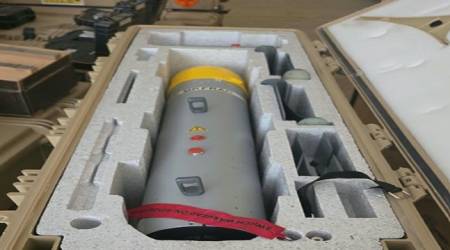
Leaked Documents Allege Sudanese Army Weapons Pipeline to TPLF-Aligned Forces as Tigray War Reignites
Leaked documents alleging a Sudanese army weapons pipeline to TPLF-aligned...
7
Oct
Eritrea Has Officially Invaded Ethiopia, Says Government Communication
Ethiopian Government Formally Condemns Eritrean Territorial Incursion as Its Forces...
7
Oct
Turkey, Somalia and the Transactional Reading of Alamein
The Alamein Declaration functions less as a coherent framework...
7
Oct
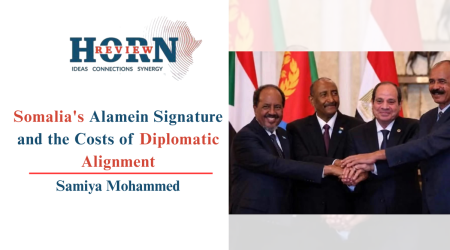
Somalia's Alamein Signature and the Costs of Diplomatic Alignment
The Alamein Declaration between Egypt, Sudan, Eritrea and Somalia...
6
Oct
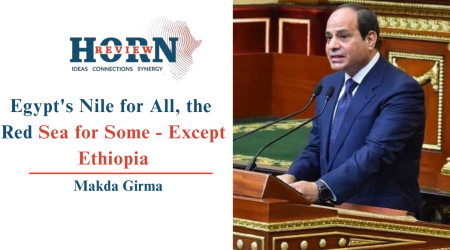
Egypt's Nile for All, the Red Sea for Some - Except Ethiopia
The contradiction was laid out almost perfectly at El Alamein....
6
Oct
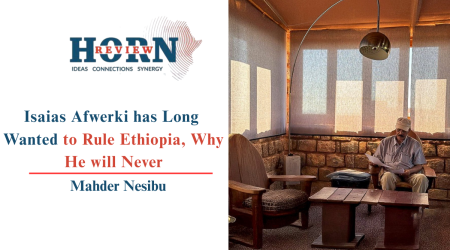
Isaias Afwerki has Long Wanted to Rule Ethiopia, Why He will Never
President Isaias Afwerki is among the most enduring figures in...