
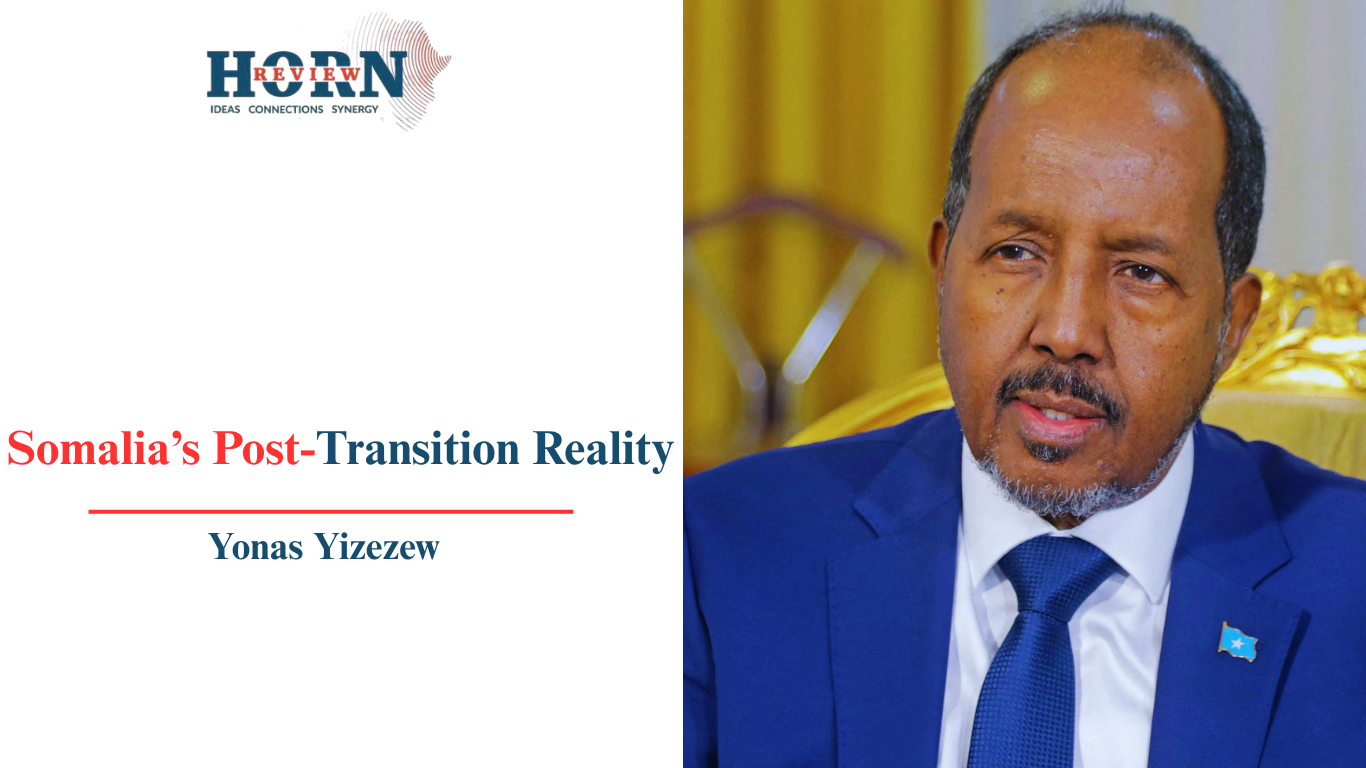
Somalia’s Post-Transition Reality
More than a decade after the establishment of the Federal Government of Somalia in 2012, the country still struggles to move from a transitional political arrangement into a stable and broadly accepted state order. Somalia now possesses internationally recognized institutions along with a federal structure, foreign diplomatic support, and regular political processes in principle. Beneath these formal elements, however, the state still confronts unresolved constitutional disagreements, rivalries among outside powers, fragile institutions, intense clan competition, ongoing insecurity, and rising frictions between Mogadishu and the federal member states. The political transition that started officially in 2012 therefore stays unfinished. Many of the core weaknesses noted in the early years of the federal government still define the nation’s path.
This situation became evident soon after the federal government took shape. In 2014 the United States intelligence chief James Clapper cautioned the Senate that Somalia would keep facing problems with credibility and effectiveness due to constant political infighting, weak leadership, poorly equipped institutions, and serious gaps in technical and administrative abilities. More than ten years later those same shortcomings remain visible throughout the Somali political scene. Somalia repeatedly deals with constitutional crises, postponed electoral timelines, fragmented security arrangements, and ongoing arguments over power between the central authority and the regions. The main issue today is not whether institutions exist but whether they hold enough legitimacy, public confidence, and operational strength to support a coherent and unified state.
The origins of the present political difficulties trace back to the era of the Transitional Federal Government. During that time the Somali state operated with very limited control over territory, weak administrative systems, and widespread corruption. Significant portions of the country stayed under the sway of Al Shabaab, clan militias, or local strongmen. Even in zones nominally held by the government, power often split among political elites, security figures, and clan networks. International donors frequently expressed concern that state resources were being redirected through patronage systems and elite rivalries instead of building genuine institutions.
Those years left a lasting mark on the political culture that still prevails in Somalia. Political power became linked less to institutional results and more to clan alliances, outside backing, and informal deals. Leaders negotiated influence through changing partnerships as they competed for foreign assistance, security assets, and economic gains tied to ports, checkpoints, trade corridors, and aid distribution. These habits did not fade with the arrival of the federal system. They became firmly rooted inside the new order.
The provisional constitution introduced after the transition aimed to create a fresh base for governance following decades of civil war and state failure. Federalism was offered as a way to reconcile regional conditions with national cohesion. The hope was that spreading authority would ease concerns about domination from Mogadishu while slowly rebuilding national bodies. Yet the constitutional effort proved politically delicate right from the start.
Many Somalis saw the constitutional framework as heavily influenced by external players and elite negotiations that lacked genuine participation from ordinary citizens. Key political talks often took place in Nairobi, Addis Ababa, Djibouti, and other diplomatic centers where regional governments and international bodies played major roles in guiding the results. For many local communities the constitution did not arise from a truly national dialogue. It instead looked like an externally backed agreement among elites meant to stabilize Somalia rapidly after long conflict.
This shortfall in legitimacy still affects Somalia’s federal system. Although the federal setup exists on paper, the real relationship between Mogadishu and the federal member states stays sharply contested. Issues involving constitutional powers, resource distribution, electoral oversight, security authority, and the split of political responsibilities remain unsettled. Instead of resolving disputes, federalism has in many instances opened fresh arenas for rivalry.
The conflicts around constitutional reform during President Hassan Sheikh Mohamud’s current term illustrate this challenge clearly. The federal government has sought to advance amendments that its supporters consider essential for better governance and improved coordination. Critics however regard these moves as efforts to concentrate power and reduce regional independence. Puntland rejected the constitutional amendments in 2024 and stated it would function separately from the federal system until the outstanding constitutional matters receive proper attention. Jubbaland suspended relations with Mogadishu following disagreements on electoral matters and perceived federal meddling in regional issues. In March 2026 South West state declared it had cut ties with the federal government after accusing Mogadishu of arming militias and trying to undermine regional leadership.
These events carry weight because they reveal that Somalia’s federal order has not yet achieved political settlement. The disagreements go beyond legal readings. They mirror deeper anxieties about political control, clan balance, and access to authority. Federal member states now approach constitutional change through the perspective of political survival instead of shared national agreement. Consequently, every significant reform carries the risk of sparking new confrontations between the center and the regions.
Clan politics keeps sharpening these divisions. Somalia’s political life remains profoundly shaped by clan identities, past grievances, and external attachments. In many areas local communities still depend more on clan structures than on official institutions for protection, dispute resolution, and social organization. This reliance stems from Somalia’s recent history. After the central state collapsed in 1991 clan networks became the main providers of safety and governance for millions of people. Over time political power grew intertwined with clan representation and control over territory.
This situation means that efforts to centralize authority without thoughtful handling of clan concerns frequently meet resistance. Cabinet selections, military movements, electoral arrangements, and constitutional changes are seldom seen as purely technical choices. They are read through the lens of clan interests and memories of exclusion or disadvantage. This explains why disagreements between Mogadishu and regional administrations intensify so rapidly. Political differences are often understood as contests over group power and survival rather than ordinary institutional matters.
The strains between the federal government and Puntland provide a clear illustration. Puntland has long regarded itself as one of the most capable and stable regional administrations. Its leaders have steadily opposed steps from Mogadishu that they believe would diminish regional self-rule. When Puntland turned down the constitutional amendments in 2024 the conflict reflected wider worries that the federal government was seeking to redesign the political system without adequate consultation or agreement. Comparable concerns have surfaced in Jubbaland where arguments over elections and security authority have repeatedly generated friction and clashes between local leaders and Mogadishu.
These internal splits keep creating openings for Al Shabaab. Despite prolonged military operations and international counterterrorism assistance the group stays resilient and operationally effective. Al Shabaab has shown time and again that it can take advantage of political divisions, weak governance, corruption, and unequal development. In many rural zones the group maintains influence since local governing structures stay feeble or missing.
Recent security incidents highlight this point. In April 2025, Al Shabaab attacked the strategic military base in Wargaadhi in Middle Shabelle, an area considered important because of its location along routes linking Mogadishu with central Somalia. Around the same time the group carried out attacks near Adan Yabaal, another key government outpost. Earlier in March 2025 Al Shabaab struck at President Hassan Sheikh Mohamud’s convoy in Mogadishu with a roadside bomb. In May 2025 a suicide bombing hit the Damanyo military recruitment center in Mogadishu and killed recruits along with civilians. These actions showed that even with stepped-up campaigns the group can still breach well-guarded zones and hit high-profile targets.
The difficulty extends beyond military matters. Al Shabaab has endured as it functions inside the political and governance voids that the state has found hard to fill. In certain places communities seek out the group’s courts because they view state institutions as corrupt, inefficient, or out of reach. In other places, Al Shabaab capitalizes on local conflicts over land, taxes, and clan shares to win backing or undermine government control. This accounts for why military advances against the group often fail to deliver lasting stability. Battlefield successes prove difficult to maintain when governance remains weak once operations end. An even graver development would occur if Somalia and outside actors eventually decide that Al Shabaab cannot be beaten militarily alone and begin treating the group as a legitimate political player through talks and formal acceptance.
Various technical initiatives have also fallen short because of proxy competition among great and middle powers. At the same time, the growing reliance of the Hassan Sheikh Mohamud government on its external backers introduces notable political dangers. Political mediation must therefore tackle the outside incentives that fuel Somalia’s instability.
The security picture grows more complex as Somalia attempts to assume greater responsibility for its own defense while international backing turns less certain. The African Union transition mission took over from a larger peacekeeping force in 2025 yet questions over funding and differences among international partners have raised doubts about long-term viability. Somalia therefore faces demands to broaden its security role while it still wrestles with institutional limitations, divided command chains, and political arguments over who controls security.
Outside actors continue to influence almost every important part of Somalia’s political and security landscape. Ethiopia, Kenya, Djibouti, Türkiye, Egypt, the Gulf states, the African Union, the United Nations, the European Union, and Western governments all hold significant stakes in the country. Their roles span counterterrorism, maritime security, economic access, regional influence, migration control, and geopolitical maneuvering.
This external presence has provided vital financial and military sustenance for Somalia’s institutions. At the same time, it has increased dependence and tangled domestic politics. Somali political figures often line up with different foreign powers to reinforce their position at home. Rivalries among neighboring countries increasingly flow into Somali affairs as well.
This tension captures Somalia’s broader predicament. Since 2012 the country has reached meaningful symbolic steps including debt relief, diplomatic normalization, institutional rebuilding, and wider international acceptance. Yet beneath these accomplishments the political order stays delicate and disputed. Somalia still lacks an agreed constitutional settlement, a unified security framework, and a political system able to balance central authority with regional self-rule and clan realities.
Somalia therefore remains suspended between the tasks of state formation and political fragmentation. This shows that its political transition stays incomplete and the country continues to function inside a drawn-out transitional period. The federal government seeks to consolidate central control while regional administrations push back against what they see as overreach. International players keep assisting the state even as they shape internal political choices. Al Shabaab keeps profiting from governance shortfalls and political splits. Clan politics still affects nearly every major national decision.
The country’s future will depend less on formal declarations and more on whether Somali political actors can gradually build a more inclusive and bargained political arrangement. Lasting stability will demand constitutional agreement, stronger local governance, balanced federal relations, accountable security bodies, wider social acceptance, and carefully managed engagement with external powers. Without such foundations Somalia risks staying locked in a cycle where political transitions proceed on the surface while the underlying drivers of instability go unaddressed.
By Yonas Yizezew, Researcher, Horn Review

RELATED
Posts
9
Oct
Where Somalia’s Federal and Regional Fight Is Going
The 2012 federal settlement was less a constitutional order...
9
Oct
Eritrea’s Post-Pretoria Strategy and the Escalation in Ethiopia
Our latest report examines Eritrea’s post-Pretoria trajectory and how selective...
8
Oct
The Houthi-al-Shabaab Nexus and the Emerging Security Architecture of the Gulf of Aden
The growing relationship between Yemen’s Houthi movement and Somalia’s al-Shabaab...
7
Oct
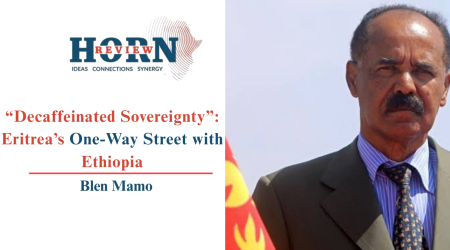
“Decaffeinated Sovereignty”: Eritrea’s One-Way Street with Ethiopia
There is a peculiar contradiction at the heart of Eritrea’s...

7
Oct
Leaked Documents Allege Sudanese Army Weapons Pipeline to TPLF-Aligned Forces as Tigray War Reignites
Leaked documents alleging a Sudanese army weapons pipeline to TPLF-aligned...
7
Oct
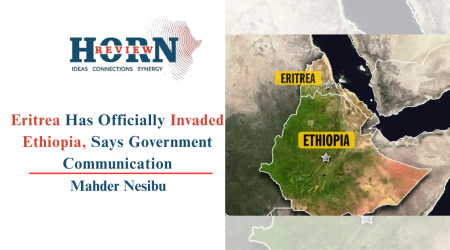
Eritrea Has Officially Invaded Ethiopia, Says Government Communication
Ethiopian Government Formally Condemns Eritrean Territorial Incursion as Its Forces...
7
Oct
Turkey, Somalia and the Transactional Reading of Alamein
The Alamein Declaration functions less as a coherent framework...
7
Oct
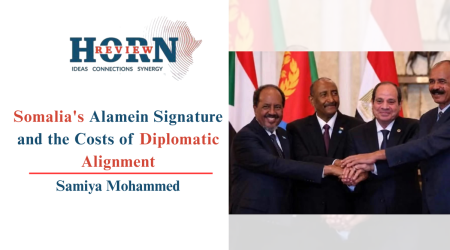
Somalia's Alamein Signature and the Costs of Diplomatic Alignment
The Alamein Declaration between Egypt, Sudan, Eritrea and Somalia...
6
Oct
Egypt's Nile for All, the Red Sea for Some - Except Ethiopia
The contradiction was laid out almost perfectly at El Alamein....
6
Oct
Isaias Afwerki has Long Wanted to Rule Ethiopia, Why He will Never
President Isaias Afwerki is among the most enduring figures in...