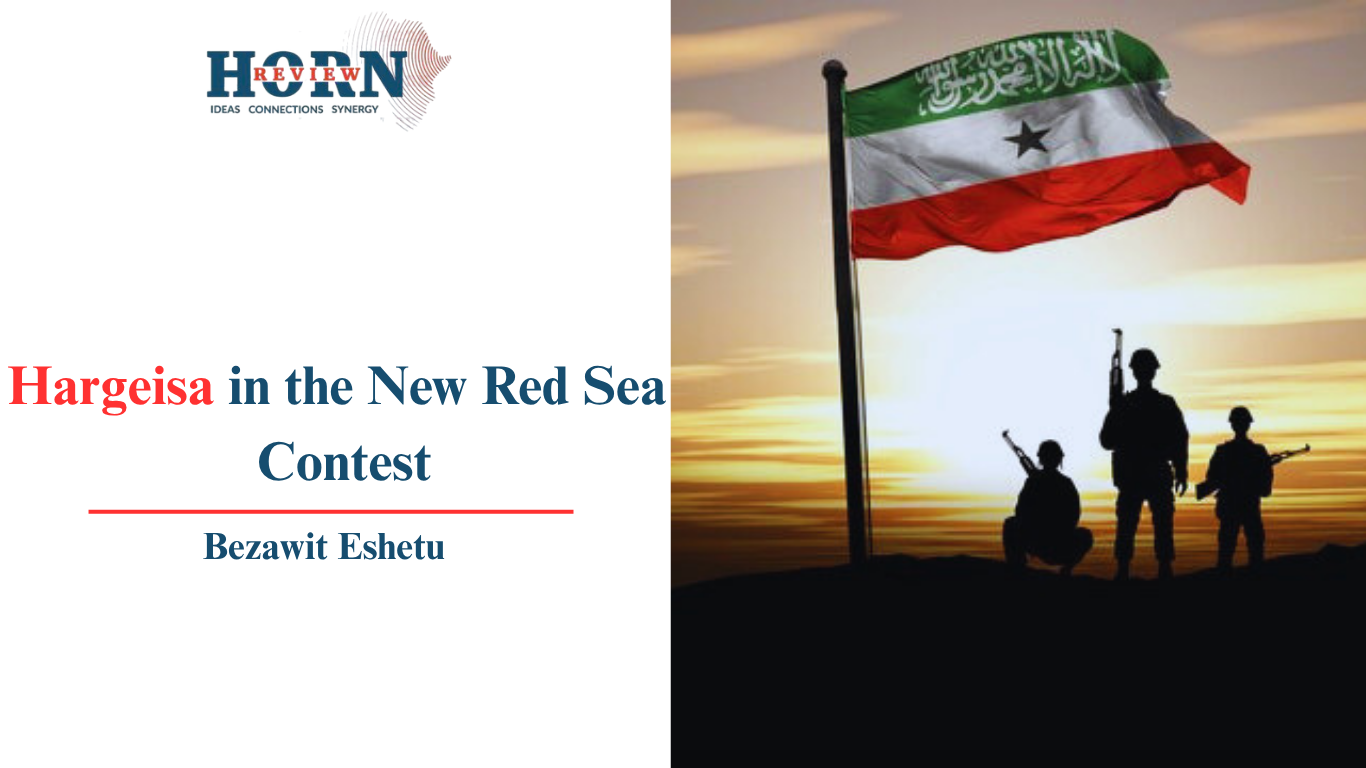
Hargeisa is not best understood as a city already marked for imminent destruction; it is better understood as a city that has entered a new category of risk. Israel’s formal recognition of Somaliland in December 2025 gave the breakaway territory a sharper strategic profile, and the follow-on Houthi warning that any Israeli presence in Somaliland would be treated as a military target pushed Hargeisa into the center of a wider Red Sea security contest. That is the essential shift. The question is no longer whether Hargeisa matters only to Somaliland; it is whether the city has become legible to hostile actors as a symbol of an emerging anti-Houthi, pro-Red Sea-access alignment. The public record does not prove a decided attack plan, but it does show that Hargeisa now sits inside a live threat environment shaped by recognition politics, maritime rivalry, and proxy signaling.
Within that environment, Press TV’s role is important because it is not merely describing this environment; it is helping construct it. The outlet carried the Houthi message that any Israeli presence in Somaliland would be a military target, framed Israel’s move as an aggressive attempt to establish a foothold in the Horn of Africa, and linked Somaliland to a wider project of regional fragmentation. That language is revealing. It shows that Tehran’s information ecosystem is not waiting for an attack to happen; it is trying to define the meaning of Somaliland’s alignment before any strike occurs. In practical terms, this is deterrence-by-narrative. The objective is to make investors, diplomats, and regional governments feel that any Israeli-linked presence in Hargeisa or Berbera carries an immediate security premium. Iran does not need to launch a missile to make the threat politically active; the rhetoric itself can alter risk perceptions and decision-making.
This narrative danger becomes more serious when viewed alongside the Houthi–Al-Shabaab connection, because that relationship is the mechanism that can translate rhetoric into operational reach. The Africa Center for Strategic Studies assessed in 2025 that collaboration between the two groups was intensifying and that it was raising maritime and land-based threats on both sides of the Gulf of Aden. Its analysis drew on evidence of physical meetings in 2024, the transfer of materiel and training, and a broader pattern of shared disruption at sea and on land. It also noted that the Houthis have gained from this relationship through piracy support and more diversified supply routes, while Al-Shabaab has gained access to more advanced weapons and training, including weaponized drones. The important point is not that the two groups have merged into one hierarchy; they have not. The point is that their cooperation has become functional enough to spread capabilities across a much wider theater than either group could manage alone.
That wider theater matters because Hargeisa’s vulnerability is rooted in a paradox of its own success: Somaliland’s comparatively strong security environment makes it far less exposed to the kind of direct territorial warfare that has plagued south-central Somalia, but it also pushes any hostile actor toward psychological and symbolic forms of attack. The evidence suggests this clearly. With only 14 security incidents and 22 fatalities recorded in Woqooyi Galbeed between 2023 and 2025, Al-Shabaab lacks both the territorial depth and operational presence needed to wage a conventional campaign. The threat, therefore, is no longer about capturing ground; it is about eroding confidence. In this context, the most credible danger lies in asymmetric disruption such as sabotage, drone intrusions, or precise strikes against prominent infrastructure tied to Somaliland’s emerging geopolitical partnerships. For Hargeisa, the central risk is not a redraw of the map, but a deliberate effort to weaken its image as a stable and secure regional hub.
For Ethiopia, that same instability would have consequences beyond Somaliland itself. The Berbera corridor is no longer just a logistical shortcut; it is a strategically necessary gateway that supports its long-term economic security and Red Sea access. What could have remained a practical commercial arrangement was turned into a sovereignty dispute by Mogadishu’s rejection of the January 2024 port agreement and its attempt to void the deal through domestic legislation, despite the fact that the arrangement reflected Ethiopia’s legitimate search for diversified maritime access through Somaliland. From this perspective, the corridor has become a measure of Ethiopia’s ability to secure its interests in a region where access, stability, and influence are increasingly inseparable.
The deeper risk for Ethiopia is not only physical disruption, but the politicization of perception. Even a limited incident in Hargeisa could sharply raise insurance costs, unsettle investors, and slow momentum around the project long before it reaches full operational scale. In that sense, the most damaging threat is a psychological blockade: one that makes the corridor appear unstable, diplomatically contested, and financially risky. For Ethiopia, defending the project may therefore require a more assertive and expensive security posture around an initiative that still lacks broad regional consensus.
This strategic contest also has a wider diplomatic effect that cannot be ignored. Israel’s recognition of Somaliland drew condemnation from Somalia, the African Union, Egypt, Turkey, and other regional actors, all of whom read the move as destabilizing and as an encroachment on Somali sovereignty. That backlash matters because it pushes Somaliland further into a contested diplomatic space: to its supporters, it becomes a frontier of sovereignty, access, and maritime security; to its opponents, it becomes evidence of foreign interference and regional partitioning. Iran’s propaganda layer feeds directly into that cleavage by presenting Somaliland not as an isolated territory but as a node in a broader Israeli project. From Tehran’s perspective, that framing is useful because it creates overlap between ideological hostility to Israel and practical hostility to any corridor that weakens Iranian leverage over the Red Sea. In that sense, Press TV is not simply amplifying a story; it is helping turn a diplomatic dispute into a theater of psychological warfare.
Thus, it is not certain that Hargeisa will be hit, but that it is now targetable in a way it was not before. Iran itself remains the least likely actor to strike directly, because its comparative advantage lies in proxy pressure, deniable support, and narrative shaping rather than overt warfighting in the Horn. The Houthis are more likely to continue using Somaliland as a warning sign and a rhetorical battlefield. Al-Shabaab is the most plausible local executor if any operation is attempted, but its present footprint in Somaliland is limited. That combination points toward a limited, high-visibility, and deniable attack risk rather than occupation or sustained war.
By Bezawit Eshetu, Researcher, Horn Review