
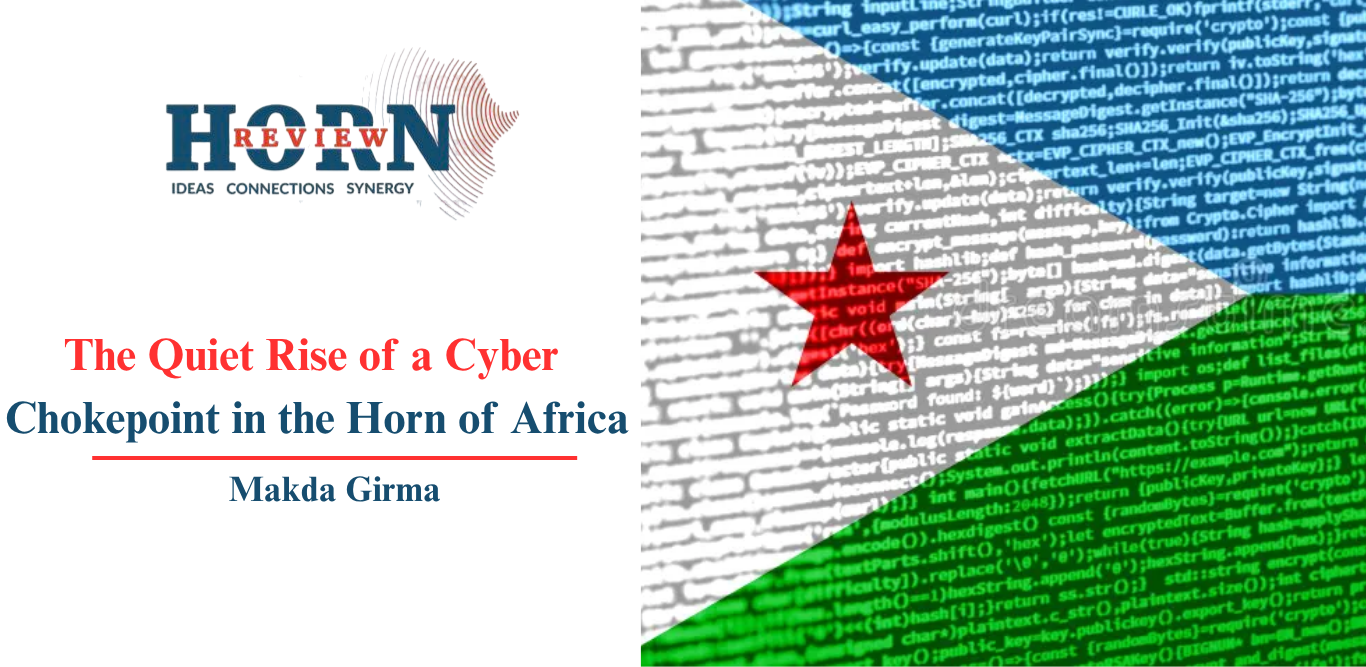
The Quiet Rise of a Cyber Chokepoint in the Horn of Africa
Along the shores of Djibouti, the familiar markers of a garrison state remain clearly visible. Foreign military bases continue to operate with flags from the United States, China, France, and others flying overhead. Naval vessels and aircraft support ongoing operations across the tense waters of the Red Sea and Gulf of Aden. For years, this small country has used its prime location at the Bab el-Mandeb Strait to generate steady income by renting land for bases and providing access to its deep-water ports. That approach delivered stability and revenue in a volatile region, but as 2026 progresses, a more significant change is unfolding beneath the waves. The real source of influence is shifting away from soldiers and surface ships toward the dense network of fiber-optic cables lining the seabed. Djibouti is moving beyond its traditional role as host to foreign forces and establishing itself as the controller of the digital backbone that sustains East Africa’s connection to the world. This is not just an infrastructure upgrade; it is a strategic recalibration of power in one of the most contested corners of the globe.
This development represents what observers term the cyber-securitization of the Bab el-Mandeb. While international attention stays fixed on naval blockades, insurgencies, proxy wars, and great-power rivalries in the region, Djibouti has steadily assembled one of the densest concentrations of submarine cable landing points on the African continent. These cables serve as the hidden arteries of global communication, carrying financial transactions, government communications, business data, and everyday digital life. Their convergence here turns a narrow stretch of coastline into a vital switchboard for data flowing between Europe, Asia, the Middle East, and Africa. In today’s reality, where nearly all long-distance internet traffic travels via undersea fiber rather than satellites, this grants the host nation a distinct and potent form of strategic power. Influence now derives not only from physical military presence and port logistics but from the capacity to manage speed, reliability, latency, and the uninterrupted flow of information that modern economies and fragile governments in the Horn of Africa rely upon daily.
By early 2026, Djibouti had secured and activated a substantial web of major international submarine cable systems, with well over a dozen key projects landing or transiting its territory. Prominent among them are the expansive 2Africa cable system, spanning roughly 45,000 kilometers and linking multiple continents with massive capacity, and the Sea-Me-We 6 cable that connects South East Asia through the Middle East to Europe. These cables terminate at advanced landing stations fitted with sensitive optical equipment that receives, amplifies, and redirects signals with precision. The Bab el-Mandeb Strait has become one of the planet’s busiest digital passages. Estimates suggest that between 17 and 20 percent of global internet traffic, depending on specific routing patterns at any given time, passes through these strategic waters. Djibouti has transitioned from a mere passive landing site into an active operational hub where data is deliberately switched, aggregated, and directed onward according to commercial and strategic priorities.
This infrastructure growth builds directly upon the country’s established geographic strengths that have long made it indispensable for maritime trade. What once facilitated the movement of goods and military assets now powers digital highways that are equally critical for economic survival. Djibouti has invested significantly in multiple landing facilities capable of handling the rising demand driven by widespread smartphone adoption, cloud computing expansion, artificial intelligence applications, and the broader digitization of African economies. The launch of the Horizon Fiber Initiative in February 2026 introduced an important new dimension to this strategy. This tripartite deal between Djibouti Telecom, Ethio Telecom, and Sudatel Group established a high-capacity terrestrial fiber corridor extending from Djibouti’s submarine cable landings through Ethiopian territory and onward toward Sudan. The initiative positions Djibouti as the primary terrestrial gateway for international connectivity serving nearly 190 million people across the three nations. Instead of ending at the shoreline, Djibouti now actively manages the final segments that deliver global bandwidth deep into neighboring territories, creating new layers of interdependence.
The effects of this control extend well beyond marginal gains in internet speed or smoother streaming services. In the Horn of Africa, dependable digital access has become closely tied to economic advancement, political stability, and the routine operations of government institutions. Ethiopia, a large landlocked country with ambitious plans to industrialize, expand manufacturing, and digitize public services, still channels the overwhelming majority of its international bandwidth through Djiboutian infrastructure. This digital dependence closely mirrors its heavy reliance on Djiboutian ports for physical trade. In times of diplomatic strain, whether involving disputes over Nile River water allocations, border management challenges, or disagreements on port usage fees, Djibouti possesses subtler but highly effective instruments of influence. It can modify transit costs, introduce controlled levels of congestion through traffic management, or quietly adjust service quality parameters. These actions serve as non-kinetic pressure tools that can prove far more disruptive to daily business operations, financial flows, and governance than conventional naval blockades, because they directly target the information streams and digital services essential to the functioning of a contemporary society.
Somalia encounters a comparable reality amid its persistent fragmentation. As various Somali regional administrations and the federal government in Mogadishu attempt to strengthen their digital frameworks and build coherent national systems despite ongoing instability and limited central control, Djibouti’s established carrier-neutral data centers provide a ready and reliable alternative route. Facilities such as the Djibouti Data Centre offer levels of redundancy, security, and stability that many domestic networks still struggle to match. Consequently, many Somali businesses, regional authorities, diaspora-linked services, and ordinary citizens find it practical and often necessary to route their traffic through Djiboutian systems rather than depending exclusively on paths passing through Mogadishu. This practical choice gradually deepens multiple layers of dependence. Communications, mobile money transactions, educational platforms, government databases, and commercial activities increasingly flow through a neighboring country’s infrastructure. Over time, such technical integration quietly reinforces Djibouti’s central role in the regional digital landscape and shapes political alignments in subtle but meaningful ways.
The transformation takes on added geopolitical weight when examined through the perspective of national security and sovereignty. Djiboutian officials now secure cable landing stations with the same rigor and protective measures previously reserved for military installations. Protocols around these critical sites have been notably strengthened in recent years. The country’s Vision 2035 long-term development plan, reinforced by its updated digital transformation roadmap and the Digital Code approved in 2025, places strong emphasis on achieving genuine cyber sovereignty. This includes the development of national data centers designed to promote the handling or storage of regional data locally rather than allowing it to be routed automatically to distant foreign servers operated by global tech giants. Such policies aim both to retain greater economic value within Djibouti and to grant national institutions improved visibility and oversight over traffic passing through its territory. A specialized National Cyber Security Authority has been established to coordinate threat response, set technical standards for critical digital assets, and defend against emerging cyber risks in a region prone to instability.
With such a high volume of traffic concentrated in one relatively small geographic area, the potential for signal intelligence collection and strategic monitoring cannot be overlooked by any serious analyst. Control over the primary conduit through which data must flow provides valuable insight into data volumes, communication patterns, and, under appropriate legal and technical conditions, selected content. In a region long troubled by insurgent movements, proxy conflicts involving external powers, and fragile political structures, this capability positions Djibouti as a strategic intelligence node with growing leverage. Foreign militaries stationed on its territory, including those from major global players, may find overlapping interests in secure and monitored connectivity arrangements. For Djibouti itself, the power to observe flows and selectively shape them enhances its negotiating position in regional disputes and offers a modern form of deterrence that usefully complements its more traditional military base rental agreements. The state can safeguard its own networks while exercising discretion over when and how it provides reliable transit services to neighbors facing internal or external pressures.
This shift clearly departs from the earlier rentier model that defined much of Djibouti’s post-independence strategy. Previously, the country’s leverage stemmed largely from fees collected for hosting foreign troops and managing port logistics, particularly serving landlocked Ethiopia’s trade needs. That approach bound Djibouti’s economic prospects closely to the strategic decisions and rivalries of distant external powers and left it exposed whenever great-power tensions escalated in the Red Sea. The emerging model is distinctly more operational and assertive in nature. Djibouti now directly manages critical data flows, controls key latency parameters, and supplies essential digital services that neighboring economies increasingly cannot easily bypass or replace without significant cost and disruption. The core strategic assets have transitioned from military bases and commercial ports to sophisticated landing stations, high-capacity interconnection points, and supporting data infrastructure. Influence is now directed more consistently toward immediate regional neighbors whose digital development and economic stability are becoming tightly linked to Djiboutian soil and decision-making.
Risks have similarly evolved with this new paradigm. Rather than primarily facing collateral damage from distant foreign wars or naval confrontations, the main concerns now center on sophisticated cyber threats, potential physical sabotage of vulnerable undersea cables, and possible political or economic backlash if neighbors perceive Djibouti’s pricing policies or access controls as overly coercive or manipulative. The digital fortress being constructed is not invulnerable. Undersea cables remain susceptible to accidental damage by ship anchors, natural seismic events, or deliberate interference, as several past incidents in the Red Sea corridor have starkly demonstrated. Regional geopolitical turmoil can rapidly trigger outages with cascading effects across entire countries. To mitigate these vulnerabilities, Djibouti must continue developing redundancy through diverse cable systems, pursue robust international technical cooperation agreements, and maintain high standards of cybersecurity across its infrastructure. There is also the longer-term risk that excessive assertiveness in leveraging its chokepoint position could encourage neighbors to invest in costlier or initially less reliable alternative routes, potentially eroding Djibouti’s centrality over time.
Sustainable success in this domain will require careful balancing. Djibouti needs to cultivate and maintain an image as a stable, business-friendly, and relatively neutral regional hub rather than allowing itself to be seen as a capricious gatekeeper that weaponizes connectivity. Transparent pricing mechanisms, consistent service quality, and mutually beneficial partnership frameworks will prove just as vital to long-term influence as the physical cables and data centers themselves. In the broader picture, Djibouti’s strategy aligns with wider African initiatives aimed at asserting greater authority over digital infrastructure and reducing excessive dependence on outside powers for core connectivity. By thoughtfully integrating its dense submarine cable network with ambitious terrestrial expansions such as the Horizon project and by growing advanced, carrier-neutral data centers, the country is working to progress from functioning merely as a simple transit point to becoming a genuine provider of value-added services including cloud computing, regional interconnection, and specialized digital offerings.
For a nation whose total population barely exceeds one million citizens, this trajectory opens genuine opportunities for meaningful economic diversification beyond traditional port and base rentals. Activities such as data processing, regional cloud hosting services, fintech development, and broader information-based industries could take firm root here, capitalizing on the advantages of low-latency links to global networks and strategic positioning. At its core, Djibouti is constructing something durable and strategically significant. It is forming a Digital Fortress through which the region’s vital data flows, economic functions, and sensitive political communications will continue to pass for the foreseeable future, even if foreign military presences eventually adjust, renegotiate, or gradually decline in scale. This ongoing process reaches far beyond enabling smoother video streaming in Addis Ababa or steadier mobile banking applications in Khartoum. It raises essential and often uncomfortable questions about who ultimately controls the gateways to information and digital sovereignty in one of the world’s most strategically volatile and geopolitically sensitive areas.
In the information age, meaningful national and regional sovereignty frequently depends on command and oversight of the unseen but critical infrastructure lying beneath the sea. Once recognized chiefly for its ports, logistics services, and military base hosting arrangements, Djibouti is now forging a fresh and more autonomous role as the critical digital crossroads and potential gatekeeper of the Horn of Africa. Though the shift proceeds relatively quietly compared to the more visible military and naval activities in the region, its long-term political, economic, and strategic consequences will likely influence conditions across the continent for many years to come. The cables beneath the water may prove more enduring and consequential than the flags flying above it.
By Makda Girma, Researcher, Horn Review

RELATED
Posts

9
Oct
Where Somalia’s Federal and Regional Fight Is Going
The 2012 federal settlement was less a constitutional order...

9
Oct
Eritrea’s Post-Pretoria Strategy and the Escalation in Ethiopia
Our latest report examines Eritrea’s post-Pretoria trajectory and how selective...

8
Oct
The Houthi-al-Shabaab Nexus and the Emerging Security Architecture of the Gulf of Aden
The growing relationship between Yemen’s Houthi movement and Somalia’s al-Shabaab...

7
Oct
“Decaffeinated Sovereignty”: Eritrea’s One-Way Street with Ethiopia
There is a peculiar contradiction at the heart of Eritrea’s...

7
Oct
Leaked Documents Allege Sudanese Army Weapons Pipeline to TPLF-Aligned Forces as Tigray War Reignites
Leaked documents alleging a Sudanese army weapons pipeline to TPLF-aligned...

7
Oct
Eritrea Has Officially Invaded Ethiopia, Says Government Communication
Ethiopian Government Formally Condemns Eritrean Territorial Incursion as Its Forces...
7
Oct
Turkey, Somalia and the Transactional Reading of Alamein
The Alamein Declaration functions less as a coherent framework...

7
Oct
Somalia's Alamein Signature and the Costs of Diplomatic Alignment
The Alamein Declaration between Egypt, Sudan, Eritrea and Somalia...
6
Oct
Egypt's Nile for All, the Red Sea for Some - Except Ethiopia
The contradiction was laid out almost perfectly at El Alamein....

6
Oct
Isaias Afwerki has Long Wanted to Rule Ethiopia, Why He will Never
President Isaias Afwerki is among the most enduring figures in...