The primary impediment to Ethiopia-Eritrea normalization regarding sea access is not territorial sovereignty, but the Eritrean leadership’s fear of domestic political collapse. While Asmara frames its resistance as a defence against Ethiopian expansionism, the regime’s existential threat lies in the contagion of freedom that an open border would bring, potentially triggering mass emigration and the unravelling of a tightly controlled political order.
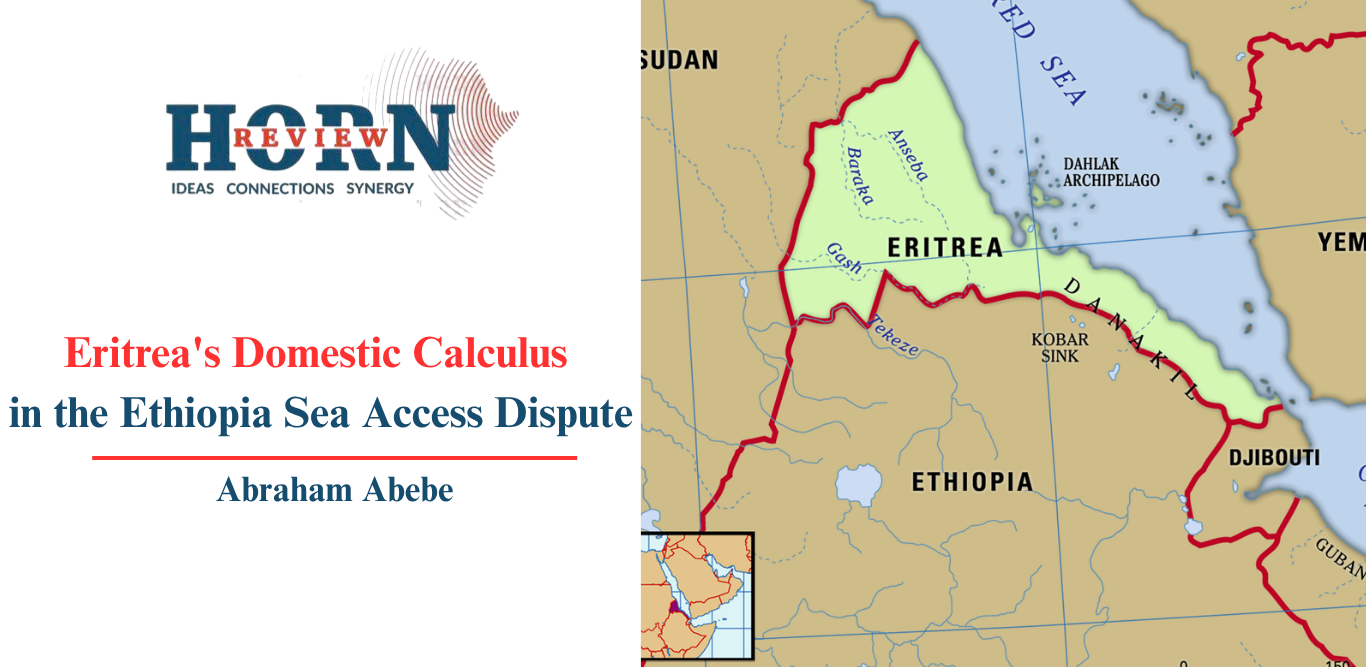
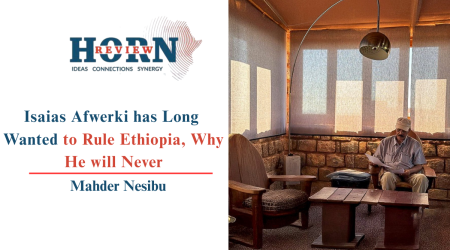
Isaias Afwerki understands that granting Ethiopia access to the port of Assab could significantly benefit both Eritrea and Ethiopia economically. It could stimulate trade, increase regional connectivity, and contribute to broader economic growth across the Horn of Africa. Asmara is fully aware of these potential advantages.
However, opening access to Assab would likely require a more open and functional border between Eritrea and Ethiopia, including greater human mobility. This is where the Eritrean leadership’s concerns become more serious. If Eritreans were allowed to move freely across the border, many, particularly young people, might choose not to remain in Eritrea. The Eritrean government has long maintained strict controls on movement, political freedoms, and access to opportunities abroad. These restrictions are designed not only to preserve state control but also to prevent citizens from openly exposing the country’s internal human rights conditions. The international community has documented a pattern of transnational repression, with reports of Eritrean agents targeting asylum seekers and diaspora critics as far afield as Sweden and the United States, suggesting the regime will go to extreme lengths to maintain its information blockade.
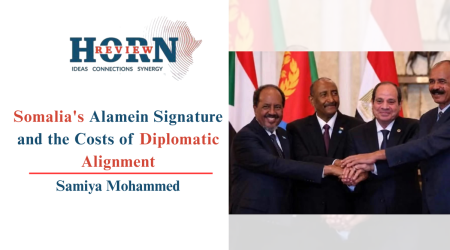
Additionally, there is the recent case of over 3,000 Eritrean refugees detained in Egypt, where the Eritrean government allegedly coordinated with Cairo to repatriate them to Asmara, with over 150 already deported. In exchange, Eritrea’s government was reportedly offering Eritrean refugees and asylum seekers as a political bargaining chip to serve Egyptian interests in the Horn of Africa.
For many Eritreans, leaving the country represents an escape from political repression, indefinite national service, economic hardship, and limited civil liberties. Basic services and freedoms that are considered normal elsewhere, including unrestricted internet access, political participation, independent civil society activity, and broader educational opportunities, remain heavily constrained in Eritrea. These pressures affect not only ordinary citizens and rural communities, but also educated and relatively privileged groups. The United Nations Commission of Inquiry on Eritrea has documented that indefinite national service, which has continued for decades with no legal discharge mechanism, amounts to a crime against humanity. As of February 2025, reports emerged that Eritrean authorities had issued directives to register and mobilize citizens under the age of sixty for military retraining, while simultaneously banning those under fifty from leaving the country, effectively sealing the population in place.
A defining example emerged after Eritrea’s national football team played against Eswatini in the 2026 Africa Cup of Nations qualification campaign. Following Eritrea’s historic victory on March 31, 2026, seven Eritrean players and officials reportedly refused to return home and instead sought asylum in Eswatini. The overriding concern for an Eritrean would be forced enrollment into indefinite military service. This pattern, seen in Eritrean football defections from Kenya in 2009, Uganda in 2013, Botswana in 2015, and Uganda again in 2019, repeated itself weeks later when five members of the Eritrean Under-20 squad defected in Uganda, driven by the same fear of conscription. Many Eritreans who have settled in Ethiopia and elsewhere describe their departure from Eritrea as a second birth, reflecting the extent of the restrictions they experienced at home. For many, gaining freedom of movement and the ability to speak openly is viewed as reclaiming a normal life.
While Eritreans risk their lives to escape, Ethiopia offers a different vision of regional relations. From the Ethiopian perspective, the demand for sea access is framed primarily as an economic and strategic necessity rather than a military objective. Ethiopia seeks reliable maritime access to support trade, economic growth, and regional integration. Proponents of this view argue that Ethiopia’s interest is based on mutual development and regional cooperation, not territorial expansion. Ethiopia’s foreign policy, particularly under the Medemer philosophy, emphasises shared infrastructure and free-trade corridors as pathways to collective prosperity rather than zero-sum territorial gains.
Nevertheless, the Eritrean leadership appears to fear that deeper economic integration with Ethiopia could weaken the government’s ability to maintain tight domestic control. An open border could accelerate emigration, increase the flow of information, and expose Eritrean society to political and social alternatives that challenge the current system. As Human Rights Watch has documented, this explains why the Eritrean leadership resists broader normalization and mobility despite the potential economic benefits.
That fear is grounded in the nature of the system itself. Eritrea today remains a highly centralised political system since independence in 1993, with no national elections, no legal opposition parties, limited press freedom, and severe restrictions on independent civil society organisations. Concerns about religious freedom, social inequality, and political repression continue to shape the country’s domestic environment. As a result, many Eritreans, including those from relatively stable economic backgrounds, continue to seek opportunities abroad. As Human Rights Watch documented, indefinite conscription and systematic repression have already driven over 580,000 Eritreans to become refugees or asylum seekers globally, an exodus that would almost certainly accelerate under an open border regime.
In this context, critics argue that Isaias Afwerki fears mass emigration and the erosion of state control more than Ethiopia’s economic ambitions. From this perspective, the issue is less about protecting territory and more about preserving a tightly controlled political order. What appears to the outside world as a dispute over maritime rights is, in reality, a confrontation between the logic of regional integration and the survival logic of one of Africa’s last hermetic states. Until Asmara’s domestic survival calculus changes, the coast will remain within sight but out of reach.
By Abraham Abebe, Researcher, Horn Review