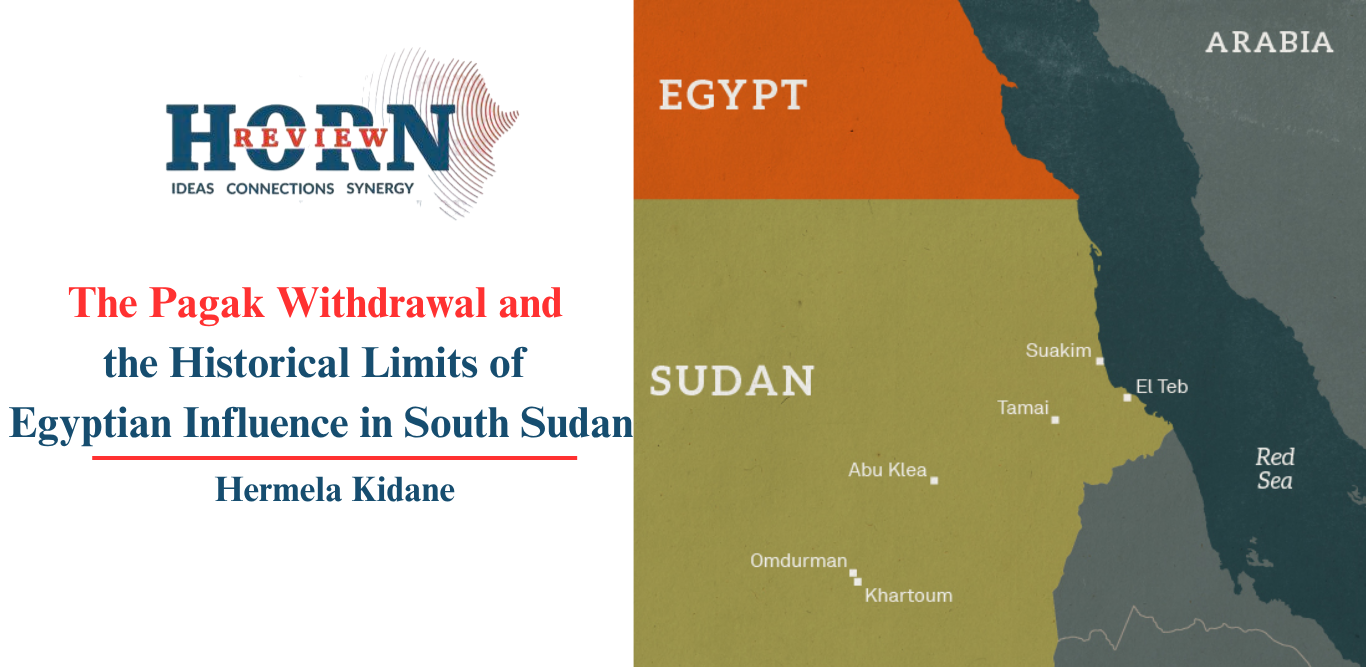
The recent decision by Juba to order the closure of an alleged Egyptian military presence near Pagak in Upper Nile State marks a potential inflection point in the geopolitics of Northeast Africa. Neither Cairo nor Juba has offered an official confirmation or detailed timeline for this withdrawal yet the Deliberate silence surrounding the event is as revealing as any formal communiqué. To understand this moment, one must abandon a linear reading of current events and engage instead with the deep historical strata of the Nile Valley specifically the ambiguous relationship between Cairo and the liberation movements of South Sudan. The narrative that Egypt was ever a purely static actor in the southern region is a myth. From the era of John Garang to the administration of Salva Kiir Cairo has navigated a precarious path often finding its strategic interests subordinated to the stronger gravitational pull of Addis Ababa. The Pagak episode is not an aberration but the logical conclusion of a historical pattern where South Sudan despite repeated Egyptian overtures consistently aligns with its eastern neighbor to ensure its own survival.
To trace this pattern, one must return to the mechanics of the liberation struggle. When John Garang launched the Sudan People’s Liberation Movement and Army in 1983 his movement faced an existential crisis of supply. The ideological orientations of the Cold War left the SPLM largely bereft of support from the traditional Socialist Bloc so Garang turned to a pragmatic regional alliance. He cultivated a strong relationship with the then Ethiopian leader Mengistu Haile Mariam who provided sanctuary logistics and a crucial rear base for the movement. Mengistu allowed the training of combatants in the Gambella region
At the same time Garang also maintained a relationship with Cairo but that relationship was defined by Egyptian skepticism and restraint. Egypt was historically invested in the territorial integrity of a unified Sudan to guarantee the flow of the Nile and Cairo viewed Garang’s rebellion as a destabilizing variable especially given his close military ties to Mengistu who was then at odds with Egypt over regional influence. So was Egypt’s reluctance driven solely by Garang’s alliance with Mengistu or by a deeper strategic belief in a unified Sudan the answer is both. Egypt’s foreign policy was primarily dictated by Nile water security. For decades Egypt had been committed to preserving the status quo of the 1959 Nile Waters Agreement and supporting the fragmentation of Sudan risked creating a new unpredictable upstream neighbor. Thus, Egypt never fully embraced Garang as a proxy but rather tolerated him as a pressure card against Sudan. The idea of an independent South Sudan was not part of Egypt’s calculation. Garang himself was a secular nationalist who sought a united Sudan reformed rather than divided and this alignment of interests with Egypt on the surface did little to overcome the underlying distrust caused by his deep military ties to Mengistu.
By the time of the Comprehensive Peace Agreement in 2005 Egypt recognized it could no longer act solely through Khartoum yet the ambiguity remained. Egypt shifted from outright opposition to managed engagement offering scholarships diplomatic support and limited military training programs. But this approach failed to account for the material reality of the map. When South Sudan eventually became independent in 2011 Egypts concern proved justified. Despite Egyptian overtures South Sudan consistently aligned with Ethiopia and in 2024 South Sudan acceded to the Cooperative Framework Agreement a treaty Egypt views as a direct assault on its historical water quota. The Egyptian strategy of building institutional ties had failed to prevent this diplomatic defection revealing the limits of soft power when pitted against existential hydrological fears.
The transition from Garang to Salva Kiir did not resolve this tension it changed the nature of the competition. President Kiir a veteran of the liberation war who fought alongside Mengistu’s forces has maintained a cordial diplomatic relationship with Egypt often leveraging Egyptian support to balance internal political fractures. He also held meetings with Egyptian leadership over the years and Cairo continued to seek influence through military attachments for South Sudanese officers hoping a general trained in Egypt would prioritize Nile unity. However, Kiir has consistently refused to act as a Nile proxy against Ethiopia. South Sudan’s oil export routes its security coordination and its mediation in the Sudanese civil war all flow through the Ethiopian highlands. For Kiir the relationship with Ethiopia is one of interdependence not just affinity.
This brings us to the recent Pagak incident. About three days ago Juba ordered the closure of an alleged Egyptian military presence near the Ethiopian border. This decision was not spontaneous but reflects South Sudan’s clear strategic priorities For South Sudan hosting Egyptian military infrastructure so close to Ethiopia’s sovereign frontier was not a strategic asset but a liability. It risked transforming South Sudanese territory into a launchpad for a Nile war a conflict from which Juba would gain nothing but lose everything including its transit access to the sea. By severing this ambiguous military presence Kiir has signaled to Addis Ababa that despite the rhetoric of Arab cooperation South Sudan remains a member of the Nile Equatorial Lakes region first. He is not just a loyal partner to Ethiopia he is now working to further strengthen that relationship.
Consequently, the strategic and national interest of Ethiopia is best served by recognizing this window of opportunity. The reconstruction of South Sudan’s state institutions requires a stable non-hegemonic neighbor. As Cairo seeks to expand its influence through solar projects in Eritrea and military cooperation in Somalia its retreat from Pagak indicates that South Sudan is a bridge too far. For Ethiopia the lesson is clear the historical pattern of the liberation struggle remains the dominant variable. The refugees in Gambella the shared struggle against Khartoum and the economic interdependence of the watershed form a bond that Egypt’s soft power cannot easily sever. If Ethiopia wishes to secure its Nile interests it must invest in the stability and sovereignty of South Sudan not as a vassal but as a partner. The closure of the Egyptian base proves that in the high stakes game of the Nile proximity population displacement and historical sacrifice will always outweigh the allure of downstream financial incentives. South Sudan has chosen its neighborhood and for the foreseeable future that neighborhood is Ethiopia not Egypt.
By Hermela Kidane, Researcher, Horn Review