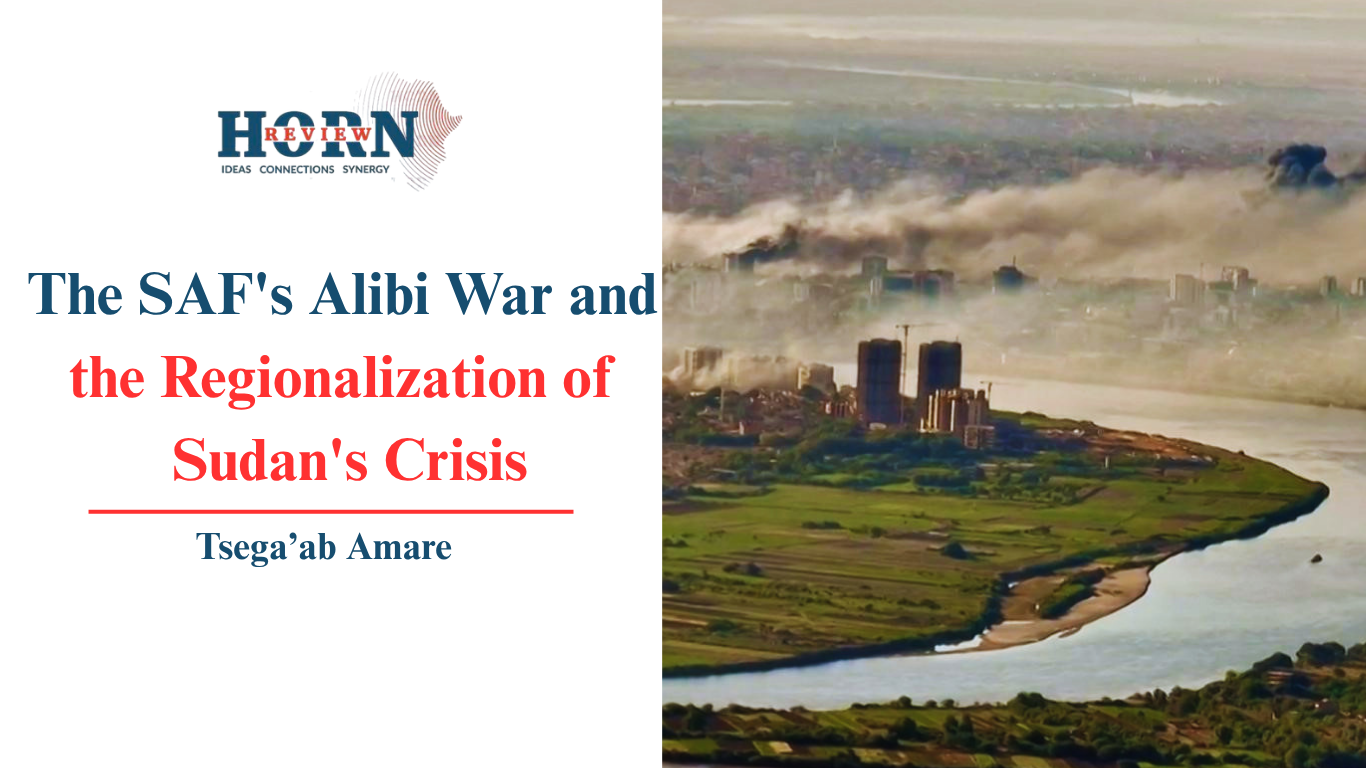
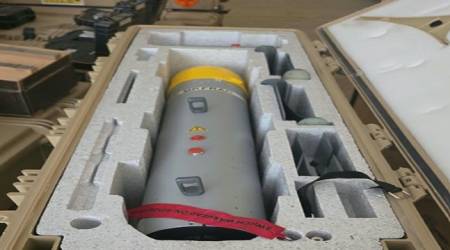
On May 05, 2026, Sudan recalled its ambassador from Addis Ababa. The stated reason was drone attacks on Khartoum and other Sudanese cities, which the Sudanese Armed Forces attributed to strikes originating from Ethiopia’s Bahir Dar airport and allegedly coordinated with UAE-supplied unmanned systems. Following that, Sudan’s Foreign Minister warned of “Open confrontation” with Ethiopia if necessary, and significant military reinforcements were subsequently reported along the Ethiopian border.
What appeared on the surface to be a bilateral security incident increasingly reflects a broader strategic calculation by a military facing stalemate at home and is seeking external justification that it has struggled to generate domestically.
Sudan’s military has entered a prolonged phase of strategic stagnation. Despite gains in Khartoum and advances across several fronts, the SAF faces mounting recruitment pressure, a legitimacy deficit in peripheral regions, and growing dependence on Iranian drone system and foreign auxiliary fighters to sustain operations its conventional military structure cannot independently maintain. When military institutions reach this kind of ceiling where battlefield developments no longer produce the decisive political outcome the leadership seeks, this is where the temptation to externalize the crisis intensifies.
The SAF’s maneuver against Ethiopia follows a familiar regional pattern. During the War in Tigray, the TPLF increasingly sought to internationalize the conflict regardless of battlefield conditions, and with particular intensity during periods of strategic uncertainty. Humanitarian lobbying, diplomatic engagement with foreign powers, and narratives centered on external responsibility became central political instruments alongside military operations. Like many armed actors confronting strategic deadlock, the TPLF attempted to reshape the political environment when battlefield momentum alone proved insufficient.
General Abdel Fattah al-Burhan and the SAF now appear to be pursuing a structurally similar approach. The capture of a Tigrayan fighter in Blue Nile State, amplified through the Tasis coalition’s messaging apparatus, became the basis for a cascade of accusations involving drone strikes from Ethiopian territory, UAE-Ethiopian coordination, and broader allegations against Ethiopian sovereignty. The Strategic objectives appear multifaceted: attracting international attention to a narrative of external aggression, redirecting domestic scrutiny away from the SAF’s inability to end the war after more than two years, and generating regional pressure to encourage diplomatic intervention that could freeze the battlefield on more favorable terms for Khartoum.
The Paradox of Accusation
What makes the SAF’s posture particularly striking is the degree to which it reverses longstanding accusations directed at Sudan itself. Ethiopia’s Ministry of Foreign Affairs did not simply reject Sudan’s claims. It presented counteraccusations supported, according to Addis Ababa, by credible evidence that Sudan has served as a hub for anti-Ethiopian networks, including TPLF-linked remnants and mercenary structures operating along Ethiopia’s western frontier. The ministry alleged that the SAF facilitated arms transfers and financial support enabling incursions through the porous Blue Nile and Benishangul-Gumuz corridors.
The presence of Tigrayan ex-combatants recruited through networks linked to SAF-adjacent structures, alongside the transactional logic sustaining these arrangements through battlefield wages, rear-base protection, and political relevance, suggests that Sudan’s role extends beyond passive tolerance. By the weight of available reporting and regional security patterns, Sudan increasingly appears intertwined with these destabilizing networks. Against that backdrop, accusations directed at Ethiopia acquire an unmistakable layer of strategic inversion.
Ethiopia’s response to this paradox has been notably disciplined. Addis Ababa chose not to answer provocation with escalation. The Foreign Ministry’s statement rejected the accusations firmly as baseless, reaffirmed the historic ties between the Ethiopian and Sudanese peoples, outlined Ethiopian grievances with measured precision, and called for dialogue and ceasefire. This restraint reflects a sophisticated reading of Ethiopia’s strategic position. While managing internal fragilities in regions such as Amhara and Tigray, Ethiopia remains acutely aware that it cannot afford entanglement in another active theater generated by a neighboring state’s escalating crisis.
Equally important, Ethiopia appears conscious that retaliation would ultimately reinforce the very narrative the SAF seeks to construct. Even if Sudan is actively enabling destabilizing forces within Ethiopia, Addis Ababa has thus far emphasized diplomacy, international accountability, and strategic restraint over reciprocal escalation.
The Egyptian Dimension
To interpret the Sudan-Ethiopia tension purely through a bilateral lens is to miss the broader regional geometry that is actively shaping the crisis. Cairo’s posture towards Ethiopia has long been shaped by the Grand Ethiopian Renaissance Dam, Africa’s largest hydroelectric project. It continues to view this through the prism of “existential water security concerns.” Egypt has pursued a multidimensional strategy that aimed to constrain Ethiopia’s regional influence through diplomatic pressure, security partnership and military cooperations with neighboring states.
The deployment of Egyptian troops to Somalia, officially framed as a security partnership, is better understood in Addis Ababa as part of a layered containment architecture that includes reported agreements around Eritrea’s Assab, naval access arrangements n Djibouti, and deepening military coordination with SAF in Blue Nile state. The base at Pagak in south Sudan’s Upper Nile State formed the interior node of this architecture, positioned at the geographic intersection of Soth Sudan, Sudan, and Ethiopia, with Egyptian interest in the location dating explicitly to GERD-era tensions from at least 2020. The closure order, described as urgent and decided at the highest levels of transitional government, is not a routine border adjustment. The closure marked the disruption of one pressure node Egypt had established in Ethiopia’s southwestern interior, and its significance lies precisely in that it was a choice.
Whether Egypt’s strategy constitutes coordinated encirclement or convergent interest pursuing objectives that might be compatible is analytically secondary. The Structural effect however is the same: Sudan’s military escalations, Egyptian security entrenchment in Somalia, and the previous Upper Nile base position have collectively constituted overlapping pressure on Ethiopia’s western, eastern, and southern flanks simultaneously. Treating this as a coincidence requires more explanatory work than acknowledging the existent pattern.
Interconnected Architecture of Instability
The Horn of Africa is entering a period of dangerous alignments in which multiple conflicts could reinforce on another in ways that make each more difficult to resolve independently. Sudan’s war draws in Tigrayan mercenaries, intersecting directly with Ethiopia’s internal security concern. Egypt’s containment, or rather, encirclement strategy activates Somalia as a pressure node. Eritrea’s longstanding reliance on proxy dynamics within Ethiopia adds further volatility. The TPLF’s present political miscalculations in determining the post war trajectory continues to create vulnerabilities that external actors, Sudan amongst, have shown willingness to exploit.
This current trajectory however remains reversible. As Alan Boswell of the International crisis Group observed, both General Al-Burhan and Prime Minister Abiy Ahmed have previously demonstrated the capacity to de-escalate when bilateral tensions approached dangerous threshold, precisely because the strategic calculus makes confrontation irrational for both sides. Sudan cannot sustain a militarized eastern front while its western and central territories remain unresolved and at large. Ethiopia cannot absorb formal confrontation with Sudan as well, while managing political instability in Amhara and trying to preserve the pretorial framework in Tigray.
The burden of de-escalation has not been evenly distributed by both sides. Sudan’s rhetorical posture, military signaling, and troop concentrations represent deliberate escalatory choices. Ethiopia’s response has largely involved absorbing pressure rather than mirroring it. This asymmetry should shape the architecture of any diplomatic responses and moves.
Beyond that, however, the international community must resist the framing the SAF is actively constructing. As Somoud rapporteur Khalid Omer stated during a roundtable discussion, the SAF is attempting to regionalize and internationalize a war whose fundamental drivers are domestic. Treating this as a regional security problem requiring regional diplomatic solutions risks validating that framing. The actual work of stabilization runs in the opposite direction: inside out, not outside in. What Sudan requires is a political process that addresses the SAF’s recruitment crisis, its legitimacy deficit in peripheral regions, and the absence of a credible civilian framework that can absorb the political pressures the military has so far deflected outward. International actors, including the Berlin Conference process, would serve the region better by conditioning engagement on internal political accountability rather than chasing the regional symptoms of a domestic institutional failure.
Sudan’s military crisis cannot be explained through Ethiopia. Ethiopia has thus far resisted being drawn into the role the SAF appears eager to construct for it. But the more important point is that even if that pressure succeeded, it would resolve nothing for Sudan. The war’s roots are not in Addis Ababa. They are in Khartoum.
The Horn does not need another war. What it requires is a credible regional mechanism capable of addressing the internal political and security crises that continue to spill across borders. Independent verification of contested claims, sustained diplomatic engagement with clearly defined mandates, and African-led conflict management frameworks are essential to preventing escalation. Without such mechanisms, domestic conflicts will increasingly be externalized into regional confrontations, pushing an already fragile geopolitical environment into a phase that will be far harder to reverse.
By Tsega’ab Amare, Researcher, Horn Review