Why Pakistan’s Role in Sudan Matters to Saudi Arabia’s Red Sea Security
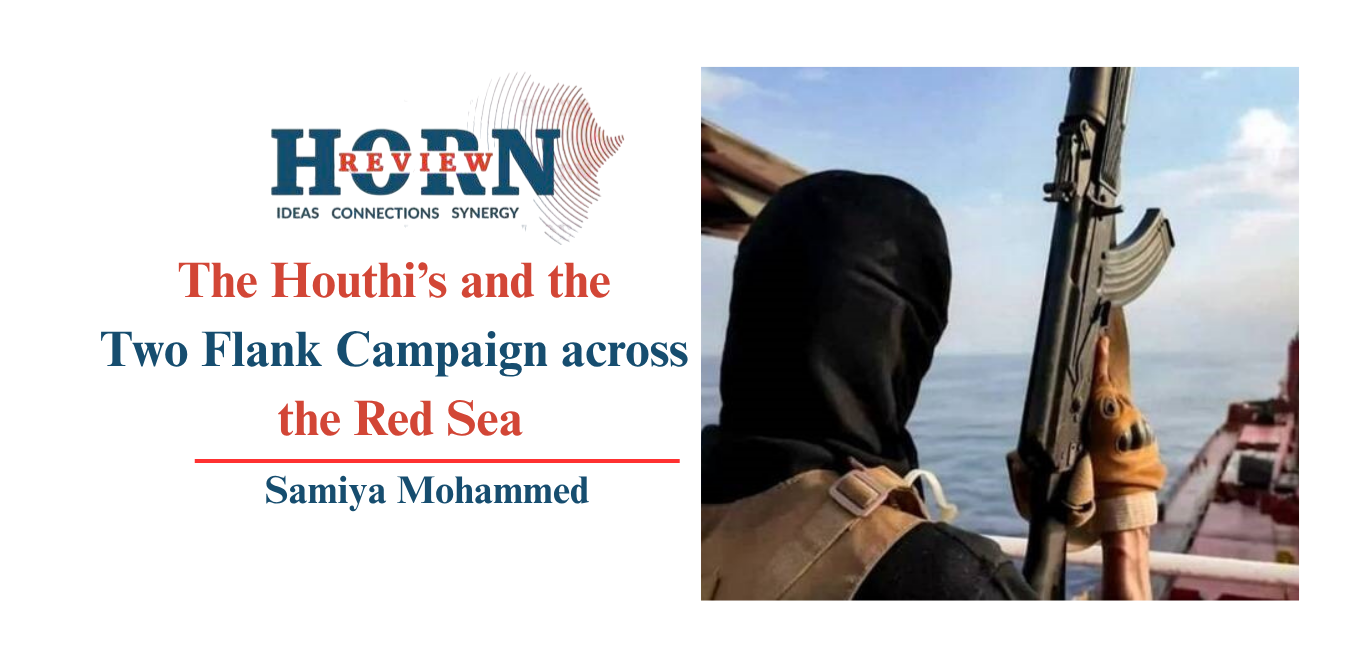
The Houthi movement’s restriction on Saudi shipping through the Bab al Mandab Strait expands the Middle East’s conflict zone. This coercive action targets Saudi Arabia’s energy infrastructure and its reliance on Red Sea transit. The measure forces Saudi to review its alliance network and devise countermeasures. The defence relationship with Pakistan becomes central to this review raising the possibility of a coordinated Saudi and Pakistan response that extends Yemen to include Sudan as a western Red Sea anchor for pressure operations against Houthi and Iranian influence.
The immediate risk from the Houthi restriction is considerable yet its practical effect will probably be selective harassment rather than an outright closure of the strait. A total blockade would antagonize key international partners and could draw a naval response. The Houthis gain influence through the threat alone producing uncertainty that disrupts maritime traffic and diverts global trade flows without triggering full scale war. Since Iran’s effective closure of the Strait of Hormuz, the Red Sea has assumed greater importance for Saudi oil exports with Saudi now sending over seventy percent of its crude shipments through the Red Sea port of Yanbu.
Saudi Arabia’s initial response to the Houthi maritime restriction has been to publicly condemn the action as piracy and to vow that it will take all necessary measures to protect its vessels. This declaratory stance however is largely reactive and by itself insufficient to deter the type of asymmetric threat posed by the Iran backed group. The true weight of the Saudi position is found not in its statements but in the formalized defense it has activated with Pakistan transforming the partnership into a binding operational commitment.
This transformed relationship is the Mutual Defence Agreement signed in September 2025. The most important clause within this pact is the explicit provision that any act of aggression against either signatory shall be considered an act of aggression against both. This is not a symbolic diplomatic gesture and is a concrete military commitment legally obligating each party to view an attack on the other as an attack on itself. The agreement institutionalizes nearly eight decades of bilateral defense cooperation, shifting from one of informal alliance to a structured mutual defense framework akin to a formal security guarantee.
Pakistan’s commitment to this has been repeatedly stated at the highest levels. More directly Pakistani civilian and military leaders have reportedly communicated to Iran that Houthi attacks on Saudi Arabia are considered a red line for Pakistan with the security of Saudi Arabia now a matter of Pakistan’s own national security. This message is not abstract and it is backed by operational reality. Pakistani troops are already deployed near the Saudi-Yemeni border placing them within the immediate zone of any potential escalation.
Taken together these elements, a legally binding mutual defense treaty, an explicit public and private warning to Iran, a visible military presence on the border and active naval security consultations point toward the formation of a functional axis. This is not just an alignment of convenience but a structured alliance centered on the defense of Saudi Arabia with Pakistan assuming a role that moves it from a supportive partner to a co-guarantor of Saudi security. The axis provides a credible deterrent option, one that holds greater weight than diplomatic protests.
In the short term this axis will manifest as defensive support. Pakistan can contribute to the Saudi led coalition’s defense network and provide naval escort services for vessels transiting the Bab al-Mandab. This is a logical extension of Pakistan’s role as a key military ally of the Gulf States. However the potential for an escalation vector beyond the immediate Yemen is where this relationship takes on a more coherent dimension. The Red Sea basin offers a geographic pincer opportunity. While the Houthis threaten the eastern flank from Yemen, the western flank defined by Sudan and the Horn of Africa becomes a crucial area for counter pressure.
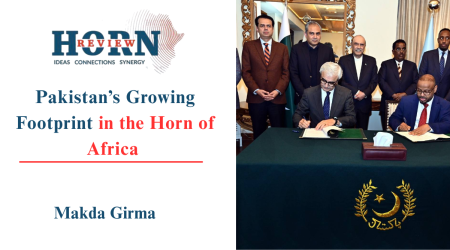
The Sudan conflict which has drawn in numerous regional actors provides this potential main point. In this fracture, Saudi Arabia has aligned itself with the SAF viewing a strong central authority in Khartoum as essential for regional stability and the security of the Red Sea coast. Pakistan’s interest in this conflict is not hypothetical and had reportedly been negotiating a $1.5 billion arms deal with Sudan including the provision of advanced weaponry and fighter jets to the SAF. This deal was reportedly frozen after Saudi Arabia raised objections and withdrew its financial backing. This intervention rather than indicating a divergence of interests might suggest coordination.
A coordinated Saudi and Pakistan approach to Sudan by bolstering the SAF’s hold on Port Sudan and the coastline could create a reliable logistical space on the western side of the Red Sea. This would facilitate their own naval operations and counter Iranian and Houthi influence in the region so it would put pressure on the Houthis from an unexpected direction. An Iran-Houthi tripartite relationship has been observed with reports of Iranian weapons flowing to the Houthis and in return fuel and logistical support moving from Houthi controlled areas to the SAF thereby weakening the Axis of Resistance network across the Red Sea.
It is important to distinguish this logic from the actual execution. The establishment of a fully coordinated axis is a matter of degree. Saudi and Pakistan coordination will be opportunistic shaped by immediate threats and the need to defend Saudi. Direct Pakistani military involvement in Sudan on behalf of the SAF is a distinct possibility given Pakistan’s history but it carries risks. Such a move could invite Iranian retaliation against Pakistani interests potentially through proxies in Balochistan or by escalating tensions in the Persian Gulf. The theoretical geographic pincer is by securing the Red Sea from two flanks. A presence in Yemen and a reinforced SAF holding the western shore would project defensive power that could deter and complicate Houthi and Iranian moves. It would transform the Red Sea from a corridor into a more heavily defended space.
The Houthi maritime embargo is a direct challenge to Saudi Arabia that has activated its most reliable defense partner. The Saudi and Pakistan axis is not a new creation but the current crisis is accelerating its evolution from a traditional alliance to a more functional and operational partnership. By extending its influence to support the SAF in Sudan, Pakistan can help Saudi Arabia manage the conflict on both sides of the Red Sea turning a geographic vulnerability into a counterweight. While the risks of overextension and Iranian retaliation are real but the logic of coordinated pressure is sound.
By Samiya Mohammed, Researcher, Horn Review