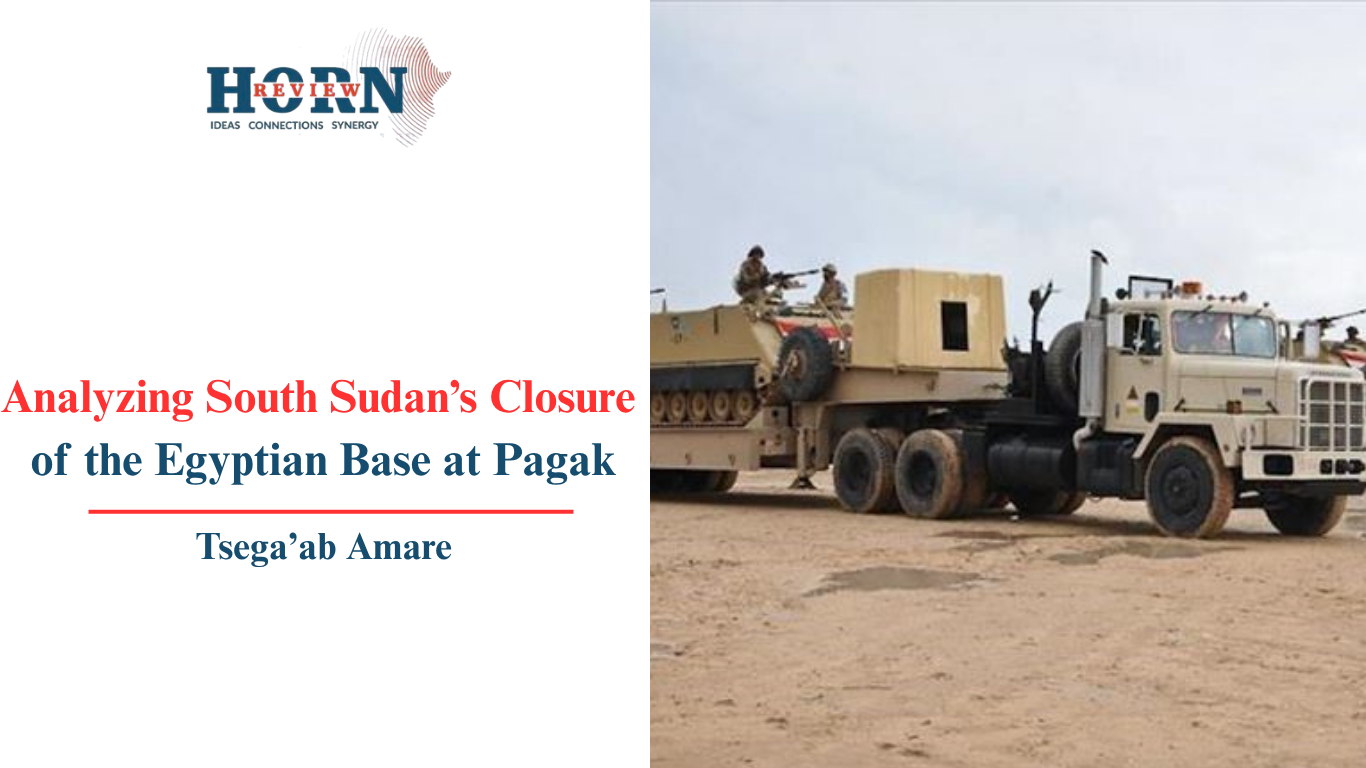
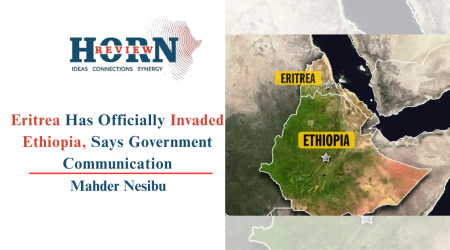
The Jute-Pagak corridor in Upper Nile State is not just an ordinary stretch off territory. Pagak served as the former headquarters of the SPLM- IO rebel faction that was led by Riek Machar, giving it a long history as a militarized political area. More consequentially from regional geopolitical angle, it sits at the geographic intersection of South Sudan, Sudan and Ethiopia with a striking distance of the Blue Nile tributaries that feed the Grand Ethiopian Renaissance Dam.
Reports that date back to June 2020 pointed to Egyptian interest in establishing a military presence in precisely this location citing its proximity to Ethiopia as strategically important in the context of tensions surrounding the GERD. South Sudan’s foreign ministry publicly denied those early reports. Yet the recent closure order, although not verified by direct governmental sources, suggests the existence of some form of Egyptian military activity in the area, over the intervening years has quietly taken root and has now been ordered to be terminated with unusual urgency.
The distinction between a local administrative closure and a national strategic signal matter enormously here. The order, according to the Sudan Times, is framed as urgent and its geographic specificity point toward a political decision made at the highest levels of Juba’s transitional government. This could not simply be taken as a border maintenance measure rather than a strategic message.
South Sudan for long has tried to walk on a delicate line between Addis Ababa and Cairo, two capitals with deeply incompatible interest in the Nile Basin and general regional understanding. Ethiopia historically has provided essential military and political support to South Sudan’s liberation movements, from backing John Garang’s SPLM – from the 1980s onward – to maintaining peacekeeping forces through UNISFA in the contested area of Abyei. Egypt in contrast, used the post-independence period to deepen ties with Juba through infrastructure aid, diplomatic engagement, and discreet security cooperation that aimed at establishing a strategic foothold on Ethiopia’s southwestern flank, as a strategy of encirclement.
The potential closure of the Pagak base therefore suggests that this balancing act has tilted more decisively toward Addis Ababa. The timing is telling it comes as Ethiopia consolidates the GERD’s operational status, generating more than 5000 megawatts of electricity, while simultaneously advancing a plan to build additional dam projects along the Abay (Nile) river basin. For Ethiopia, an Egyptian military outpost in Upper Nile is not viewed as a passive intelligence node but as a potential threat vector that is positioned near the dam’s western approaches at a moment of heightened strategic sensitivity.
President Salva Kirr also has concrete domestic motivations for recalibration. This recalibration is less a concession than a convergence of interests. Ethiopia have increasingly framed South Sudan’s internal security not as a problem to be managed through factional leverage but as a condition to be stabilized through economic integration. The Gambela-Pagakk-Paloch road corridor which directly connects Ethiopia’s western region to South Sudan’s oil infrastructure reflects this logic. Addis Ababa believes durable influence in juba can only be built through supply chains and connectivity rather than calibrated support to armed factions. A South Sudan that is internally coherent and not hosting the forward military presence of a downstream rival is seen as a more predictable and manageable neighbor.
South Sudan’s alignment with the Cooperative Framework Agreement, which entered into force in October 2024 following ratification by six upstream states including South Sudan is equally important. The CFA directly challenges the colonial era Nile water arrangements upon which Egypt has historically relied. By joining this framework Juba had already positioned itself outside of Cairo’s preferred Nile governance structure. The potential closure of Pagak therefore preserves the diplomatic capacity Ethiopia accumulated through the CFA ratification process and clears the regional atmosphere. As a return to proxy inflected instability would carry costs for both capitals.
The Pagak closure must also be situated within the broader trajectory of Egypt’s post 2020 hydraulic security architecture. Faced with the irreversible advancement of the GERD, Cairo pursued what has been described by many analysts as a layered containment strategy; a network of military partnerships, infrastructural agreements, and even regional alignments that are designed to constrain Ethiopia diplomatically and strategically.
Elements of this strategy emerged across multiple theatres.
- In Somalia, through the August 2024 defense agreement and subsequent troop deployments under AUSSOM beginning in 2025. The move established a direct Egyptian military footprint on Ethiopia’s eastern flank, widely read in Addis Ababa as less about Somalia stability than about strategic positioning;
- In Eritrea, through reported port upgrade agreements and logistical understandings centered around Assab. This offered Egypt a potential Red Sea staging point at the precise northern gateway to Ethiopian territory;
- In Djibouti, through naval access arrangements that extended Egypt’s maritime presence along the full length of the Horn’s coastline, threading a line of access from the Red Sea entrance southward; and
- In Sudan, through deepening military coordination’s with the SAF during the ongoing conflict, in Blue Nile state, reports suggest that Egyptian linked personnel operating alongside SAF structures faced growing battlefield vulnerabilities amid intensified offensives by Sudan Founding Alliance Forces (TASIS).
What emerges from these developments is a broader structural plan. Egypt continues to retain influence along the Red Sea corridor where naval reach and Gulf aligned partnerships provide strategic depth. However, in the interior of the Nile Basin Ethiopia possesses enduring geographical and political advantages that are rooted in proximity, historical relationships and upstream leverage. South Sudan’s decision to close the Pagak base reflects this imbalance. The Potential utility of small forward outposts for surveillance or coercive signaling against the GERD has diminished significantly given the dam being fully operational. The infrastructure is complete, the turbines are running, and any scenario that involves direct disruption now carries immense political and operational risks with uncertain strategic returns.
This closure belongs to a wider regional pattern. Across the Horn of Africa, states are increasingly demonstrating what could be described as a form of sovereign resilience; a growing preference and understanding for a locally negotiated security arrangements over open ended foreign military entrenchment. Foreign military platforms that were once framed as stabilizing guarantees are increasingly being viewed as liabilities capable of drawing states into wider geopolitical rivalries without delivering durable security. South Sudan’s decision crystallizes this logic. The Egyptian presence at Pagak offered Juba limited direct security benefit while generating substantial strategic risk both in relation to Ethiopia and in terms of South Sudan’s own sovereignty narrative.
This does not mark the end of Egyptian engagement with South Sudan, nor does it represent a comprehensive rupture in bilateral relations, as Cairo will adapt its approach. Nevertheless, this episode marks a meaningful contraction in Egypt’s ability to project influence deep into the Nile Basin Interior at a moment when such influence has become strategically critical.
For Juba, the challenge now lies in transforming this moment of assertive sovereignty into a durable institutional framework. Rather than remaining a passive arena for proxy competition South Sudan has the opportunity to position itself as a mediating bridge within the Horn. These three states, South Sudan, Ethiopia, and eventually postwar Sudan share the Upper Nile corridor’s most contested geography, from the Sobat Basin to the Blue Nile approaches, and no lasting security architecture for the region is conceivable without all three at the table. A future Tripartite Border Security Council could formalize the type of security understanding that the Pagak closure implicitly signals, creating mechanisms for managing cross-border armed movements and external military access without overreliance on extra regional actors.
The broader lesson this offers, for the Horn of Africa, is ultimately a familiar one. Zero sum military posturing built on outposts and proxy networks rarely produces lasting stability and the states most likely to shape the region’s next decade will be those capable of converting geographic leverage into institutional cooperation.
South Sudan, for the moment, appears to be signaling that it understands the difference. Pagak is a small town on a contested border but the decision to close a foreign base rather than accommodate it is the kind of sovereign choice that reveals which direction a state has decided to face.
By Tsega’ab Amare, Researcher, Horn Review