Maritime chokepoints have repeatedly shaped the outcomes of international disputes by offering those who can influence them a potent means of leverage. In 1951, when Iranian Prime Minister Mohammad Mossadegh nationalized the oil industry, the United Kingdom responded by deploying the Royal Navy to blockade Abadan and restrict Iranian tankers from transiting the Strait of Hormuz. The action sharply reduced Iran’s export revenues and contributed to the broader crisis that led to significant political changes in 1953.
In 1956, Egypt’s President Gamal Abdel Nasser reversed this dynamic by nationalizing the Suez Canal. The canal’s vital role in European trade with Asia prompted a swift military response from Britain, France, and Israel, since its closure proved politically unacceptable to the powers that depended on it.
The pattern continued in 1967, when Egypt closed the Straits of Tiran to Israeli shipping. This became one of the immediate triggers of the Six-Day War and showed how even a relatively minor waterway could serve as a direct casus belli when it threatened a state’s core economic interests.
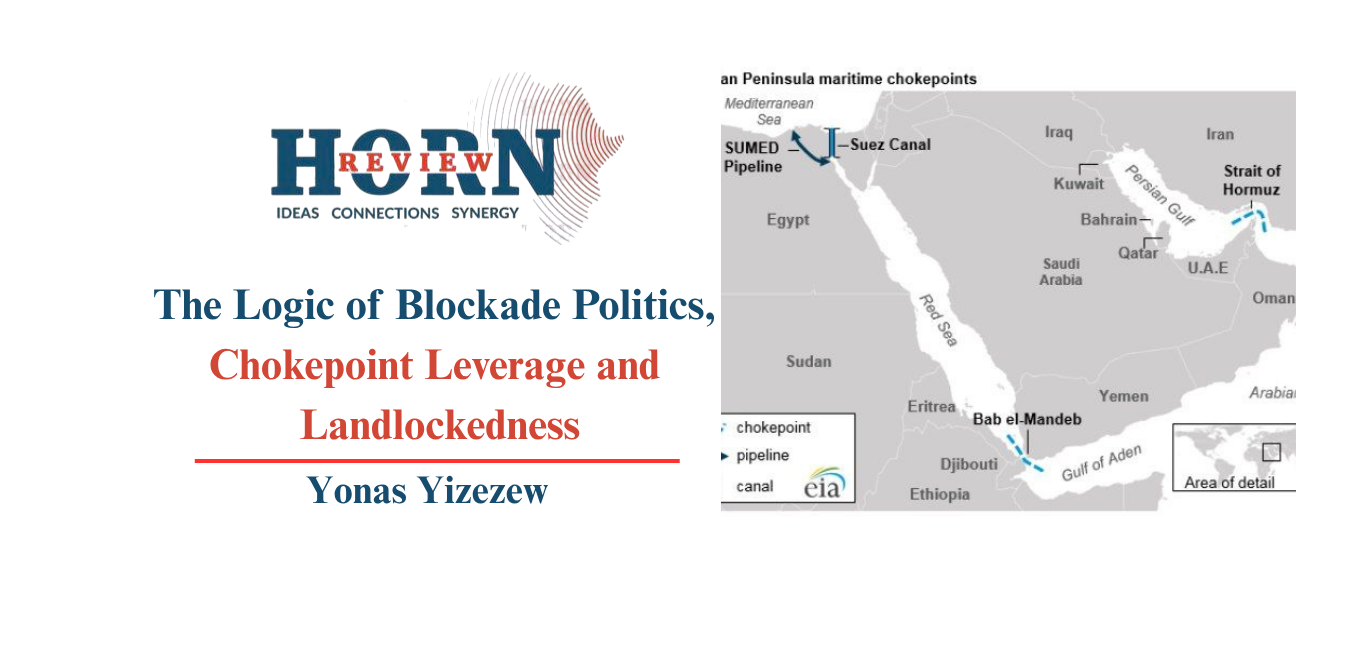
In this sense, the war between the U.S., Israel and Iran erupted in 2026 reflects both continuity and intensification of these tactics. Iran used the Strait of Hormuz as a central element of its defensive and diplomatic strategy. Following the outbreak of war, Iran conducted targeted attacks against commercial shipping, including drone and missile strikes, mines, harassment by fast-attack boats, and the selective enforcement of transit requirements. In order to avoid the damage on its own export capabilities, Iran avoided a complete and sustained closure of the strait. Instead, it created a persistent environment of risk that raised global oil prices, increased shipping costs, and used to gain concessions and increase Iran’s bargaining leverage during mediation efforts.
The strategic importance of the Strait of Hormuz stems from its role in carrying roughly one-fifth of the world’s seaborne oil under normal conditions. Due to the restriction, commercial traffic diminished significantly and Iran’s operations focused on vessels associated with opposing interests while permitting other traffic to transit under specific conditions. The United States responded by establishing naval blockades of Iranian ports in April and July after the collapse of temporary ceasefires. President Trump claimed that these measures, including the blockade and strikes on coastal military assets, were necessary to protect commercial navigation and uphold freedom of navigation. The exchanges showcased the reciprocal and challenging nature of blockade dynamics in confined waters.
When restrictions on shipping through the Strait of Hormuz disrupted Gulf oil exports, their dependence on oil forced them to seek alternative routes. Saudi Arabia subsequently began using the Yanbu terminal on the Red Sea to reroute its oil flows and reduce its exposure to the strait. This shift, in turn, increased the strategic importance of the Red Sea corridor and the Bab el-Mandeb for Saudi energy exports.
In this sense, renewed clashes between the Houthis and Saudi Arabia were followed by a Houthi announcement of a blockade targeting Saudi-linked shipping. This move increased the potential for a pressure initially directed at Riyadh to evolve into broader shipping constraints within the Bab el Mandeb as tensions involving Iran intensified. This development showed how proxy relationships can multiply the effects of chokepoint politics, extending leverage across connected maritime spaces.
Conflict-driven disruptions of this nature have become a consistent element of the modern global landscape. Global supply chains rely on a limited number of corridors which creates operational efficiency but also significant strategic vulnerability. Interference with these vital nodes causes economic effects to spread rapidly across international markets despite the existence of alternative transit options. Other maritime passages remain susceptible to similar strategies. The Strait of Malacca is vital to East Asia’s energy imports, while the Suez and Panama Canals remain critical to global trade. Emerging routes, such as potential Arctic passages, may gain strategic weight as conditions change. In each case, the ability to influence transit—whether through direct action, asymmetric tools, or proxy forces—offers a way to impose costs that reach far beyond the immediate area.
Various historical precedents show a consistent tendency among actors to use whatever leverage they possess for strategic purposes. In the current war, Iran combined direct restrictions in the Strait of Hormuz with proxy pressure in the Red Sea, expanding its coercive tools and increasing its ability to exert pressure across multiple strategic maritime chokepoints. This approach reflects broader realities in contemporary international affairs in which when full-scale conventional superiority is difficult to apply in confined waters or carries high risks, chokepoint leverage provides a flexible middle path that can yield diplomatic or strategic gains. Modern technologies, including relatively low-cost drones and agile maritime assets, appear to have lowered the threshold for effective disruption, while global markets transmit the consequences almost immediately.
These patterns also show the collective vulnerabilities of today’s interconnected system. Interference with primary maritime arteries impacts energy markets and supply chain integrity while influencing inflationary trends in distant regions. Such actions challenge the traditional legal frameworks that sustain international commerce. Modern responses indicate an evolving international architecture where national strategic calculations frequently take precedence over multilateral consensus. Consequently, naval cooperation and diplomatic initiatives are increasingly prioritized toward the mitigation of sovereign risk rather than the universal enforcement of established international norms.
Blockade politics, in its various recurring forms, persists because maritime chokepoints concentrate enormous value in limited geographic spaces and because states and groups naturally make use of the tools available to them. Protecting open maritime access, while addressing the underlying regional tensions that drive such confrontations, will likely remain a central challenge for the international community in the years ahead. In an order defined by complex security demands, the skillful application of geographic leverage continues to demonstrate its enduring relevance.
Within this framework of blockade politics, landlocked states would be the most disadvantaged countries. As they have no coastlines or direct access to the sea, they depend entirely through neighboring countries and on the stability of distant maritime chokepoints for their import and exports.
Disruptions in the Strait of Hormuz, Bab el-Mandeb, or other critical passages raise global energy and transport costs that hit landlocked economies especially hard. What makes it a double damage is that, they often have fewer options for rerouting or substitution. Since they don’t possess naval capabilities or direct influence over sea lanes, these countries function as passive recipients of chokepoint shocks, experiencing higher commodity prices, supply shortages, and slower growth without possessing the tools to shape outcomes or deter disruptions. Their reliance on overland corridors through coastal nations adds another layer of vulnerability as those transit partners may themselves be affected by maritime instability.
Ethiopia provides a clear example of the compounded economic pressure faced by landlocked nations during maritime crises. Disruptions in international waters drive up global freight and energy prices which immediately elevates the cost of essential imports while undermining the competitiveness of Ethiopian exports in the global market.
At the same time, instability in the Red Sea affects its main transit routes through coastal neighbors, causing higher fees, delays, and logistical difficulties. This creates compounded economic pressure with little ability for Ethiopia to mitigate or influence the maritime chokepoints that control its lifeline.
By Yonas Yizezew, Researcher, Horn Review