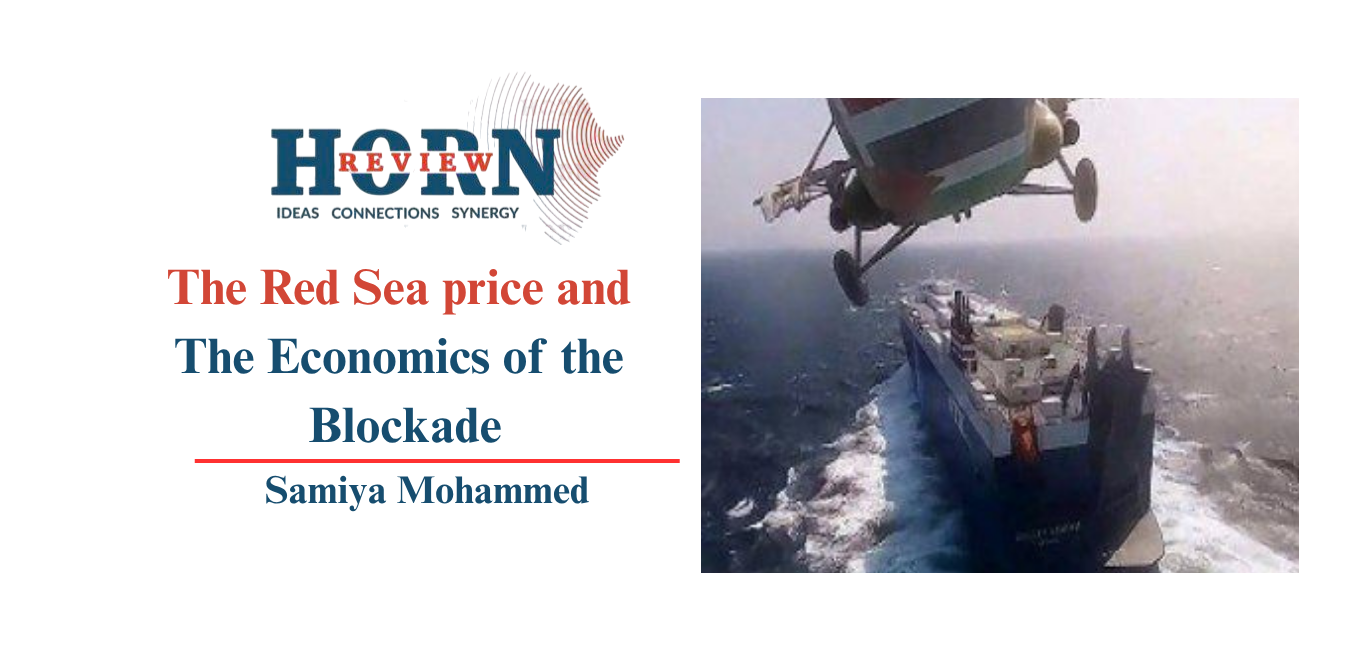
Economics has a habit of enforcing geography long after politics convince that it have escaped it. The latest disruption in the Red Sea is another reminder that trade routes, shipping costs and insurance markets often have the final word. Missiles and drones may capture headlines but the real pressure is applied through freight rates, war risk premiums, delayed cargoes and growing uncertainty. Military action creates the disruption while economics spreads the consequences across global energy markets. Geography sets the stage, geopolitics lights the fuse and insurance determines how much everyone pays.
The decision by marine war insurers to withdraw or reconsider cover for Saudi linked cargoes moving through the Red Sea illustrates how quickly commercials can change once risk crosses an acceptable point. Insurance is rarely emotional and it is a business built on probability and exposure. When underwriters believe the odds of an attack have risen what premiums can reasonably cover, they either raise prices dramatically or leave the market altogether. That decision immediately changes the economics of shipping. A voyage that looked commercially attractive one week can become financially impossible the next. This is exactly how relatively inexpensive attacks generate expensive consequences.
Saudi Arabia now is treated alongside shipping linked to the United States, the United Kingdom and Israel when underwriters assess Red Sea war risk. From a commercial perspective insurers are not making political judgments. They are pricing exposure and if attackers publicly identify certain shipping as legitimate targets, underwriters respond by adjusting premiums or refusing cover. Insurance follows risk rather than diplomacy. Once that process begins, reversing it becomes difficult without a meaningful reduction in the threat itself.
This is not the first time maritime conflict has demonstrated the power of economics over military events. During the Iran and Iraq Tanker War in the 1980s hundreds of commercial vessels came under attack as both sides sought to weaken each other’s economic position. Insurance premiums surged, naval escorts expanded, shipping routes adjusted and commercial operators absorbed enormous additional costs. Energy continued moving but at a much higher price. The conflict demonstrated that even limited attacks against commercial shipping could reshape global energy markets without closing sea lanes entirely.
History offers similar lessons across the Red Sea itself. Long before missiles and drones entered the picture this passageway experienced piracy, rival powers competing for control, commercial blockades and repeated military confrontations. Whoever controlled access to the Bab el-Mandeb held influence over one of the world’s busiest maritime corridors. Merchant shipping has always understood that geography cannot be negotiated away. political actors change and weapons evolve, but the passage remains vulnerable because geography remains constant. Today’s version differs primarily in speed.
That acceleration favors groups seeking disruption rather than outright military victory. They do not need to destroy every ship. They only need to convince insurers, ship owners and cargo owners that the possibility of attack has become commercially unacceptable. Once that point is crossed, economics amplifies military pressure far the cost of individual operations. This is why relatively inexpensive drones and missiles can generate consequences measured in billions of dollars. The direct physical damage may remain limited but the indirect economic effects continue expanding.
Energy markets dislike uncertainty almost as much as they dislike actual shortages. Traders routinely price future risks before physical supply is interrupted. The expectation of disruption becomes valuable information on its own. As uncertainty grows, market participants demand compensation for assuming additional risk. That compensation eventually appears in freight costs, insurance premiums, and commodity prices. Saudi Arabia faces an especially difficult position because alternative routes carry their own limitations. Diversification of export infrastructure reduces dependence on any single corridor, but no pipeline or terminal eliminates geography altogether. Maritime trade still depends on secure sea lanes. If one route becomes more dangerous, another becomes more crowded or more expensive. Geography always imposes costs somewhere else in the system.
Military pressure alone rarely determines commercial outcomes. Insurance, finance, shipping, and market expectations complete the equation. War is expensive not only because weapons destroy assets but because uncertainty changes behaviour across every participant in the supply chain. That behavioural shift often produces greater economic damage than physical destruction alone. There is also an important psychological dimension. Shipping companies do not need certainty that an attack will occur. They only need enough uncertainty to question whether the financial return justifies the exposure. Insurance companies apply similar logic. Markets respond to changing probabilities rather than absolute outcomes. This is why relatively few successful attacks can reshape commercial decisions affecting thousands of voyages.
Naval patrols reduce some risks but cannot eliminate every threat across busy maritime corridors. Diplomatic initiatives may lower tensions temporarily but often struggle against wider regional rivalries. Commercial operators continue adapting because waiting for perfect security is not an option. The reality remains stubbornly consistent with Economics enforcing geography and geopolitics. Groups backed by Iran achieve disruption at comparatively low cost because they target the economics of trade rather than its physical existence. Insurance simply formalizes that. When cover disappears, fewer ships are willing to accept the risk.
That pattern is neither unusual nor unprecedented. Similar cycles have appeared throughout maritime history whenever commercial shipping entered contested waters. The names of the actors change but the economic logic remains consistent. History offers little reason to expect a quick resolution. Maritime disruptions tied to regional conflicts rarely disappear overnight because they reflect wider political and military rivalries rather than isolated incidents. Until then consumers will continue adapting to a market defined by uncertainty. There are no heroes in that equation and There are only ledgers balancing higher costs against greater risks with global energy markets absorbing the bill.
By Samiya Mohammed, Researcher, Horn Review