
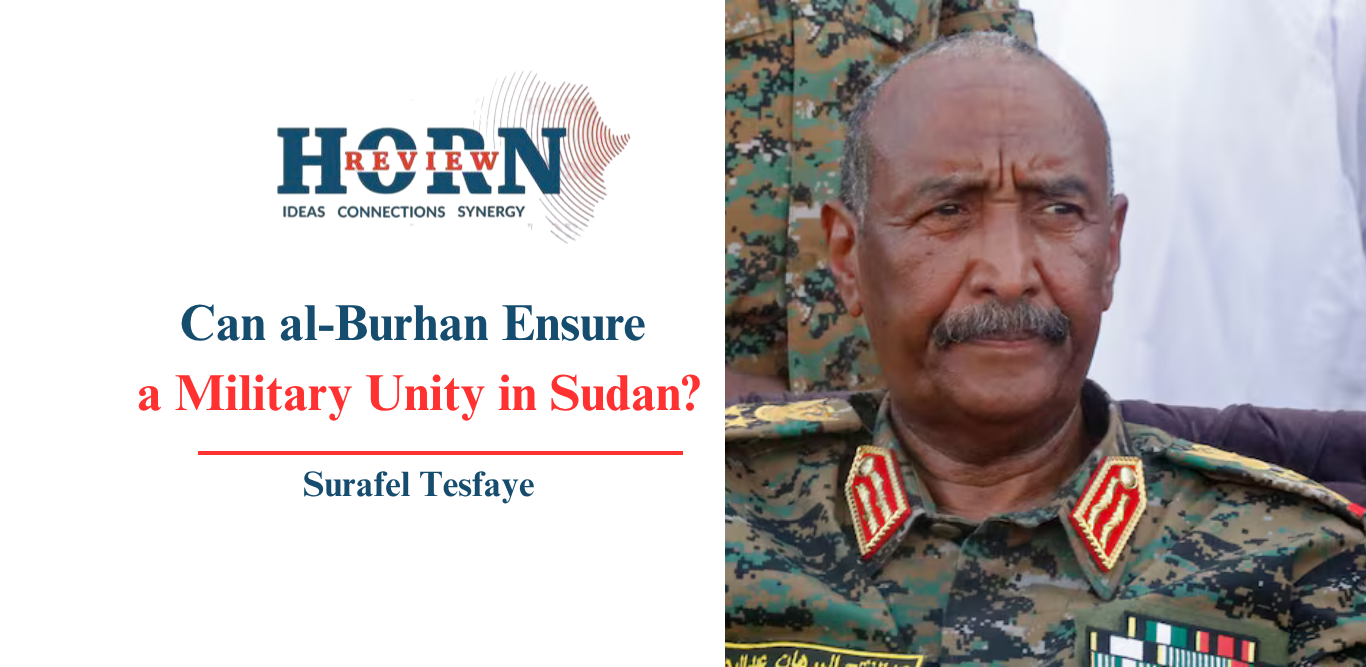
Can al-Burhan Ensure a Military Unity in Sudan?
The recent standoff between Field Commander Major General Al-Nour Ahmed Adam, widely known as Al-Nour Qubba, and the Sudan Armed Forces leadership under General Abdel Fattah al-Burhan marks a critical inflection point in the Sudanese civil war. The situation cannot be reduced solely to the rejection of a proposal, nor is it merely a dispute over military integration. Rather, it exposes the central contradiction of the conflict and highlights a grim reality for Sudan’s future, while laying bare the SAF’s war strategy and Burhan’s rhetoric about building a unified national army. Given these developments, raises difficult questions about the future of the Sudanese state. Is the conflict moving towards the reconstruction of a unified national army, or is it pushing the state toward fragmentation into rival armed groups? More importantly, Is Burhan constructing a national military institution, or is he merely extracting political opportunity from the chaos of war?
Al-Nour Qubba was once one of the most powerful commanders within the Rapid Support Forces. He was a founding figure of the RSF and a senior battlefield commander in Darfur. When he recently defected to the SAF, many in Port Sudan celebrated the move as a major blow against Mohamed Hamdan Dagalo’s camp. Yet that celebration proved short lived, because Qubba rejected Burhan’s proposals to integrate his combatants into the regular army’s ground force structure. In response, Qubba made it clear that he would not dissolve his forces into the regular army. Instead, he would fight alongside the SAF, but his men would remain under his exclusive command, operating as a parallel auxiliary force rather than as soldiers subject to institutional military control.
The heft of this refusal cannot be separated from the war’s founding crisis. Qubba’s demand precisely mirrors the crisis that ignited Sudan’s civil war. The rupture between Burhan and Hemedti began largely over the unresolved question of parallel-armed groups and the failure to merge the RSF into a unified national military. Now Burhan face’s a former RSF commander who seeks to preserve the very arrangement the SAF claims to be dismantling.
The situation grows even more perilous when viewed from the perspectives of military intelligence and internal security; because figures like Qubba present both opportunity and danger in equal measure. His value to the SAF is undeniable. He possesses extensive knowledge of the RSF’s communications, logistical routes, tribal recruitment systems, supply lines across Darfur and Kordofan, and the internal fractures developing within Hemedti’s command structure. But it also makes him a security risk. Hardliners and Islamist-aligned factions within Sudanese intelligence will inevitably wonder whether Qubba is a stable partner or an armed actor keeping his options open. A commander who retains his own forces and refuses structural integration can quickly become a rival military authority if the battlefield shifts or negotiations threaten his interests.
The deeper problem with Burhan’s strategy is political, not tactical. By negotiating with defectors as independent actors instead of absorbing them through institutional discipline, the SAF is devolving into a coalition management structure. The alliance around Burhan comprises regular army units, Islamist brigades, tribal militias, regional armed movements, and opportunistic defectors, each with separate chains of command and competing ambitions. Burhan’s strategic thinking seems to ignore the fact that these groups have assembled not out of a shared ambition for Sudan’s future, only by the immediate goal of defeating the RSF.
This danger deepens as these armed factions expand territorially. As commanders consolidate new areas of control, recruitment increasingly follows tribal and regional lines rather than national military standards. The longer the war continues, the larger and more entrenched these localized armed structures become. Once such groups accumulate battlefield experience, economic influence, territorial control, and access to state resources, disarming them after the conflict becomes extraordinarily difficult without triggering another cycle of war. Sudan’s history already demonstrates how auxiliary wartime forces can evolve into autonomous politico military actors once they become deeply embedded within local economies and tribal networks. The present trajectory suggests a repetition of this grim pattern on an even larger scale.
This is why Qubba’s rehabilitation has unsettled some of Burhan’s own allies. The earlier defection of Abu Agla Keikal had already revealed similar tensions inside the SAF camp. Like Qubba, Keikal preserved considerable autonomy after aligning with the army, maintaining his own command networks and local military influence instead of dissolving into the state military structure. Rather than creating a coherent military hierarchy, these arrangements have normalized the existence of parallel-armed centers operating alongside the state army.
For instance, the Darfur Joint Forces and factions aligned with Minni Minnawi lost thousands of fighters during the siege of El Fasher, a campaign in which Qubba played a major operational role. For many in those circles, bringing Qubba into the SAF camp feels less like reconciliation and more like a humiliating political compromise. Granting him, operational freedom angers existing allies and introduces operational friction. Consequently, Burhan’s willingness to accommodate Qubba could alienate groups that remained loyal to the army throughout the war. Every new defection may enlarge the anti-RSF coalition numerically, but it also erodes the coalition’s internal cohesion.
Sudan has traveled this road before, for the entire civil war was ignited by a failure to agree on security sector reform and a timeline for merging the RSF into the regular army. The Sudanese state originally empowered Mohamed Hamdan Dagalo and the RSF as an auxiliary force meant to solve short-term counterinsurgency problems in Darfur. Khartoum armed the RSF, financed it, legitimized it, and allowed it to maintain a separate command structure outside the institutional military hierarchy. Over time, that parallel force grew into a military organization strong enough to challenge the state itself. Now Burhan risks repeating the same strategic mistake by empowering defectors who retain their own-armed constituencies while operating under the SAF umbrella. This is what makes the present situation exceedingly dangerous. No single power is emerging to impose order. Instead, the conflict is fostering the creation of multiple autonomous defector led forces, each with its own agenda and armed capacity.
Officially, SAF commanders insist that integration follows strict institutional frameworks tied to disarmament, demobilization, and reintegration. Senior officers like Yasser al-Atta repeatedly emphasize that allied factions must eventually surrender heavy weapons and fully integrate into conventional military structures. Yet the reality on the ground moves in the opposite direction. Integration has become transactional rather than institutional. Militia commanders keep their men, vehicles, weapons, and local command systems while receiving legitimacy, ammunition, logistical support, and battlefield cover from the state.
This arrangement is steadily eroding the institutional character of the SAF. While ordinary officers and regular member soldiers remain subject to formal military discipline, politically useful defectors negotiate special arrangements based on their battlefield leverage. Over time, these disparities will undermine morale inside the army and deepen mistrust within the officer corps. More critically, they will destroy the ideal of a unified national military institution by replacing institutional hierarchy with negotiated armed patronage.
That’s why Burhan’s approach reflects a dangerous form of short-term strategic thinking. The concessions he offers to defectors might stabilize battlefield fronts for now, but they also lay the groundwork for future internal power struggles within the anti-RSF camp. Commanders who preserve independent military structures today will eventually demand political dominance, territorial leverage, and control over strategic resources.
So what is unfolding in Burhan’s leadership is not merely a military alliance against the RSF. It is the gradual emergence of competing armed actors positioning themselves for influence in a post war Sudan. The SAF leadership appears focused entirely on immediate battlefield survival, giving far less attention to what Sudan will look like after the war. Spoiling defectors for temporary military gains might help the army hold fronts today, but it creates far more dangerous problems for the future. Once these commanders consolidate territory under SAF protection, they will likely expand recruitment from their own tribal and regional bases, gradually transforming localized militia blocs into heavily armed political constituencies operating under state legitimacy.
That process will generate a future problem that Burhan currently has no means to control. His central dilemma is that he lacks any realistic framework to integrate peripheral tribal commanders, opportunistic defectors, institutional SAF officers, and increasingly influential Islamist factions into a single unified military order. These groups are not bound by a common national doctrine or long term political vision. Most are fighting for survival, prestige, regional influence, or access to economic networks, not for the reconstruction of a unified Sudanese state.
One crucial point must be clear. This does not mean any faction will topple Burhan tomorrow, nor that Qubba personally has the capacity to do so now. The argument concerns the future trajectory of sudans defectors. Raising this question should not be dismissed as a temporary concern. If examined closely, this pattern foreshadows Sudan’s future. At some point, those brigades will grow, and other commanders will ask: why should we dissolve our forces when others are permitted to keep theirs? Without institutional frameworks functioning, this dynamic will create a division of powers inside the SAF itself.
Moreover this integration clash fundamentally derails international peace initiatives, such as those proposed by the Quad or the African Union, aimed at building a civilian-led government, because a militarized environment is now shaping everything. An internal conflict within the SAF could erupt at any moment due to power hierarchies and the re-embedded groups. This reveals that no strict vision for Sudan’s future exists under Burhan. If this continues, the fractures will only worsen.
Under such conditions, the eventual weakening or collapse of the RSF would not necessarily produce unity within the SAF coalition. On the contrary, it could open the door to a fierce internal struggle over influence inside the post war state itself. Islamist factions operating around the SAF, Darfur based movements, tribal militias, defectors, and institutional army officers would all begin competing for political authority, military dominance, and control over state resources. Once the common enemy disappears Some factions would seek to become Burhan’s primary power base, while others would resist marginalization or exclusion from the future political order.
Not only this, fractures inside the coalition could emerge even before a military victory, not solely after. Rival factions are already competing over territory, and political proximity to the SAF leadership. These commanders are not being integrated into the military in any meaningful institutional sense right now. That raises an unavoidable question. If they are not being integrated now, how could they ever become fully subordinated later, after they have expanded their manpower, battlefield legitimacy, and territorial influence? Burhan risks producing a military landscape where armed factions formally allied with the state remain structurally independent from it.
The consequences become even more severe when examined from the perspective of Sudan’s future political order. If Sudan continues down this path, the chances of any credible civilian led transition will grow ever smaller. International mediators and regional governments have always tied future stabilization efforts to the creation of unified security institutions that can subordinate armed actors to civilian authority. But the current wartime structure around the SAF moves in the opposite direction. The conflict is becoming increasingly militarized through the expansion of auxiliary forces, autonomous commanders, ideological brigades, and transactional alliances, all of which weaken rather than strengthen institutional state authority.
Even if the RSF suffers a military collapse tomorrow, Sudan is unlikely to transition smoothly into a stable post war state. The removal of the common enemy would instead expose the internal contradictions currently held together by wartime necessity. Islamist brigades embedded inside the SAF structure, the Darfur Joint Forces, tribal militias, and former RSF defectors would all begin competing over political authority, territorial influence, border economies, intelligence structures, and access to state resources.
At that stage, the question of who becomes Burhan’s dominant partner in the post war order could trigger a new internal struggle. The SAF leadership possesses no coherent mechanism to reconcile ideological Islamist factions, institutional army officers, tribal commanders, and opportunistic defectors within a single centralized command structure. Most of these actors do not share a common long-term political vision beyond defeating the RSF. Once that objective weakens or disappears, the alliances sustaining the coalition could quickly fall apart. The danger, therefore, extends beyond mere military fragmentation. Burhan risks creating a permanent warlord order that operates under the symbolic cover of the state, or igniting a second phase of conflict dominated by bargaining among armed factions that do not operate within the state military apparatus.
Moreover, those autonomous commanders preserved during wartime will eventually demand political rewards tied to their wartime loyalty. Governorships, control over trade corridors, access to intelligence networks, and regional security authority could all become bargaining tools in a future post war negotiation.
This is precisely why Qubba’s dispute with the SAF leadership matters beyond the immediate military context. It is not limited to an administrative disagreement over rank, command, or military procedure. It reveals the structural crisis that will shape Sudan’s future. Burhan is not building a unified post war army. He is managing a fragile battlefield coalition whose internal contradictions are steadily deepening under the pressure of war.
If this continues, Sudan may eventually face a political reality in which the state survives in name only, while real coercive power is dispersed among competing armed centers operating inside the state’s own military umbrella. In that case, even a battlefield victory against the RSF would not necessarily restore national cohesion. It would simply open the door to another phase of conflict driven not by Hemedti, but by the armed actors, Burhan empowered in the name of defeating him.
By Surafel Tesfaye, Researcher, Horn Review

RELATED
Posts
9
Oct
Where Somalia’s Federal and Regional Fight Is Going
The 2012 federal settlement was less a constitutional order...
9
Oct
Eritrea’s Post-Pretoria Strategy and the Escalation in Ethiopia
Our latest report examines Eritrea’s post-Pretoria trajectory and how selective...
8
Oct
The Houthi-al-Shabaab Nexus and the Emerging Security Architecture of the Gulf of Aden
The growing relationship between Yemen’s Houthi movement and Somalia’s al-Shabaab...
7
Oct
“Decaffeinated Sovereignty”: Eritrea’s One-Way Street with Ethiopia
There is a peculiar contradiction at the heart of Eritrea’s...
7
Oct
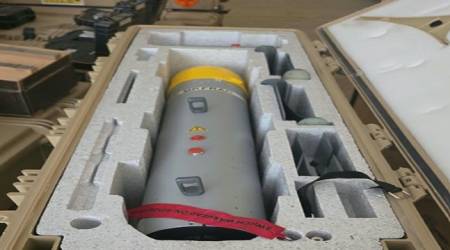
Leaked Documents Allege Sudanese Army Weapons Pipeline to TPLF-Aligned Forces as Tigray War Reignites
Leaked documents alleging a Sudanese army weapons pipeline to TPLF-aligned...
7
Oct
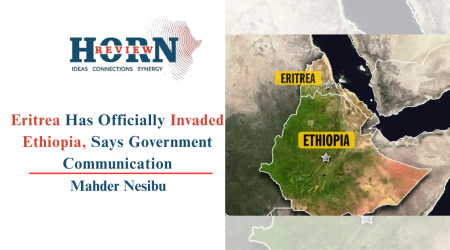
Eritrea Has Officially Invaded Ethiopia, Says Government Communication
Ethiopian Government Formally Condemns Eritrean Territorial Incursion as Its Forces...
7
Oct
Turkey, Somalia and the Transactional Reading of Alamein
The Alamein Declaration functions less as a coherent framework...
7
Oct
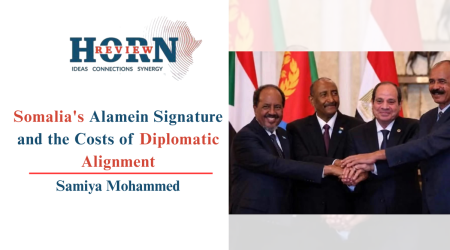
Somalia's Alamein Signature and the Costs of Diplomatic Alignment
The Alamein Declaration between Egypt, Sudan, Eritrea and Somalia...
6
Oct
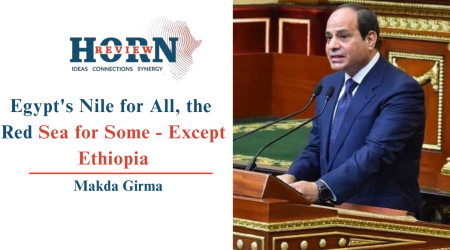
Egypt's Nile for All, the Red Sea for Some - Except Ethiopia
The contradiction was laid out almost perfectly at El Alamein....
6
Oct
Isaias Afwerki has Long Wanted to Rule Ethiopia, Why He will Never
President Isaias Afwerki is among the most enduring figures in...