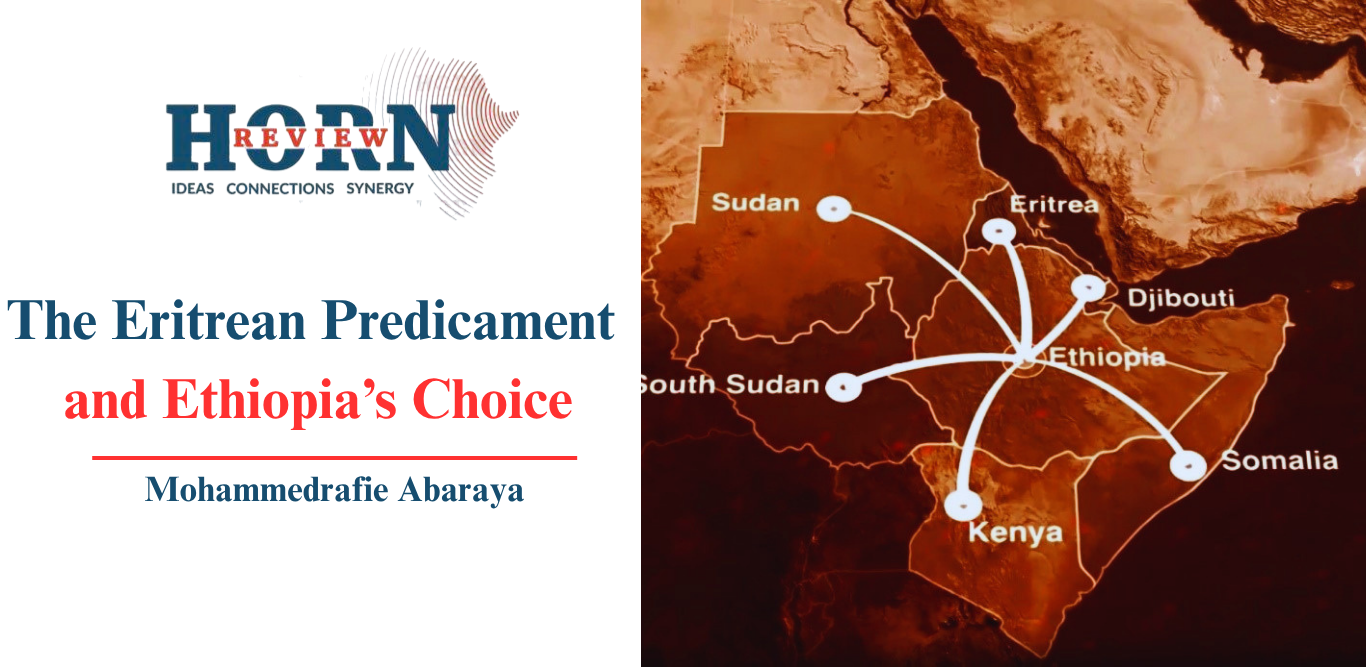
In international relations, countries do not choose their neighbors. Geography is destiny. What states can choose, however, is how they engage with those neighbors—whether to cooperate in shaping a shared neighborhood or to undermine it through hostility and suspicion. Ethiopia’s strategic choice is clear: it is shared prosperity. Accordingly, Ethiopia seeks a Horn of Africa that supports shared growth, regional economic integration, and long‑term stability. Yet among the most persistent obstacles to this vision is the posture and policy of the Eritrean government.
Over the past two decades, Ethiopia has recorded an average annual economic growth rate exceeding 8.5 percent. International financial institutions project this momentum to continue, with growth estimated at over 9 percent in the coming year. Ethiopia is determined to sustain this economic dynamism to meet the developmental needs of its population of more than 130 million. Prosperity is not merely an aspiration; it is an existential imperative. Nevertheless, a range of challenges complicates this ambition, and one of the most troubling concerns relates to the conduct of the Eritrean government.
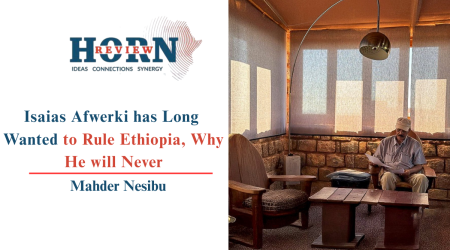
In the short term, this challenge manifests through Eritrea’s active interference in Ethiopia’s internal affairs. This interference takes multiple forms, the most dangerous of which involves military, logistical, and financial support to militant and rebel groups operating inside Ethiopia, in particular the TPLF. Eritrea’s fixation on Ethiopian domestic politics is striking. The frequent public commentary by Eritrean officials on Ethiopia’s internal political dynamics gives the impression that they are disgruntled opposition figures rather than leaders of a neighboring sovereign state. While such rhetoric might be dismissed as bizarre or even amusing, the material support provided to armed groups with the explicit aim of destabilizing Ethiopia cannot be ignored. This has long been a pattern. Most alarmingly, Eritrea’s role in pushing hard‑line factions of the TPLF to renege on the Pretoria Peace Agreement represents a serious escalation. This behavior has elevated Eritrea from a passive skeptic of normal relations with its neighbors to an active spoiler of an already fragile peace. This is further compounded by the fact that Eritrean troops are operating within and occupying Ethiopian territory.
Beyond these immediate concerns lies a more consequential medium‑term challenge: Eritrea’s refusal to make good on its undertaking to allow Ethiopia access to the Port of Assab. Sustaining rapid economic growth requires efficient logistics, diversified trade routes, and reliable access to maritime outlets. For Ethiopia’s hinterland, Assab is geographically and historically the most natural and cost‑effective route to the sea. Eritrea’s continued blockade of this port—apparently driven more by spite than by rational economic or political calculation—significantly constrains Ethiopia’s options. There is also reason to believe that President Isaias is deliberately undermining the viability of the port to deny his own youth opportunities, as access to maritime routes would facilitate their departure from Eritrea in large numbers. While Ethiopia consistently advocates for mutually beneficial maritime and logistics arrangements, Eritrea persists with a policy defined by hostility and confrontation, including through the use of proxies.
More troubling still is a looming long‑term risk that extends beyond Ethiopia: the future of the Eritrean state in a post‑Isaias era. Presidents, even presidents for life, are mortal. In most countries, the death or departure of a head of state triggers constitutional procedures that ensure continuity and stability. Eritrea, however, lacks the basic institutional safeguards required for an orderly transition. There is no functioning constitution, no parliament, and no designated successor. A country that achieved independence with enormous promise has been hollowed out into a shell state by decades of personalized rule.
The consequences are already visible. Large segments of Eritrea’s population have fled through perilous migration routes, creating one of the most significant exoduses of the modern era. Violent clashes among Eritrean diaspora communities abroad may foreshadow the internal chaos that could erupt once the president exits the scene. Decades of extreme militarization and collective trauma make a peaceful transition highly unlikely. This institutional vacuum renders Eritrea vulnerable to opportunistic extremist groups operating in the region, including organizations such as Al‑Shabaab and ISIS. The emergence of a contiguous belt of instability stretching from the Sahel through Sudan and Eritrea to Yemen would have devastating consequences for regional security and for the strategic Red Sea corridor.
For Ethiopia, which shares more than 1,000 kilometers of border with Eritrea and hosts the largest population of Eritrean refugees, this scenario is deeply alarming. Yet this should not be viewed as Ethiopia’s concern alone. A surge of refugees into neighboring states and the potential entrenchment of violent non‑state actors along one of the world’s most vital maritime routes should concern all stakeholders in Red Sea and global security.
What, then, is to be done? There are no quick fixes or easy solutions. However, the first step toward any durable resolution is an honest diagnosis of the problem. For close observers of Eritrea, the core issue is increasingly evident: a leadership with no genuine interest in the welfare, development, or future of its own people. A leadership devoid of constructive vision at home cannot be expected to pursue cooperation abroad. Eritrea’s future is being held hostage by aging elites trapped in outdated narratives of the twentieth century.
Ethiopia remains willing to work with Eritreans—and with friends of Eritrea—through dialogue and engagement to overcome these challenges. This willingness extends even to engaging with the existing Eritrean leadership in pursuit of a peaceful and diplomatic resolution of tensions between the two countries. Ethiopians and Eritreans are bound by geography, history, and deep social ties. This reality cannot be altered. What can be chosen is how both societies confront the legacy of their troubled past. Ethiopia’s choice, particularly for its current generation, is a future grounded in cooperation and institutionalized economic integration. Achieving this requires confronting mistrust and grievances through sustained dialogue. A necessary first step toward rebuilding confidence would be for the Eritrean government to cease its interference in Ethiopia’s internal affairs and withdraw its forces from Ethiopian territory.
Only then can the Horn of Africa move closer to becoming a neighborhood defined not by antagonism, but by shared prosperity and stability.
By Mohammedrafie Abaraya, Deputy Executive Director of Federal Democratic Republic of Ethiopia, Institute of Foreign Affairs
Email: mohammed.rafie@ifa.gov.et