
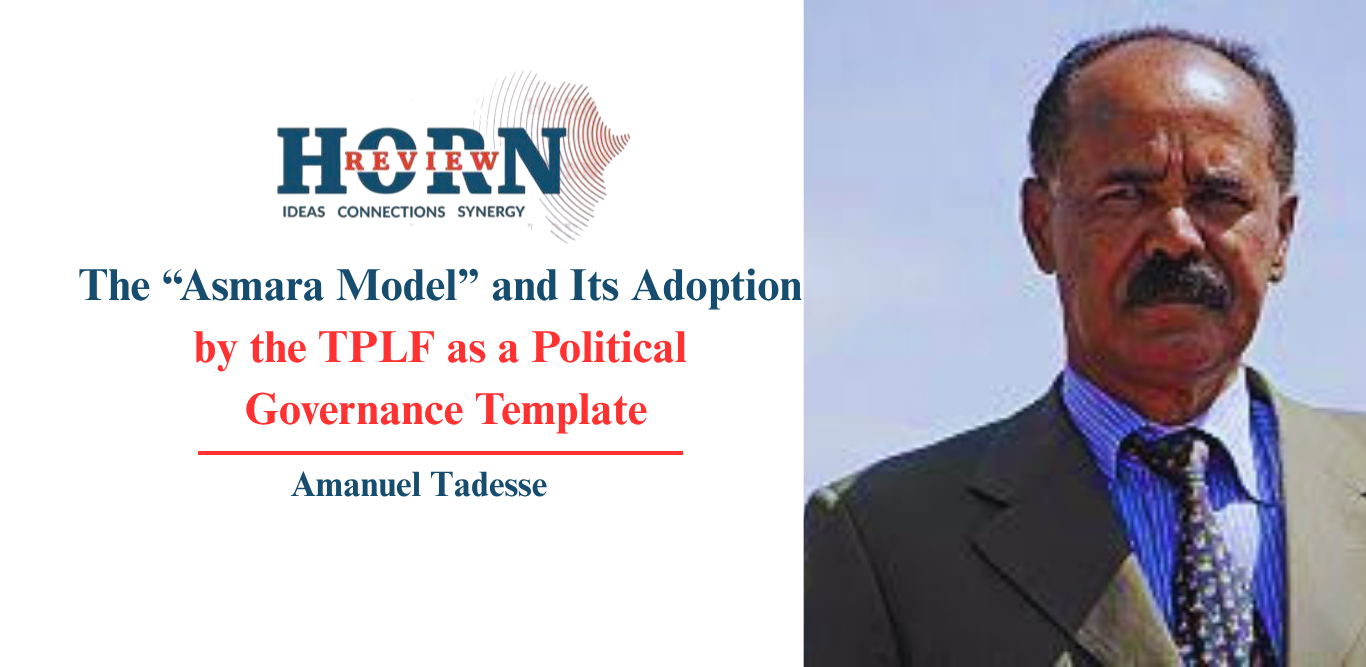
The “Asmara Model” and Its Adoption by the TPLF as a Political Governance Template
In the years following the Pretoria Agreement, factions within the TPLF have increasingly embraced political and security practices that resemble the governance approach of President Isaias Afwerki and the Eritrea’s ruling People’s Front for Democracy and Justice (PFDJ). Since its emergence as a secessionist movement and later as the governing authority of Eritrea, the PFDJ has consolidated what can be described here as the “Asmara Model.” The “Asmara model” used in this piece refers to a politico-military governance framework characterized by the fusion of the ruling party with state apparatuses; reliance on proxy networks; the securitization of civilian institutions; the instrumentalization of humanitarian aid; centralized command-and-control governance; and the prioritization of regime survival and elite enrichment over public welfare; and the conversion of state into a clientelist state structure.
Following its disengagement from active hostilities after the signing of the Pretoria Agreement, the TPLF has replicated aspects of the Asmara model in its post-conflict political and administrative practices within the region. It is therefore imperative to carefully probe some of the salient features of the Asmara model and the extent to which this model has been reproduced in the TPLF’s governance conduct in the Tigray region and beyond.
- “Ximdo”: Tactical Alliance with Sha’abia and Other Anti-Ethiopian Elements
One of the defining features of the Asmara model is the construction of opportunistic alliances with ethnic insurgents and anti-state actors operating across the Horn of Africa. The PFDJ historically institutionalized a doctrine of proxy warfare based on covert military coordination, regional destabilization, and the externalization of insecurity into neighboring states.
During and after its secessionist struggle, Eritrean political and security apparatuses cultivated tactical relations with various groups and armed opposition actors such as the MEISON, the Ethiopian People’s Revolutionary Party (EPRP), the Afar Liberation Front, ONLF, OLF, Ginbot 7, and anti-Ethiopian armed actors. These ultra-nationalist alliances were not established on the basis of ideological coherence or durable strategic convergence. Rather, they were co-opted for proxy confrontation, coercive leverage, geopolitical attrition, and the destabilization of Ethiopia and neighboring states such as Sudan, Djibouti and Yemen.
The TPLF hardline clique is now replicating and re-establishing tactical engagements with the Eritrean regime, which it had previously portrayed as a mortal enemy under the political catchphrase of “Ximdo”. In fact, the TPLF had been a junior partner of the EPLF since its initial alliance with the latter during the 1970s and 1980s, when both movements coordinated operations against the military junta. This cynical and unholy alliance eventually collapsed when the Eritrean regime launched aggression against Ethiopia in 1998. The Algiers Agreement formally ended the war but it failed to establish durable peace, as both sides continued seeking to undermine one another and became entrenched archenemies. This ushered in the prolonged period of “no war, no peace,” during which the TPLF maintained a decisive political and diplomatic advantage over Sha’abia through strategic regional maneuvering. However, the impasse was eventually broken by the advent of a reformist government in Ethiopia led by Dr. Abiy Ahmed. The TPLF was unhappy and sulking when peace and normalization between Ethiopia and Eritrea became a reality. In its bid to reverse the political reform process and evade accountability for alleged human rights abuses committed during its rule under the EPRDF, the disgraced TPLF cabal unleashed a merciless attack against the Northern Command, thereby triggering the northern conflict that later ended with the Pretoria Agreement. The conflict also reignited Sha’abia’s anxieties over Ethiopia’s legitimate aspirations for access to the Red Sea.
The Eritrean regime and the TPLF faction then put aside their long-standing and intense hostility to each other and have formed an anti-Ethiopian alignment, also supported by Ethiopia’s historical adversaries. Using these as leverages, the regime in Asmara is providing logistical, financial, military, and intelligence support to TPLF and other armed and opposition groups, including Fano, splinter ONLF, OLA, ARDUF, ANRUF, and Kimant Democratic Party.
As an extension of this emerging alignment, the TPLF has recently in coordination with Eritrean military operatives and elements linked with SAF, convened the second Ximdo conference in Port Sudan. These meetings brought together a coalition of armed groups, opposition remnants, and militant political networks, including splinter ONLF figures led by Abdirahman Mahdi, ANRUF under Haji Ibrahim Osman Aliyu, FANO affiliates, opposition leftovers such as Andargachew Tsige and Professor Mohammed Hassen, Eritrean Ambassador to Sudan Issa Ahmed Issa, and Sha’abia affiliated propogandists. This alliance echoes a serious miscalculation by both the TPLF and Eritrea, aimed at obstructing the 7th Ethiopian National Elections based on the assumption that the ENDF is overstretched by ongoing conflicts and therefore incapable of mounting an effective offensive response against them. However, they fail to recognize that the current tensions are largely the result of their own destabilizing role in undermining the Government of Ethiopia’s firm position in defending the country’s sovereignty. Nevertheless, they are fully aware of the consequences they would face if they directly engage in unprovoked confrontation with Ethiopia. Yet, they continue their destabilization roles, seemingly with the intention of testing the water.
This political realignment has exposed the TPLF faction as an appendage and protégé of the PFDJ. It has also revealed the emptiness of its rhetoric about the causes and consequences of the Eritrean-Ethiopian war, as it is enabling the Eritrean forces to occupy Ethiopian territories and terrorize civilians in border areas. Accordingly, the opportunistic Ximdo alignment appears to be the last gamble of the TPLF faction: entrusting its political fate to its former mortal enemy while exposing the people of the Tigray region to further destruction in pursuit of the militarized logic of the Asmara model. Nevertheless, TPLF extremists appear to overlook the reality that Asmara is using them as cannon fodder or expendable instruments rather than genuine partners, while remaining fully aware of the TPLF’s long-term intentions.
- Sudan as a Strategic Rear Base for Proxy Warfare and the Militarization of Army 70
Within the volatile geopolitical and security dynamics of the Horn of Africa, Sudan has historically served as a strategic rear base for insurgent movements, proxy militias, and transnational armed actors operating across the region. Under established principles of international law, states bear a duty not to permit their territory to be utilized for hostile, subversive, or destabilizing activities directed against neighboring states. Nevertheless, Sudan has repeatedly emerged as a permissive operational theater for armed political organizations seeking to externalize conflict, project violence across borders, and manipulate regional instability for geopolitical leverage.
In the Eritrean context, successive Eritrean nationalist and armed movements cultivated extensive political, military, and logistical infrastructures inside Sudanese territory during different phases of the Eritrean armed struggle. These included the Eritrean Liberation Movement (Harakat al-Tahrir al-Eritriya), established in Port Sudan in 1958; the Eritrean Liberation Front (al-Jabha), founded in Cairo in 1961 and later deeply entrenched in Sudan’s eastern frontier; and subsequently the Eritrean Peoples’ Liberation Front (Sha’abia), which consolidated major operational structures through Sudan beginning in the 1970s. Through hubs in Khartoum, Kassala, and Port Sudan, these organizations established recruitment pipelines, intelligence corridors, political liaison offices, weapons procurement systems, financial networks, and cross border military supply chains. Sudanese territory thus evolved into a protected sanctuary and staging ground for sustained cross-border armed operations against Ethiopia.
This historical trajectory later crystallized into what I described as the Asmara model – a regional security doctrine institutionalized by the Eritrean regime in the post-independence era. It normalizes proxy warfare, covert destabilization, strategic infiltration, and the instrumentalization of neighboring territories as tools of geopolitical leverage. Under this model, regional conflicts are treated not merely as localized security crises but as opportunities for influence projection, regime survival, asymmetric coercion, and the weakening of neighboring states through proxies.
Along a comparable geopolitical trajectory, the TPLF faction has increasingly exhibited operational tendencies that resemble aspects of the Asmara model. Historically, during the armed struggle against the Dergue regime, the TPLF maintained political and operational networks within Sudan, benefiting from the permissive regional environment that characterized Khartoum’s posture toward insurgent movements operating against Ethiopia.
More recently, following the outbreak of the Northern Ethiopia conflict, TPLF’s militia aka Army 70 led by Meuzey Mekonnen Tewelde under Brig. Gen. Megbey Haile’s Western Command has been vigorously operating in Sudan and fighting as a mercenary force alongside Gen. Abdel Fattah al-Burhan’s SAF and allied militias such as Sudan Shield Force led by Abu Aqla Kaikal. These operations have taken place in the volatile Gedaref State, along the common border with Ethiopia, a borderland claimed both by Ethiopia and Sudan. It is also worth noting that widely circulated footage recently released by fighters of the Rapid Support Forces (RSF) purportedly depicts the capture of individuals identified as Army 70 combatants fighting alongside the SAF. Thus, these hostile acts show how the TPLF is adopting the Asmara model using the Sudan’s eastern frontier as a safe haven to destabilize Ethiopia.
- The TPLF’s Linkages with Extremist Terrorist Groups
The PFDJ has long been acted opportunistically in its dealings with others, aligning itself with any actor that could support its objective of undermining Ethiopia. The TPLF now appears to be mimicking the political behavior of its patron. The TPLF, through its armed elements and clandestine cells has also established operational and ideological linkages with the extremist armed actors operating within the Sudan conflict theater, including the al-Barra Bin Malik Battalion, a militia led by Abu Zaid Talha of al-Misbah, and affiliated with Muslim Brotherhood and networks connected with the IRGC. The Battalion was designated as a foreign terrorist organization by the U.S Department of State on March 9, 2026, and subjected to European Union sanctions on January 29, 2026. The battalion has been actively fighting in support of the SAF on the Khartoum, Omdurman, and Gezira fronts. Scholars like Clionadh note that armed movements in a fragile region with recurrent surges of conflicts may evolve into transnational conflict entrepreneurs, exerting influence through cross-border instability and strategic alliances. In this parlance, the TPLF has been leveraging the Sudan conflict in a manner similar to the regional proxy strategies historically linked with the Eritrean regime utilizing external conflicts to establish tactical alliance with armed actors, get geopolitical relevance, and increase pressure on Ethiopian government through regional destabilization dynamics. It can therefore be concluded that the TPLF is increasingly replicating the regional destabilization template of Asmara Model by transforming itself from a domestic insurgent movement into a transnational proxy and destabilization apparatus operating across the Horn of Africa.
- The Instrumentalization of Humanitarians Aid
The TPLF has used humanitarian aid and the plight of internally displaced persons (IDPs) as instrument of political leverage, replicating PFDJ’s template. The faction has obstructed humanitarian operations and measures taken to ensure the safe, voluntary, and dignified return of IDPs, while simultaneously mobilizing financial and political support for its renewed adventures. During the armed struggle against the Dergue regime in the 1970s, the PFDJ had obstructed the delivery of aid to famine-affected populations in Eritrea for political purposes. Likewise, the TPLF has diverted humanitarian assistance and formal budgets allocated by federal government for social services and exploited relief operations to sustain its military capabilities, including the procurement of military equipment and logistical support. As an extension of its long-standing humanitarian maneuvering since its establishment in the late 1960s, the TPLF has replicated the Asmara model of instrumentalizing humanitarian aid as a mechanism of political pressure and strategic bargaining. In this regard, the faction has sought to portray the Federal Government of Ethiopia as incapable of adequately delivering humanitarian assistance, while politicizing the suffering of civilians in Tigray region to advance its political and military agenda.
- Politicization and Militarization of Civilian Governance Structures
Another defining natures of the Asmara model is the systematic fusion of civilian governance with military command structures. Scholars such as Alex De Waal have argued that the PFDJ institutionalized a garrison-style political culture in which civilian institutions became subordinate to military objectives, revolutionary command networks, and security centered rule. Under such a system, the distinction between civilian administration and military authority is deliberately erased, producing an authoritarian order governed through coercion, surveillance, and permanent mobilization. In a similar manner, the TPLF faction has changed governance structures that were previously administered under the Interim Administration led by Getachew Reda and later by Lt. Gen. Tadesse Werede into increasingly politicized and militarized command structures. Through faction-controlled cabinets and informal command networks, civilian institutions are being subordinated to party-security apparatuses directed by the TPLF politburo and its affiliated security forces. In practice, this mirrors a wartime mobilization doctrine modeled on the PFDJ system, where public administration is converted into an instrument of political control and militarized domination rather than constitutional governance. This trajectory has cultivated a commandist political order in which coercive structures overshadow civilian authority and foster a climate of confrontation, ideological rigidity, and political intimidation throughout the Tigray region. At its core, the TPLF faction by reproducing the PFDJ model adopts the elevation of party-security structures above autonomous public institutions. The remnant projects itself as the sole source of authority across all sectors of governance and conflates the identity and destiny of the people of Tigray with the survival of the TPLF itself. This is a hallmark of authoritarian political movements that seek to monopolize legitimacy by presenting themselves as synonymous with the people. Yet political organizations are temporary and contingent, whereas the people and their collective interests transcend any single party, faction, or leadership circle. This dynamic reflects a dangerous Asmara-style tendency in which party structures eclipse public institutions, blurring the boundary between the defunct TPLF organization and the regional state apparatus itself. The result is an environment of institutional capture, political opacity, and constitutional decay, where governance becomes dependent on factional loyalty rather than legal mandate or public accountability. Such a system leaves little room for an independent civil service, democratic pluralism, or a coherent long-term political vision capable of addressing the aspirations and grievances of the people of Tigray. The outcome is the consolidation of a militarized authoritarian enclave sustained through fear, factional patronage, and ideological conformity.
- The Manipulation of Education for Military Mobilization
The TPLF has instructed all schools in the Tigray region to close one month ahead of schedule, effective June 7, 2026, before the onset of the rainy season, citing unpaid teachers’ salaries for several months and the severe financial crisis affecting the education sector. However, given the TPLF’s entrenched political and militarized character, this departure from the normal academic calendar cannot be viewed merely as a consequences of financial constraints. Rather, it appears to constitute a political and strategic calculation aimed at facilitating youth mobilization for military recruitment, reminiscent of Eritrea’s Warsay-Yikealo system, under which youths are subjected to compulsory conscription.
In this context, the premature closure of schools can be understood as an effort to reinforce armed command structures through the recruitment of new cadres and to prepare for renewed confrontation, thereby prioritizing militarized objectives over the educational future of the younger generation in the region. Accordingly, the disruption of education for the implicit purpose of military mobilization reflects a militarized governance template that the TPLF is widely perceived to have adopted from its longstanding political and ideological ally, Sha’abia.
Based on the preceding discussions, one can brazenly concluded that the TPLF is replicating the Asmara Model, operating as a proxy-driven destabilizing actor that lingers to pursue confrontation and regional instability rather than constructive political engagement. Despite repeated opportunities for peaceful political reintegration, the TPLF remain unwilling to abandon strategies that undermine Ethiopia’s sovereignty, stability, and national cohesion, while simultaneously derailing the aspirations of the people of Tigray. The people of Tigray must critically understand the true political trajectory of hardline the TPLF cabals and actively resist ways that continue to expose the region to conflict. The international community should also recognize that the Government of Ethiopia has consistently demonstrated restraint in seeking to resolve differences through peaceful means. However, concerns remain that factions within the TPLF are attempting to drag the Ethiopian government back into confrontation in coordination with local insurgents and external backers, including the regime in Asmara. While Ethiopia has continued to prioritize dialogue and stability, such restraint cannot be expected indefinitely, as every sovereign state has the legitimate right and responsibility to protect its sovereignty, constitutional order, territorial integrity, and national security from any form of threat both internal and external.
By Amanuel Tadesse, International Law and Foreign Relations Expert

RELATED
Posts
9
Oct
Where Somalia’s Federal and Regional Fight Is Going
The 2012 federal settlement was less a constitutional order...
9
Oct
Eritrea’s Post-Pretoria Strategy and the Escalation in Ethiopia
Our latest report examines Eritrea’s post-Pretoria trajectory and how selective...
8
Oct
The Houthi-al-Shabaab Nexus and the Emerging Security Architecture of the Gulf of Aden
The growing relationship between Yemen’s Houthi movement and Somalia’s al-Shabaab...
7
Oct
“Decaffeinated Sovereignty”: Eritrea’s One-Way Street with Ethiopia
There is a peculiar contradiction at the heart of Eritrea’s...
7
Oct
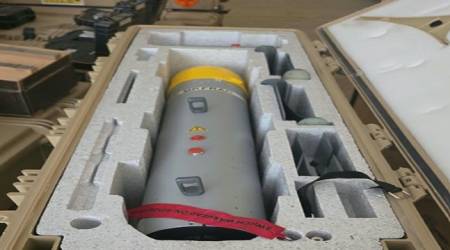
Leaked Documents Allege Sudanese Army Weapons Pipeline to TPLF-Aligned Forces as Tigray War Reignites
Leaked documents alleging a Sudanese army weapons pipeline to TPLF-aligned...
7
Oct
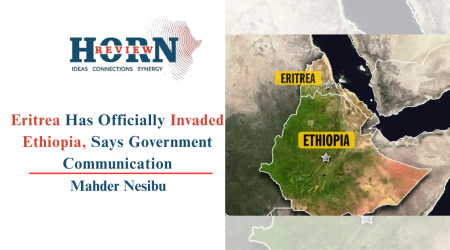
Eritrea Has Officially Invaded Ethiopia, Says Government Communication
Ethiopian Government Formally Condemns Eritrean Territorial Incursion as Its Forces...
7
Oct
Turkey, Somalia and the Transactional Reading of Alamein
The Alamein Declaration functions less as a coherent framework...
7
Oct
Somalia's Alamein Signature and the Costs of Diplomatic Alignment
The Alamein Declaration between Egypt, Sudan, Eritrea and Somalia...
6
Oct
Egypt's Nile for All, the Red Sea for Some - Except Ethiopia
The contradiction was laid out almost perfectly at El Alamein....
6
Oct
Isaias Afwerki has Long Wanted to Rule Ethiopia, Why He will Never
President Isaias Afwerki is among the most enduring figures in...