In much of postcolonial Africa, the story of independence was never simply about the departure of foreign rulers. It was about the promise of transformation. Liberation movements across the continent did not fight only to inherit flags, borders, and diplomatic recognition. They fought to create new political communities grounded in dignity, sovereignty, and popular participation. Independence was imagined not merely as a legal event, but as a moral rebirth.
Yet history repeatedly exposes a brutal truth. Many liberation movements that emerged from anti-colonial struggle eventually transformed into highly centralized states where the logic of wartime survival outlived the war itself. Institutions became subordinated to ruling elites, political pluralism narrowed, and national unity was increasingly equated with political conformity.
Few countries embody this contradiction more profoundly, Thirty-three years after independence, Eritrea remains one of Africa’s most politically closed and institutionally centralized states. The country that once symbolized revolutionary endurance and self-reliance now stands at the center of a deeper continental debate: what happens when liberation succeeds militarily but stalls institutionally?
This question does not concern Eritrea alone. Across the Sahel, political systems are also being reshaped by militarization, securitized governance, collapsing institutions, and growing public distrust toward both domestic elites and foreign influence. While Eritrea and the Sahel emerged from vastly different historical paths, they increasingly intersect around one central reality: the crisis of state legitimacy in postcolonial Africa. The comparison is important because it reveals two opposite but interconnected forms of fragility.
In the Sahel, weak states fractured under insurgencies, coups, external interventions, and institutional collapse. In Eritrea, by contrast, the state remained remarkably cohesive and centralized, but often at the expense of civic openness and institutional pluralism. One model suffered from too little state control. The other became defined by too much concentration of authority.
Both roads expose the unresolved tension between sovereignty and freedom in contemporary Africa. To understand Eritrea’s present condition, one must first understand the historical psychology of its liberation struggle.
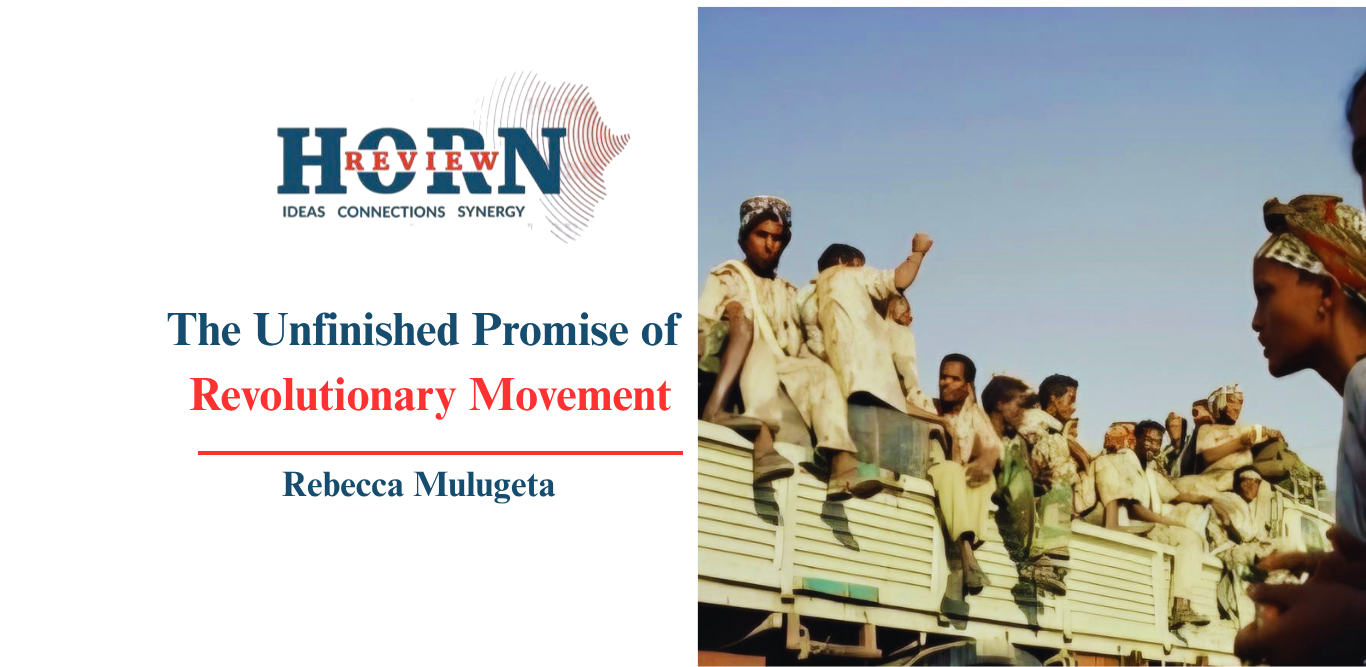
Eritrea’s path to independence was among the most militarized movements on the African continent. The war lasted for decades, consuming entire generations. Fighters survived not only through military organization but through extreme ideological cohesion, sacrifice, and centralized command structures. In the context of war, such discipline became necessary for survival.
But wars shape states long after they end. Many revolutionary governments struggle to transition psychologically from liberation movements into civilian institutional systems. Wartime structures built around secrecy, hierarchy, and centralized authority often continue into peacetime governance. Political pluralism becomes viewed not as democratic necessity, but as potential fragmentation. Criticism becomes associated with disunity. Stability becomes inseparable from control.
Eritrea reflects this transition with unusual intensity, maintaining a heavily centralized model since its 1993 session, when national elections were never held, independent media vanished, and governance gradually shifted into securitized state structures. Yet attempting to bring stability achieved through prolonged political closure carries its own costs. Over time, centralization can evolve from a temporary security logic into a permanent governing culture. Institutions cease functioning independently and instead become extensions of executive authority. Public participation weakens. Political succession becomes uncertain. Citizens increasingly experience the state not as a participatory framework, but as a structure that manages society from above.
This is where Eritrea’s crisis becomes less about immediate instability and more about institutional stagnation. The absence of independent institutions creates a profound long-term vulnerability because states ultimately survive not through discipline alone, but through adaptability. Political systems require mechanisms for criticism, renewal, generational transition, and social negotiation. Without these channels, pressure accumulates silently beneath the surface.
One sees this tension most visibly through migration. Few realities reflect institutional exhaustion more powerfully than the sustained departure of youth. Across refugee camps and diaspora communities stretching from and to and , many young Eritreans describe lives shaped by uncertainty, prolonged national service, restricted economic mobility, and limited civic space. Their departure represents more than economic migration. It reveals a widening emotional distance between state structures and societal aspirations. This phenomenon mirrors, in a different form, developments across the Sahel.
In countries such as Mali, Niger, and Burkina Faso, decades of weak governance, corruption, economic inequality, and external dependency gradually eroded public trust in civilian political systems. Coups were welcomed by sections of the population not necessarily because military rule promised democracy, but because existing institutions had lost legitimacy.
The rise of military-led governments in the Sahel reflects a broader continental frustration with postcolonial governance models perceived as externally dependent, economically unequal, and institutionally hollow.
Yet the Sahelian path also shows the dangers of securitized governance becoming the dominant organizing principle of the state. As insurgencies expanded across the region, governments increasingly prioritized military responses over institutional reform. Political discourse became dominated by sovereignty, security, and anti-foreign rhetoric. Civilian institutions weakened further while military actors gained political centrality.
This securitization process parallels aspects of Eritrea’s political evolution, though under different historical circumstances. Both cases demonstrate how prolonged insecurity reshapes the relationship between state and society. Governments facing existential threats often centralize authority, restrict dissent, and subordinate institutions to security priorities. Initially, these measures may generate cohesion. Over time, however, they risk hollowing out the very institutional life necessary for sustainable national development.
states become highly protective of sovereignty while citizens simultaneously experience shrinking political agency. The secession imagined sovereignty as collective emancipation. Yet many Eritreans today navigate a political environment where civic participation remains deeply constrained. Public debate is limited. Independent journalism is absent. Religious communities outside officially recognized structures face restrictions, including members of , who have endured decades of exclusion and imprisonment linked to their refusal to participate in military service and political referendums.
These realities have shaped not only politics, but the social psychology of the country itself. This dynamic produces a society outwardly stable yet internally restrained. Still, reducing Eritrea solely to repression would oversimplify a deeply complex national reality.
sovereignty without institutional openness eventually encounters structural limits. No state can indefinitely rely on revolutionary legitimacy alone. Liberation memory is powerful, but generational realities evolve.
This generational shift is transforming political discourse across Africa. In the Sahel, frustrated youth populations became central actors in anti-establishment mobilizations. In Eritrea, many young people express frustrations differently, often through migration rather than public political confrontation. Yet both reactions emerge from a common continental condition: the growing disconnect between postcolonial states and youthful societal aspirations.
At its core, this is an institutional crisis. Africa’s post-liberation challenge was never only about achieving independence. It was about building institutions capable of balancing sovereignty with accountability, security with participation, and unity with pluralism. Some states failed because institutions became too weak. Others became trapped in overcentralization where institutions existed primarily to preserve executive authority.
Eritrea belongs to the second category. The tragedy is not that the state disintegrated, but that institutional and political life became so restricted that society itself was gradually compressed under an increasingly centralized order. Over time, public space narrowed, independent civic activity weakened, and political expression became heavily constrained. Yet, Eritrea’s future remains unwritten.
What does it truly mean to celebrate independence in the absence of genuine freedom? This is the fundamental question confronting Eritrea today. After decades of governance defined by securitized control, political restriction, and concentrated authority, the issue is no longer simply one of state survival, but of national direction and political legitimacy. Can a government that has long viewed civic openness with suspicion create space for meaningful public participation without perceiving it as a challenge to its authority? Can institutions evolve into independent pillars of governance rather than remaining subordinate to a single political center?
For many young Eritreans, the search for opportunity, dignity, and personal freedom is increasingly imagined beyond the country’s borders rather than within them. This widening disconnect between the state and society reflects a deeper national crisis, one that cannot be resolved through security structures alone. The real challenge facing Eritrea is whether the legacy of the struggle can mature into a more inclusive political vision, one rooted not only in sacrifice and sovereignty, but also in accountability, civic rights, institutional trust, and the meaningful participation of its people.
These questions matter not only for Eritrea, but for a continent still wrestling with the unfinished promises. Across Africa, the first generation of postcolonial struggles centered on territorial sovereignty. The emerging struggle concerns institutional citizenship. Citizens increasingly demand not only protection from external domination, but meaningful participation within their own states.
This is the deeper lesson connecting Eritrea and the Sahel. Whether through institutional collapse or excessive centralization, both regions reveal the dangers of states losing organic connection with society itself. Stability without participation becomes brittle. Freedom without institutions becomes chaotic. Sustainable governance requires balancing both.
But true national strength is measured not only by surviving war or resisting foreign pressure. It is measured by whether citizens can speak openly without fear, participate meaningfully in public life, worship freely, and imagine dignified futures within their homeland. A flag alone cannot complete the promise of liberation. Only institutions trusted by the people can do that.
By Rebecca Mulugeta, Researcher, Horn Review