As we live in a messier international situation, we see how the world is being rebuilt with no any alternative vision of a world order in sight that organizes and manages international affairs. As international relations evolve for control of capital and meaning, we witness the weaponization of everything ranging from global geo-economic chokepoints and corridors to geo-strategic industries and financial instruments.
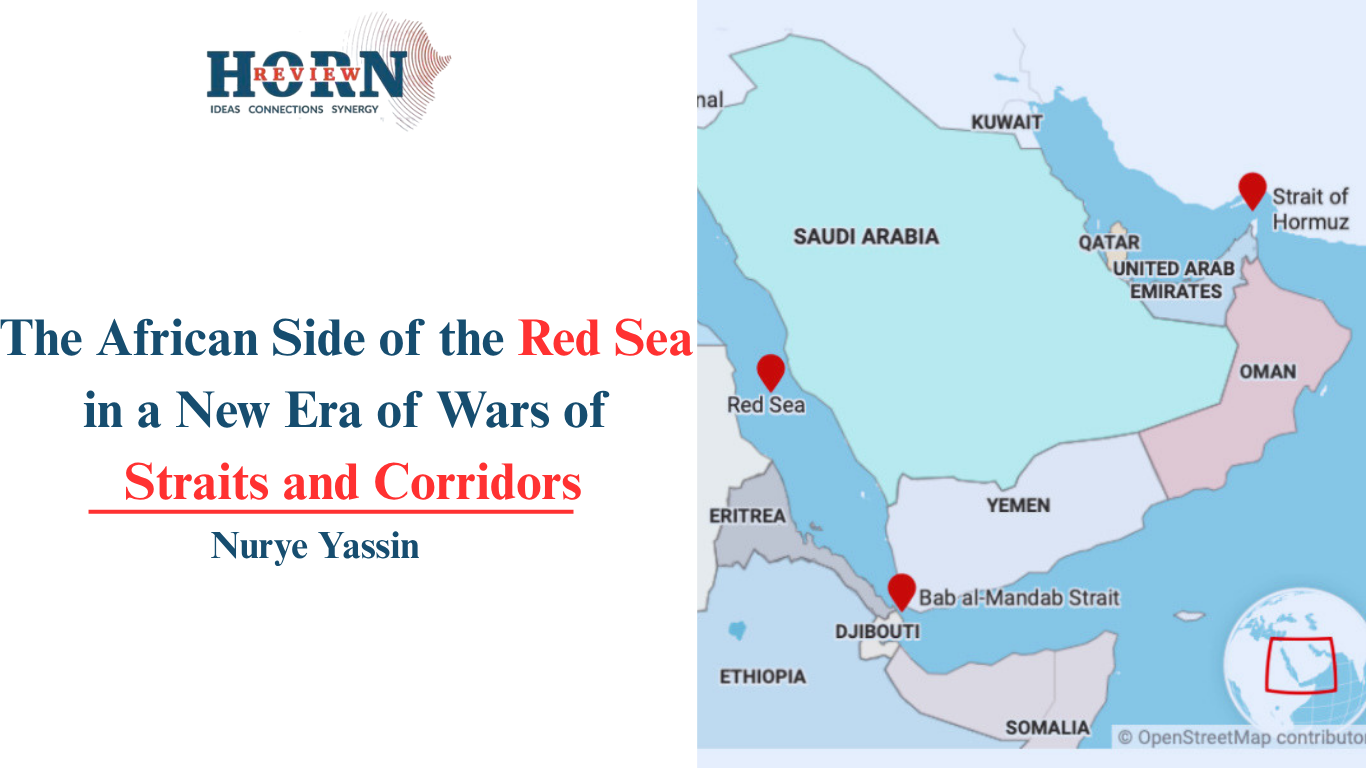
The Middle East conflict brings the strategic corridor and chokepoint rivalries to the center of international affairs making the war so existential for the Gulf Arabs, Horn of Africa, and adjacent regions. The closure of vital geo-economic chokepoints and corridors encompassing the Med-Red-Indo-Pacific maritime spaces signals geography is being weaponized to re-territorialize strategic regions and re-configure the model of the world order.
The conflict shows military bases become magnets attracting drone and missile attacks instead of serving as a security shield posing risks to those countries that host naval bases in their territory. The conflict changes the notion and model of military bases in a changing military climate. The battle for chokepoints increasing the costs of military bases to host nations has resulted in the militarization of critical military, financial, industrial, digital, diplomatic, logistical, water and energy infrastructure, creating global geo-economic shocks.
The African side of the Red Sea crowded with foreign military bases is a major frontline in this broader conflict and future showdown. The Red Sea ceases to be neutral exposing the Horn of Africa to the wider Middle Eastern conflict as well as wars of chokepoints. The evolving Gulf Arab reality makes the countries of the African side of the Red Sea rethink the presence of military bases as they are no longer a protector from the wars of straits.
The Middle East conflict having the possibility to shut down the Red Sea corridor and Bab el Mandeb strait will trouble the African side of the Red Sea, potentially making it a military target and closing the economic and energy lifelines. In particular, Ethiopia’s survival depending on the peace and stability of the vital waterway is at stake given the militarization of critical sea lanes and straits endangering vital regions of the world. The battle for straits would place Ethiopia’s economic artery and national security at risk.
Most importantly, the potential destruction of strategic infrastructures located on the African coast, the continued disruption of the Red Sea corridor and potential closure of the Bab el Mandab Strait could impose on Ethiopia a maritime entrapment. This is a structural challenge that requires an ontological solution to this existential predicament.
The closure of the Strait of Hormuz is indicative of the magnitude of its broader impact extending far beyond the surrounding regions, which is poised to bring the global economy down. The economic strain resulted from the closure of the Strait of Hormuz exposes the world to unprecedented geopolitical and geo-economic shocks.
Furthermore, the Middle East conflict is a manifestation of a larger global contest for global power rebalancing. Unlike other strategic regions, the African side of the Red Sea hosts the military bases of contesting and rival middle and major powers turning the littoral states into quasi-sovereign entities, putting a limit on the regional strategic autonomy, and drawing the region into complicated global policy shoals.
As the geography of strategic regions situated along critical sea lanes and chokepoints are being reshaped, the countries of the African side of the Red Sea face an unprecedented challenge that is so existential. Outsourcing security to foreign actors makes the Horn vulnerable to present and future wars of straits. Investing on endogenous capability, native intelligence, regional foresight, smart power and self-sufficiency is of immense importance to carefully navigate the global corridor showdown.
Re-fashioning an Afro-centric Maritime Security Architecture-East Africa Standby Force
This security deficit can be filled with a new security mechanism that could independently define the developments in the region. In this respect, an indigenous and Afro-centric naval bloc has to be thought and brought to force to secure the sea lanes and chokepoints of the vital waters ways. The East African Standby Force can be a maritime security pillar of this region having a dual mandate to secure both the territorial and maritime spaces. Endogenous military defense grouping is of particular significance to secure the territorial waters of the Red Sea and East African coasts.
Re-activating the IGAD Red Sea Taskforce as a Cooperative Red Sea Political Platform
This security architecture demands a cooperative regional political framework that addresses existing and future tensions and promotes cooperation for the greater benefit of the region and its partners. IGAD carves out a role in shaping an inclusive multilateral Red Sea platform, outlining a common position, establishing a Red Sea Taskforce and appointing a Special Envoy. In such a situation, the Taskforce could play a pivotal role in articulating collective interests and addressing the new threat-set. In this regard, reactivating the IGAD Red Sea Taskforce is of paramount significance to respond to the wars of straits. Efforts at restoring the institutional health of IGAD have to be fast-tracked to respond to the trends of the times.
The IGAD Red Sea Taskforce could enable the African side of the Red Sea to build collective capacity, forge a regional vision, take on a collective approach, and shape the strategic environment of competing interests. Ethiopia’s maritime vulnerabilities can be meaningfully addressed through genuine dialogue within this platform. The ongoing and emerging tensions can be handled within this cooperative framework. This platform minimizes the ability of regional and extra-regional spoilers to exploit tensions in the Horn and divide the region for their respective regional agenda. The Taskforce helps the region better face existing and future chokepoint wars and seize opportunities arising from the evolving dynamics.
Synergizing Energy Policy with East Africa Power Pool and Nile Basin Initiative for Collective Energy Sovereignty
As the world is experiencing energy insecurity as a result of the closure of the vital chokepoints, energy diplomacy can be an entry point for cooperation within the African side of the Red Sea to prevent the perils of energy crisis and economic chaos. The region endowed with conventional and new energies should align energy policy with regional integration initiatives, such as East African Power Pool and the Nile Basin Initiative to enhance collective regional security while reducing reliance on foreign energy sources.
Ethiopia becomes a major renewable energy hub in Africa integrating the East Africa with power trade. South Sudan has substantial oil and gas reserves while Ethiopia is exploring its hydrocarbon potential. Joint energy infrastructure development (pipelines, refineries, transmission lines and green energies) within the region holds significant potential to secure regional energy security and resilience as well as promote regional integration.
The countries of the Horn should seize the momentum in the midst of chaos advancing energy policy alignment to create an enabling environment for cross-border energy investment, trade and infrastructure development. This lays a solid foundation for regional economic self-sufficiency, integration and autonomy.
the African Side of the Red Sea: Transitioning from a Global Military Hub into Global Geo-Economic Crossroad
The Horn, located at the heart of global geo-economic corridors and chokepoints, holds the keys to international peace, trade, and energy, and supply chains. The Horn cannot leave its corridors and chokepoints to chance. It should center its geography in the geo-economics of corridorisation to keep external powers engaged in its regional development and security initiatives while preserving its regional autonomy. This strategic region should exercise a culture of pragmatism, subtlety and complexity in the global rivalry over land and sea routes and straits to navigate the emerging global corridor fault lines, chokepoint wars, and naval blockades.
If African side of the Red Sea imagines and acts as a functional collective political, economic, social and security unit, it could rethink and act differently to turn itself from its global military hub into a global geo-economic crossroad between Africa, Asia and Europe. Geography is on the side of the Horn of Africa. Caring intellect, regional thought, and world-making imagination are enablers for the Horn to be a critical player in the global economy and world affairs serving as a strategic bridge for South-North and East West connectivity processes.
By Nurye Yassin , Independent Researcher on Horn-Gulf Relations