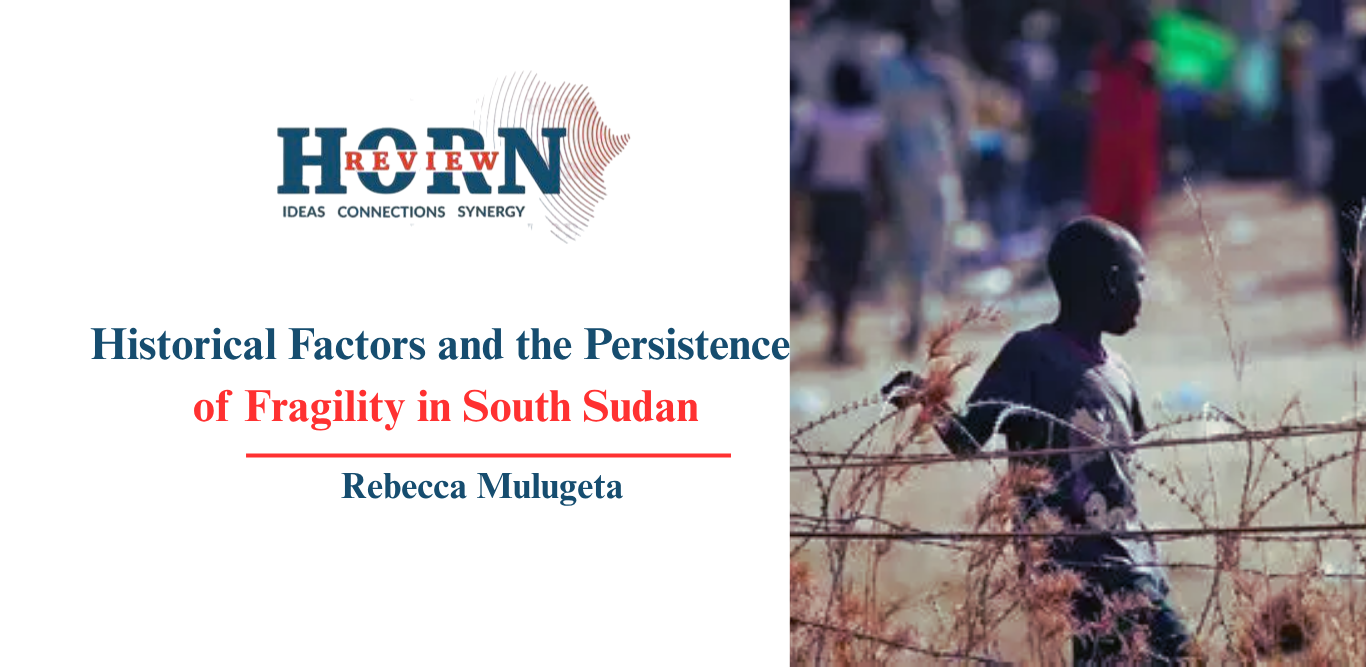
When South Sudan became independent in July 2011, the moment was celebrated globally as the successful conclusion of one of Africa’s longest liberation struggles. For many South Sudanese, independence symbolized far more than sovereignty. It represented historical justice after decades of political marginalization, civil war, and mass displacement under successive governments in Sudan. Across Juba and other towns, crowds gathered with revolutionary slogans that carried the emotional weight of generations who had survived war. Independence was imagined not only as the birth of a new country, but as the beginning of peace, and statehood built on the sacrifices of liberation.
Yet more than a decade later, South Sudan remains trapped in a cycle of political fragility, militarized governance, communal violence, economic collapse, and institutional weakness. The optimism that accompanied independence rapidly gave way to civil war in 2013, followed by repeated peace agreements that reduced violence without fundamentally transforming the political structures driving instability. While many analyses focus on elite rivalry, ethnic divisions, or corruption as explanations for South Sudan’s crisis, these factors alone do not fully explain the persistence of insecurity. The deeper problem lies in the historical foundations upon which the South Sudanese state was built.
South Sudan’s contemporary insecurity cannot be understood separately from the political logic created during decades of liberation struggle. The state inherited not only the trauma of war, but also the militarized structures, patronage networks, and political culture produced by that war. In many ways, South Sudan achieved independence before completing the transition from armed movement to civilian statehood. The result is a country where the institutions of governance remain deeply shaped by the logic of liberation politics.
The roots of this crisis stretch back long before South Sudan’s independence in 2011. They are embedded in Sudan’s colonial formation and the unequal political order that emerged after Sudanese independence in 1956. Under Anglo-Egyptian colonial administration, northern and southern Sudan were governed through different systems. The North received greater political and economic investment, while the South remained administratively isolated. Colonial governance reinforced regional divisions rather than integrating Sudan into a cohesive political entity.
When Sudan gained independence, political power remained concentrated among northern Arab elites in Khartoum. Southern populations increasingly viewed the post-colonial Sudanese state as exclusionary and dominated by an Arab-Islamic political identity that marginalized non-Arab and non-Muslim communities. The absence of meaningful political inclusion generated early resistance in the South, culminating in the 1955 Torit mutiny, which marked the beginning of the first Sudanese civil war.
This historical experience is crucial because it established two enduring dynamics that continue shaping South Sudan today. First, it created a deeply rooted political distrust toward centralized authority. Second, it normalized armed resistance as the primary mechanism through which southern communities pursued political survival and representation.
Although the 1972 Addis Ababa Agreement temporarily ended the first civil war by granting limited southern autonomy, the settlement failed to address the structural questions of national identity, political inclusion, and state organization. The fragility of the agreement became evident in 1983 when President Jaafar Nimeiri revoked southern autonomy and imposed Islamic law across Sudan. For many southern Sudanese, the move represented not simply a constitutional change, but the reassertion of political domination by Khartoum.
The second civil war that followed fundamentally transformed southern Sudanese politics. The emergence of the Sudan People’s Liberation Movement and its military wing under John Garang created not only a liberation movement, but also the institutional foundation from which the future South Sudanese state would eventually emerge.
This distinction is important because liberation movements are not designed primarily to function as civilian governing institutions. They are structured around military survival, centralized authority, loyalty networks, and coercive discipline. During more than two decades of war, the SPLM/A developed political practices shaped by armed conflict rather than democratic institution-building. Commanders exercised localized authority. Political legitimacy became tied to military contribution. Decision-making remained heavily centralized. Internal dissent was frequently securitized rather than institutionally managed.
These wartime political structures later crossed directly into the post-independence state. One of the most overlooked dimensions of South Sudan’s insecurity is therefore not simply the existence of violence, but the historical normalization of militarized governance itself. Decades of conflict embedded the perception that political authority is inseparable from armed power. This weakened the later development of civilian institutions capable of regulating competition peacefully.
The SPLM/A also experienced major internal fractures during the liberation struggle, particularly after the 1991 split involving factions aligned with Riek Machar and John Garang. The violence that followed deepened mistrust among communities, especially between Dinka and Nuer populations. Importantly, these divisions were not purely “tribal” in nature, as simplistic external narratives often suggest. They were political fractures emerging within a militarized liberation context where competition over authority, survival, and representation became increasingly personalized and militarized.
This historical fragmentation matters because many of the communal tensions visible today are rooted in unresolved wartime political divisions rather than ancient ethnic hostility. The civil war years created overlapping layers of grievance, militarization, and localized power structures that remained unresolved after independence.
The 2005 Comprehensive Peace Agreement ended the north-south civil war and opened the path toward South Sudanese independence. However, while the agreement successfully ended direct conflict with Khartoum, it did not fundamentally transform the SPLM/A into a civilian political institution. Instead, the movement transitioned into government while retaining much of its wartime structure and political culture.
One of the central contradictions of South Sudan’s state formation was that the liberation movement became the state before meaningful institutional transformation occurred. By independence in 2011, the country inherited weak institutions and a political system shaped by wartime structures, where authority remained personalized and legitimacy was tied more to liberation credentials than institutional accountability. The death of John Garang in 2005 shows these weaknesses, highlighting the movement’s reliance on individual leadership and weak succession mechanisms. These challenges contributed to the 2013 civil war, which reflected not only rivalry between Salva Kiir and Riek Machar but also the failure to build a stable and institutionalized state, exposing weak national cohesion, limited institutional legitimacy, and factionalized security forces..
The persistence of insecurity in South Sudan stems from its incomplete transition from a liberation movement to a civilian state. Historical mistrust, wartime patronage networks, fragmented security institutions, and the continued influence of armed actors have kept political competition closely tied to access to power, resources, and security. Despite multiple peace agreements, militarized governance remains largely intact. This fragility is compounded by an oil-dependent economy that reinforces patronage politics and weakens accountability, while local disputes over cattle, land, and resources increasingly intersect with national rivalries. Combined with widespread weapons and weak state authority, these dynamics continue to fuel recurring instability.
Importantly, South Sudan’s insecurity should not be understood simply as state failure in the conventional sense. Rather, it reflects the unresolved contradictions of liberation-state formation. The state continues to operate through overlapping systems of military authority, ethnic patronage, and weak institutionalization inherited from the liberation era.
This is why peace agreements alone have struggled to stabilize the country sustainably. Power-sharing arrangements may temporarily reduce violence among elites, but they do not fundamentally transform the structures producing insecurity. Without deeper institutional reforms, peace remains vulnerable to renewed fragmentation.
The challenge facing South Sudan today is therefore not only post-conflict reconstruction. It is the far more difficult task of transforming the political logic of liberation into the political logic of governance. That transition requires more than elections or elite agreements. It requires rebuilding the relationship between citizens and the state itself. It requires professionalizing security institutions, reducing the political role of armed actors, strengthening judicial systems, and constructing forms of citizenship that transcend wartime factional identities.
Most importantly, it requires replacing liberation legitimacy with institutional legitimacy. For decades, the authority of South Sudan’s ruling elite derived from participation in the liberation struggle. But revolutionary legitimacy alone cannot sustain long-term governance. States ultimately depend on institutions capable of managing diversity, mediating competition, and delivering security impartially.
South Sudan’s crisis therefore reflects something visible in many post-liberation societies: the institutions effective for winning wars are not necessarily effective for governing peace. More than a decade after independence, South Sudan remains suspended between these two political realities. The liberation struggle succeeded in creating sovereignty, but the transition from armed movement to stable statehood remains incomplete. As long as the structures of wartime politics continue shaping governance, insecurity will remain deeply embedded within the political order.
The central question facing South Sudan today is no longer whether liberation was justified. For millions of South Sudanese, liberation represented historical necessity. The deeper question now is whether the country can complete the unfinished transformation from revolutionary movement to institutional state before the legacies of war permanently consume the promise of independence.
By Rebecca Mulugeta, Researcher, Horn Review