Throughout much of Somalia’s post independence history a persistent tension has existed between the aspiration for a strong centralized national state and the decentralized clan based governance structures that denote much of the country’s political reality. This tension contributed to the interplay of the dictatorship of Major General Mohamed Siad Barre from 1969 to 1991. Barre’s regime pursued policies aimed at suppressing regional and clan autonomy while concentrating power within a narrow circle of chauvinist drawn primarily from his own Marehan sub clan of the Darod clan family. These policies are widely regarded as having played a major role in the outbreak and escalation of the Somali civil war that began in the late 1980s. The conflict that followed led to the disclosure of Somaliland which was explicitly established with institutional arrangements intended to guard against the return of authoritarian centralization.
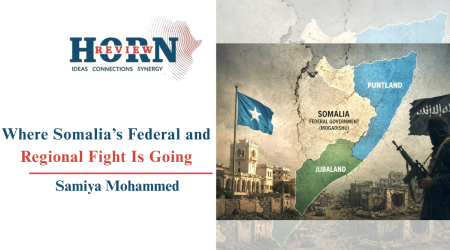
Three decades later certain developments in Somalia have prompted concerns about a potential reassertion of centralized authority at the expense of the federal system. In particular recent military movements toward Puntland reportedly involving federal forces supported by technical vehicles, armoured personnel carriers and allied clan militias have raised questions about possible efforts to remove the region’s elected president Sa’id Abdullahi Deni. When viewed in conjunction with earlier political developments in South West State where President Abdiaziz Laftagareen was removed from office through a combination of political and institutional measures it could be suggested a pattern of centralization that could undermine the federal policy in favour of stronger executive authority concentrated in Mogadishu.
To understand the current context it is useful to examine the structural features of governance under Siad Barre. Following his seizure of power in 1969 Barre declared his intention to eliminate clannism and tribalism in the name of Scientific Socialism. In practice his administration abolished regional councils, prohibited clan based political expression, and centralized administrative, military and economic authority within a small group of chauvinist drawn predominantly from his Marehan sub-clan. Other Darod sub-clans, including the Majerteen predominant in present-day Puntland and the Ogaden were progressively marginalized while non-Darod communities particularly the Hawiye and Isaaq experienced systematic repression.
An example of the regime’s approach was the 1988 military campaign against Hargeisa which resulted in the extensive destruction of the city and a large number of civilian casualties estimated between 50,000 and 100,000. One long term consequence of Barre’s rule was the dismantling of institutional mechanisms that could have served as buffers between the central government and regional populations. When the regime’s patronage networks ultimately collapsed in the late 1980s and early 1990s the absence of legitimate regional institutions or negotiated power sharing arrangements contributed to the rapid cleft of the state along clan lines. By 1991 Somalia had effectively dissolved into competing armed factions. In response Somaliland declared independence, while Puntland was later established in 1998 as a federal entity designed to balance national unity with regional autonomy and to prevent a return to either authoritarian centralization or complete statelessness.
Current developments in Puntland can be understood within this historical and political context. In early 2026 the federal government in Mogadishu carried out a series of coordinated actions in South West State that resulted in the removal of President Abdiaziz Laftagareen from office. These actions involved parliamentary procedures, targeted security deployments and engagement with opposition figures within the state. The process which was presented as consistent with constitutional mechanisms was viewed by several federal member states as a potential precedent for increased central intervention in regional affairs.
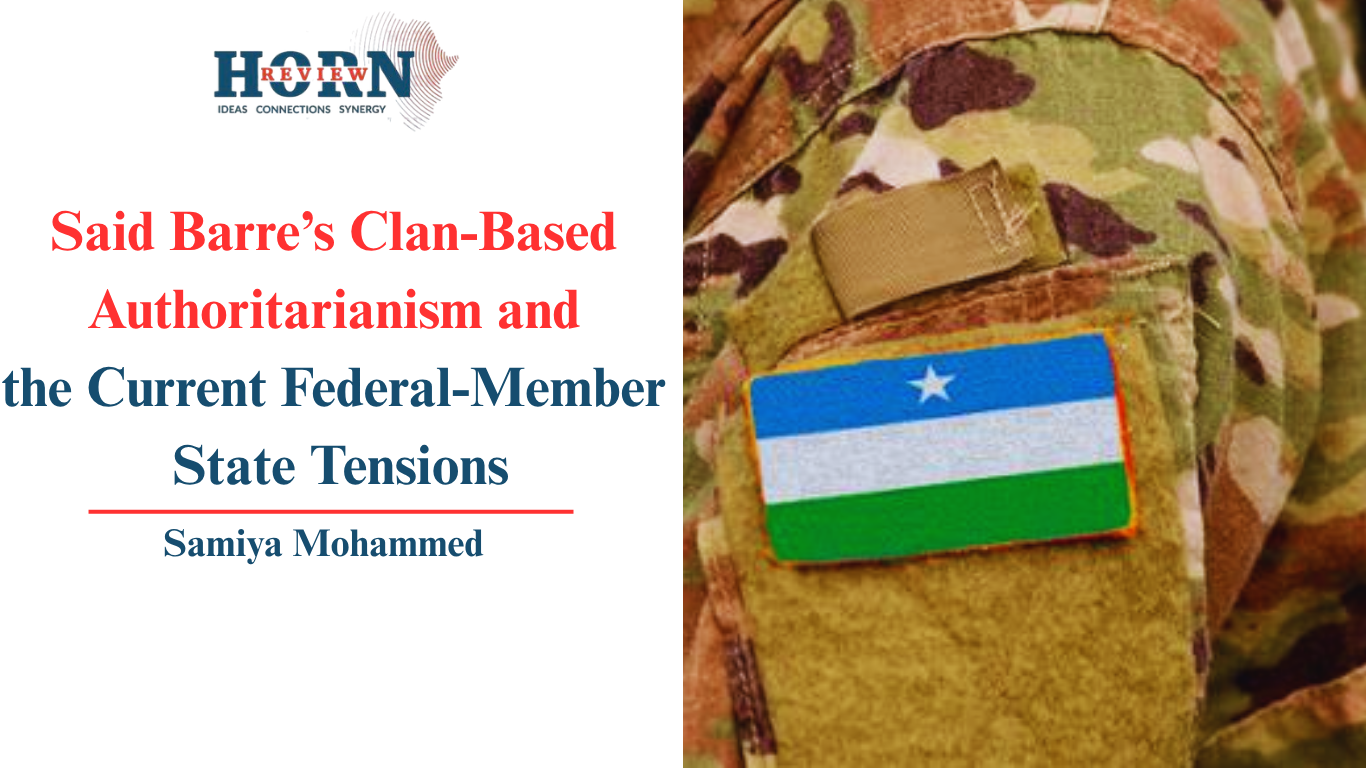
Similar change now appears to be open out with respect to Puntland. Unlike South West State, Puntland has maintained a continuous and functioning regional administration since its establishment in 1998. It possesses its own security forces including the Puntland Maritime Police Force and Dervish paramilitary units, a relatively autonomous judiciary and an independent revenue base derived primarily from the port of Bosaso and fisheries. President Sa’id Abdullahi Deni who was elected in January 2024 has consistently resisted certain federal initiatives particularly those related to constitutional review processes that he argues could diminish the powers of federal member states.
In recent statements President Deni has expressed concern that a similar approach to that used in South West State could be applied to Puntland. Speaking in Qardho he placed regional security forces on high alert and warned that developments observed in other federal member states might be replicated in Puntland. Deni stated that efforts to undermine regional administrations were underway and called on regional authorities to prepare to defend and protect their institutions. He described these actions as part of a broader centralizing agenda citing the precedent in South West State as an indication of the federal government’s intentions.
President Deni further asserted that Puntland was defending its people and territory emphasizing that its security forces had been instructed to carry out their duties responsibly. His remarks reflect growing apprehension that a combination of political pressure, parallel institutional arrangements and security posturing directed toward Puntland mirrors the approach previously employed in South West State.
Deni has specifically referenced statements made by individuals close to President Hassan Sheikh Mohamud including adviser Sheikh Ali Wajiis who reportedly advocated for the establishment of direct federal administration over regions on an individual basis. Deni interpreted these statements as evidence of an intention to erode Puntland’s autonomy and undermine the federal system as a whole. He has also accused the federal government of seeking greater control over Puntland’s natural resources denoting the overall situation as a challenge to the constitutional balance between the federal center and the member states. In parallel federal troops have reportedly been redeployed toward the border areas between Galmudug and Puntland. Additionally discussions have prop up in Mogadishu regarding possible alternative leadership arrangements within Puntland.
Current developments in Puntland reflect growing tensions between the federal government and federal member states. The combination of military deployments toward Puntland, political pressure, and reported external logistical support suggests an attempt to replicate the approach previously used in South West State. This has heightened concerns within the Puntland administration. Some external actors have reportedly favoured a more centralized governance model in Somalia citing perceived inefficiencies of the federal system in areas such as counter terrorism and economic management.
Somalia’s clan based social structures remain a resilient feature of society predating the modern state. They provided essential governance, security and dispute resolution during the stateless period of the 1990s. Puntland’s 1998 Charter established it as a federal entity, explicitly rejecting both secession and excessive centralization. It reserves most powers to the region limiting the federal government to foreign policy, national defense and currency matters. Although Somalia’s provisional 2012 constitution enshrines federalism in principle, successive federal administrations have sought greater control over budgets, security and judicial appointments. A military operation against an elected regional president would set a precedent potentially escalating disputes between the center and member states.
More than three decades after the collapse of Siad Barre’s regime elements of centralized governance strategies appear to be re emerging. While executed with greater institutional sophistication, the current approach shares underlying assumptions about the primacy of executive authority over federal and clan based realities. President Deni’s recent alerts and references to the South West State precedent indicate that Puntland’s leadership perceives these developments as a direct challenge to regional autonomy.
By Samiya Mohammed, Researcher, Horn Review