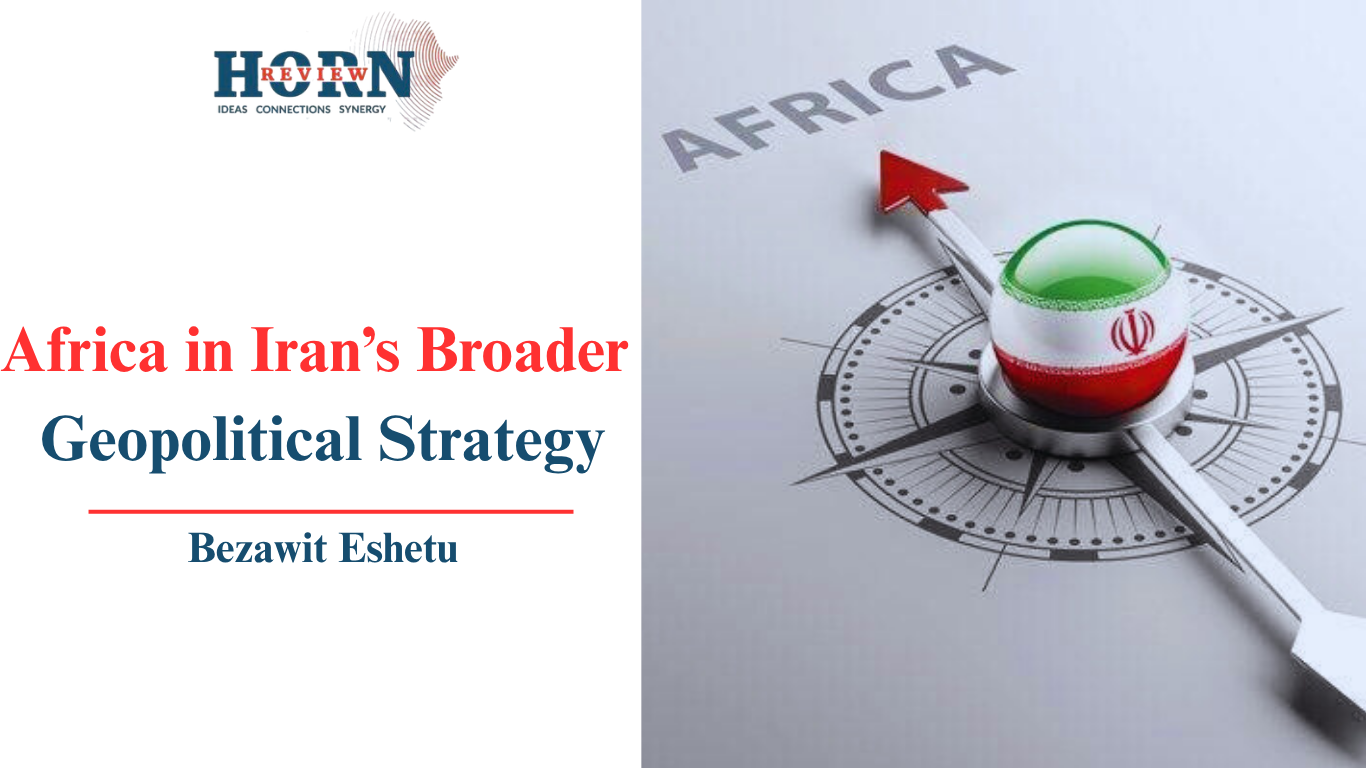
The eruption of the 2026 military conflict between Iran and the US-Israel alliance has changed Africa’s role from a secondary battleground to an essential strategic landscape. Over the past decade, Iran has shifted from spreading its revolutionary ideology to more practical, transactional relationships, and this change has solidified under intense pressure. Iranian nuclear and military facilities faced continuous air strikes.
Meanwhile, Africa’s power vacuums, caused by the West stepping back and distractions in the Gulf, presented Tehran with three interconnected benefits: unregulated mineral sourcing, expanded maritime logistics, and diplomatic support within broader BRICS arrangements. The strength of this network lies in its subtlety; it integrates into local crises instead of being forced on top, challenging the view that great-power struggles in Africa are merely about extraction or peripheral interests.
The Sahel and West Africa are the frontlines of this shift; here, a drones-for-uranium deal has taken advantage of the coups post-2023 and the Alliance of Sahel States’ rejection of French security measures. By nationalizing Niger’s SOMAÏR mines, opportunities arose for secret exchanges: Iranian Mohajer-6 and Shahed-series drones, surveillance systems, and technical advisors went to the juntas in Niamey and Bamako in exchange for yellowcake uranium and artisanal gold.
Free from Western human-rights conditions, these agreements appeal to governments facing threats from JNIM and Islamic State insurgencies, providing affordable tools for their survival. For Tehran, this partnership secures vital raw materials needed to maintain its nuclear program while pushing Washington into delayed minerals-for-security strategies that lag behind Iran’s unconditional, ledger-free approach. This is more than opportunism; it is a sign of a more developed form of asymmetric diplomacy, turning Africa’s resource nationalism into Iran’s means of evading sanctions.
This procurement strategy naturally extends into the Greater Horn of Africa, where Sudan’s civil war has become a testing ground for Iran’s operational reach. Since late 2025, Iranian drones and equipment have gone through Eritrean ports at Assab and Massawa, supporting the Sudanese Armed Forces. In return, Tehran sought a permanent foothold along the Red Sea, linking its Gulf coastline to Houthi allies in Yemen, despite earlier refusals at Port Sudan.
By supporting the Sudanese Armed Forces with Mohajer-6 drones and related equipment routed through Eritrean ports such as Assab and Massawa since at least mid-2025, Iran has extended its logistical reach along the western Red Sea. This has helped integrate SAF operations into a broader network of partnerships aligned with its regional interests, including links to Houthi activities in Yemen.
While this presence contributes to Tehran’s efforts to diversify pressure points beyond the Persian Gulf, the primary disruptions to Bab el-Mandeb shipping and the Suez Canal in 2026 have stemmed more directly from Houthi threats and broader conflict escalation rather than Sudanese territory itself. What may appear as opportunistic support for one side in Sudan’s civil war is in fact Tehran’s calculated strategic hedging, providing a lower-profile avenue to sustain influence in the Red Sea arena and potentially offset risks to its core Gulf interests through extended access and alliances.
In contrast, North Africa acts as Tehran’s diplomatic support system, providing rhetorical cover and institutional credibility when traditional alliances suffer. Algeria has used its connection with Iran to assert leadership against Morocco’s growing ties with Israel through the Abraham Accords, framing their rivalry over Western Sahara as part of a larger fight for Arab-African independence. Algeria’s historical caution, stemming from its reliance on Russian arms and Gulf economic ties, has kept military partnerships from deepening.
Nevertheless, the 2026 confrontation strengthened their relationship due to shared risks of isolation. Within the Arab League and African Union, Algiers amplifies Iran’s condemnation of aggression, helping maintain Tehran’s global presence. This dynamic shows a careful balancing act: ideological synergies increase influence without provoking further sanctions, illustrating how Iran exploits divisions within the Arab world to retain credibility, even as its infrastructure at home deteriorates.
Southern Africa, anchored by South Africa’s pivotal role as BRICS architect and facilitator, has emerged as Tehran’s most effective shield of symbolic, diplomatic, and financial support amid intensifying sanctions. Iran’s full integration into the bloc since its 2024 accession has evolved into a robust strategic partnership that actively protects Iranian mineral exports through alternative BRICS supply chains and de-dollarized trade platforms, while expanding secondary energy markets via collective bargaining, national-currency settlements, and joint resource initiatives that blunt the impact of Western restrictions.
The landmark “Will for Peace 2026” naval exercises held in January in South African waters with Iranian, Chinese, and Russian warships operating alongside South African forces marked a decisive assertion of multipolar non-alignment, deliberately conducted in defiance of explicit US tariff threats and G20 exclusion warnings. Pretoria’s consistent and outspoken solidarity with Palestine, combined with its leadership of the Global South, has furnished Tehran with powerful diplomatic cover rooted not in ideological affinity but in a structural rejection of unipolar dominance.
Although this approach is risky, sometimes leading to strong words that go beyond South Africa’s actual military strength and even causing economic backlash, it shows how Africa’s most influential middle power can cleverly use conflicts between major powers to act independently. By doing this, South Africa turns Iran’s isolated position into a shared Global South cause, using it to push back against what it sees as excessive Western influence in a way that has real impact.
Amid all these state-level interactions lies a strong human network underpinning Iran’s covert activity: Al-Mustafa International University. This institution, based in Qom with branches in seventeen African countries from Senegal to Tanzania, serves not just as an educational body but as a tool for ideological screening. It has trained thousands of seminarians, primarily from Nigeria, the Sahel, and East Africa.
IRGC Quds Force members target graduates who return not merely as clerics but as nodes creating dual-use mosques, charities, and cultural centers. These sites gather intelligence, recruit locally, and maintain a level of cultural deniability unachievable by traditional intelligence agencies. During the 2026 conflict, alumni quickly shifted from soft-power representatives to logistical support for arms deliveries and safe houses, forming a self-sustaining elite that seamlessly integrates into local communities.
The university’s output directly feeds into the IRGC-Quds Force’s advisory-plus approach, most refined in the distinct landscapes of the Sahel post-coup. Unlike overt Western or Russian contractors, Iranian personnel operate under the guise of engineering for drone maintenance, using graduates as cultural links into elite units such as Burkina Faso’s Cobra forces or Mali’s presidential guard. This sets up structures resembling proxies: local militias receive counter-insurgency training that also prepares them for operations against Western or Israeli targets.
Activity in Uganda and Senegal for soft-target surveillance shows adaptability; networks that lay dormant for years can mobilize when needed. This model avoids direct occupation, taking advantage of gaps in Western intelligence that have typically focused on Sunni extremism while neglecting Shi’a outreach over decades.
Funding this entire system relies on a shadow economy that reduces Tehran’s exposure to dollar fluctuations. Gold tied to conflict in Sudan and artisanal mining across the Sahel vanishes before entering official channels, moving via the Red Sea route to Iran and funding proxy activities and acquisitions.
Complementary barter agreements exchange drone technology and training for yellowcake uranium in Niger and Mali, utilizing resource nationalism while embedding technical staff within local security forces. This setup shields operations from Treasury sanctions: even if Iran’s central bank is frozen, field commanders still have money to use.
The United States and Israel face a complex challenge in addressing Iran’s activities in Africa. Any direct measures against these networks could lead to tensions or unintended confrontations with African sovereign states, whose territorial integrity and independence must be fully respected. At the same time, allowing such networks to expand unchecked may enable Iran to further develop its economic, logistical, or strategic capabilities across the continent, with broader implications for regional and international stability.
Thus, African states that engage with Iran’s network, often seeking immediate security assistance against internal threats, economic relief through trade or aid, or greater autonomy from traditional Western partners, inadvertently absorb cascading unintended costs. Diverted military equipment frequently leaks into illicit markets or non-state actors, weakening fragile governance, fueling insecurity, and undermining rule of law.
At the same time, proxy-driven disruptions in the Red Sea inflate global fuel, fertilizer, and shipping costs, driving up food and energy prices in import-reliant economies and intensifying inflation, shortages, and household hardship. Deeper entanglement in proxy conflicts through arms supplies or indirect involvement in regional wars gradually erodes national sovereignty, domestic stability, and long-term development prospects by diverting resources into external rivalries and exposing states to retaliatory pressures.
In essence, Iran’s “Continental Rear” strategy transforms parts of sub-Saharan Africa into a low-risk theater for projecting power, deterring adversaries, and imposing asymmetric costs with minimal direct exposure for Tehran. Meanwhile, host nations quietly shoulder the interconnected human, economic, and security burdens, serving as unwitting extensions of a distant geopolitical contest whose fallout reverberates through their governance, markets, and societies for years to come.
By Bezawit Eshetu, Researcher, Horn Review