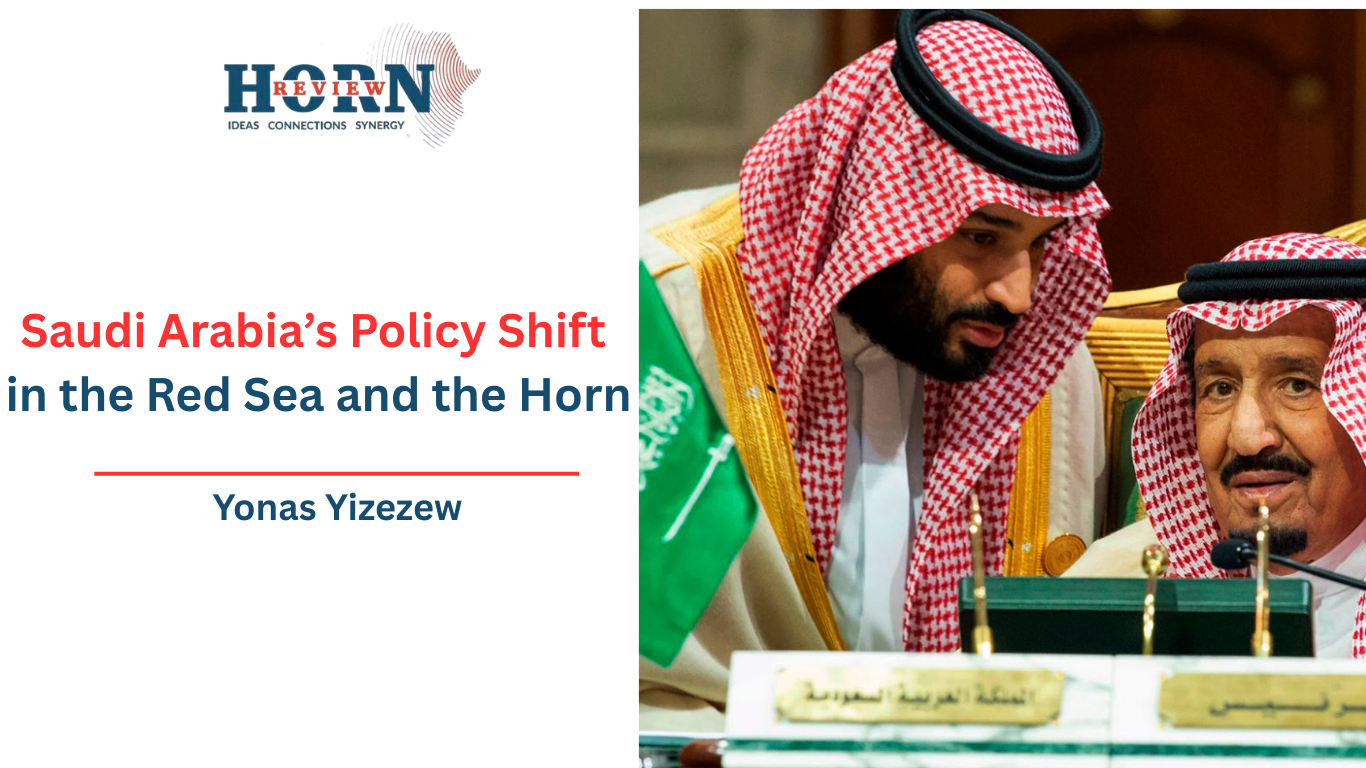
Following the Jeddah rapprochement between Ethiopia and Eritrea, Saudi Arabia’s involvement in the Horn of Africa, particularly with Ethiopia, has increasingly centered on various areas of investments. Since 2019, as the United Arab Emirates has expanded and solidified its presence across the Red Sea and Horn of Africa, Saudi Arabia has adopted a more restrained and cautious posture. Yet, evolving circumstances in the conflicts in Sudan and Yemen have prompted shifts in both Gulf states’ strategies. With the Rapid Support Forces achieving significant territorial advances in late 2025, Egypt and Saudi Arabia—key supporters of the Sudanese Armed Forces—ramped up their backing for the military. This dynamic reached a breaking point in Yemen, where advances by the Emirati-supported Southern Transitional Council sparked a rift, leading Saudi forces and their allies to launch airstrikes that reversed those gains. The council’s territory in Yemen shrank to virtually nothing, culminating in its quiet dissolution. This episode represented the first direct military clash between proxies of the two Gulf powers, whose partnership had long underpinned regional security frameworks, signaling not just a localized tactical dispute but a broader strategic parting of ways with profound regional ramifications.
At the heart of this Saudi-Emirati divergence lies fundamentally different assessments of how to safeguard regional stability—whether through measured restraint or decisive action. Saudi Arabia pursues what H. A. Hellyer described as ‘de-escalatory developmentalism’, prioritizing the prevention of state failure as the foremost threat, with an emphasis on reducing tensions and shielding borders to safeguard its internal reforms. In contrast, the United Arab Emirates embraces ‘pre-emptive activism’ perceiving unchecked fragility in neighboring states as the greater peril and advocating proactive measures to reshape vulnerable structures before they crumble.
Saudi Arabia’s framework rests on a de-escalation-oriented vision that privileges homeland security. As a vast continental nation with substantial resilience, the Kingdom regards the regional landscape as fundamentally navigable, opting to dial down conflicts as they emerge while fortifying its frontiers against spillover effects. Riyadh’s focus remains inward, channeling resources into transformative domestic initiatives like Vision 2030 rather than costly external engagements that might undermine those goals or provoke wider instability.
The UAE, by comparison, approaches the region through the lens of pre-emptive activism, seeing the prevailing order not merely as flawed but as inherently precarious, susceptible to rapid decline without intervention. In this view, Iran and its proxies pose actively destabilizing forces that exacerbate existing weaknesses. While Saudi Arabia’s scale affords it the capacity to endure suboptimal regional conditions over time, the UAE perceives a narrower margin for such tolerance, necessitating agile and independent maneuvering.
Abu Dhabi frames its actions not as rivalry with Riyadh but as essential strategic autonomy from its larger neighbor. This manifests in pursuits like expanding global port networks, advancing the Abraham Accords’ framework, and sustaining support for entities such as Yemen’s Southern Transitional Council, all aimed at carving out operational flexibility. The core discord between the two thus revolves around their conceptions of the regional order and the primary sources of risk within it.
This contest extends well beyond Yemen, notably into dynamics involving Israel. Saudi leaders have steadfastly maintained that any normalization with Israel must hinge on establishing a sovereign Palestinian state, consistent with the 2003 Arab Peace Initiative originated under Saudi leadership. Riyadh remains particularly attuned to the risk that a Gulf partner—having normalized ties with Israel and cultivated an independent security profile—might erode Saudi Arabia’s diplomatic primacy on this cornerstone issue of Arab consensus.
Tensions sharpened in December 2025 when Israel extended recognition to Somaliland—the first nation to do so—potentially enabling a base and intelligence outpost in the southern Red Sea near the Bab el-Mandeb Strait. Amid its Yemen rift with the UAE, Saudi Arabia viewed this as yet another domain where its influence could be eclipsed by competing actors. In response, Riyadh pivoted toward Somalia’s federal government, formalizing defense cooperation that has fostered an alignment incorporating Egypt, Pakistan, and Turkey.
For Saudi Arabia, which depends heavily on Red Sea stability to underpin its oil-driven economy and its role as a littoral state, any development perceived as constraining its regional leverage prompts resolute pushback. This imperative has further shaped its actions in Sudan, where reports indicate Riyadh quietly facilitated a $1.5 billion arms agreement enabling the Sudanese army to acquire vital aircraft and air defense systems from Pakistan, bolstering its position in the ongoing conflict. Reinforcing this stance, Saudi Arabia has moved to interrupt alleged Emirati air logistics to the Rapid Support Forces by denying overflight clearances for their cargo and military flights, while urging allies to follow suit. Joint pressure from Riyadh and Egypt on Libyan figure Khalifa Haftar likely influenced his decision to shutter the Kufrah air base in southeastern Libya.
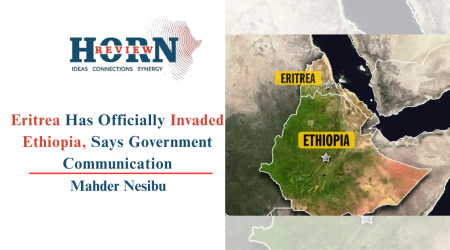
The Horn of Africa’s most pressing flashpoint has emerged in the escalating frictions between Ethiopia and Eritrea, compounded by reports of Eritrean forces within Ethiopian borders and heightened strains between the federal government and the Tigray People’s Liberation Front, raising the specter of broader war. Ethiopian Foreign Minister Gedion Timothewos’ early February visit to Riyadh set the stage for Foreign Minister Prince Faisal bin Farhan’s trip to Addis Ababa on February 10–11, followed swiftly by Deputy Foreign Minister Waleed El Khereiji’s February 12 meetings with Eritrean President Isaias Afwerki in Asmara, all framed around bolstering cooperation among both states to avert escalation that will ave a devastating consequence for the region.
Through these shuttle efforts, Riyadh seeks to avert encirclement by instability. If Ethiopia and Eritrea enter into full-scale war, the Red Sea’s security might also be at risk, thereby increasing instability in a corridor Saudi Arabia is trying to safeguard.
Israel’s potential foothold in Somaliland, opening possibilities for a southern Red Sea presence near Bab el-Mandeb, raises concerns for Saudi Arabia. This development could enhance Israeli maritime monitoring of vital shipping lanes in the Red Sea, intersecting with Riyadh’s efforts to maintain an Arab-led security framework in the corridor. Therefore, Saudi Arabia aims to cultivate alternative alignments, partnering with actors like Egypt, Turkey, and Pakistan to dilute UAE and Israeli dominance without direct confrontation.
Moreover, Saudi Arabia wants to counterbalance the UAE’s entrenched leverage across the Horn and the Red Sea and forestall a conflict that could ripple into maritime disruptions. This strategy is also aimed at guarding against expanding influence from Israel and the UAE in the region, even as Ethiopia maintains ties with all three powers. It now starts to work to counter the deep web of influence Abu Dhabi has spent years building in the Horn of Africa and around the Red Sea.
Compounding these concerns, Sudan’s civil war, which has disrupted its role as a vital agricultural supplier to the Middle East, has curtailed output from what was once considered a breadbasket for the region, prompting Saudi Arabia to deepen its substantial agricultural and other investments in Ethiopia to secure its food security and other needs. An Ethiopia–Eritrea conflict might jeopardize these assets, prompting Riyadh’s mediation to stabilize the area and protect food supplies critical for domestic needs.
Departing from its earlier cautious posture since 2019, which focused on investment deals amid increased UAE influence in the wider region, Saudi Arabia is now pursuing more assertive involvement, evidenced by the revival of the Red Sea Council for joint patrols and reversals against UAE-backed forces in Yemen. This approach also includes defense pacts, such as the recent agreement with Somalia, coordinated aid to Sudan alongside Egypt and other actors, and shuttle diplomacy between Ethiopia and Eritrea.
By Yonas Yizezew, Researcher, Horn Review