
Military Dominance Fails to Legitimize So What Will Solve Sudan’s Conflict?
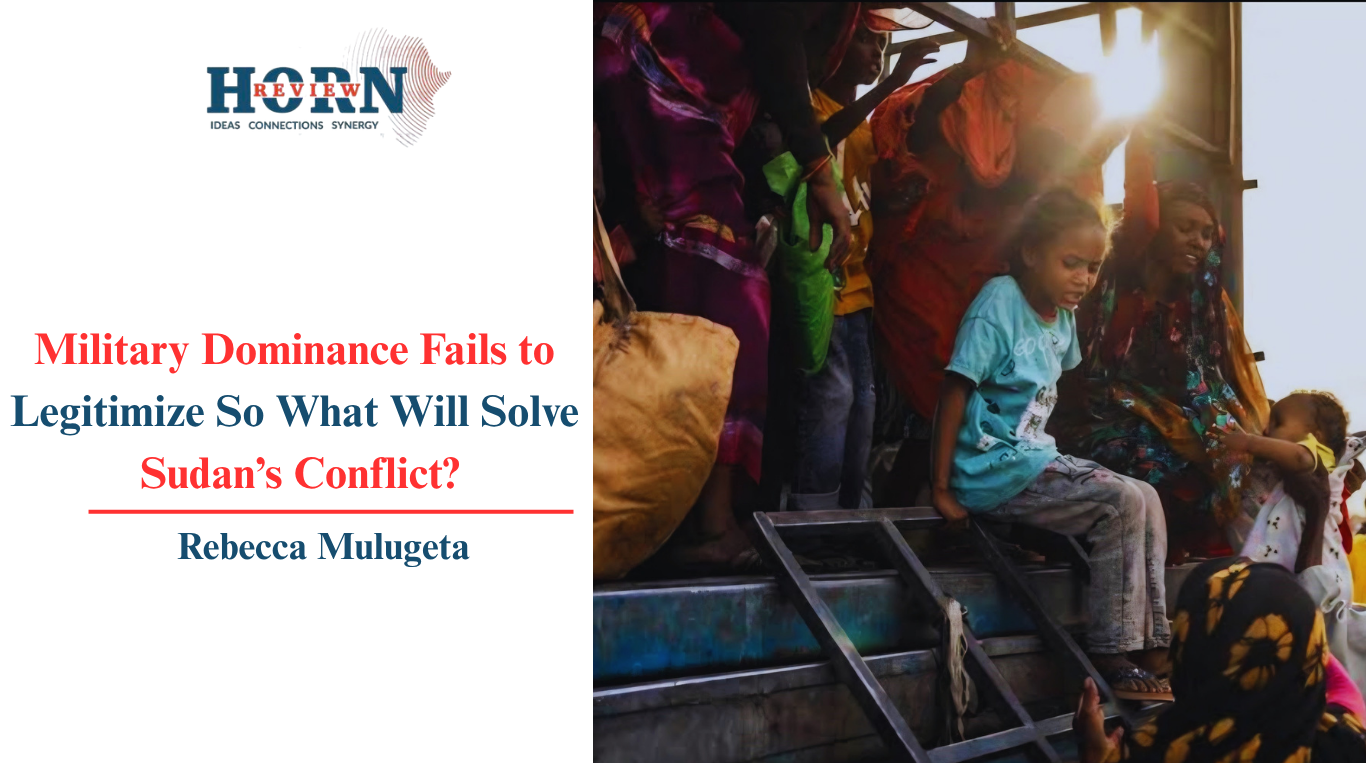
“Final victory belongs to the side of justice,” the Ambassador of Türkiye remarked, yet in Sudan today, justice is being buried beneath the ruins of a collapsing state. What began as a struggle for power has transformed into an existential battle over whether Sudan itself can survive. For more than a year, the country has endured one of the deadliest conflicts in modern African history, a war that has shattered cities, displaced millions, and pushed state institutions toward collapse. From once-vibrant neighbourhoods reduced to rubble to families crossing deserts in search of safety, the scale of suffering has become almost impossible to measure. Hospitals have fallen silent, hunger is spreading rapidly, and the foundations of national authority are eroding in real time. Sudan is no longer simply searching for peace; it is fighting to preserve the very existence of the state before it disappears beneath the wreckage of war.
Yet despite the scale of destruction, despite the endless summits, conferences, mediation initiatives, ceasefire announcements, and diplomatic statements, Sudan continues to fall apart. Everyone speaks about peace in Sudan. But where is the real solution? This is the question that now hangs over every discussion surrounding the war. Because Sudan today is not suffering from a lack of negotiations. It is suffering from the failure of negotiations to understand what this war has become.
Many international and regional initiatives still approach Sudan as though it were a conventional conflict between two military factions that can eventually negotiate a political settlement once battlefield pressure becomes unbearable. But Sudan’s war has moved far beyond that framework. This is no longer simply a confrontation between the Sudanese Armed Forces and the Rapid Support Forces over political control.
Sudan is no longer facing just a civil war; it is confronting the slow collapse of the state itself. The conflict has evolved into a deeper national crisis marked by military fragmentation, humanitarian devastation, and the erosion of political legitimacy. What makes this moment especially dangerous is that the war is no longer only destroying cities and displacing millions, it is steadily dismantling the institutions that once held the country together. As civilian authority weakens, the vacuum is increasingly being filled by foreign competition, armed networks, and war economies that profit from instability. With each passing month, the prospects for national recovery become more fragile while the risk of permanent fragmentation grows more severe. If the current conflict continues, Sudan may soon reach a point where rebuilding the state becomes far more difficult than preventing its collapse.
The consequences will not remain inside Sudanese borders. Sudan sits at the centre of several fragile geopolitical regions at once. It connects the Horn of Africa, the Sahel, North Africa, and the Red Sea corridor. Its collapse would not create one isolated crisis. It would create interconnected instability stretching across already vulnerable regions. The Sahel is already struggling with insurgencies, coups, weakened governance structures, and expanding militant networks. The Horn of Africa already faces economic pressure, political tensions, displacement crises, and fragile security environments. A fragmented Sudan would deepen all of them simultaneously.
For example the collapse of Libya transformed the Sahel and the Horn of Africa into an open corridor for arms trafficking, militant mobility, and cross-border insurgencies, accelerating the expansion of extremist and armed groups across already fragile states. The fall of Libya did not remain a domestic crisis; it destabilized the wider Sahel and Horn by unleashing weapons flows, weakened border control, and empowered insurgent networks that rapidly spread across the region.
This is why Sudan’s war is no longer simply Sudan’s problem. It is becoming one of Africa’s most dangerous geopolitical emergencies. Yet despite this reality, most mediation efforts continue repeating the same central mistake: they still place military actors at the centre of Sudan’s political future while civilians remain secondary participants in processes supposedly designed to save the country. This is precisely why there is still no real solution on the ground. Because Sudan cannot escape militarised collapse through another militarised political arrangement.
For decades, Sudan moved through repeated cycles of civilian uprisings followed by military intervention, fragile transition, elite bargaining, and renewed instability. Every time civilians attempted to reclaim political space, armed institutions repositioned themselves as guardians of stability while continuing to dominate the state itself.
The resulting peace was never sustainable; it was merely an accumulation of fragility. The current conflict is not an isolated event, but rather the most devastating expression of this historical failure. While Sudanese actors possess the inherent capacity for negotiation, and international efforts led by the U.S. continue to push for engagement, the current crisis demands more than just another performative ceasefire or a symbolic dialogue disconnected from the grim realities on the ground. To prevent terminal collapse, Sudan requires an entirely new framework: one that fundamentally separates military de-escalation from the urgent task of rebuilding political legitimacy.
What, then, is the path out of Sudan’s devastating war? Stabilizing the Sudanese state necessitates a synchronized, three-track strategy where all components operate concurrently rather than sequentially. The primary pillar of this framework is a specialized military track focused exclusively on securing a ceasefire between the SAF and the RSF. The mandate for this track is both focused and urgent: it must prioritize the immediate reduction of hostilities, the protection of civilian populations, and the stabilization of active frontlines to prevent further territorial erosion. By establishing robust, enforceable monitoring mechanisms, this track serves as the essential mechanical lever to slow the nation’s descent toward fragmentation and preserve the remaining institutional infrastructure.
Military leaders must negotiate military realities because they command the armed structures driving the conflict. They control troop movements, battlefield operations, weapons systems, and logistical networks. Ignoring this reality would make implementation impossible.But this military track must remain confined to military questions alone. This distinction matters enormously.
The SAF and RSF should negotiate ceasefire arrangements and humanitarian guarantees. They should not dominate Sudan’s political future. Because Sudan’s crisis itself emerged partly from decades of military domination over political life. Allowing armed actors to once again shape the political transition would reproduce the very instability that repeatedly pushed the country toward collapse.
Sudan cannot survive another transition where violence becomes the pathway to political legitimacy. Yet this is exactly the danger if political dialogue begins prematurely under current battlefield conditions. Many international actors continue speaking urgently about launching political negotiations immediately. But political dialogue before stabilising the battlefield could accelerate fragmentation instead of preventing it. Armed factions would intensify violence to improve bargaining positions. Territorial control would become political leverage. Militias across Sudan would conclude that military escalation creates political relevance.
Relying exclusively on military de-escalation risks institutionalizing Sudan’s collapse rather than reversing it; therefore, we must establish a second, autonomous track: a sustained humanitarian truce shielded from political maneuvering. Life-saving aid cannot remain a secondary consideration to military strategy because humanitarian failure creates permanent consequences; negotiated peace cannot resurrect a child lost to starvation or heal a generation scarred by the total erasure of healthcare and education. To prevent a legacy of ruin that outlives the war itself, humanitarian access must be treated as a protected, non-negotiable mandate, backed by international guarantees that ensure survival remains independent of battlefield shifts or diplomatic delays.
While securing aid is vital to prevent social collapse, the decisive pillar for Sudan’s survival is the restoration of civilian-led political authority. Current mediation frameworks often fail because they sideline civilians as secondary actors while allowing armed groups to dominate the discourse. This is a fatal strategic error; the SAF and RSF are products of the very militarized order that destabilized the nation and, therefore, cannot be the architects of its democratic future and also legitimate actors. For Sudan to break the cycle of violence, civilian leadership must move from the periphery to the center, ensuring the post-war architecture is built on institutional legitimacy rather than another fragile military compromise disguised as national salvation.
This means Sudan’s political future should be negotiated primarily by civilian political actors, civil society organisations, academics, technocrats, and local community representatives capable of rebuilding governance structures independent from armed authority.
The bifurcation of authority in Sudan is a strategic necessity: military leaders must be restricted to negotiating political dialogues, while civilian entities exclusively drive the future of the state to prevent the permanent severance of the social contract. As national institutions vanish, the population is forced to pivot toward militias and external patrons, risking a rapid descent into localized, fragmented power structures that are nearly impossible to reintegrate once normalized. With armed economies expanding and local loyalties hardening, Sudan is fast approaching a point where reunification will be far harder than preventing the initial collapse; therefore, time is the most critical factor, requiring external actors to confront their role in the crisis and abandon detached diplomatic processes that allow the country to dissolve while negotiations stall.
Many foreign powers publicly speak about peace while simultaneously pursuing strategic interests inside Sudan. The country’s geographic location, Red Sea access, natural resources, and regional importance have attracted overlapping external competition. As a result, mediation efforts increasingly risk becoming entangled in geopolitical calculations rather than focused entirely on preserving Sudanese statehood.
This has weakened trust among Sudanese civilians. For many inside Sudan, international diplomacy increasingly appears fragmented and selective, shaped as much by external interests as by genuine concern for civilian protection or democratic transition. And this matters because sustainable peace cannot emerge where legitimacy itself has collapsed.
Sudan today demonstrates the limits of security-first diplomacy. No military victory is likely capable of reunifying the country fully anymore. Even if one side secures temporary battlefield advantage, governing a devastated and fragmented Sudan through force alone would generate endless instability, insurgencies, and resistance movements.
Military dominance is incapable of generating political legitimacy; that authority resides solely with the civilian sphere. Consequently, a synchronized three-track approach is the only viable path forward. It must establish a military track to halt the battlefield’s consumption of the nation, a humanitarian track to prevent the total collapse of the social fabric, and a civilian political track to restore legitimacy before fragmentation becomes permanent. These pillars are interdependent; pursuing one in isolation guarantees the failure of the entire stabilization effort.
The Sudanese crisis has bypassed the phase of incremental decline; it is now a simultaneous collapse across military, political, social, and economic dimensions. Yet, amidst this multi-dimensional systemic failure, a singular source of strategic hope persists: the unwavering insistence of the Sudanese people that the nation’s future must transcend military rule.
Even in the face of mass displacement, systemic famine, and the erosion of national institutions, civilian networks remain the primary engines of resilience. By organizing localized humanitarian relief, documenting violations, and championing the restoration of a civilian-led state, these actors are preserving the very concept of Sudanese sovereignty. This persistent civilian agency represents more than just social endurance; it is the final viable window for national recovery and the reconstruction of a legitimate state.
A sustainable resolution to the conflict in Sudan cannot be achieved through traditional elite bargains between armed factions or the pursuit of a decisive military victory. Furthermore, mediation frameworks that prioritize the leverage of those with weapons while marginalizing the civilian population are structurally incapable of producing long-term stability.
Sudan’s stabilization depends on a synchronized, three-track architecture that fundamentally decouples military negotiations from the establishment of political legitimacy. In this model, the SAF and RSF are restricted to negotiating operational political talks; humanitarian actors are empowered to secure unconditional and continuous aid access; and Sudanese civilians are positioned as the exclusive architects of the nation’s political future. Only by maintaining this strategic separation can the country prevent terminal fragmentation and begin the process of institutional reconstruction.Because those who command the guns may eventually negotiate silence on the battlefield, However only civilians can rebuild Sudan before the state disappears completely beneath the war.
By Rebecca Mulugeta, Researcher, Horn Review

RELATED
Posts
25
Sep
The United States’ Shifting Sudan Strategy and the Limits of Coercive Leverage
Washington's approach to Sudan's civil war has shifted in character...
25
Sep
Intelligence Report Details the Deep Crisis inside the TPLF & Eritrea's Subsequent Calculation
The central mystery of the present Tigray crisis is not...
24
Sep
Ethiopia’s Tigray Crisis in Context
Download the Pdf version below
Ethiopia’s Tigray Crisis in...
24
Sep
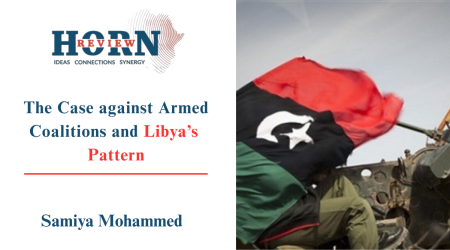
The Case against Armed Coalitions and Libya’s Pattern
Certain structural conditions in political history recur with regularity to...
24
Sep
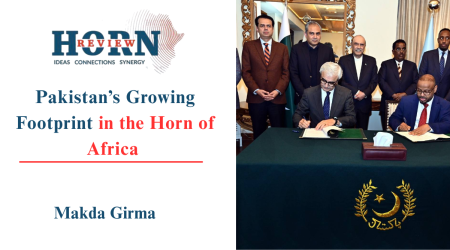
Pakistan’s Growing Footprint in the Horn of Africa
The Horn of Africa sits beside one of the most...
24
Sep
Grand Fulla and the End of Egypt’s Nile Veto
South Sudan decided to proceed with the Grand Fulla Dam...
23
Sep
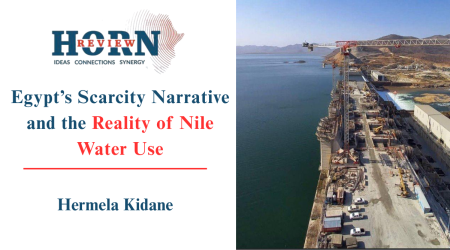
Egypt’s Scarcity Narrative and the Reality of Nile Water Use
Egypt has portrayed the Grand Ethiopian Renaissance Dam as...
23
Sep
The Alliance for “Survival” as Eritrea’s Proxy Coalition
By Amanuel Tadesse, International Law and Foreign Relations Expert
Eritrea’s relationship...
21
Sep
How Cairo’s Institutions Read Ethiopia
Egypt’s policy thinking toward Ethiopia has evolved from a primarily...