Envoys, Energy Corridors, and Counter Alliances
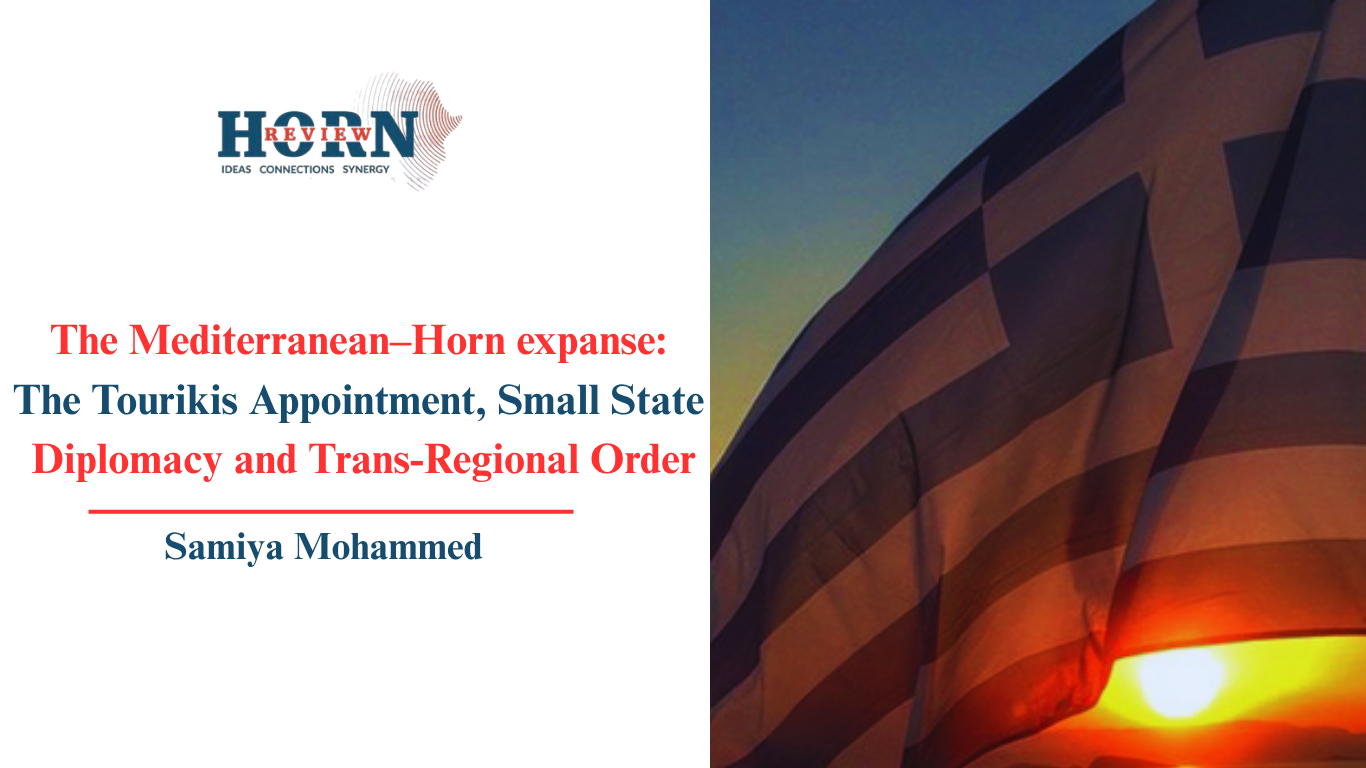
The appointment of Dimitrios Tourikis as Somaliland’s Special Envoy to Greece is not an independent diplomatic action. It takes place within a wider transformation affecting the Horn of Africa and the Eastern Mediterranean, where questions of recognition, maritime security, port infrastructure and regional influence are increasingly intertwined. Tourikis a Greek businessman and founder of the consultancy Callamus, publicly confirmed his appointment in May 2026 describing himself as deeply honoured and acknowledging Somaliland Foreign Minister Abdirahman Dahir Adam Bakaal. His recent activities including meetings with universities and discussions surrounding economic cooperation and diplomatic engagement suggest that the role is intended to extend ceremonial representation.
The consequence of Greece in this context should not be underestimated. Greece has become one of Israel’s closest partners over the past decade particularly in the fields of energy, maritime security, defense coordination and Eastern Mediterranean geopolitics. The Greece–Israel’s center has strengthened considerably in the middle of shifting regional alignments, tensions with Turkey and competition over energy tract in the Mediterranean. Any Somaliland outreach toward Greece therefore carries implications beyond bilateral relations. Viewed through this the timing of the appointment appears highly consequential. Israel’s recognition of Somaliland fundamentally altered the diplomacy surrounding the territory.
Reports also coming in to the light in May 2026 that the UAE is lobbying countries such as Eswatini, Argentina, Zambia and the Dominican Republic to recognize Somaliland are consistent with a broader of incremental normalization. While these reports remain unconfirmed officially, they align with observable regional movements.
Somaliland’s appointment of a Greek envoy fits squarely within this pattern. It signals an effort to institutionalize relationships in Europe through figures capable of leveraging networks in business, diplomacy and strategic policy circles. Greece’s position is particularly relevant because of its convergence with Israel and its own tensions with Turkey in the Eastern Mediterranean. Turkey has spent years with influence in Somalia through infrastructure projects, humanitarian assistance, military training, economic investment and operates its largest overseas military base in Mogadishu and maintains substantial political capital with Somalia’s federal government. Qatar has similarly developed strong relationships within Somalia through financial assistance and political engagement.
What is gradually taking shape however is a potential counter alignment involving the UAE, Israel, and possibly Greece each motivated by overlapping but distinct concerns. This does not necessarily imply the existence of a formal alliance. Rather it reflects converging interests that create incentives for coordinated or parallel engagement with Somaliland. In this framework recognition becomes less an ideological endorsement of Somaliland’s self determination and more an instrument tied to infrastructure, regional security and geopolitical competition. That distinction is crucial. Much of the international debate surrounding Somaliland historically centered on legal and historical arguments regarding sovereignty. Increasingly however the issue is being reframed through hard realities.
This helps explain why recognition efforts may initially focus on smaller or more diplomatically flexible states. Countries such as Eswatini or the Dominican Republic are often viewed as more open to strategic persuasion, economic incentives or alignment with influential regional partners. These are classic recognition by stealth tactics. The process rarely begins with immediate full diplomatic recognition from major powers. Instead it develops incrementally through practical cooperation that creates facts on the ground. Special envoys are appointed, Economic agreements are signed, Ports are expanded, Security cooperation deepens, Diplomatic visits increase, Technical representation comes over time and these arrangements normalize the international presence and reduce the political costs associated with eventual recognition. This model has precedents globally. States often avoid abrupt recognition decisions in sensitive geopolitical contexts preferring gradual engagement that allows flexibility while minimizing diplomatic backlash.
The international norms are not static and they evolve when geopolitical incentives shift sufficiently. The combination of Red Sea insecurity, global competition over maritime routes Gulf involvement in East Africa and intensifying rivalries may be gradually altering the maths surrounding Somaliland’s status. Recognition processes often operate through momentum effects. Once the first barriers are broken additional states may become more willing to engage openly particularly if recognition begins appearing advantageous rather than diplomatically risky.
A future European recognition would carry greater symbolic weight. Greece is a member of both the European Union and NATO and its diplomatic decisions resonate far from the bilateral level. Even absent full recognition, stronger Greek and Somaliland relations could help institutionalize Somaliland’s European presence and provide legitimacy through informal normalization. The appointment of Dimitrios Tourikis should therefore be understood not just as a diplomatic appointment but as part of a larger geopolitical transition.
International recognition processes are moulded by legal considerations, regional politics, economic interests and competition simultaneously. But what is increasingly evident is that Somaliland’s campaign is entering a new phase in one driven less by appeals to historical justice alone and more by integration into the geopolitical priorities of influential regional actors. In that sense the nascent UAE–Israel–Somaliland remitting with Greece potentially moving closer through diplomatic engagement depicts more than a series of isolated developments. It reflects the gradual construction of a new regional alignment stretching from the Eastern Mediterranean to the Horn of Africa where ports, maritime corridors, and strategic influence are becoming central determinants of diplomatic recognition and international legitimacy.
By Samiya Mohammed, Researcher, Horn Review