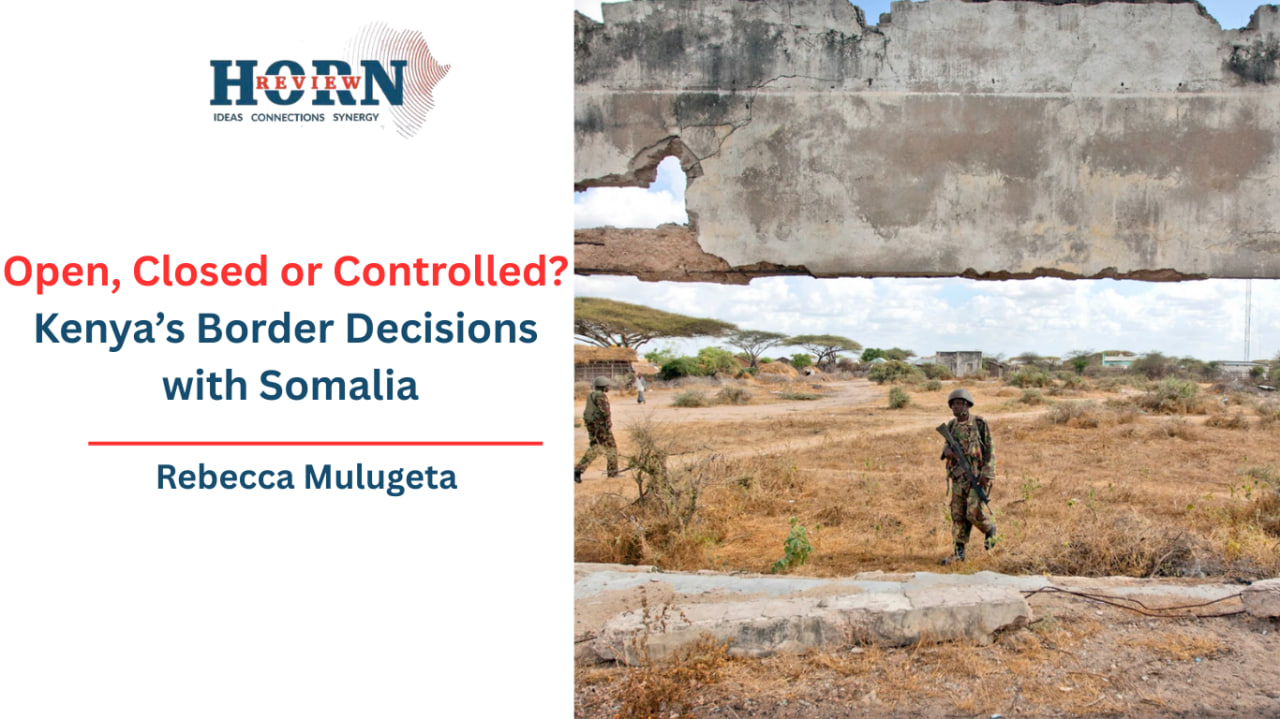
Kenya’s decision to reopen parts of its border with Somalia after 15 years of closure is a debatable point in the country’s counterterrorism and regional security posture. Announced by President William Ruto with little visible preparation on the ground and limited public alignment with security agencies, the move immediately triggered concern across diplomatic, intelligence, and policy circles. While the decision falls squarely within Kenya’s sovereign authority, sovereignty alone does not resolve the strategic dilemma it creates. The core question is whether reopening a historically volatile frontier at a time when Al-Shabaab remains active, adaptive, and increasingly regionalized strengthens long-term state control or exposes Kenya and its neighbors to heightened short-term and structural risks?
The Kenya and Somalia border has never functioned as a conventional boundary. It cuts through Somali-speaking communities whose economic, social, and familial ties long predate modern statehood. For decades, movement across the frontier was fluid, and largely unregulated. This reality shifted sharply after Kenya’s 2011 military intervention in Somalia when the East African nation launched a major military incursion into Somalia to push back al-Shabab, an al-Qaeda affiliate, from its border. These soldiers were later absorbed into the African Union force and High-profile incidents in Nairobi, Garissa, and along the coast transformed the border from a peripheral governance challenge into a central national security concern. In response, Kenya adopted a containment-heavy approach, relying on border closures, military deployments, intelligence operations, and close coordination with the United States and other partners.
For a time, this approach appeared to yield results. Large-scale mass-casualty attacks declined, and Kenya demonstrated an ability to disrupt planned operations. Yet the deeper architecture of Al-Shabaab’s influence remained intact. Rather than being dismantled, the group adapted. It reduced its visibility, diversified revenue streams, and embedded itself more deeply into cross-border economic systems. This evolution exposes the limitations of border closure as a security tool. Containment restricted formal movement but failed to eliminate informal flows.
UN reporting on Somalia and regional security has consistently highlighted this pattern on S/2024/748 and the earlier S/2023/724 refer that prolonged and poorly enforced border closures do not stop cross-border movement. These routes become ideal terrain for militant governance. Al-Shabaab has systematically exploited this vacuum, taxing on goods and people moving across informal corridors. These activities provide steady revenue, but more importantly, they embed the group into the everyday survival strategies of border communities.
This is where the debate around Kenya’s decision becomes more visual than a simple open-versus-closed border argument. Closed borders without capacity do not weaken militant groups. They strengthen them economically and socially. When the state withdraws from regulation, non-state actors fill the gap. Over time, this creates parallel systems of authority that are difficult to uproot through military force alone.
President Ruto’s move can therefore be read as a strategic rather than a denial of threat. The logic underpinning the decision is that formalizing movement allows the state to reclaim control over flows, replace shadow taxation with public revenue, and restore intelligence visibility. In theory, when crossings are properly managed, the space for militant taxation and coercion reduces. The state becomes present not only as a security actor, but as an administrative authority.
However, this logic collides with the reality of the current threat environment. Al-Shabaab remains operational, capable of conducting attacks inside Kenya and across the region. The group has also demonstrated an increasing ability to cooperate tactically with other armed networks such as the Houthi. timing and execution raises serious concerns. Kenya’s security agencies and international partners were reportedly unsettled by the announcement, particularly the Central Intelligence Agency, which maintains close coordination with Kenya’s National Intelligence Service. From a counterterrorism standpoint, reopening the border without visible and credible security barriers increases exposure, creates new infiltration points, and complicates counterterrorism operations built around controlled movement.
From this perspective, reopening a border adjacent to an active militant ecosystem appears premature. The concern is not with Kenya’s sovereignty or long-term governance ambitions, but with the risk that capacity gaps will be exploited faster than the state can respond
If we compare with Chad’s recent closure all in borders adjacent to Sudan it helps clarify why this debate has no simple resolution. In response to the war in Sudan, Chad opted for a sharply different approach. Faced with the risk of arms proliferation, militant spillover, and regional destabilization, N’Djamena moved to close and harden its borders. Chad did to prevent its territory from becoming a transit corridor for weapons, fighters, and illicit networks emerging from Sudan’s collapse. In Chad’s case, border closure was framed as a defensive necessity, a way to reduce exposure during an acute regional crisis.
Kenya’s context, however, differs fundamentally. Chad’s borders, while porous, do not slice as deeply through socially integrated communities in the same way as Kenya’s frontier with Somalia. Kenya cannot realistically seal its border without imposing severe economic and social costs. Where Chad pursued isolation to buy time, Kenya faces a border where isolation has historically produced informalization, resentment, and militant entrenchment.
Yet the Chad comparison also highlights the risks embedded in Kenya’s approach. Chad closed its borders specifically to avoid becoming a route for illicit arms movement. Kenya now risks the opposite. Southern Somalia remains saturated with weapons, and Al-Shabaab has demonstrated logistical competence and adaptability. An open but weakly regulated border could facilitate the movement of arms into Kenya, intensifying insecurity not only domestically but across the region. In such a scenario, Kenya would not simply be managing its own risk and also it would be redistributing it.
This region is deeply interconnected and Instability rarely remains confined within national boundaries. Arms flows, militant networks, and illicit trade move fluidly across states. A failure of border governance in one country creates pressure elsewhere. Kenya’s decision therefore carries implications beyond its territory.
The central issue, therefore, is not whether borders should be open or closed. It is whether the state can regulate movement credibly and consistently. Community engagement is crucial along the counter terriosm. Without local trust, even the most sophisticated systems fail. Border governance is not just a security function but also It is a governance. Whether this decision succeeds depends entirely on implementation. If border reopening is followed by sustained intelligence integration, and community trust-building, Kenya may gradually reduce the structural foundations of Al-Shabaab’s influence around its borders. If it is not, the country risks becoming more exposed at a moment when militant networks are increasingly and adaptive.
The contrast with Chad shows a broader truth about security policy in Africa’s conflict zones. There is no universal template. States choose between imperfect options shaped by geography, demography and institutional strength. What matters most is coherence between strategy and capacity. Kenya has chosen to contest control openly rather than retreat behind closure. That choice demands far more than political declaration. It requires long-term commitment, coordination with partners, and a willingness to absorb short-term shocks.
Kenya’s border reopening exposes a deeper reality about counterterrorism in the Horn of Africa. Military force and border closure can suppress symptoms, but they rarely dismantle the systems that sustain militant groups. Governance, regulation, and legitimacy are slower and politically costly, but they remain the only durable tools available. Kenya has chosen to test that reality. The outcome will shape not only its own security, but the stability of the wider region for years to come.
By Rebecca Mulugeta, Researcher, Horn Review