
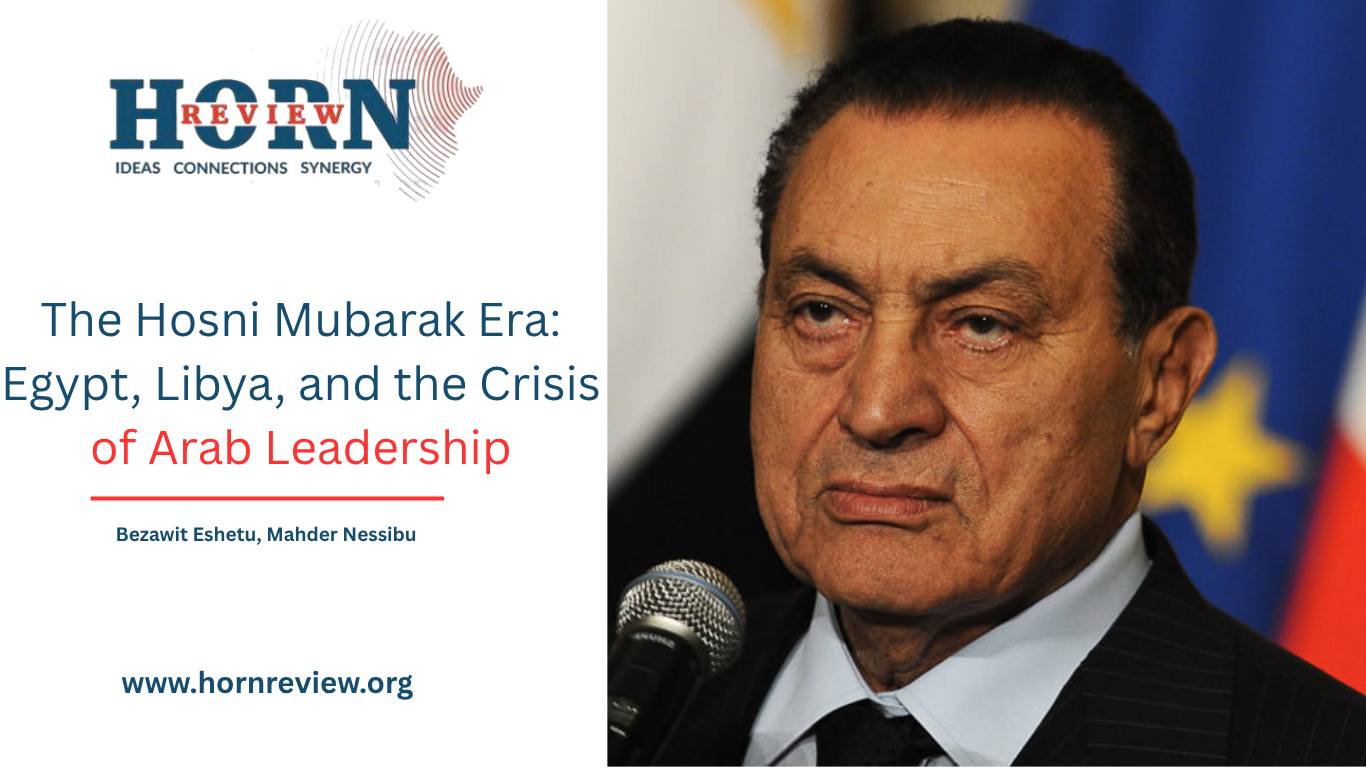
The Hosni Mubarak Era: Egypt, Libya, and the Crisis of Arab Leadership
Hosni Mubarak’s accession in October 1981 ended an era of revolutionary ambition and inaugurated a foreign policy of tight, risk-averse management. Confronted with a weakened military, rising Islamist unrest, and the diplomatic fallout from Sadat’s westward turn, Mubarak abandoned grand pan-Arab projects and made one clear calculation: keep the regime intact. His diplomacy traded leadership for stability, rebuilding external ties, attracting aid, and containing regional crises that might reignite domestic upheaval.
This policy shift built on the trajectory of pan-Arabism, which achieved its peak under Nasser in the mid-20th century by promoting the political, cultural, and economic integration of Arab states against colonial influences and Western dominance. Initiatives such as the brief United Arab Republic with Syria and support for rebel movements in the Middle East and North Africa positioned Egypt as the core of Arab nationalism. Nasser’s leadership, shown through the nationalization of the Suez Canal and his response to the 1956 crisis, influenced emerging figures, including Muammar Gaddafi in Libya, who based his 1969 coup against the monarchy on Nasser’s Free Officers model. However, the ideology weakened after Nasser’s defeat in the 1967 Six-Day War against Israel, during which Egypt lost the Sinai Peninsula due to substantial military losses.
This setback, known as the “Naksa,” highlighted pan-Arabism’s weaknesses, including internal divisions, uncoordinated efforts among Arab states, and Israel’s military advantages, leading to disillusionment as national priorities and Cold War influences overrode unified action. Early in his rule, Gaddafi presented himself as a continuation of pan-Arabism, providing rhetorical and material support to Nasser in his later years. After Nasser’s death in 1970, Gaddafi proposed federations involving Libya, Egypt, and Syria to restore Arab unity. These proposals failed due to ideological differences, territorial issues, and leadership conflicts, illustrating pan-Arabism’s core limitation: its idealistic framework lacked sufficient practical mechanisms, allowing economic inequalities and authoritarian rivalries to prevent sustainable cooperation and leaving proponents like Gaddafi dissatisfied with Arab fragmentation.
Pan-Arabism’s erosion accelerated under Sadat, who favored economic revival and diplomatic realignments over ideological crusades. This approach was tested in the 1973 Yom Kippur War, where Egypt and Syria launched a coordinated assault on Israel, with Gaddafi contributing financial support and aircraft as a way to bolster Arab prestige and reaffirm his commitment to pan-Arab ideals. Although the war fell short of total victory, it restored some Egyptian morale by breaching Israeli defenses and culminating in UN-brokered ceasefire. Nevertheless, it also laid bare emerging rifts, as Gaddafi lambasted Sadat for halting the campaign without reclaiming all occupied Arab lands, including those in Palestine.
These differences grew amid Sadat’s domestic economic difficulties and his alignment with U.S. assistance to reduce Soviet involvement, leading to his engagement with Israel. His 1977 visit to Jerusalem and the 1978 Camp David Accords, which regained the Sinai Peninsula but established normal relations with Israel, isolated Egypt from many Arab states. Gaddafi condemned this as a betrayal of pan-Arab solidarity, exacerbating earlier conflicts that had already erupted in the 1977 Libyan-Egyptian War, caused by Gaddafi’s opposition to Sadat’s Western orientation and involvement in Egyptian matters. Sadat’s pragmatic approach, driven by Egypt’s need for investment in the wake of regional economic disruptions like the 1973 oil crisis, mirrored a wider Arab trend in which pressing national necessities eclipsed unity. This isolated figures like Gaddafi, who argued that it eroded the Arabs’ unified leverage against Israel and Western interests, hastening pan-Arabism’s decline from a viable strategy to mere rhetorical flourish.
The legacy of these strained relations persisted into the Mubarak era, where Egypt’s foreign policy continued to navigate the fragments of pan-Arab ideals amid pragmatic necessities. These ongoing tensions, endorsing Arab cooperation publicly while focusing on regime protection privately, were most evident in Egypt’s relations with Gaddafi’s Libya, blending historical connections with competitive elements. Upon taking office, Mubarak pursued normalization through meetings with Gaddafi and Syrian officials, motivated by economic factors: Egypt’s expanding population relied on Libyan oil revenues for remittances, while Libya required Egyptian workers for development projects.
This economic interdependence, however, was soon complicated by Gaddafi’s evolving priorities. As he became increasingly frustrated with Arab divisions, Gaddafi shifted toward pan-Africanism in the late 1990s, directing oil revenues to African institutions and positioning himself as a key continental figure. This reorientation raised alarms in Egypt, especially regarding joint management of transboundary resources like the Nubian Sandstone Aquifer, which involved pacts with Chad and Sudan. Gaddafi’s pan-African strategy was a calculated response, using Libya’s energy resources to build influence in sub-Saharan Africa amid anti-imperial sentiments, while avoiding Arab disappointments—yet it increased border concerns and challenged Egypt’s priorities centered on the Nile.
Faced with this shift, Mubarak adopted a defensive posture, emphasizing border safeguards over outright challenges, which underscored Cairo’s hesitation to project assertive power and inadvertently permitted Gaddafi’s ventures to erode Egyptian clout in Africa. On the global stage, Mubarak positioned Egypt as a bridge between Libya and Western nations, facilitating the lifting of sanctions tied to incidents like the Lockerbie bombing and aiding talks after Gaddafi’s 2003 abandonment of weapons of mass destruction programs. Such intermediation delivered tangible gains, from expanded trade to collaborative energy projects like natural gas pipelines.
Despite these diplomatic successes, Gaddafi’s African orientation ultimately undercut Egypt’s influence in the south, revealing a core flaw in Mubarak’s tactics: an overemphasis on short-term economic perks at the expense of enduring strategic foresight, allowing rivals to infringe on critical spheres. Compounding this were porous borders that facilitated smuggling and sporadic kidnappings of Egyptians in arid zones, further taxing bilateral ties without eliciting forceful countermeasures from Cairo. These border vulnerabilities extended into the broader Arab arena, where Gaddafi’s extremism clashed with Mubarak’s restraint, but Egypt’s willingness to overlook Libyan excesses for reciprocal benefits signaled its waning authority, as it failed to harness its cultural prestige to effectively broker or curb regional turbulence.
This model of opportunistic partnerships also shaped Mubarak’s dealings with figures like Syria’s Bashar al-Assad and Sudan’s Omar al-Bashir. It forged a loose coalition rooted in common fears of foreign meddling and domestic dissent, which often intersected with Gaddafi’s maneuvers to bolster autocratic resilience. These alliances reflected Mubarak’s pragmatic approach to regional diplomacy, prioritizing regime survival over ideological consistency or long-term strategic vision. By aligning with leaders who shared his aversion to external pressures, Mubarak aimed to create a buffer against isolation, yet this strategy ultimately highlighted Egypt’s limited influence and contributed to its waning regional stature.
For Assad, who assumed power in 2000 amid intense global scrutiny following his father’s death, Mubarak positioned himself as a crucial intermediary. Assad sought Egyptian support to counter U.S. demands during the 2003 Iraq war, leveraging Mubarak’s established ties with Washington to ease tensions. The two leaders coordinated closely on sensitive issues, such as the international investigations into the 2005 assassination of Lebanese Prime Minister Rafik Hariri, where Mubarak advised caution to prevent escalation into broader conflict. Framed publicly as efforts to strengthen Arab solidarity, these interactions underscored Egypt’s constrained leverage, as Syria maintained its independent streak under Assad. This dynamic not only preserved short-term stability but also revealed how Mubarak’s role as a mediator often served to mask Egypt’s inability to dictate terms, setting the stage for deeper explorations of similar ties with other autocrats.
Building on this pattern of selective cooperation, Mubarak’s relationship with Bashir evolved from early antagonism to robust mutual defense, offering a prime example of how personal and national interests intertwined to sustain authoritarian networks. Bashir seized power in Sudan through a 1989 Islamist coup, which initially strained relations with Egypt due to ideological clashes and disputes over the Halaib Triangle border region. However, by the late 1990s, pragmatic necessities prompted a thaw, with relations mending through economic agreements and diplomatic engagements. This culminated in the 2004 Four Freedoms Agreement, which facilitated freedom of movement, residence, work, and ownership between the two countries, easing border tensions and fostering economic interdependence.
This shift demonstrated Mubarak’s willingness to overlook ideological differences for strategic gains, such as securing Nile water rights and countering regional isolation. By the 2000s, Mubarak extended overt support to Bashir amid international condemnation, hosting him in Cairo multiple times despite the International Criminal Court’s 2009 arrest warrant for atrocities in Darfur. Mubarak’s government framed this as a defense of Arab sovereignty, proposing bilateral immunity to shield Bashir from prosecution. This alliance revealed profound interdependence: Mubarak gained a southern ally to stabilize borders and resource flows, while Bashir benefited from Egypt’s diplomatic weight to deflect Western sanctions. Yet, this reciprocity eroded Egypt’s moral authority in global forums, portraying Mubarak as an enabler of impunity rather than a principled leader. The relationship’s depth lay in its transformation from rivalry to cooperation, where shared vulnerabilities, including fears of Islamist insurgencies and economic pressures, cemented a bond that prioritized regime longevity over ethical considerations or regional progress.
These interlinkages among Gaddafi, Assad, and Bashir manifested in shared dialogues and collective defiance of international penalties, forming a web of authoritarian mutual reliance. Gaddafi’s loud advocacy often amplified Assad’s efforts to survive isolation and Bashir’s determination to withstand scrutiny over Darfur, with Mubarak acting as a moderating force. For instance, Egypt, alongside Libya, opposed external interventions in Sudan, viewing them as assaults on national sovereignty that could set precedents threatening their own regimes. This coalition, though informal, highlighted a broader pattern of autocratic solidarity during the 2000s, where leaders exchanged intelligence, diplomatic cover, and rhetorical support to navigate global dynamics. While Mubarak’s Egypt provided a veneer of stability to these arrangements, the role ultimately undermined Cairo’s ambitions for dominance, as it alienated progressive Arab voices and allowed wealthier Gulf states to surpass Egypt in diplomatic influence.
Broader geopolitical shifts further compounded Egypt’s diminishing stature under Mubarak. His heavy reliance on U.S. aid, reinforced through participation in coalitions against threats like Iraq’s 1990 invasion of Kuwait, alienated segments of the Arab public, especially on Palestinian-Israeli issues. This dependence exposed Egypt to aid fluctuations and diminished its clout in regional organizations, where Saudi Arabia’s financial power increasingly prevailed. Meanwhile, Gaddafi’s investments in African initiatives outshone Egypt’s security-focused posture, exposing Mubarak’s inward-looking priorities and leaving Egypt unprepared for evolving alliances. By accommodating these changes for immediate benefits, such as economic partnerships and border resolutions, Mubarak’s policies accelerated Egypt’s decline from a regional leader to a marginal actor in a fractured Arab world that Cairo could neither shape nor navigate. This outcome stemmed from a preference for short-term equilibrium over forward-thinking adaptation, linking directly to the personal alliances that prioritized survival over innovation.
The consequences of this foreign policy extended far beyond Mubarak’s rule, sowing discontent that fueled the Arab Spring uprisings and led to the downfall of both him and Gaddafi in 2011. Mubarak stepped down in February amid widespread protests calling for democratic reforms, while Gaddafi was killed in October during a NATO-supported rebellion that exploited his internal repression, African overreach, and Arab isolation. Although the leaders did not actively conspire against each other, given historical rivalries, their fates were connected through the Arab Spring’s cascading momentum, which began in Tunisia, inspired Egyptians to challenge Mubarak, and subsequently motivated Libyans to rise against Gaddafi
Despite Mubarak’s achievements in containing domestic extremism and managing international relations, his primary shortcoming lay in his failure to leverage Egypt’s demographic and cultural assets for authentic regional leadership. Instead, he perpetuated a system of corruption and oppression similar to those he supported abroad, merging foreign and domestic strategies in ways that exacerbated internal problems. The harsh controls he imposed suppressed free expression and empowered a select elite, ultimately fueling the unrest that culminated in his removal from power.
Mubarak’s era revealed the superficiality of Egypt’s claimed Arab leadership, masking a nation burdened by donor dependency and autocratic alliances that bred instability rather than fostering meaningful unity or progress. These constraints persist under Abdel Fattah el-Sisi, who has continued Mubarak’s focus on security while avoiding critical reforms, a trajectory that threatens to deepen Egypt’s isolation and hinder its potential for genuine leadership in the region.
By Bezawit Eshetu and Mahder Nessibu, Researchers, Horn Review

RELATED
Posts
19
Oct
Eritrea's Incursion and Ethiopia’s Right to Self-Defense: Where Does the Law Stand?
Ethiopia’s recent letter to the United Nations Security Council...
19
Oct
Eritrea’s Garrison State and Its Crisis-Exporting Strategy
The Eritrean People’s Liberation Front did not simply inherit a...
19
Oct
How Egypt's Opening Could Take Shape in Southwest Somalia
Federal authority in the Bay region is contracting in...
18
Oct
Is Eastern Sudan Becoming a Fortified Base for the Next Regional War?
General Abdel Fattah al-Burhan's recent inspection of the 11th...
18
Oct
The Legal Paradoxes in Eritrea’s AU Complaint to ReInstate its Mission
Ethiopia’s expulsion of ten Eritrean diplomats from Addis Ababa marked...
17
Oct
Russia’s Mediation Offer Between Ethiopia and Eritrea
Russia’s decision to offer a platform for contacts between Ethiopia...
15
Oct
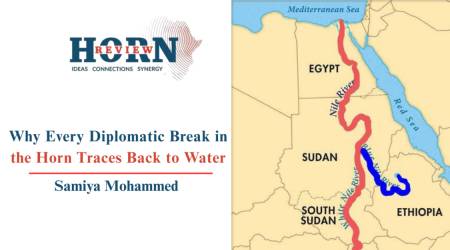
Why Every Diplomatic Break in the Horn Traces Back to Water
Analysis of instability in the Horn of Africa and...

15
Oct
The AU’s Uneven Geography of Urgency
Since Mahmoud Ali Youssouf assumed leadership of the African Union...
15
Oct
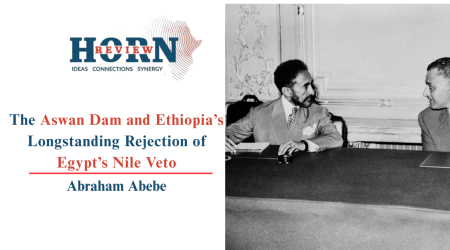
The Aswan Dam and Ethiopia’s Longstanding Rejection of Egypt’s Nile Veto
On 29 May 1956, before construction of the Aswan High...
15
Oct
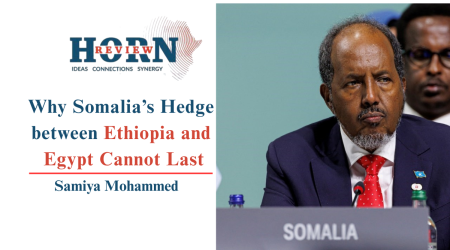
Why Somalia’s Hedge between Ethiopia and Egypt Cannot Last
The public position articulated by Somalia’s Deputy Foreign Minister Hassan...