
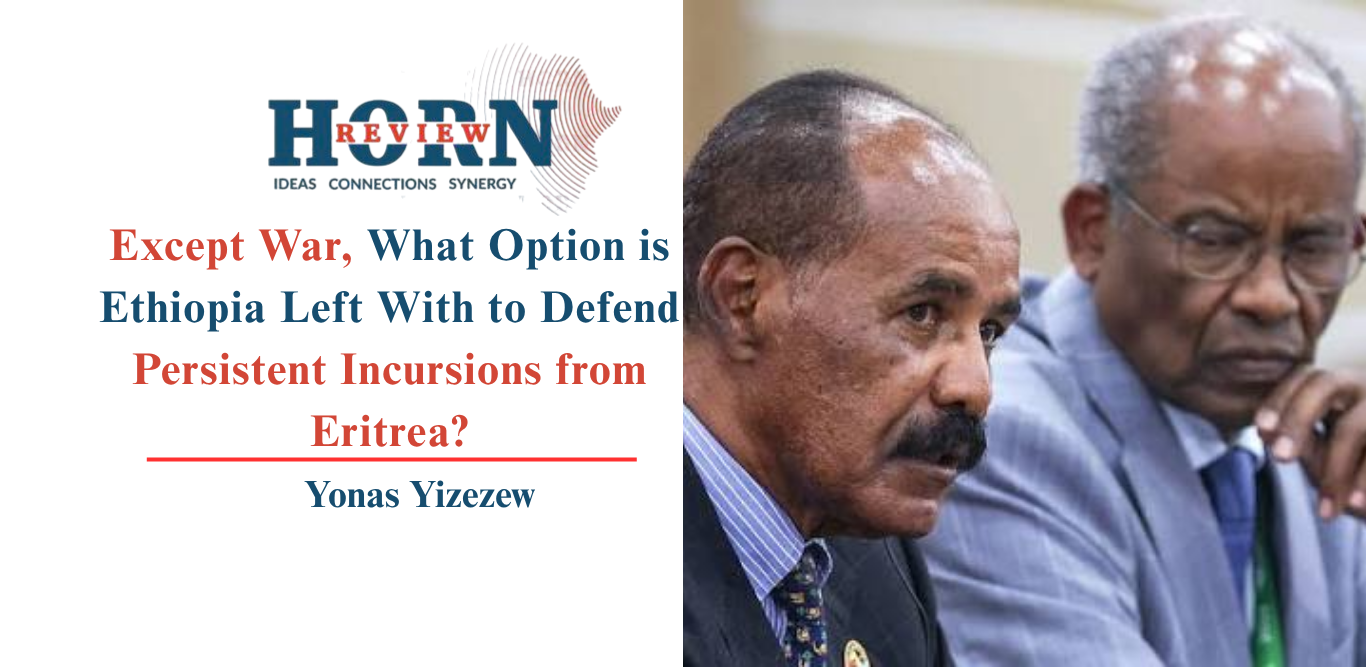
Except War, What Option is Ethiopia Left With to Defend Persistent Incursions from Eritrea?
Having learned from the devastating costs of the 1998 border war between Ethiopia and Eritrea and the 2020 northern Ethiopia conflict, preventing a full-scale war between Ethiopia and Eritrea remains crucial. In a region plagued by persistent conflict, militant activities, and extremist and terrorist havens, the last thing it needs is another war. As U.S. Secretary of State Marco Rubio stated, “the last thing the world needs right now is another war.”
However, Ethiopia’s relationship with Eritrea does not seem likely to be resolved through conventional diplomatic assurances alone. Since its secession, Eritrea has adopted an antagonistic posture toward its largest neighbor and pursued policies that challenge Ethiopia’s security and regional interests. It has a documented record of supporting anti-Ethiopian government armed groups, providing them with sanctuary and other forms of assistance. Following the Pretoria peace agreement, although Eritrean forces withdrew from Tigray’s heartland, they remained in territories inside Tigray near the Eritrean border. Eritrea also established an alliance with the TPLF and other armed groups inside Ethiopian territory, with the latter forming an alliance aimed at overthrowing the Ethiopian federal government. In this context, Eritrea plays a significant role, while other external actors also contribute by providing support.
The nature of the Eritrean state under the People’s Front for Democracy and Justice (PFDJ) remains a persistent source of insecurity for Ethiopia. The country’s political system is highly centralized and militarized, with indefinite national service, the dominance of military institutions over civilian administration, and the concentration of power in President Isaias Afwerki and his close circle all playing a central role in keeping the regime in power. Since the 1998–2000 border war, Eritrea has maintained a security posture shaped by permanent mobilization and a deep suspicion of Ethiopia. This reflects what can be described as a small-state syndrome, in which the perceived vulnerability of a state, its limited strategic depth, and its exposure to stronger neighbors shape how its leadership understands external threats. In Eritrea’s case, this outlook has reinforced the tendency to view Ethiopia through a security lens and to treat the preservation of regime security as a national priority. This reinforces the need to address the underlying strategic calculations that shape Eritrea’s behavior toward Ethiopia.
In recent years, the practical consequences of this structure have become evident in Eritrea’s military presence in border areas of northern Ethiopia and its cultivation of relationships with armed groups operating inside Ethiopian territory. For more than a year, Ethiopian authorities documented patterns of material support, including ammunition intercepts and alleged training linkages, directed toward elements of the Tigray People’s Liberation Front and other armed groups in Ethiopia. These activities culminated in formal Ethiopian notifications to the United Nations Security Council in October 2026, invoking Article 51 of the UN Charter on the inherent right of self-defense in response to the advances of Eritrean units tens of kilometers into Tigrayan territory and coordination with domestic insurgent coalitions. The severing of diplomatic relations between Addis Ababa and Asmara in early October further removed remaining formal channels for crisis management. In this environment, Eritrea’s conduct has shifted from wartime alliance against the TPLF during 2020–2022 to a tactical realignment that treats a weakened or fragmented Ethiopian center as preferable to a consolidated neighbor capable of projecting power in the region.
The nature of the regime, shaped by President Isaias Afwerki’s personalized style of rule and his longstanding political outlook towards Ethiopia, makes it unlikely that Asmara will voluntarily provide the guarantees necessary for de-escalation. For Ethiopia, however, Isaias’s decades-long rule has remained a persistent security concern, given Eritrea’s history of hostility towards its southern neighbor and its support for armed with anti-government agendas. Ethiopia needs credible guarantees from Eritrea to address these concerns, ease tensions, and create conditions for a lasting resolution. However, as noted above, the nature of Eritrea’s leadership makes such guarantees difficult to secure, particularly if they require a change in the security policies and political outlook that have shaped its approach towards Ethiopia for decades.
Demands for an end to support for armed opposition groups, the cessation of cross-border arms transfers, and a verifiable halt to military preparations near Ethiopian territory would require the Eritrean leadership to reconsider practices closely tied to its system of internal control. Introduced during the 1998–2000 border war, national service has evolved into an indefinite obligation serving both military and labor needs. Many Eritreans remain in service for years, often with little control over their assignments and limited remuneration. Its prolonged nature also gives the government considerable influence over citizens’ livelihoods and their ability to leave state service.
In Eritrea, generals often wield greater authority than civilian officials at the zonal level, with power ultimately concentrated in the presidency. Isaias Afwerki has also rotated military commanders and senior officials, limiting their ability to build independent power bases. Control over the economy, political coordination, information, and national security remains concentrated among a small circle of trusted figures whose influence depends heavily on their relationship with the president. Under such conditions, transparency and demobilization would be perceived as a threat to the regime’s capacity to extract resources, suppress dissent, and justify isolation. The empirical record of Eritrean foreign policy since its secession, marked by disputes with Yemen, Djibouti, Sudan, and Ethiopia, illustrates a consistent preference for confrontation over institutionalized cooperation when the latter would constrain personalist authority.
In essence, full-scale war between Ethiopia and Eritrea would risk repeating the cost of the previous conflicts, while increasing the risk of regional actors becoming involved. A direct war between Ethiopia and Eritrea would be an uneven contest given Ethiopia’s demographic and military scale. Yet Eritrea’s garrison-state structure would allow it to mobilize much of its population and national resources with potentially devastating consequences for its population and economy. Therefore, Ethiopia’s dilemma would be how to neutralize the threat posed by Eritrea’s leadership without turning the military imbalance into a prolonged and costly conflict.
Given these constraints, effective threat neutralization begins with identifying the specific sources of risk. These include Eritrea’s military presence, support for armed groups, and other activities directed by its leadership that threaten Ethiopia’s security. Given the concentration of political and security authority within Eritrea’s leadership, a surgical and swift operation directed at the narrow decision-making and security core offers a theoretically coherent pathway. The personalist character of the Eritrean system concentrates operational and political authority in a limited set of individuals and institutions surrounding the president. However, this approach would require a carefully defined communication strategy to establish the basis for action, build international understanding of its security concerns and demonstrate that any measures taken are necessary and proportionate to the threats identified.
Israel’s approach towards Iran illustrates how operations targeting senior leadership and key decision-making structures can disrupt command arrangements and weaken a state’s capacity to coordinate its response. However, Iran’s institutional depth has allowed it to sustain resistance despite the loss of senior figures. Eritrea differs in this respect, but the case provides an illustration. Its political system is more personalized, with authority concentrated around Isaias Afwerki and a narrow circle of military and security officials. Let alone the removal of the inner circle, the removal of Isaias would be consequential extending beyond Ethiopia’s immediate security concerns, potentially reshaping Eritrea’s political order and the wider Horn of Africa. Eritrea’s relatively shallow administrative depth, compared with more layered systems that possess provincial redundancy or institutionalized revolutionary guards, may increase the disruptive potential of precise action against the center.
For international actors, Eritrea’s status as a pariah state, its record of playing a spoiler role in the region, and its government’s persistent human rights violations would shape how they assess such a development. The prospect of a change in leadership could be viewed as an opportunity to address longstanding sources of regional instability and the country’s human rights crisis. In its 2015 report, the UN Commission of Inquiry on Human Rights in Eritrea found that “systematic, widespread and gross human rights violations have been and are being committed in Eritrea under the authority of the Government,” adding that some of these violations “may constitute crimes against humanity.” Beyond this, such an approach could help avert a devastating interstate war, free the Eritrean people from a tyrannical and deeply oppressive regime and minimize wider humanitarian consequences.
The broader regional context reinforces the logic of limitation. A major war would intersect with ongoing conflicts in Sudan, competition over Red Sea access, and Nile water disputes, creating opportunities for external actors to deeply embed themselves in the region. Eritrea’s alignment with SAF’s al-Burhan and Egypt mean that uncontrolled escalation would quickly expand the geographic and political scope of the conflict. By contrast, a tightly constrained operation that demonstrably prioritizes the neutralization of leadership-directed threats minimizes the grounds for third-party intervention and preserves Ethiopia’s capacity to address internal security challenges. The small-state syndrome that shapes Eritrean behavior is characterized by acute sensitivity to Ethiopia’s growing regional role and influence, alongside a tendency to use asymmetric means to constrain Ethiopia’s position and establish strategic buffer zones along its borders including through support for the TPLF.
As noted, Eritrea’s political and security system is built around military mobilization, secrecy, and the use of regional networks to advance its strategic interests. For Ethiopia to achieve lasting security, Eritrea would need to provide credible assurances against military build-up, arms trafficking, and support for proxy groups, including the TPLF and other armed movements, while preventing its territory from being used as a sanctuary for groups seeking to destabilize Ethiopia. However, the centralized and highly personalized nature of Isaias Afwerki’s rule raises serious doubts about whether such commitments would be honored without meaningful pressure. Ethiopia’s long-term security interests therefore depend on addressing these sources of interference while avoiding the heavy costs of a prolonged interstate war.
A carefully considered approach, supported by verified intelligence and a coherent communication strategy, seeks to address immediate security threats while preserving the prospects for long-term regional stability. Ethiopia cannot afford to remain trapped in the same recurring cycle of confrontation with Eritrea, in which unresolved threats repeatedly generate new tensions and bring both countries closer to a devastating war.
By Yonas Yizezew, Researcher, Horn Review

RELATED
Posts
21
Oct
Ethiopia, Kenya and the Growing Complexity of Somalia's Security Crisis
Prime Minister Abiy Ahmed's visit to Kenya on October 20...
21
Oct
Why Africa Needs Permanent Strategic Research Capacity and How Tana Forum Could Grow into It
Tana High-Level Forum on Security in Africa currently provides an...
21
Oct
Consistency in Ethiopia's Approach and the Evolution of Mediation Channels from IGAD
The path of Ethiopia and Somalia relations since the mid...
21
Oct
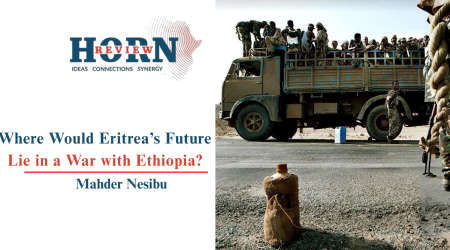
Where Would Eritrea’s Future Lie in a War with Ethiopia?
After a succession of escalations, the armies of Ethiopia and...
21
Oct
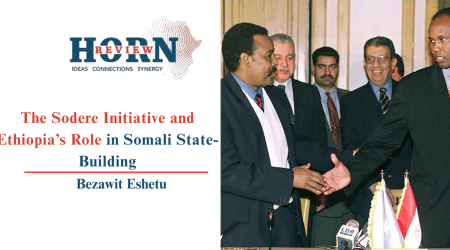
The Sodere Initiative and Ethiopia’s Role in Somali State-Building
Ethiopia’s initiative at Sodere brought Somalia’s rival factions into a...
21
Oct
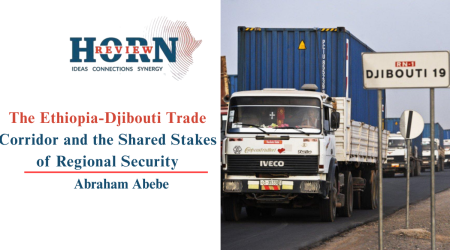
The Ethiopia-Djibouti Trade Corridor and the Shared Stakes of Regional Security
The TPLF-Shabiya attempt to cut the Ethiopia-Djibouti trade corridor...
17
Oct
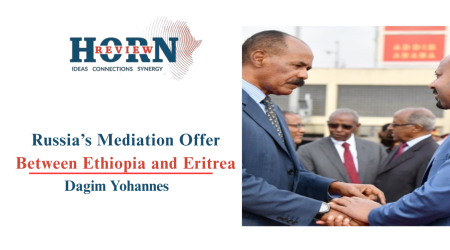
Russia’s Mediation Offer Between Ethiopia and Eritrea
Russia’s decision to offer a platform for contacts between Ethiopia...
15
Oct
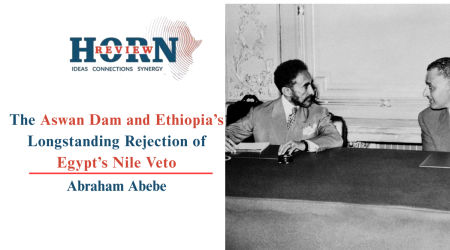
The Aswan Dam and Ethiopia’s Longstanding Rejection of Egypt’s Nile Veto
On 29 May 1956, before construction of the Aswan High...
15
Oct
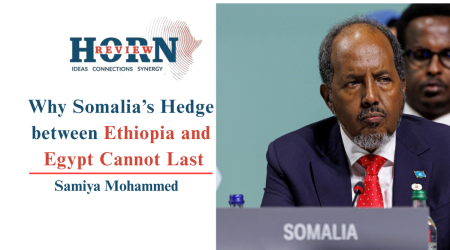
Why Somalia’s Hedge between Ethiopia and Egypt Cannot Last
The public position articulated by Somalia’s Deputy Foreign Minister Hassan...
15
Oct
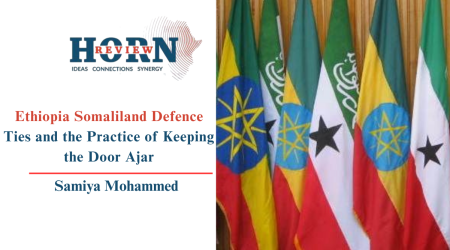
Ethiopia Somaliland Defence Ties and the Practice of Keeping the Door Ajar
The recent meeting between Brigadier General Nimcaan at the...