
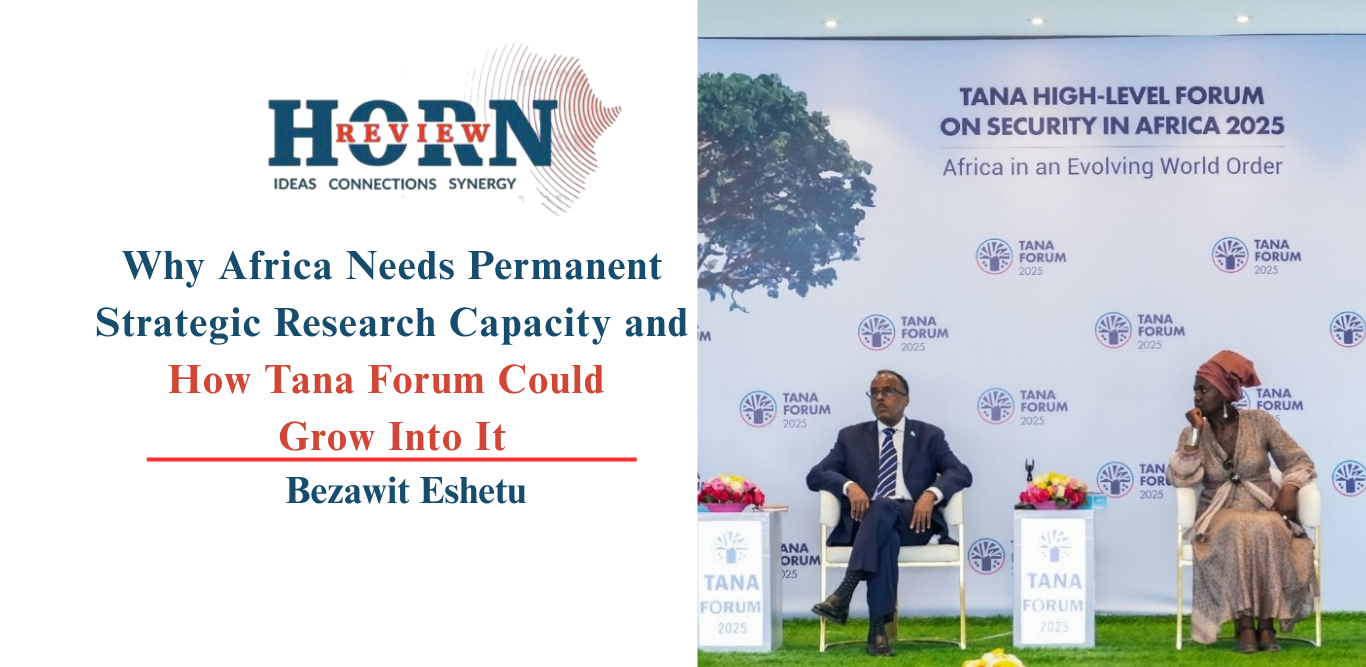
Why Africa Needs Permanent Strategic Research Capacity and How Tana Forum Could Grow into It
Tana High-Level Forum on Security in Africa currently provides an annual setting for high-level dialogue on the continent’s peace and security challenges. Its founding purpose and convening model give it a foundation from which a more continuous role could be developed. Tana could grow around its annual gathering into a permanent pan-African strategic research and policy-learning center, connected to other African forums and research bodies and supported by a broader African funding base. This could turn ideas exchanged at the Forum into cumulative knowledge, strengthen informal diplomacy, and give African perspectives greater analytical weight in global debates.
From Continental Dialogue to Strategic Capacity
Africa’s peace and security challenge are also a challenge of strategic learning. Conflict can disrupt food production, displace communities, weaken public finances, and unsettle trade, while insecurity in one country can intensify political and economic pressures in its neighbors. The scale of these connections is visible in the Africa Center for Strategic Studies’ estimate that 167 million Africans faced acute food insecurity in 2025, including approximately 130 million people living in countries affected by conflict. These figures point to a wider strategic reality. A security crisis rarely remains confined to the place where violence begins, and its effects may continue long after the immediate fighting subsides. Understanding such consequences requires analysis that follows the links between local conflict, regional stability, and the political economy in which both are embedded.
The African Union’s African Peace and Security Architecture provides a continental framework for early warning, political decision-making, mediation, and coordinated responses to conflict. The strength of this framework depends partly on how effectively evidence informs its use. Early-warning information gains value when analysts can interpret the political significance of a signal and explain what it may mean for neighboring states. Mediation improves when negotiators can draw on comparisons from earlier processes, including the reasons agreements endured or broke down. Regional cooperation becomes more effective when governments understand how their decisions affect the threat perceptions and choices of others. The challenge is therefore to connect the continent’s formal peace and security instruments with continuous analysis and learning.
African governments, researchers, mediators, universities, training centers, and regional bodies possess substantial experience. Yet the knowledge generated through this work remains unevenly connected across institutions and can be lost when political leadership changes. A lesson from one peace process may remain in a report detached from the needs of subsequent negotiators. Research can explain the causes of a crisis, while its policy value grows when the implications are carried into subsequent debate. An annual meeting can generate insight, and that insight gains strategic value when it is revisited, compared with other cases, and assessed against what happens afterwards. The central gap is therefore continuity between knowledge and decision. A permanent Tana research capacity could help turn separate episodes of experience into a cumulative resource for African policy and diplomacy, provided that the necessary staff, mandate, partnerships, and funding were established.
The appropriate measure of progress is the quality of judgement that African actors can sustain over time. Strategic learning requires the ability to recognise recurring patterns while accounting for differences in political incentives, social conditions, and regional relationships. It also requires a reliable institutional memory that survives personnel changes and shifts in public attention. By preserving evidence and testing assumptions against subsequent events, a permanent research function could help policymakers distinguish lessons that travel across contexts from those that depend on local circumstances. This is the analytical value that a permanent research function could add, and it provides the basis for considering whether Tana is well placed to develop further.
Why Tana Forum Has a Distinctive Starting Point
Tana’s potential suitability for a broader role stems from its founding purpose and its method of convening. The first Tana High-Level Forum on Security in Africa took place in Bahir Dar on 14 and 15 April 2012, with participants from all five African regions. Its founding account described the Forum as a means of supplementing and reinforcing existing institutions while creating space for African-led discussion of the continent’s security challenges. The informal setting was designed to bring political leaders into candid exchange with security practitioners, academics, civil society, and other participants, creating room for discussion beyond consensus declarations and fixed public positions. These features give Tana a distinctive starting point. The format can allow ideas to be explored before they become fixed public positions and bring participants into conversation across professional and political boundaries. They provide a basis for further development, though a year-round research role would require additional capacity beyond the annual gathering.
That character matters because Africa already has a varied landscape of dialogue platforms and specialist institutions. The Dakar International Forum on Peace and Security centres on regional and international security challenges, while the Aswan Forum explicitly connects peace and security with sustainable development. The Kigali Global Dialogue brings policymakers, academics, civil society, and the private sector together to consider wider development challenges, including digital transformation and global governance. These platforms have their own relationships, audiences, and agendas. This landscape creates an opportunity for Tana to build connections across the field while respecting the convening roles of its peers.
The same logic applies to Africa’s research and training bodies. The African Security Sector Network focuses on security-sector reform, while the Kofi Annan International Peacekeeping Training Centre develops expertise through research and training in peace support operations and conflict management. ACCORD, the African Leadership Centre, the Institute for Security Studies, universities, and national research centers contribute further analysis and practical experience in mediation, governance, and peacebuilding. A connective role would help this knowledge circulate more widely. Tana could bring leaders of peer forums and research institutions together around shared questions, support collaborative studies where the evidence calls for a cross-regional view, and keep findings in circulation after individual events have ended.
From Annual Forum to Permanent Research Centre
The institutional form worth considering for this next phase is a permanent pan-African strategic research and policy-learning center built around the existing Tana Forum. The annual gathering would remain its principal high-level convening platform, while a dedicated office would provide year-round continuity. This would require full-time research leadership, analysts and program staff, a stable operating budget, and the capacity to maintain partnerships and preserve institutional memory. Tana’s public information places its current secretariat at the Institute for Peace and Security Studies at Addis Ababa University and describes the Forum as an independent initiative guided by its Board and Technical Committee. The existing secretariat could provide a starting point.
If established, the Centre’s role would be to carry questions raised at the Forum into sustained research, then bring findings back into African policy discussions. Comparative work could examine why particular peace agreements hold, how political transitions affect local security, and how regional economic or resource pressures alter conflict dynamics. A secure and carefully governed knowledge archive could preserve mediation records, policy decisions, public commitments, and assessments of their outcomes. Research partnerships and fellowships would connect the permanent team with African universities and practitioners, drawing on local expertise across a distributed research network. A permanent office could provide continuity, while a wider African research network would supply continental reach.
The relationship between dialogue and research would need to protect both candor and independence. Tana’s existing convening space allows participants to test ideas and expose disagreements before an exchange becomes an official position. A research center, if created, could assess the resulting questions through transparent methods and verifiable evidence. Its findings would need to remain independent, including when they complicate the preferences of a government, partner, or funder. A board with continental representation, independent research leadership, published funding disclosures, and clear rules for conflicts of interest could protect that separation. Such arrangements would help establish the Centre’s credibility with officials and external audiences alike.
Its research priorities should also reflect the conditions experienced beyond diplomatic capitals. Conflict is shaped by local political economies, displacement, unequal access to resources, social trust, and the relationship between formal authorities and community institutions. Partnerships with African scholars, women peacebuilders, youth researchers, civil society organizations, and communities affected by insecurity would deepen the evidence base and help identify assumptions that national or international analysis may overlook. Such engagement requires safeguards for sensitive testimony and a clear account of how community knowledge informs published findings. A genuinely continental research capacity depends on where questions originate, whose evidence counts, and how conclusions return to the people and institutions they concern.
Intellectuals, Policymakers and Informal Diplomacy
Policy decisions are shaped by political authority, but the quality of those decisions also depends on the knowledge available to those who exercise it. Scholars and experienced analysts can place an immediate crisis in historical context, identify patterns that are difficult to see during a fast-moving emergency, and examine whether proposed responses address the causes of a conflict. Officials bring an understanding of political constraints, institutional interests, and the practical consequences of decisions. Mediators understand the relationships and grievances that shape negotiation, while civil society and community actors can clarify how agreements are experienced beyond formal political circles. When these perspectives meet repeatedly and candidly, each can improve the others’ understanding of what is possible, what is legitimate, and what may endure.
This is one of the functions of informal or Track II diplomacy. Non-official dialogue can create space to explore possible concessions, test assumptions about another party’s interests, and identify areas of agreement before public commitments narrow the room for compromise. Its value lies in supporting formal diplomacy with additional channels of understanding. Researchers can strengthen the judgement of political representatives, while technical expertise gains legitimacy through its connection with grounded evidence, independent interpretation, and the experiences of people affected by conflict. Tana’s format could support this role because candid exchange is already central to its identity. A future Tana center could support this work by developing a network of African intellectuals and practitioners who understand the historical and local dimensions of different conflicts while remaining connected to policymakers making decisions under pressure.
African Financing and Institutional Independence
The financial basis of any expanded Tana role would be central to its credibility. Tana’s public FAQ reports that 70 percent of annual Forum funding comes from the Ethiopian government and the African private sector, with the remaining 30 percent provided by development partners. This figure describes the annual Forum’s current funding mix. A permanent research center would need its own multi-year financing model. The wider African think-tank sector has faced persistent pressures from uncertain funding and reliance on external donors, which can weaken continuity and research independence. An expanded Tana would therefore need a broader and more predictable African funding base, with multi-year commitments capable of supporting research staff and an independent analytical agenda. Ethiopian support could remain an important anchor, complemented over time by other African companies such as the Dangote Group and Midroc, financial institutions, foundations, and regional partners.
The scale of African resources makes this a realistic institutional question. The Africa Finance Corporation’s State of Africa’s Infrastructure Report 2026 estimates that non-bank domestic capital pools exceed US$2 trillion, compared with approximately US$1.7 trillion in cumulative external flows to Africa between 2014 and 2024. The report also places African pension and insurance assets above US$1 trillion. These aggregate figures describe resources held by many separate actors and serve different legal and commercial purposes. They do, however, demonstrate that the continent has a substantial domestic capital base from which carefully governed long-term support for strategic research could be built.
African companies have a direct interest in the political and economic conditions under which they operate. Regional insecurity affects logistics, insurance costs, investment decisions, labor mobility, and the reliability of cross-border trade. A well-designed research center could help firms and governments understand these risks more systematically. Long-term corporate sponsorship, institutional memberships, African philanthropic support, and multi-year public contributions are possible elements of a more stable financing model. They would require safeguards, including diversified sources, transparent disclosure, and rules preventing individual sponsors from directing research findings. The aim would be to build financial independence through governance as well as through the African origin of a growing share of its resources.
External partnerships would remain useful for specialized research, exchange, and technical work. The central distinction is between supplementing an African-led research agenda and relying on external support to define its priorities or sustain its basic operations. A center rooted in African financing could collaborate widely while maintaining the analytical freedom to assess the choices of African governments, international partners, and private actors on the strength of evidence. That credibility would strengthen the value of its work for African decision-makers and make its analysis more persuasive internationally.
From African Analysis to Global Influence
Africa’s demand for a stronger collective voice in global affairs is visible in the institutions where decisions with continental consequences are made. The United Nations Security Council has five permanent members, China, France, the Russian Federation, the United Kingdom, and the United States, while African countries participate through elected seats. The absence of an African permanent member remains a central concern in the African Union’s common position on Council reform, which calls for two permanent African seats and five non-permanent seats in an expanded Council. The AU reaffirmed that position in 2026 as part of its continued effort to translate a shared continental demand into institutional reform
The African Union’s admission as a permanent member of the G20 in 2023 shows that collective representation can change Africa’s access to global decision-making. Representation, however, is only one part of influence. The substance of engagement depends on the quality of the evidence behind negotiating positions, the ability to anticipate the consequences of competing options, and the capacity to hold a position together across changing political circumstances. Issues such as the terms governing critical minerals, debt and climate finance, and digital systems will shape Africa’s long-term room for maneuver. Effective participation requires sustained work before leaders reach the negotiating table.
This is where a future African strategic research center could matter beyond the immediate peace and security agenda. It could help identify where African interests converge, document where national positions genuinely differ, and develop evidence that enables governments to negotiate with a clearer understanding of their options. It could also connect lessons from separate forums so that a discussion about security informs debates on resource governance or regional economic resilience. Greater analytical coordination would reduce the space in which fragmented information and unaligned priorities weaken Africa’s bargaining position. External partners would continue to matter, but African governments and institutions would be better placed to evaluate proposals against their own long-term priorities when they have access to shared evidence and independent analysis.
The underlying ambition is a durable African capacity to frame questions, set priorities, and develop policy alternatives that can travel from local experience to continental deliberation and global negotiation. The United States offers one illustration of how intellectual infrastructure can support statecraft. Research institutes and policy networks provide space for ideas to develop before they enter formal decision-making; the Council on Foreign Relations, for example, describes how George Kennan’s 1947 article in its journal, Foreign Affairs, helped shape the containment strategy that guided US policy through much of the Cold War. The American model reflects its own resources and political system, yet the wider principle travels. A collective voice gains weight when it rests on analysis prepared before a crisis, tested across countries, supported by independent expertise, and sustained after a diplomatic meeting concludes.
The case for developing Tana rests on its potential to connect capacities that currently sit across separate forums, research bodies, and policy processes. The annual Forum already provides a platform for high-level exchange. A permanent research center could turn questions arising from that exchange into knowledge that is preserved, tested, and made available over time. A wider network linking peer forums and research bodies could help carry that knowledge into continental institutions and global debate. These are possibilities that would depend on deliberate institution-building and sustained African financing.
By Bezawit Eshetu, Researcher, Horn Review

RELATED
Posts
21
Oct
Ethiopia, Kenya and the Growing Complexity of Somalia's Security Crisis
Prime Minister Abiy Ahmed's visit to Kenya on October 20...
21
Oct
Consistency in Ethiopia's Approach and the Evolution of Mediation Channels from IGAD
The path of Ethiopia and Somalia relations since the mid...
21
Oct
Where Would Eritrea’s Future Lie in a War with Ethiopia?
After a succession of escalations, the armies of Ethiopia and...
21
Oct
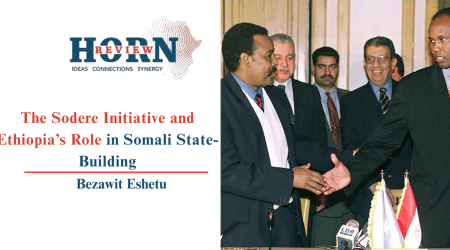
The Sodere Initiative and Ethiopia’s Role in Somali State-Building
Ethiopia’s initiative at Sodere brought Somalia’s rival factions into a...
21
Oct
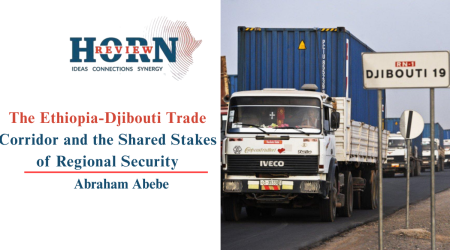
The Ethiopia-Djibouti Trade Corridor and the Shared Stakes of Regional Security
The TPLF-Shabiya attempt to cut the Ethiopia-Djibouti trade corridor...
21
Oct
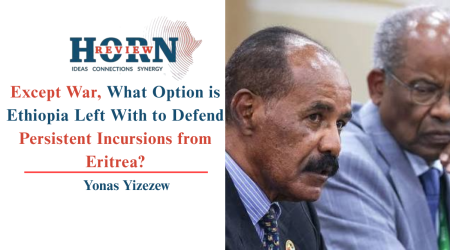
Except War, What Option is Ethiopia Left With to Defend Persistent Incursions from Eritrea?
Having learned from the devastating costs of the 1998 border...
17
Oct
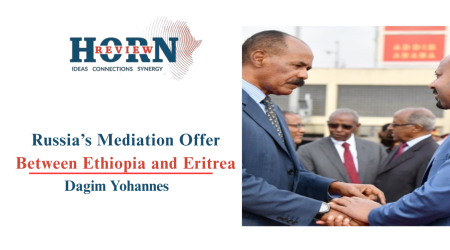
Russia’s Mediation Offer Between Ethiopia and Eritrea
Russia’s decision to offer a platform for contacts between Ethiopia...
15
Oct
The Aswan Dam and Ethiopia’s Longstanding Rejection of Egypt’s Nile Veto
On 29 May 1956, before construction of the Aswan High...
15
Oct
Why Somalia’s Hedge between Ethiopia and Egypt Cannot Last
The public position articulated by Somalia’s Deputy Foreign Minister Hassan...
15
Oct
Ethiopia Somaliland Defence Ties and the Practice of Keeping the Door Ajar
The recent meeting between Brigadier General Nimcaan at the...