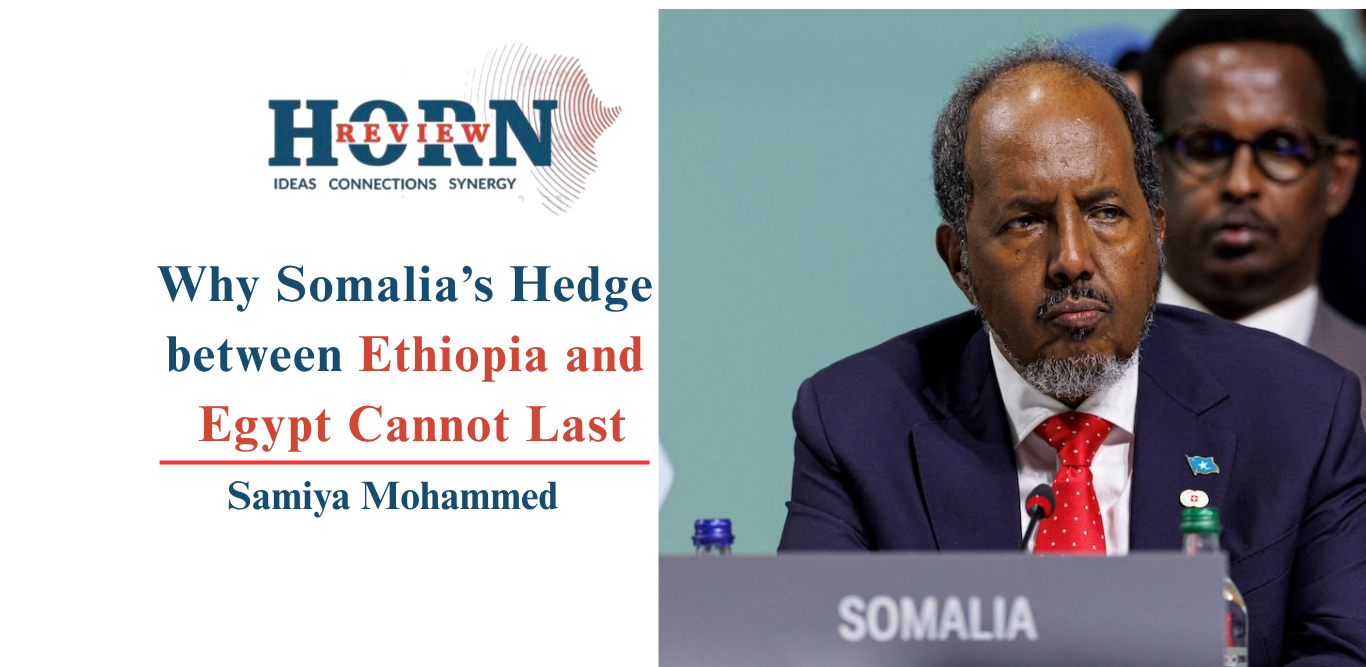
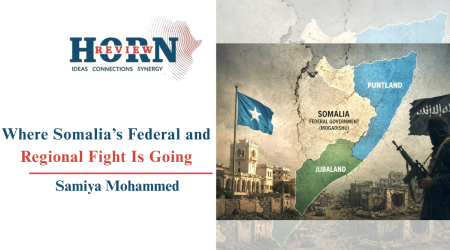
The public position articulated by Somalia’s Deputy Foreign Minister Hassan Mohamed Ali Nadara to the BBC Somali service is a constructed narrative. According to this narrative Somalia is neutral and maintains constructive relations with all regional actors and nothing has changed in its relationship with Ethiopia. This statement however when examined the actual configuration of Somalia’s security partnerships and diplomatic engagements, the claim of neutrality does not correspond to the operational reality. Somalia is engaged in a deliberate balancing act attempting to retain Ethiopian military support on its territory while simultaneously deepening security and political ties with Egypt and other actors that have clear and persistent disputes with Ethiopia. The neutrality claim functions as a public cover for this dual track approach.
The first point concerns the gap between declaratory policy and operational reality. Somalia’s public diplomacy emphasizes neutrality and good relations with all parties. However the structural conditions of Somalia’s security environment make genuine neutrality difficult to sustain. Ethiopian forces have been a central component of the multinational effort against Al Shabaab for well over a decade and have operated under successive African Union mandates and have provided critical manpower, intelligence and logistical capacity in sectors where Somali national forces remain unable to operate independently. Their presence is embedded in the day today conduct of counter insurgency operations. Simultaneously Somalia has expanded its security and political engagement with Egypt. This engagement includes defense agreements, training arrangements and diplomatic coordination. Egypt’s interests in the Horn of Africa are defined in opposition to Ethiopia’s particularly concerning the Grand Ethiopian Renaissance Dam and broader questions of the red sea. By deepening ties with Egypt Somalia is not maintaining neutrality. It is participating in a regional alignment that has direct implications for Ethiopia’s security. The neutrality claim is therefore best understood as a diplomatic instrument and not a description of policy.
The most immediate risk associated with Somalia’s dual track strategy is the potential reduction or withdrawal of Ethiopian forces. Ethiopia has demonstrated in previous periods that it is willing to adjust its force posture based on its assessment of own interests. If Ethiopia concludes that its forces are being used to stabilize a government that is simultaneously enabling its regional rivals, Ethiopia may decide to reduce commitment. Such a decision would not necessarily be announced in advance and It could manifest as a gradual drawdown or a narrowing of the operational areas in which Ethiopian forces are willing to operate. The consequences for Somalia would be severe. Ethiopian forces have been among the more effective ground forces in the counter insurgency campaign. withdrawal or reduction would create immediate capability gaps that Somali national forces are not prepared to fill. Al Shabaab has consistently demonstrated an ability to exploit security voids. The practical cost would be measured in territorial losses, increased attack frequency and higher casualties among Somali security forces and civilians.
The other risk concerns the qualitative degradation of security cooperation. Effective counter-insurgency operations depend on trust, predictability and sustained coordination. Intelligence sharing, joint planning, and logistical support are not transactional commodities that can be turned on and off without consequence. Once Ethiopia determines that the partnership with Somalia has become one sided then the nature of cooperation will change. These changes would not be announced publicly however They would manifest as a slow deterioration in operational effectiveness. In a counter insurgency environment, such degradation is dangerous.
The third risk is structural As Somalia deepens its engagement with Egypt, Egypt gains leverage inside Somalia’s security structure. This leverage can take several forms and Egypt may seek to influence the deployment of its own forces in specific sectors, advocate for particular commanders or shape political decisions in Somalia .Over time this can lead to a situation in which Somalia’s security setup is partially shaped by external actors pursuing their own regional objectives. The result is a shift in the balance of who can pressure Mogadishu and who is willing to support it.
Al-Shabaab is an adaptive organization. It has demonstrated a capacity to survive sustained pressure, adjust its tactics and exploit political and security divisions. Any reduction in effective AUSSOM capacity or coordination sends a clear signal to the group. It indicates that the enemy is distracted, that the security architecture is fragmenting and that opportunities for expansion exist. Al Shabaab has historically moved quickly to exploit such opportunities. It re infiltrates areas from which it was previously expelled. In a context of reduced Ethiopian presence and degraded cooperation, the group would find more room to operate. The political cost would be borne by a government that has staked its legitimacy on delivering security. The cost would be borne by all actors committed to stabilizing Somalia.
The conclusion is that Somalia’s current strategy of strategic ambiguity is not sustainable indefinitely. The neutrality claim is a political convenience that allows Somalia to avoid an immediate rupture with Ethiopia while it deepens ties with Ethiopia’s rivals. In the short term this approach may maximize Somalia’s options. It allows to retain Ethiopian forces while exploring alternative partnerships. But it also creates contradictions that cannot be managed without cost. The longer Somalia attempts to have it both ways, the greater the risk that it ends up with neither the security support it needs nor the political flexibility it seeks.
A coherent security strategy requires clarity about which partnerships are foundational and which are supplementary. It requires a realistic assessment of Somalia’s own capabilities and the timelines for developing them. It requires recognition that neutrality is not a policy that can be declared unilaterally and it must be reflected in consistent behavior and transparent engagement. If Somalia continues to pursue a dual track approach without addressing its internal contradictions, the practical cost will be weaker security on the ground and less reliable support from the neighbour whose forces are actually inside the country. The gains of the past decade are fragile and can be reversed.
By Samiya Mohammed, Researcher, Horn Review