
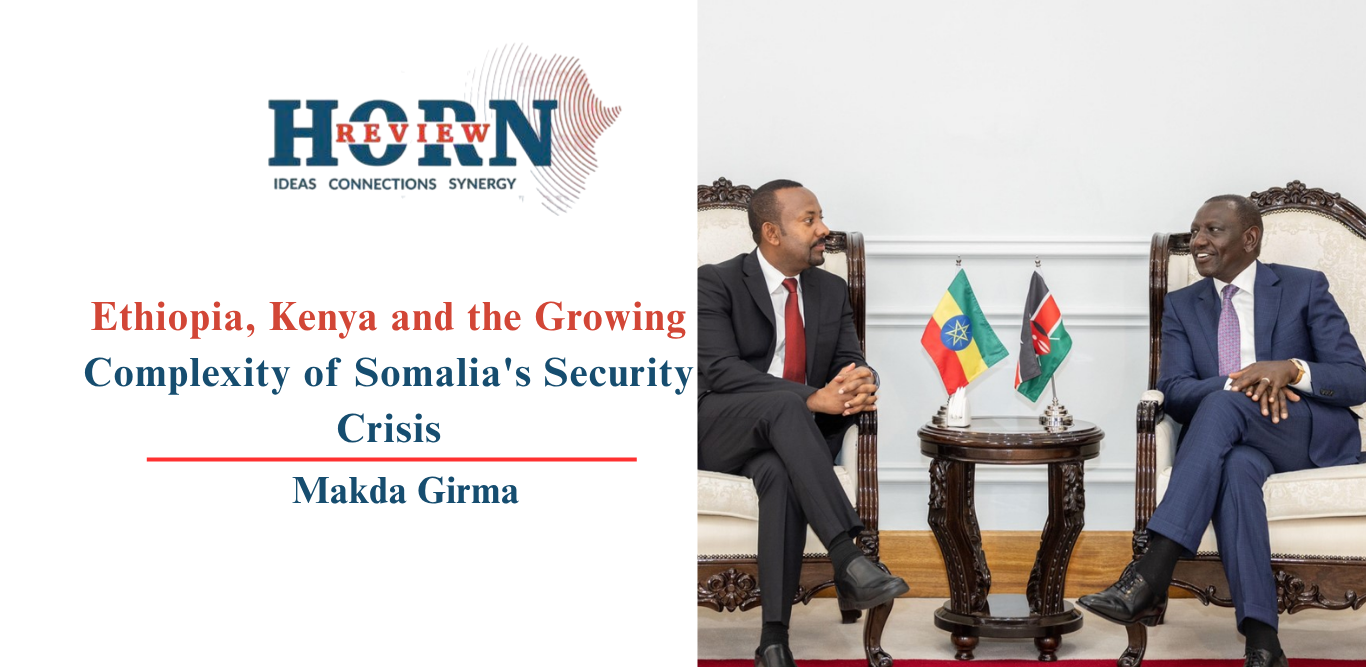
Ethiopia, Kenya and the Growing Complexity of Somalia’s Security Crisis
Prime Minister Abiy Ahmed’s visit to Kenya on October 20 came at a time when Ethiopia’s relations with its neighbours are increasingly shaped by competing security concerns and shifting regional alignments. Attending Kenya’s Mashujaa Day celebrations as President William Ruto’s guest of honour, Abiy emphasized the longstanding partnership between the two countries, highlighting cooperation in electricity, telecommunications, trade and regional connectivity. Yet beyond the diplomatic celebrations, the visit coincided with growing tensions involving Somalia, whose internal political crisis has begun complicating its relations with both Ethiopia and Kenya. Although Abiy’s visit was officially centered on Kenya’s Mashujaa Day celebrations and bilateral cooperation, it unfolded against a backdrop of growing regional tensions involving Somalia. The visit did not publicly establish a common Ethiopian and Kenyan position on the Somali crisis, but it brought renewed attention to the strategic importance of their partnership as both countries navigate increasingly complicated relations with Mogadishu.
The significance of Ethiopia’s relationship with Kenya extends beyond bilateral cooperation. Both countries have invested considerable military and diplomatic resources in Somalia’s stabilization, particularly in efforts to contain Al Shabaab and prevent insecurity from spreading across their borders. However, Somalia’s confrontation between its federal government and regional political actors is creating disagreements over the responsibilities of neighbouring countries. For Ethiopia, the challenge is to maintain its commitment to Somalia’s security without becoming involved in political disputes that could undermine its wider regional interests.
The immediate source of tension lies in Somalia’s South West State, where the removal of former regional president Abdiaziz Hassan Mohamed Laftagareen in March 2026 failed to produce a lasting political settlement. Instead, confrontations between his supporters and forces aligned with the federal government have continued, exposing deeper disagreements over regional autonomy and the distribution of political authority. By October 19, forces loyal to Laftagareen reportedly controlled five towns in the Bay region, including Buurhakaba, Qansaxdheere and Dinsoor, complicating Mogadishu’s efforts to consolidate authority. The conflict is particularly consequential because the South West State includes territories where Ethiopian forces have maintained a security presence for years.
According to Somali Guardian reporting published on October 19, Somali federal authorities requested Ethiopian military assistance against forces aligned with Laftagareen, but Ethiopian commanders declined to participate in what they considered an internal political confrontation. Although the reported exchange has not been independently confirmed, it illustrates a fundamental question concerning foreign military involvement in Somalia: whether security assistance intended to confront common threats should extend to supporting the federal government in disputes over domestic political authority.
For Ethiopia, the issue has acquired additional importance following the transition from the African Union Transition Mission in Somalia, ATMIS, to the African Union Support and Stabilization Mission in Somalia, AUSSOM, which commenced on January 1, 2025. Under United Nations Security Council Resolution 2767, the successor mission was authorized to support Somali forces against Al Shabaab, protect civilians and facilitate the gradual transfer of security responsibilities to Somali institutions. Its mandate also encompasses security support for political processes, but does not provide unrestricted authority to determine the outcome of internal political disputes.
The transition brought renewed attention to the distinction between Ethiopian troops operating under African Union arrangements and those deployed through separate bilateral security understandings. This distinction matters because forces assigned to AUSSOM operate within a defined multinational framework, while deployments outside that structure depend on separate arrangements with Somalia. In its December 2025 communiqué, the African Union Peace and Security Council explicitly acknowledged Ethiopia and Uganda for deploying additional troops under bilateral arrangements. Their presence cannot therefore be understood solely through AUSSOM’s command structure.
Ethiopia’s longstanding involvement in Somalia has primarily been driven by the need to prevent Al Shabaab from developing secure operating areas near Ethiopian territory. The group’s ability to exploit instability and threaten communities across borders makes developments in Somalia directly relevant to Ethiopia’s national security. Ethiopian military operations and participation in successive African Union missions have consequently contributed to a broader effort to contain threats before they reach Ethiopian territory. The South West State remains especially important because the Bay and Bakool regions form part of the wider security environment connected to Ethiopia’s eastern frontier.
Participation in Somalia’s internal political confrontations, however, would expose Ethiopia to different risks. Military intervention could associate Ethiopian forces with one Somali political faction, weaken relationships with local communities and transform a defined security commitment into an extended responsibility for political outcomes. Even a successful intervention would not necessarily resolve disagreements concerning federal authority and regional political representation. Somalia’s domestic disputes require political settlements that military involvement by neighbouring countries cannot independently deliver.
This position should not be confused with opposition to Somalia’s federal government. Addis Ababa and Mogadishu continue to maintain diplomatic relations and share an interest in preventing renewed militant expansion. Somali President Hassan Sheikh Mohamud’s September 29 visit to Addis Ababa, during which he discussed bilateral relations and regional security with Abiy Ahmed, demonstrated the continued importance of diplomatic engagement despite existing disagreements.
Those disagreements nevertheless have a deeper history. The January 2024 memorandum of understanding between Ethiopia and Somaliland, which addressed potential Ethiopian maritime access, produced a significant confrontation with Mogadishu over sovereignty and territorial integrity. Somalia regarded the arrangement as an infringement on its sovereignty, while Ethiopia viewed access to the sea as an important strategic and economic objective. The dispute contributed to Somalia’s closer security engagement with Egypt, which already maintained long winded Nile disagreements with Ethiopia.
The December 2024 Ankara Declaration, facilitated by Türkiye, helped restore diplomatic engagement by reaffirming mutual respect for sovereignty and acknowledging the possibility of mutually beneficial maritime arrangements under Somalia’s sovereign authority. Nevertheless, restoring diplomatic communication did not eliminate competing regional security calculations. Egypt’s expanding security engagement with Somalia and its prospective contribution to AUSSOM have introduced further sensitivity into discussions about troop deployments.
The African Union’s June 2025 negotiations with troop-contributing countries included Ethiopia and Egypt, demonstrating that both countries were considered within the mission’s institutional arrangements. In December 2025, the African Union also acknowledged Egypt’s preparations for deployment while emphasizing the need to prevent security gaps during the transition. Political endorsement, negotiated contributions and actual troop deployments, however, remain distinct stages. For Ethiopia, any substantial expansion of Egyptian forces near areas where Ethiopian troops operate would raise operational questions, particularly given the unresolved Nile dispute. Careful coordination would be essential to prevent competing strategic interests from complicating counterterrorism operations.
Kenya faces a related challenge arising from Somalia’s domestic political confrontation. Laftagareen’s presence in Kenya following his removal has generated criticism from Somali officials. On October 19, Somalia’s parliamentary speaker, Abdikadir Mohamed Nur Jama, reportedly accused individuals residing in Kenya of involvement in activities connected to the conflict and questioned the alleged protection they received. The reporting did not establish evidence supporting those allegations, and Kenyan authorities had not publicly responded at the time. Hosting Somali political figures does not independently demonstrate Kenyan government support for their military activities. Nairobi must balance its diplomatic responsibilities and continued cooperation with Mogadishu against its own legal and national security considerations.
The consequences of Somali instability for Kenya are also economic. The Lamu Port South Sudan Ethiopia Transport corridor, LAPSSET, represents an important regional infrastructure initiative intended to expand commercial connectivity and diversify access to maritime trade. Its security is connected to conditions in northern and coastal Kenya, where Al Shabaab has demonstrated the ability to threaten personnel and transport infrastructure. On September 19, 2026, suspected militants attacked Kenyan military personnel patrolling part of the corridor in Garissa. No casualties were reported, but the incident illustrated the security demands associated with protecting strategic infrastructure.
Although these attacks cannot be directly attributed to the South West State’s political crisis, prolonged instability in Somalia could place additional pressure on counterterrorism operations and create opportunities for militant expansion. For Kenya, preserving security cooperation with Somalia therefore carries implications for domestic security, investment and regional transport connectivity. Ethiopia shares an interest in protecting these connections, which could strengthen economic integration and provide additional commercial routes.
Against this background, the partnership between Addis Ababa and Nairobi offers continuity. Cooperation in electricity transmission, telecommunications and transport has created practical interests that extend beyond individual political disagreements. During his October 20 visit, Abiy emphasized Ethiopia’s electricity exports to Kenya, Safaricom’s presence in Ethiopia and growing commercial connections. Their importance becomes greater as Ethiopia confronts renewed tensions with Eritrea, instability in northern Ethiopia and unresolved strategic disagreements with Egypt. The October 2026 escalation in Tigray and tensions with Eritrea demonstrate the competing pressures confronting Addis Ababa. Strong relations with Kenya provide an additional channel for diplomatic consultation without requiring both governments to adopt identical policies toward Somalia.
The coming months will test whether the three countries can prevent Somalia’s internal confrontation from developing into a wider regional dispute. Particular attention should be given to the security situation around Baidoa, changes to Ethiopian and Egyptian troop arrangements, and Somalia’s political preparations ahead of the presidential election announced for May 15, 2027. Diplomatic engagement through Kenya, IGAD or other regional mechanisms could become increasingly relevant if political divisions deepen. Whether mediation initiatives emerge, however, will depend on the willingness of the parties to pursue negotiation.
Abiy’s Kenya visit ultimately illustrates the continuing value of dependable regional partnerships during a period of uncertainty. Ethiopia’s national interests require a stable Somalia, effective cooperation against Al Shabaab and security arrangements that do not unnecessarily entangle Ethiopian forces in domestic political rivalries. Its relationship with Kenya offers opportunities to advance those objectives while protecting economic integration and regional connectivity. The challenge for Addis Ababa is to preserve this partnership alongside constructive engagement with Mogadishu, ensuring that Somalia’s political disagreements do not become another source of confrontation across the Horn of Africa.
By Makda Girma, Researcher, Horn Review

RELATED
Posts
21
Oct
Why Africa Needs Permanent Strategic Research Capacity and How Tana Forum Could Grow into It
Tana High-Level Forum on Security in Africa currently provides an...

21
Oct
Consistency in Ethiopia's Approach and the Evolution of Mediation Channels from IGAD
The path of Ethiopia and Somalia relations since the mid...
21
Oct
Where Would Eritrea’s Future Lie in a War with Ethiopia?
After a succession of escalations, the armies of Ethiopia and...
21
Oct
The Sodere Initiative and Ethiopia’s Role in Somali State-Building
Ethiopia’s initiative at Sodere brought Somalia’s rival factions into a...
21
Oct
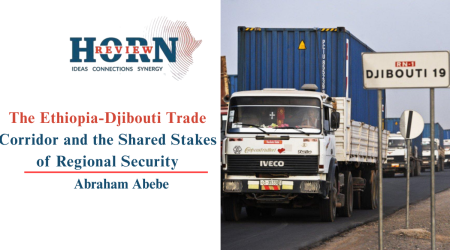
The Ethiopia-Djibouti Trade Corridor and the Shared Stakes of Regional Security
The TPLF-Shabiya attempt to cut the Ethiopia-Djibouti trade corridor...
21
Oct
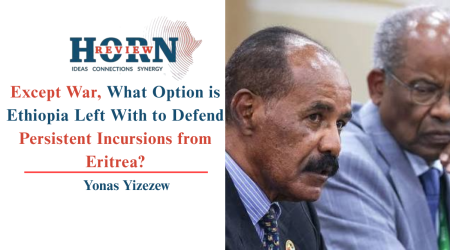
Except War, What Option is Ethiopia Left With to Defend Persistent Incursions from Eritrea?
Having learned from the devastating costs of the 1998 border...
17
Oct
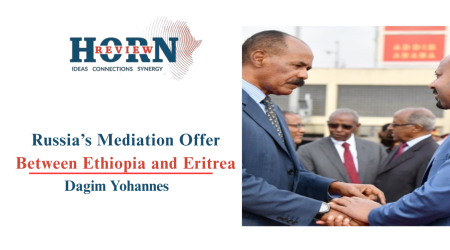
Russia’s Mediation Offer Between Ethiopia and Eritrea
Russia’s decision to offer a platform for contacts between Ethiopia...
15
Oct
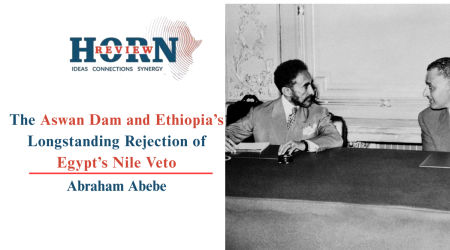
The Aswan Dam and Ethiopia’s Longstanding Rejection of Egypt’s Nile Veto
On 29 May 1956, before construction of the Aswan High...
15
Oct
Why Somalia’s Hedge between Ethiopia and Egypt Cannot Last
The public position articulated by Somalia’s Deputy Foreign Minister Hassan...
15
Oct
Ethiopia Somaliland Defence Ties and the Practice of Keeping the Door Ajar
The recent meeting between Brigadier General Nimcaan at the...