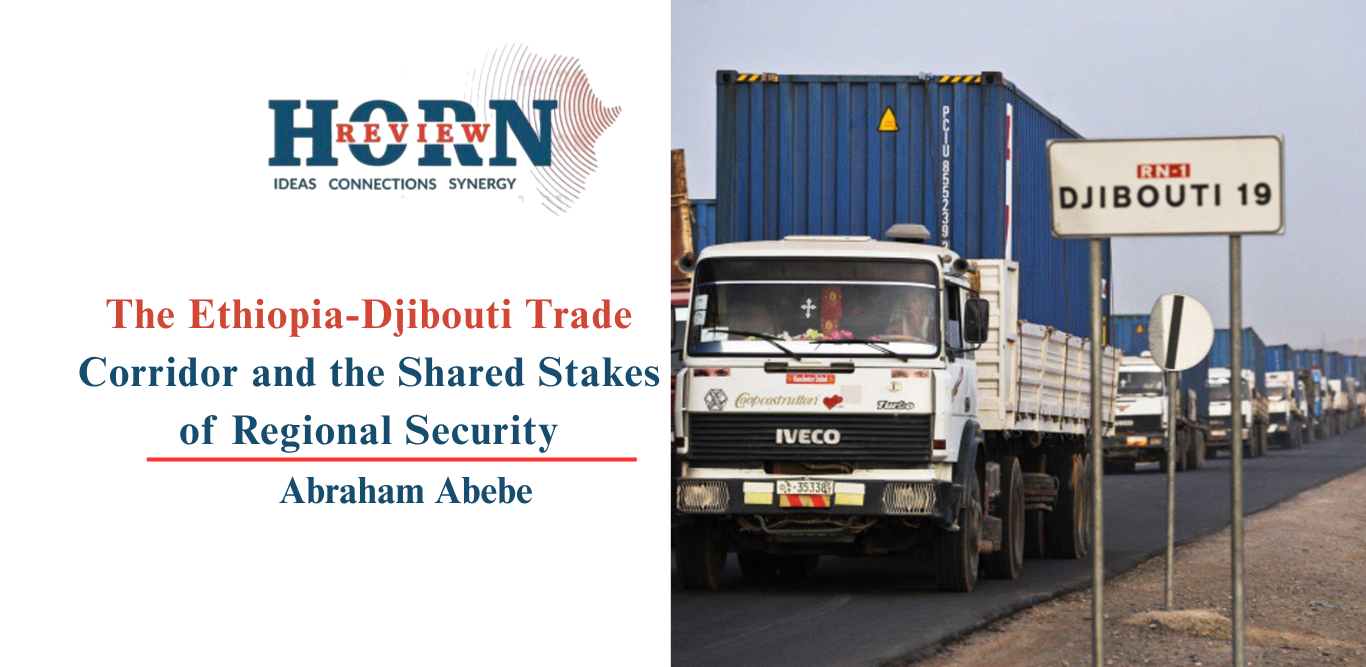
The TPLF-Shabiya attempt to cut the Ethiopia-Djibouti trade corridor was more than a threat to Ethiopia’s economic lifeline; it also endangered Djibouti’s economic interests. A strategy designed to pressure the Ethiopian federal government by disrupting this vital trade route would have imposed costs on both countries, potentially extending Ethiopia’s conflict into a wider regional economic crisis. The corridor is not simply a transport link between two neighbouring states. It underpins Ethiopia’s access to international markets and Djibouti’s role as a principal gateway for Ethiopian trade.
More than 95 per cent of Ethiopia’s import-export trade uses the Ethio-Djibouti corridor, while Djibouti’s economy relies heavily on Ethiopian trade through its port. A disruption would have threatened Ethiopia’s access to international markets while putting Djibouti’s port-related economic activity at risk. The scale of the impact would depend on the duration and extent of the disruption, but the corridor’s importance makes its security a shared economic concern.
The plan must also be understood in the context of the military imbalance between the ENDF and the opposing forces. Given the ENDF’s apparent military superiority in conventional capabilities, direct confrontation with the Ethiopian military would have presented a significant challenge. Threatening the Ethio-Djibouti corridor could have offered the opposing forces an asymmetric means of exerting pressure on the federal government. This reflects a broader strategic logic: actors facing disadvantages in direct military confrontation may seek leverage by threatening infrastructure essential to a state’s economic functioning. The corridor represented precisely such a vulnerability. However, this strategic logic alone does not establish that a coordinated plan existed; that allegation must be assessed against the reported intelligence and subsequent battlefield developments.
The corridor’s strategic significance also creates a constraint for any actor seeking to exploit it. Although disruption could impose economic costs on Ethiopia, it could simultaneously undermine Djibouti’s port revenues and commercial activity, potentially broadening opposition to the threat beyond Ethiopia’s borders. Such an outcome would risk turning an attempt to pressure the Ethiopian federal government into a wider regional security concern. The interdependence of the two economies therefore has a strategic dimension: the corridor’s vulnerability is not exclusively Ethiopia’s weakness, but also a source of shared interest in preventing its disruption. This makes the protection of the route relevant to regional stability as well as bilateral economic security.
The leaked intelligence report suggests that Eritrean troops were present at 50 locations in Ethiopian territory across eastern Tigray and northern Afar before the Ethiopian government launched its defensive operation. According to the report, the deployment was intended to facilitate an attempt to cut the Ethio-Djibouti trade corridor. Subsequent reporting documented the TPLF-led forces’ advance into Afar, including the capture of Erebti and their movement towards Afdeera, underscoring the region’s strategic importance to Ethiopia’s access to Djibouti. These developments provide relevant context for assessing the alleged plan, although the reported troop deployments and rebel advances do not, on their own, establish that all the actors involved were coordinating towards that objective.
The presence of Eritrean troops at these locations did not, in itself, guarantee control of the corridor. On 1 October 2026, federal forces and allied Tigray Peace Force units counterattacked and retook both towns, reversing much of the rebel advance in Afar. The ENDF’s technological capabilities, intelligence-gathering capacity and operational reach may have contributed to its response, although the extent of their influence cannot be established from the reported battlefield outcome alone. Further evidence concerning force coordination, operational decisions and battlefield performance would be needed to determine the precise factors behind the reversal. The counteroffensive addressed the immediate battlefield situation, but it did not eliminate the broader security concern raised by the alleged plan. The intelligence report therefore raises questions about foreign military deployments near strategically sensitive areas and the potential threats they could pose to Ethiopia’s economic security.
The episode underscored the importance of integrating critical transport infrastructure into national defence planning, intelligence collection and inter-agency coordination. Protecting the Ethio-Djibouti corridor requires identifying vulnerabilities before armed actors can exploit them, as well as maintaining the capacity to respond effectively to emerging threats. Its geographic exposure and economic importance make early warning and infrastructure resilience essential components of corridor security. Djibouti’s position is central to this assessment. Ethiopia should therefore approach corridor protection as a shared bilateral concern rather than solely as a domestic security matter. Structured cooperation could help both countries exchange relevant threat assessments, coordinate security planning and safeguard the trade relationship on which their mutual economic interests depend.
At the national level, Ethiopia should make corridor security a permanent national-security priority through complementary measures. Coordinated military and intelligence planning should strengthen strategic warning and enable authorities to assess credible indications of armed movements towards corridor-adjacent areas, suspicious troop deployments and attempts to disrupt transport networks. Layered protection should improve the resilience of critical transport and logistics infrastructure, reducing the risk that disruption at a single point could interrupt the wider trade route. Periodic reviews of security conditions and corridor vulnerabilities would help ensure that these measures remain responsive to changing threats.
The security of the Ethiopia-Djibouti trade corridor is inseparable from the strategic interests of both countries. Although the ENDF’s reported counteroffensive reversed rebel gains in Afar, the alleged plan and the reported Eritrean troop deployments warrant further scrutiny. Preventing future threats requires sustained defence preparedness, effective early warning and institutionalised bilateral security cooperation. Ultimately, safeguarding the corridor is essential to Ethiopia’s economic security, Djibouti’s commercial interests and regional stability.
By Abraham Abebe, Researcher, Horn Review