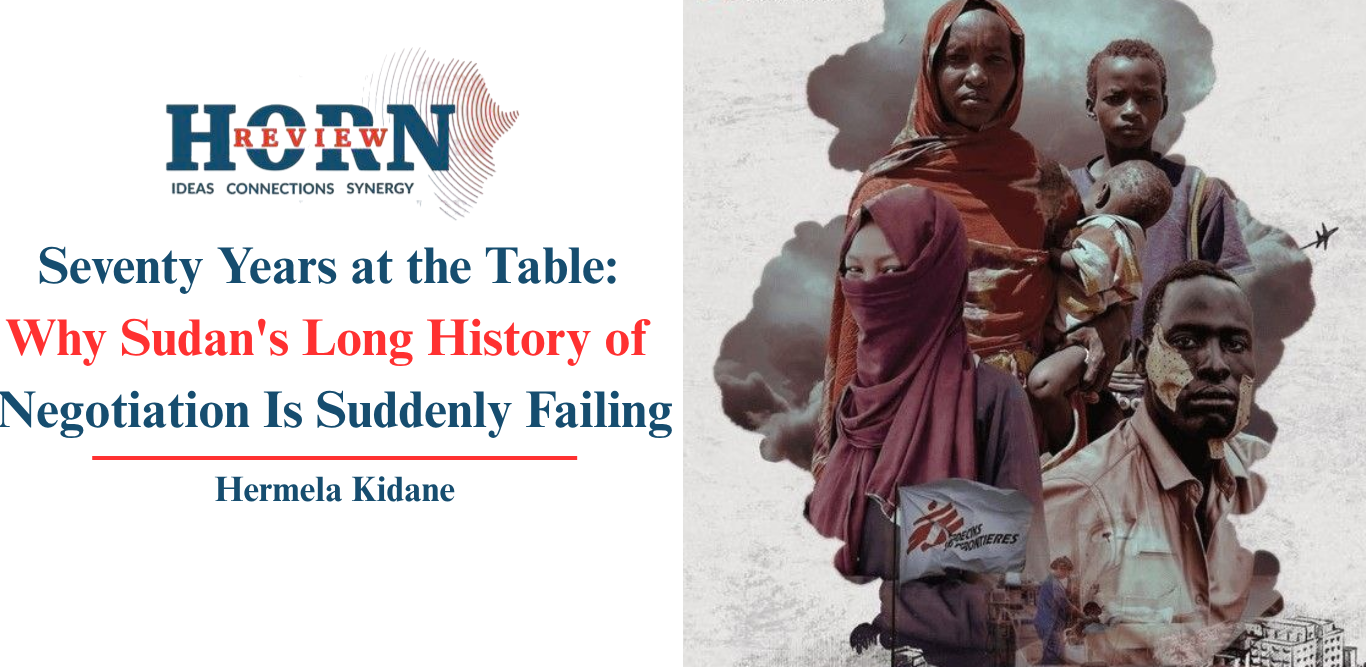
For generations Sudan’s arena has followed a grim but predictable logic wars would always eventually return to the negotiating table. From the Ethiopia Agreement of 1972 which briefly calmed the first southern rebellion to the Comprehensive Peace Agreement of 2005 that ended the long North-South civil war and even the Juba Peace Agreement of 2020 the nation’s history has been shaped by a paradoxical culture of conflict resolution. Sudan’s political elite often described as ruthless have historically treated military victory not as an end in itself but as a prelude to political bargaining. Then why is current negotiations fail? This is precisely why the current collapse of Quad mediated negotiations involving the United States, Saudi Arabia, the United Arab Emirates and Egypt is not just a diplomatic setback. It shows a break from Sudan’s political DNA.
Throughout Sudan’s history the road to peace has never been smooth. Negotiations have often been plagued by mistrust, external meddling, collapsing ceasefires and the exclusion of marginalized voices. However, these persistent challenges and against considerable odds most of the country’s major wars and conflicts have ultimately concluded at the negotiating table. From the frail compromises of Ethiopia in 1972 to the strategically driven Comprehensive Peace Agreement of 2005 and even the Juba Peace Agreement of 2020 which is a distinct pattern manifests Sudan’s warring parties however ruthless or intransigent have consistently returned to dialogue. This culture of negotiation flawed and incomplete as it may be has repeatedly proven more powerful than the pull of permanent warfare. The challenges were real but the outcome was consistent guns gave way to agreements.
That common ground has now evaporated. Unlike earlier wars which pitted the periphery against the center or fought over the soul of the state the current conflict between the Sudanese Armed Forces (SAF) and the Rapid Support Forces (RSF) is something far more than a war within the military Islamist elite itself. General Abdel Fattah al Burhan and General Mohamed Hamdan Dagalo (Hemedti) were once allies co-architects of the 2021 coup that crushed Sudan’s democratic transition. Their falling out is not about ideology or marginalization it is a struggle over resource and power competition who controls gold mines, trade routes, banking networks, military contracts and the spoils of a deeply predatory economic system.
This is what makes the current war radically different from Sudan’s past conflicts. Previously warring parties shared a common interest in preserving the state as a vehicle for rent seeking and future bargaining. Negotiations succeeded because exhaustion and external pressure could still push rivals toward a power sharing deal. Today however resource and power competition has turned former allies into mortal enemies with no shared interest in keeping the state intact. The war involves the simultaneous disintegration of the state’s monopoly on violence with the RSF functioning as a parallel army leaving no higher authority, no institutional framework and no mutual interest in preserving a collapsing system. Where past negotiations ultimately worked today’s talks repeatedly fail. There is no exhausted partner willing to compromise, no shared state to salvage and no historical precedent for peace when the competition over resources and power has become a zero sum fight to the finish.
The most major variable altering Sudan’s historical road is the depth of its regional entanglement. The Quad mediators the United States, Saudi Arabia, the UAE, and Egypt are not a unified bloc but a house divided, each pursuing distinct interests. This external sponsorship has created a moral hazard for the belligerents. Historically Sudanese parties negotiated because the cost of war exceeded the cost of peace. Today both the SAF and the RSF receive a steady influx of weapons, drones, and diplomatic cover from foreign backers. The SAF has received critical military support. Because external actors are willing to fuel the war indefinitely to protect their geostrategic interests both have concluded that a decisive military victory might be achievable or at least that a stalemate is survivable. mediation only succeeds when parties view it as a viable option to achieve their goals currently the battlefield appears more promising than the conference room.
The claim that Sudanese culture inherently favors negotiation requires a refinement. Historically, negotiations succeeded because they were driven by discrete organized constituencies the Anya Nya rebels, the Sudan People’s Liberation Army or Darfuri factions who could mobilize fighters and deliver votes. The current warring parties represent no one but themselves. The pro-democracy civilian coalition the Forces for Freedom and Change has been sidelined, arrested or killed since the 2021 coup. There is no civilian counterweight at the table to absorb the costs of compromise. The Quad’s proposal while ostensibly advocating for a civilian led transition immediately faced rejection from Burhan who dismissed the roadmap as an insult that sought to eliminate the armed forces while leaving the RSF intact.
Without a unified civilian bloc to legitimize a power sharing formula any agreement reached by the generals would likely collapse as quickly as the Jeddah Declaration of May 2023.
If negotiation continues to fail the most plausible outcome is not a conventional military victory but de facto partition. The RSF has consolidated control over vast swathes of Darfur and the western corridors effectively establishing a governance structure akin to a stateless protectorate. The SAF having lost its last major stronghold in El-Fasher retains control of the east and north including Port Sudan the country’s lifeline to the Red Sea. This cartographic reality suggests that Sudan may be approaching a Libyan style fragmentation where two rival governments claim sovereignty but control distinct territories.
In this environment a diplomatic win is infinitely more necessary than a military one yet it remains the most elusive prize. Such a truce would not end the war but it would halt the hemorrhaging of civilian life and create conditions for local rather than national ceasefires.The heritage of conflict originates in the failure to sustain peace due to unaddressed structural grievances. Until external donors cut the supply lines that make war profitable and until the civilian voice is forcibly reintroduced into the process Sudan will remain trapped in a negotiation fallacy acting out the rituals of dialogue while preparing for the permanence of war.
By Hermela Kidane, Researcher, Horn Review