
13
May
Sudan’s Deepening Fragmentation and the Urgent Need for a Civilian-Led Political Recovery
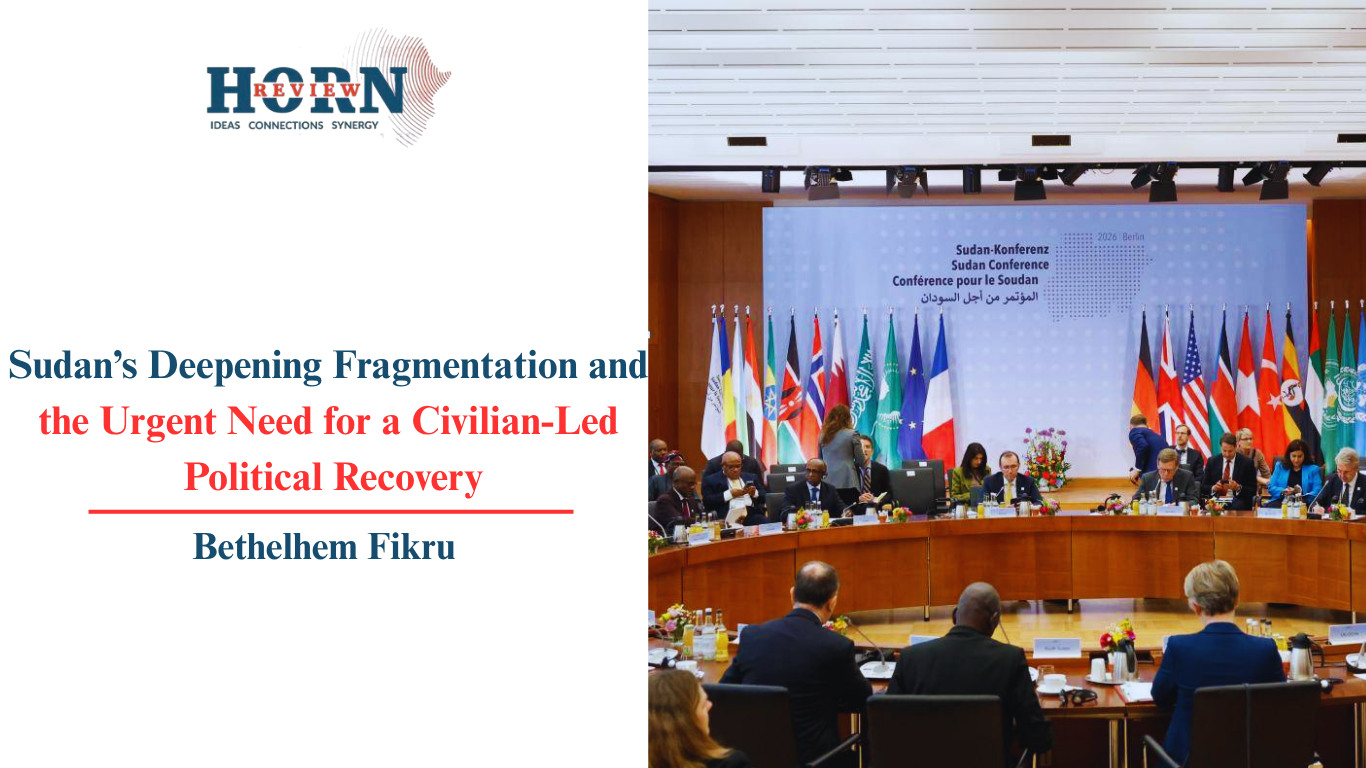
More than three years after fighting erupted between the Sudanese Armed Forces and the Rapid Support Forces in April 2023, Sudan’s internal conflict has profoundly altered the country’s political and territorial landscape. What began as a contest for power in Khartoum has gradually produced a de facto division of the country, marked by parallel governance structures, entrenched military fiefdoms, and a steady erosion of central state authority. The longer the war continues without resolution, the greater the risk that this fragmentation hardens into a lasting political reality, carrying severe implications not only for Sudan itself but also for the broader stability of the Horn of Africa.
Efforts to contain the crisis through regional and international mediation have thus far produced only limited progress. Egypt’s role in diplomatic initiatives illustrates one of the central structural constraints shaping current mediation efforts. Cairo has consistently aligned itself with the Sudanese Armed Forces, guided by longstanding national interests related to Nile water security, border management, and preservation of centralized state institutions over paramilitary structures. This alignment has inevitably reduced the perceived neutrality of Cairo-hosted consultations. Although forums in the Egyptian capital have facilitated engagement among civilian and political actors, they have struggled to overcome the deep mistrust between the conflict parties, particularly as the Rapid Support Forces and segments of Sudanese civil society increasingly view such initiatives as tilted toward preserving the dominance of the regular army. Cairo regularly meets Burhan and SAF-aligned groups, while hosting some Sudanese civilian forces that lean toward the army.
Similar limitations have affected other mediation platforms. The Jeddah process initially generated cautious optimism through humanitarian declarations and ceasefire understandings, yet many of these commitments were rapidly violated on the ground. Likewise, the Quad framework involving the United States, Egypt, Saudi Arabia, and the United Arab Emirates advanced an ambitious roadmap in September 2025 centered on humanitarian truce arrangements, permanent ceasefire mechanisms, and eventual transition toward civilian governance. However, differing strategic calculations among Quad members, combined with continued battlefield competition inside Sudan, have constrained implementation and weakened the framework’s practical effectiveness.
Taken together, these repeated diplomatic shortfalls underscore a broader structural reality: mediation efforts framed primarily through geopolitical balancing and external power interests have so far struggled to generate sufficient legitimacy and leverage to move the Sudanese parties toward meaningful compromise. Both the Sudanese Armed Forces and the Rapid Support Forces continue to calculate that battlefield developments and sustained external backing may ultimately yield more favorable outcomes than genuine negotiation. As a consequence, Sudan’s effective sovereignty has become progressively weakened.
While the authorities in Port Sudan retain formal international recognition, the Sudanese state no longer exercises meaningful control over its full territory nor maintains a monopoly over legitimate force. Parallel administrations, rival economic systems, fragmented security structures, and increasingly porous borders have transformed Sudan into a contested political arena where external actors pursue overlapping strategic interests related to the Red Sea, Nile waters, resource access, regional influence, and security competition across the Horn of Africa. In practical terms, Sudan today functions less as a fully sovereign unified state than as a fragmented political space shaped by competing centers of power and external patronage networks.
The conflict’s regional spillover is no longer a future risk but an immediate and expanding reality. Cross-border movements of fighters, arms, and displaced populations have already strained neighboring countries. Tensions involving Ethiopia have become particularly sensitive, with mutual accusations surrounding the alleged use of territory for military purposes, support for opposing factions,and links to residual armed groups. Such dynamics risk drawing Ethiopia further into the Sudanese crisis, especially amid its own complex domestic and border sensitivities.
Yet from a strategic perspective, prolonged instability and fragmentation inside Sudan offer Ethiopia little meaningful advantage. On the contrary, Ethiopia’s long-term security and economic interests appear far more closely tied to the emergence of a stable, sovereign, and territorially intact Sudan capable of contributing to regional security, economic integration, border stability, and cooperative regional frameworks. Continued Sudanese state erosion risks intensifying insecurity across already fragile regional corridors while further complicating broader efforts toward connectivity, trade integration, and political stabilization throughout the Horn of Africa.
All regional states , Ethiopia and other regional states therefore share a direct interest in preventing further escalation and containing the conflict’s outward ripple effects. Left unchecked, the Sudanese crisis risks undermining broader Horn of Africa security arrangements while weakening already fragile regional cooperation mechanisms.
The accumulated evidence after more than three years of conflict increasingly suggests that a purely military solution is no longer viable. Neither side appears capable of securing a decisive victory capable of restoring nationwide stability and legitimate governance. Continued attrition has instead deepened humanitarian suffering, entrenched regional and ethnic fragmentation, and expanded opportunities for external interference. Both military factions, prioritizing institutional survival and political leverage, have contributed to dynamics that increasingly destabilize not only Sudan itself but also the wider region.
In this environment, the most credible pathway forward increasingly appears to lie in a Sudanese-owned, inclusive, and civilian-led political process , one that places civilian actors, resistance committees, political parties and representatives of marginalized regions at the center of decision-making. Such a framework would need to address the conflict’s underlying structural drivers through credible power-sharing arrangements, comprehensive security sector reform, accountability mechanisms, and long-term efforts to overcome historical patterns of political and economic marginalization.
Top-down bargains between the two generals have repeatedly failed to produce sustainable outcomes. A broader and protected national dialogue offers the strongest prospect for generating the legitimacy, ownership, and public trust necessary for any eventual settlement to endure.
Against this backdrop, Ethiopia’s potential role may increasingly need to be understood through the lens of facilitating an inclusive civilian-centered process rather than through the narrower prism of regional alignment politics. Although competing narratives have at times portrayed Addis Ababa as leaning toward one side of the Sudanese conflict, Ethiopia has consistently articulated support for a unified, sovereign, and territorially intact Sudan governed through an inclusive political framework rather than prolonged military competition. This distinction is important because it shifts emphasis away from factional preference and toward preservation of the Sudanese state itself , an outcome that ultimately aligns not only with Sudan’s recovery but also with Ethiopia’s own strategic interest in a more stable regional order.
Ethiopia’s comparative advantage appears to lie less in backing particular actors and more in its potential ability to provide political space, diplomatic convening capacity, and institutional support for a broader Sudanese-led civilian dialogue. Addis Ababa’s historical role in facilitating major Sudanese peace agreements, combined with its current leadership position within the African Union Peace and Security Council and its active role within IGAD, creates an important institutional platform for reinforcing an African-led framework centered on civilian recovery, negotiated transition, and preservation of state cohesion.
Khalid Omer Yousif, Rapporteur of the Somoud Alliance, stated during a roundtable discussion that Ethiopia has the capability and strategic positioning to play a significant role in resolving Sudan’s civil war. He highlighted Ethiopia’s chairmanship of the African Union Peace and Security Council (AU PSC) and its influence in IGAD, urging Addis Ababa to position itself as a neutral and impartial front-line actor in support of a genuine civilian-led solution.
Ethiopia should maintain clear impartiality, without siding any Sudanese faction, and consistently prioritise Sudanese unity, sovereignty, and territorial integrity. A carefully balanced approach focused on civilian dialogue, humanitarian access, and de-escalation remains essential.
Ethiopia appears comparatively well positioned to play a constructive facilitating role in this endeavor. Addis Ababa brings a significant historical track record, having contributed decisively to the 1972 Addis Ababa Agreement that ended Sudan’s first civil war and to the IGAD-mediated Comprehensive Peace Agreement of 2005. In both instances, Ethiopian diplomacy combined respect for Sudanese agency with a consistent emphasis on unified and stable outcomes.
Today, Ethiopia’s chairmanship of the African Union Peace and Security Council since April 2026 provides an important institutional platform. By leveraging this position alongside its influence within IGAD, Ethiopia could help create protected political space for genuine civilian dialogue, coordinate with the broader Quintet mechanism involving the AU, IGAD, UN, Arab League, and EU, and work constructively with additional partners, including the Quad.
Prolonged conflict increases the likelihood of entrenched de facto partition, deeper proxy entanglements, expanded humanitarian deterioration, and wider regional destabilization capable of overwhelming neighboring states and straining international response capacities. External actors may therefore need to align more effectively behind coordinated de-escalation efforts rather than competitive patronage dynamics. For Sudanese actors themselves, the cumulative costs of war increasingly suggest that recalibrating toward a civilian-centered governance arrangement may represent the more rational long-term path.
The coming period, particularly under Ethiopia’s leadership of the AU Peace and Security Council and amid ongoing international initiatives, may constitute a narrow but important diplomatic window. If regional and international actors can generate sufficient coordination and leverage, support for a protected Sudanese-led civilian political process could offer the most credible route toward restoring Sudan’s effective sovereignty and anchoring broader stability across the Horn of Africa.
The structural incentives sustaining conflict remain powerful, yet the strategic logic of prevention grows stronger with each passing month of fragmentation and regional spillover. In that context, carefully calibrated regional engagement centered on civilian recovery, sovereign state preservation, and inclusive political transition may ultimately prove more sustainable than continued military competition and geopolitical fragmentation.
By Bethelhem Fikru, Researcher, Horn Review

RELATED
Posts
2
Sep
Drought, Flood, and War: The Greater Horn’s Narrowing Room for Failure
A moderate to strong El Niño is now settling over...
2
Sep
AQAP Mediation and the Normalization of Cross Sectarian Jihadi Logistics
The relationship between the Houthi movement in Yemen and...
2
Sep
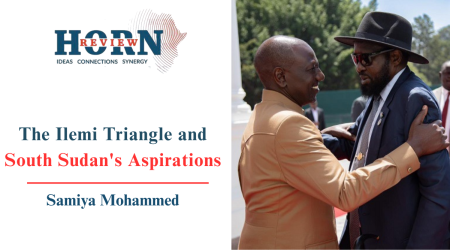
The Ilemi Triangle and South Sudan's Aspirations
The recent pronouncements by South Sudan's Vice President Taban...
2
Sep
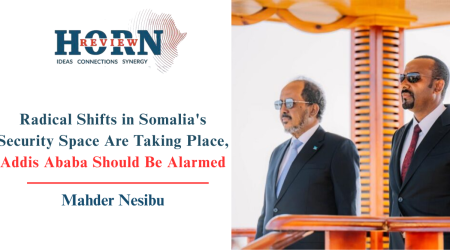
Radical Shifts in Somalia's Security Space Are Taking Place, Addis Ababa Should Be Alarmed
The presidency of Hassan Sheikh Mohamud, who returned to Villa...
31
Aug
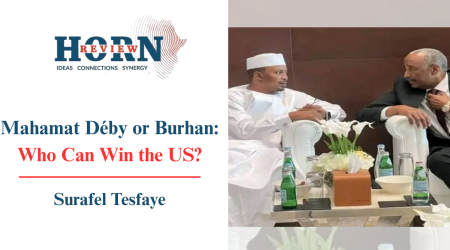
Mahamat Déby or Burhan: Who Can Win the US?
On August 20, 2026, Sudanese warplanes and drones pursued a...
31
Aug
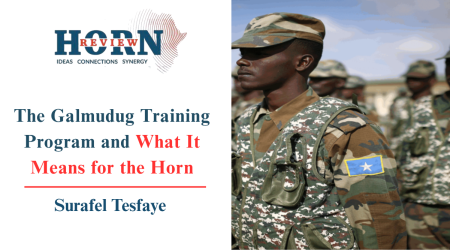
The Galmudug Training Program and What It Means for the Horn
In August 2026, approximately 3,000 Somali soldiers graduated from the...
31
Aug
Saudi Arabia's Recalibrated Engagement in Sudan and the Red Sea
The presentation of diplomatic credentials is ordinarily a procedural formality...
31
Aug
The Eritrean Regime’s Human-Trafficking Industry
For more than two decades, Isayas Afeworki’s regime has presented...
30
Aug
The Red Sea Transformation and Ethiopia’s Maritime Renaissance
The formation of the Horn of Africa is undergoing a...