Thesis of Coordinated Containment
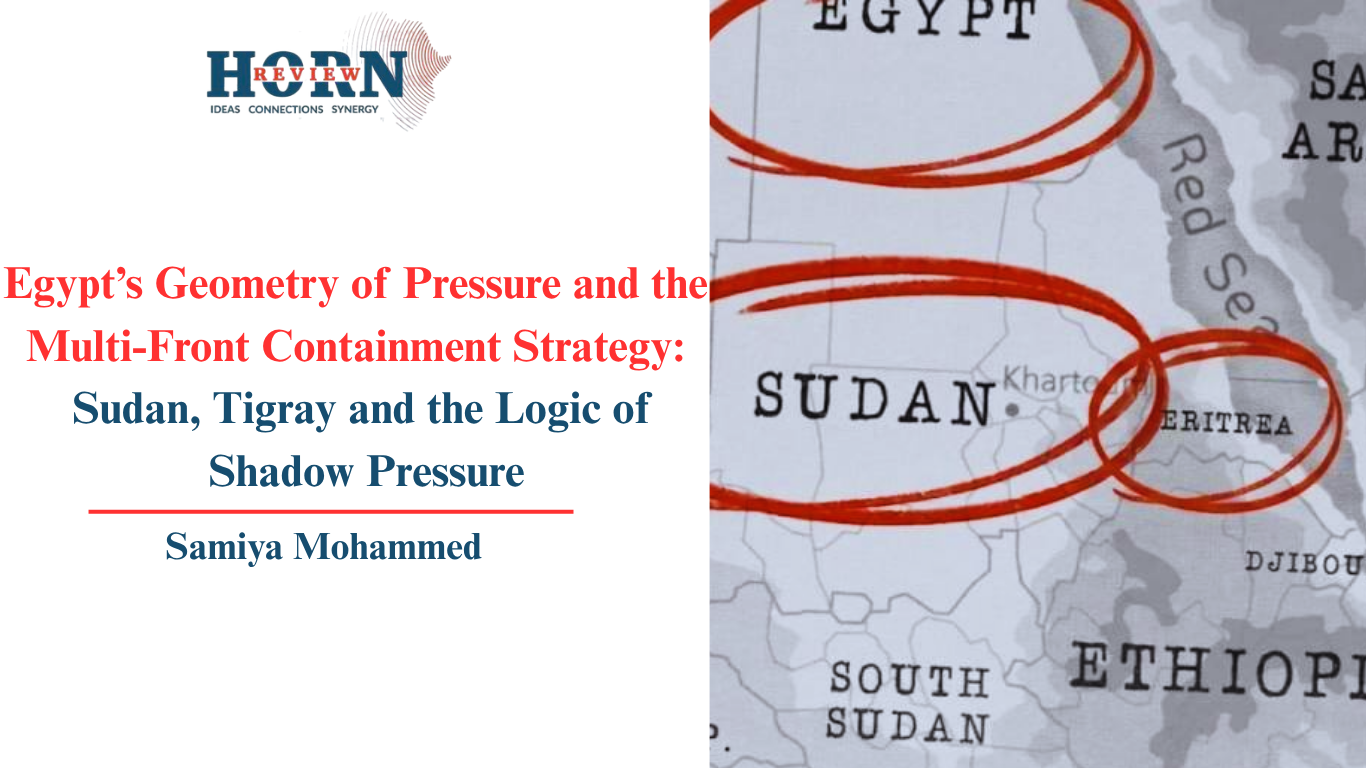
The recent security sequence in north eastern Africa departs from conventional bilateral state to state tensions. Instead what has surfaced is a pattern of asymmetric coercive measures, proxy alignments and synchronized diplomatic acts. The period from late April to early May 2026 provides a particularly instructive case that on a single day, the Tigray People’s Liberation Front moved to effectively nullify the Pretoria accord restoring pre war administrative structures and contesting the federal authority and on that same day the Sudanese Transitional Sovereign Council issued pointed accusations against Ethiopia alleging drone delivered munitions had struck areas near Khartoum, recalled its ambassador and secured public endorsements from both Egypt and Saudi Arabia.
These events comprise a coordinated multi front containment strategy directed at Ethiopia, orchestrated primarily by Cairo facilitated quietly by Asmara and enabled by a permissive regional environment in which acting through Ethiopia’s peripheral pressures have become levers for external actors. To support this argument the first examines is the TPLF’s repudiation of Pretoria as an exploitable opening for regional rivals, rather than an isolated internal rebellion. The second assesses Sudan’s role as an active military diplomatic front paying careful attention to the SAF’s current capacity constraints and the conditions under which those constraints might dissolve. The third outlines Egypt’s long term containment logic focusing on its alignment with the Sudanese Transitional Sovereign Council its deepening ties with Eritrea and its preference for deniable, limited encouragement over direct intervention. The fourth considers the Eritrean factor as a critical but often understated component of the pressure campaign.
The TPLF’s effective repudiation of the Pretoria peace agreement manifested through the reinstatement of pre-war parliamentary structures and regional governance authorities presents more than a domestic political challenge. Within a realist framework, any internal fragmentation of a target state creates opportunities for external actors to exert pressure without direct military engagement. The TPLF does not need to function as a formal proxy for Cairo or Asmara to serve their strategic interests. Its mere existence as a defiant, armed regional authority forces Ethiopia to divert intelligence, security and fiscal resources away from its northern and eastern borders. Several features of the current Tigrayan situation render it particularly useful as a front in Egypt’s containment strategy. Its geographical position along the Eritrean border creates natural logistical and intelligence linkages that external actors can exploit without leaving overt presence. They legitimize a narrative of encirclement and strain Ethiopia’s relations with neighbouring states.
For Egypt the Tigray front offers the advantage of plausible deniability. Egypt can benefit from Ethiopian internal division without providing overt military or financial assistance to the TPLF. At most, limited encouragement intelligence sharing, permissive political signalling or tolerance of third-party supply routes suffices to raise the cost of Ethiopian federal control. This asymmetric approach is consistent with Egypt’s broader culture which prioritizes patience, encirclement, and the exhaustion of adversaries through multiple low intensity pressures rather than decisive confrontation. The Sudanese military formal accusations against Ethiopia on citing drone launched munitions striking areas near Khartoum International Airport Sudan also Egypt and Saudi Arabia responds with immediate statements of support for Sudanese sovereignty, while Ethiopia countering with accusations that Sudan was deploying mercenaries along their shared border, this exchange presents the most tangible manifestation of the multi-front pressure campaign.
However, any realistic assessment of Sudan’s role must begin with a clear eyed evaluation of the Sudanese Armed Forces current operational capacity. The SAF remains deeply compromised by its civil war against the Rapid Support Forces. Significant territorial losses in Blue Nile state combined with persistent insecurity around Khartoum have stretched SAF logistics, degraded unit cohesion and consumed command attention. Under these conditions, the SAF cannot independently launch a major new offensive against Ethiopia. To do so would require force concentrations and sustainment capabilities that simply do not exist. The phrase at this time is therefore critical. The probability of a major Sudanese-Ethiopian front remains low under current conditions but specific escalation triggers could alter this equilibrium. The first trigger is a continuation or intensification of drone attacks on the Khartoum metropolitan area. Each such incident generates domestic political pressure on the Burhan-led militants to respond forcefully regardless of military readiness. The second trigger is further SAF territorial losses in Blue Nile. Paradoxically, a worsening military position against the RSF could incentivize a diversionary confrontation with Ethiopia using nationalism to consolidate internal support and shift public attention away from civil war setbacks.
This is where Cairo’s role transitions from passive observer to active enabler. Egypt cannot fight Ethiopia through Sudan but it can lower the costs and raise the incentives for Sudan to escalate. Three forms of Egyptian encouragement are plausible and observable. The first is political cover with Egyptian diplomatic support at the Arab League insulates the Sudanese junta from international criticism should it choose to escalate border tensions. The second is material support while large scale Egyptian troop deployments remain improbable with the provision of arms, intelligence or logistics to specific SAF units operating near the Ethiopian border is well within Cairo’s capacity and strategic interest. The third is proxy tolerance Egypt can signal to Khartoum that it will not object to Sudanese support for anti-Ethiopian armed groups operating in the borderlands effectively delegating pressure to non state actors.
To interpret Egypt’s behaviour in the current crisis solely through the lens of immediate provocation would be analytically insufficient. Cairo’s culture is defined by a long term, patient approach to asymmetric competition. The central objective is not the military defeat of but the systematic weakening of Ethiopian leverage across multiple engagements. This logic of containment operates through interlocking components. However, No analysis of the current pressure campaign would be complete without explicit attention to Eritrea’s role. The Isaias Afwerki government rarely announces its intentions but its actions and its studied inaction speak clearly. Asmara has watched Ethiopia’s evolving Red Sea policy with alarm, viewing any Ethiopian naval presence as a direct threat to Eritrean sovereignty and economic access. Consequently, Eritrea’s interests align almost perfectly with Cairo’s containment logic.
Eritrea’s contribution to the pressure campaign is likely threefold starting with intelligence cooperation Eritrean security services maintain coverage of the Tigrayan border region and information sharing with Egyptian and Sudanese counterparts is a low cost, high impact form of support. while overt supply routes to the TPLF would risk international condemnation, Eritrea’s quiet tolerance of limited cross border movements enables the Tigrayan front to remain active without direct Eritrean engagement. Eritrea maintains capable ground forces that have operated inside Tigray in the past. The credible possibility of renewed Eritrean intervention serves as a deterrent to any Ethiopian effort to decisively suppress the TPLF or retaliate against Sudanese provocations.
The coordinated pressure campaign against Ethiopia through the TPLF, Sudan, and a Cairo-Asmara axis is not yet a war but it is no longer just a diplomatic friction. The near simultaneous timing of the Tigrayan repudiation of Pretoria and the Sudanese accusations against Ethiopia combined with the immediate diplomatic backing of Egypt and Saudi Arabia satisfies the evidentiary threshold for coordinated action. The argument that this reflects a multi-front containment strategy rather than coincidence rests on the observable alignment of interests, the pattern of diplomatic signalling and the long term logic of Egyptian foreign policy.
The critical variable for near term escalation remains the Sudanese Armed Forces. At present, the probability of a major SAF led offensive against Ethiopia is low due to capacity constraints imposed by the civil war with the RSF. However, two escalation triggers could fundamentally alter this with continued or intensified drone attacks on Khartoum which would generate irresistible domestic pressure for retaliation and further SAF territorial losses in Blue Nile which could incentivize diversionary confrontation. In either scenario Egypt’s role would transition from encouragement to more active coordination potentially including material support for SAF operations near the Ethiopian border.
For now, the most probable outcome is sustained low intensity pressure with periodic Sudanese accusations and border incidents, continued Tigrayan defiance short of full scale civil war and persistent Egyptian-Eritrean diplomatic coordination. None of this however warrants an inference of Ethiopian paralysis or imminent fragmentation. More fundamentally, the peripheral pressures that Egypt and Eritrea seek to leverage like Tigrayan political defiance, Sudanese border provocations, Eritrean military posturing carry inherent risks for the pressure coalition itself. Historical precedent from the Horn suggests that sustained external encouragement of internal fissures tends to generate countervailing nationalist consolidation in the target state rather than its disintegration. To underestimate Ethiopian agency or coercive capacity would therefore constitute a material miscalculation.
By Samiya Mohammed, Researcher, Horn Review