
Bab el-Mandeb: The Next Global Flashpoint
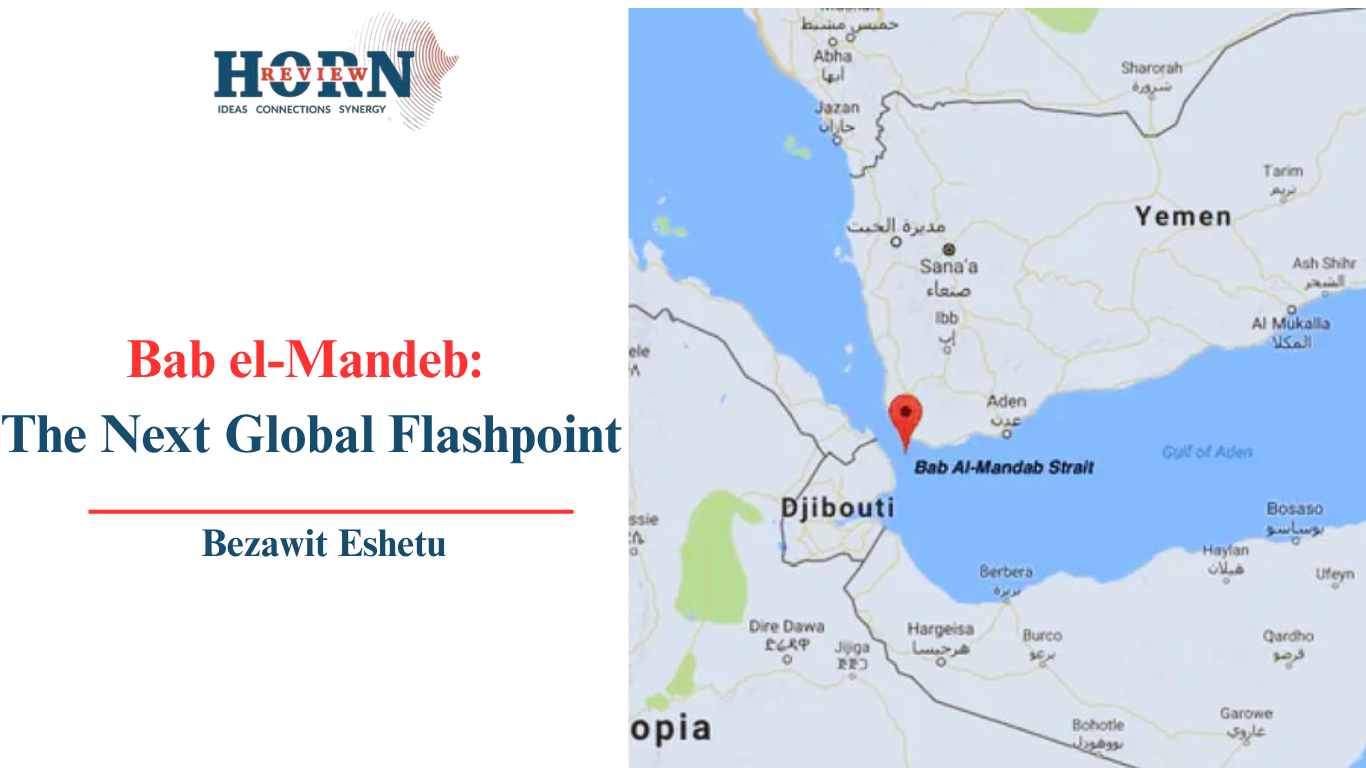
With the Strait of Hormuz effectively closed amid rising tensions between Iran and Israel, the Bab el-Mandeb Strait has become a vital artery for global energy and trade. This narrow passage connects the Red Sea to the Gulf of Aden and the Indian Ocean, and it is divided into two channels by Yemen’s Perim (Mayun) Island. Because it carries roughly 10 to 12 percent of global seaborne trade, including essential petroleum shipments to Europe and Asia, its strategic importance has risen sharply. Yet the idea of “ownership” in this area is better understood as a legal concept than a practical reality, because actual control is far more fragmented and contested.
Legally, control belongs to three coastal states: Yemen in the northeast, and Djibouti and Eritrea on the southwestern shore. In that sense, no single country has complete command over the strait. Instead, operational dominance is divided and constantly contested, shaped by the presence of non-state armed groups, foreign military bases, the militarization of islands, and competing regional powers. This makes the Bab el-Mandeb a challenge to the traditional assumption that recognized governments, backed by navies, can fully control a strategic strait. Here, influence shifts to whichever actor has the most effective capabilities at a given moment.
Yemen, for its part, retains legal sovereignty over the northeastern coastline and Perim Island, which is especially important because the island bisects the Bab el-Mandeb into two distinct channels and channels international shipping through defined routes. On the African side, Djibouti and Eritrea face each other across overlapping territorial waters, which prevents any one state from unilaterally sealing the strait. But in practice, the most consequential actor along Yemen’s western coast is the Houthi movement, or Ansar Allah.
Although the Houthis do not possess a traditional navy, they have developed an asymmetric toolkit that includes anti-ship cruise missiles, underwater drones, and loitering munitions. These capabilities give them the power to selectively disrupt shipping and, in effect, act as a de facto gatekeeper. Their ability to allow or deny passage based on political loyalty rather than legal authority shows how control in the Bab el-Mandeb works in practice. At the same time, their restraint from imposing a total blockade, even with Hormuz effectively closed, reveals that they understand the strait’s value as leverage. By using pressure carefully, they can raise costs for Western-aligned shipping without provoking an all-out coalition response.
Because of this local threat environment, security around the strait has become increasingly internationalized, especially on the Djiboutian side. Djibouti has turned itself into a shared security hub by hosting a dense concentration of foreign military bases, including Camp Lemonnier for the United States, China’s People’s Liberation Army Support Base, French installations, and a Japanese outpost. Even though these powers compete globally, they all converge on one basic interest: keeping the Bab el-Mandeb open to commercial traffic. In that sense, the strait is protected not by a single sovereign power but by a layered system of external deterrence and shared maritime interest.
That logic is reinforced by naval task forces such as the U.S.-led Operation Prosperity Guardian and the EU’s Operation Aspides, both of which aim to shield commercial shipping from Houthi attacks. Their presence shows that control in the Bab el-Mandeb is not about territorial ownership in the classic sense; it is about mutual deterrence. No actor can dominate the chokepoint outright without facing collective pushback from other regional and global powers.
A more durable form of influence has also emerged through the militarization of islands. Developments on Perim Island and parts of the Socotra Archipelago, backed by UAE strategies and reports of joint UAE-Israeli military projects, including runway expansions for advanced aircraft, have created fortified positions that extend surveillance and strike capacity across the narrow channels of the strait. These positions make it possible to monitor Iranian smuggling routes and Turkish naval activity, while also allowing the UAE and Israel to avoid the instability of Yemen’s mainland. In this way, island militarization creates a de facto gatekeeper presence linking the Arabian and African coasts.
Seen through this wider geopolitical lens, the Bab el-Mandeb becomes the center of two competing strategic visions. On one side stands the “Status Quo Axis,” made up of Saudi Arabia, Egypt, and Turkey, which seeks to preserve the nominal sovereignty of coastal states in order to protect economic routes, including Turkish infrastructure projects in Port Sudan. On the other side is the “Recognition-by-Deed Triangle” of the UAE, Israel, and a more assertive Somaliland, which seeks to reshape regional geography through new naval bases and diplomatic recognition. The outcome is not a single owner of the strait, but a geopolitical space that is temporary, functional, and constantly renegotiated by superior technology, alliances, and access.
This is why the Bab el-Mandeb matters to so many actors beyond the immediate region. The United States, China, France, Japan, Russia, Turkey, and India all have military or diplomatic interests in securing energy routes and countering one another. Regionally, Saudi Arabia and the UAE view the strait as critical for oil shipments to Europe and Asia, while Iran uses Houthi proxies to extend its influence and threaten shipping aligned with the West. Egypt, meanwhile, sees the strait as part of the wider security architecture of the Suez Canal. With Hormuz effectively closed, these interests intensify even further, making the Bab el-Mandeb the key route sustaining Western energy markets and turning any disruption there from a regional problem into a global economic threat.
The countries bordering the Bab el-Mandeb Strait which are Yemen, Djibouti, and Eritrea do not possess a level of control comparable to Iran’s hold over the Strait of Hormuz. Iran can threaten Hormuz directly because of its proximity, naval capacity, and the fact that the chokepoint lies within its immediate strategic reach. By contrast, authority in the Bab el-Mandeb is fragmented by both geography and politics. Yemen’s coastline is contested between the internationally recognized government and the Houthis, which makes any state-level blockade difficult to impose or sustain.
Djibouti, meanwhile, has chosen to prioritize hosting foreign military bases rather than projecting unilateral power, while Eritrea claims extensive territorial waters but lacks both the resources and the political incentive to enforce prolonged control. In this sense, the closest equivalent to Hormuz-style leverage in the Bab el-Mandeb is the Houthis’ asymmetric power, supported by Iran, though even this remains dependent on proxies and remains vulnerable to superior international naval force.
That fragmented political reality is mirrored by the legal framework governing the strait. Navigation through the Bab el-Mandeb is primarily regulated by the United Nations Convention on the Law of the Sea (UNCLOS), especially Part III, which governs transit passage through straits used for international navigation. Under this regime, ships and aircraft enjoy the right of continuous and expeditious transit, and coastal states cannot obstruct that passage. Because this framework has also come to reflect customary international law, it applies even to non-signatories and preserves the Bab el-Mandeb’s status as an international waterway. Alongside transit passage, other rules also shape conduct in the area, including innocent passage through territorial seas, freedom of navigation in exclusive economic zones, traffic separation schemes, and anti-piracy regulations. As a result, no separate bilateral arrangement can override this broader legal order for the Bab el-Mandeb.
Eritrea’s position is especially significant within this legal and strategic environment. As a coastal state on the southwestern shore that has not signed or ratified UNCLOS, Eritrea’s choice is not simply a procedural omission but a deliberate expression of independence. Asmara has long been skeptical of multilateral treaty structures and views UNCLOS as a framework that tends to privilege global trade and the interests of major maritime powers over the security concerns of smaller coastal states.
By remaining outside the convention, Eritrea avoids mandatory dispute-resolution mechanisms that could challenge its maritime borders or island claims. It therefore prefers bilateral negotiations, where it can exercise greater leverage. This creates a paradox: Eritrea accepts the customary-law recognition of its 12-nautical-mile territorial sea and its exclusive economic zone rights, yet resists the stricter transit-passage regime and instead leans toward the more flexible innocent-passage standard within its waters.
That selective compliance generates ongoing friction. In the Bab el-Mandeb, where territorial seas overlap, Eritrea’s position introduces regulatory uncertainty and makes the legal environment more ambiguous. Security concerns or environmental justifications could be invoked to interfere with navigation, creating unpredictability for both naval forces and commercial shipping.
Even though major powers insist that transit passage remains customary law and therefore cannot be unilaterally restricted, the existence of this grey zone means that routine maritime incidents can quickly escalate into geopolitical crises. In practice, Eritrea gains an uneven advantage as an unreliable gatekeeper, forcing high-level diplomatic engagement even for relatively simple crossings. The wider result is that ignoring UNCLOS does not erase basic norms, but it does add instability to an already volatile choke point.
In the context of renewed tensions between Iran and Israel and a closed Hormuz, the international community is therefore forced to focus even more closely on the actors capable of influencing Bab el-Mandeb. Among them, the Houthi movement remains the most immediate disruptor. Backed by the Axis of Resistance, it seeks to transform the strait into a restricted zone for vessels linked to Israel or its allies. At the same time, the possibility of cooperation between non-state actors, including Houthi–Al Shabaab coordination, increases pressure on coalition resources and complicates maritime security planning.
At the state level, Eritrea also emerges as a pivotal swing state. Historically, it has leaned toward Iran, but it is now tied more closely to Saudi and Egyptian financial and security support. This makes Asmara unpredictable, especially if regime survival ever outweighs the value of its current alignments. Djibouti, by contrast, is trying to preserve an almost impossible neutrality through its base-hosting model, even as divisions inside the Arab League and strategic competition from China make that posture harder to sustain. Yemen’s recognized government, together with Saudi Arabia and the UAE, adds another layer of rivalry, particularly because Riyadh’s preference for Somali unity conflicts with Abu Dhabi’s investments in Somaliland.
These overlapping roles make Djibouti, Yemen, and Somaliland distinct but interconnected pieces of the same strategic puzzle. Djibouti functions as the reliable maritime hub, where foreign bases help ensure the continuation of shipping traffic. Yemen represents the contested eastern front, where the Houthi presence produces immediate security threats. Somaliland, meanwhile, has become an increasingly important factor, especially since Israel recognized its independence in December 2025, making it the first UN member state to do so. That recognition is significant because it alters the balance of influence in the region and ties Somaliland more directly into the wider struggle over the Bab el-Mandeb.
For Israel, this recognition fits within the broader logic of peripheral doctrine and provides strategically valuable ground. Somaliland’s 850-kilometer coastline, together with the upgraded Berbera port and airport, reduces response times to Houthi targets better than Israeli bases farther away. From there, Israeli capabilities can monitor and disrupt Iranian smuggling in the Gulf of Aden before it reaches the Bab el-Mandeb bottleneck. Berbera also gives Israel a fallback position in case the Red Sea becomes more heavily disrupted, making Somaliland an operational asset as well as a political one.
This development has also sharpened competition between Turkey and Israel in the Horn of Africa. Turkey’s “Blue Homeland” strategy seeks uncontested access from the Mediterranean to the Indian Ocean, and it is backed by the large TURKSOM base in Mogadishu as well as defense agreements that create economic interests in Somalia’s exclusive economic zone. Somaliland’s geography, especially the proximity of Berbera and Zeila to the Gulf of Aden, gives Israel an operational advantage that Turkey’s southern base cannot easily match.
The result is a growing intelligence and electronic-warfare contest. Israel’s capabilities would expose Turkish naval movements and create a kind of “glass house” effect that weakens Turkey’s deterrence. Ankara, in turn, sees this as part of a wider encirclement, linking disputes in the Eastern Mediterranean to pressure points in the Red Sea and threatening the expected returns from Somali agreements. In that environment, disputes over maritime boundaries and resource extraction turn Somaliland into a flashpoint: Israel’s presence supports its goals of countering the Houthis, diversifying partnerships, and projecting power, while Turkey responds by deepening its involvement in Mogadishu in an effort to preserve its position in the Red Sea arena.
Taken together, the evolution of the Bab el-Mandeb into a competitive jurisdiction has major implications for global energy flow, maritime security, and regional partnerships. With Hormuz effectively locked down, keeping the Bab el-Mandeb open becomes essential to preventing energy shocks and prolonged disruption in Western markets. International task forces may provide temporary stability, but their success ultimately depends on neutralizing asymmetric threats without disturbing the fragile balance of power in the Horn of Africa.
By Bezawit Eshetu, Researcher, Horn Review

RELATED
Posts
6
Oct
Sisi’s Sovereignty Sermon and the Proxy War Next Door
In New Alamein this past weekend, Egyptian President Abdel Fattah...
5
Oct
Egypt Displays Its Anti-Addis Coalition as Ethiopia Gains Against Rebels. What Comes Next?
Egypt's strategy of cultivating relationships around its chief rival in...

5
Oct
Eritrea’s Old Narrative in a New Red Sea Order
Eritrea’s historic framing of Ethiopia, Israel, and the Red Sea...
5
Oct
How Far Will Somalia Go to Keep Israel Away?
Somali President Hassan Sheikh Mohamud’s declaration that his country will...
5
Oct
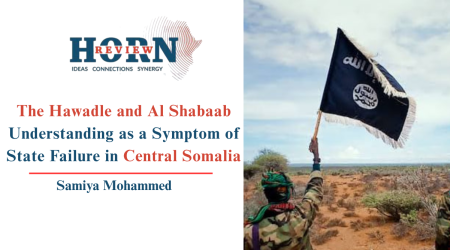
The Hawadle and Al Shabaab Understanding as a Symptom of State Failure in Central Somalia
The agreement between Al Shabaab and sections of the...
5
Oct
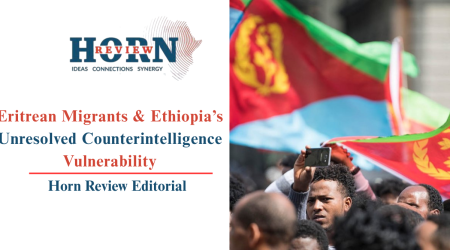
Eritrean Migrants & Ethiopia’s Unresolved Counterintelligence Vulnerability
Ethiopia may be approaching a security environment in which a...
5
Oct
The African Union’s Retreat for Egypt Exposes a Deeper Institutional Weakness
On October 1, African Union Commission Chairperson Mahmoud Ali...

4
Oct
Eritrea's Buffer is Collapsing: What Comes Next?
Ethiopian National Defense Force’s capture of Mekelle, if sustained, may...
4
Oct
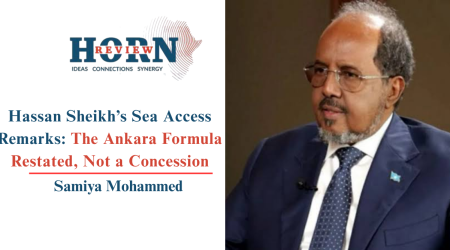
Hassan Sheikh’s Sea Access Remarks: The Ankara Formula Restated, Not a Concession
President Hassan Sheikh Mohamud’s remarks on 3 October 2026 that...
4
Oct
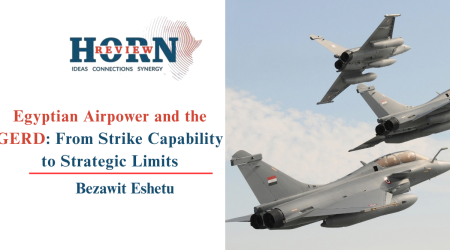
Egyptian Airpower and the GERD: From Strike Capability to Strategic Limits
The Grand Ethiopian Renaissance Dam is within the theoretical reach...