How 1973 Yom Kippur War Proved That Bab el-Mandeb Is Unclosable
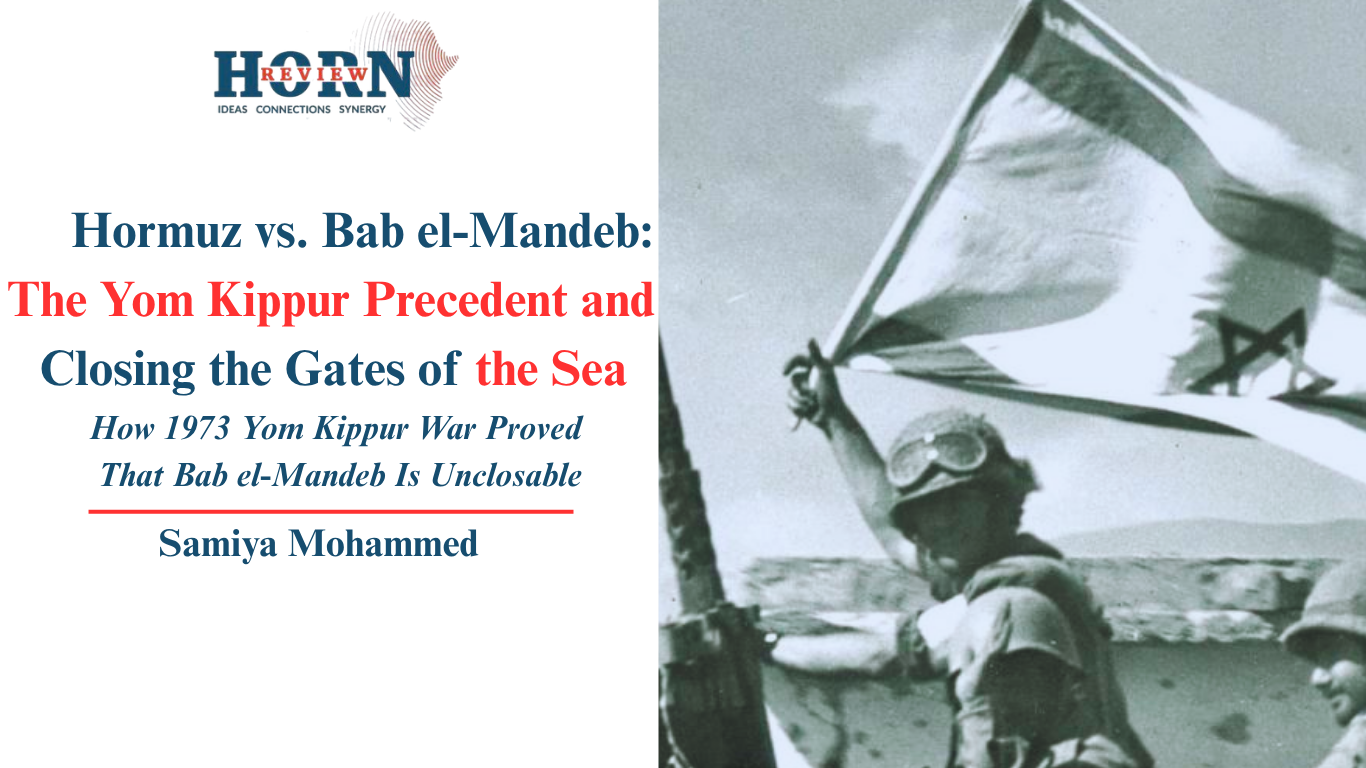
In the winter of 1973 as the Yom Kippur War reshaped the political contours of the Middle East, Egyptian and South Yemeni warships took up positions in the Bab el-Mandeb Strait their mission was not a general blockade of international commerce but a targeted interdiction vessels bound for the Israeli port of Eilat were turned back while shipping destined for other nations continued largely unhindered. Within weeks diplomatic pressure arranged in part by United States Secretary of State Henry Kissinger had persuaded Cairo to relax its restrictions and by November 18, 1973 Israeli-bound traffic resumed without public fanfare.
Half a century later a different question haunts global energy markets and maritime security planners. Iran has repeatedly threatened to close the Strait of Hormuz, the twenty one mile wide waterway through which approximately one fifth of the world’s oil passes. In 2026 following military exchanges with the United States and Israel, Tehran made good on these threats in practice effectively blockading the strait and sending shockwaves through the global economy. This contrast prompts a cardinal inquiry with why can one state credibly threaten to close a maritime point while another cannot? The answer is in the relative power of the actors involved but in the immutable facts of geography, sovereignty and the control that distinguishes Bab el-Mandeb from Hormuz. No single country possesses the unilateral legal or practical capacity to close the Bab el-Mandeb Strait.
The Strait of Hormuz is in terms a gift to the power that commands its northern shore. At its narrowest point the strait measures approximately thirty two kilo meters across with shipping lanes compressed into two channels that run within Iranian territorial waters. The Iranian coastline runs the entire length of the strait’s northern side a geographic endowment that allows Tehran to project force from positions of relative advantage. The mountainous terrain that abuts the waterway provides natural cover for missile batteries, radar installations and launch sites while the constricted dimensions of the strait itself afford attacking forces the luxury of short warning times and limited moving room for defending naval assets.
The legal body governing international straits offers little remedy. While the United Nations Convention on the Law of the Sea guarantees the right of transit passage through straits used for international navigation this guarantee is only as robust as the willingness and capacity of the international community to enforce it. Iran though has demonstrated through decades of intermittent harassment including the seizure of foreign-flagged vessels and the mining of international waters that treaty obligations alone do not constrain state behaviour when security interests are perceived to be at risk. The legal planning of maritime transit however well intentioned cannot compensate for geographic asymmetry when a determined coastal state chooses to exploit it.
The Bab el-Mandeb Strait presents a different picture. Here the waterway is defined not by unitary control but by fragmentation. The strait separates the Arabian Peninsula from the Horn of Africa with Yemen on the north eastern side and Djibouti together with Eritrea on the south western shore. At its narrowest point, the strait is divided into two channels by the Yemeni island of Perim the Dact el-Mayun channel, which lies within Yemeni territorial waters and the Iskander channel which falls within Djiboutian jurisdiction. This division of sovereign control is fundamental. No single state commands both shores and no single state can interdict shipping without either the cooperation of or confrontation with its neighbour across the water.
The 1973 blockade illustrates precisely why unilateral closure of Bab el-Mandeb is so difficult to sustain. Egypt and South Yemen were able to interdict Israeli bound shipping not because they commanded both shores of the strait but because they coordinated their efforts across the waterway and did so in the context of a broader regional war. Even then the blockade was never total and general commerce continued and the pressure on Israeli shipping was sufficient to achieve political objectives without provoking a major international response. More importantly when the diplomacy shifted the blockade was eased not because of military defeat but because the political coalition supporting it had achieved its immediate aims and faced mounting diplomatic pressures by the time.
Recent events have showed the asymmetry between the two points. Since the onset of the current conflict in the Middle East, the Houthi movement which controls much of Yemen’s Red Sea coast could launch missiles and drones at commercial shipping in the Bab el-Mandeb strait and the broader Red Sea. But what the Houthis have done is not a blockade nor is it a closure of the strait. Harassment, even sustained harassment is fundamentally different from the systematic interdiction of all shipping. The Houthis lack the naval capacity to enforce a comprehensive blockade they cannot patrol both channels of the strait, cannot board and inspect vessels and cannot prevent ships from passing if they are willing to accept the risk of attack. Their capabilities are asymmetric in the sense that they can impose costs on shipping but they are insufficient to achieve the kind of total closure that Iran has demonstrated in the Strait of Hormuz.
This distinction is critical. A state or non-state actor can disrupt shipping however only a power with dominant control over both shores and at least the ability to patrol both channels effectively can close a strait. Iran comes close to meeting this threshold at Hormuz because its geography and military posture allow it to threaten both channels of the strait from a single coastline. No comparable actor exists at Bab el-Mandeb. The historical record bears this out. No full closure of Bab el-Mandeb has ever occurred not during the 1973 war not during the subsequent decades of conflict in Yemen not during the current Houthi campaign. What has occurred is targeted interdiction, harassment and disruption phenomena that while serious do not amount to the decisive closure that Iran has achieved at Hormuz. This is not for want of effort on the part of regional actors however it is a function of the strait’s inherent characteristics. Bab el-Mandeb is simply not a point that any single state can close.
This does not mean that Bab el-Mandeb is secure. The Houthi campaign has already demonstrated the capacity of non-state actors to impose costs on global commerce. The strait remains vulnerable to missile attacks, drone strikes, and the kind of asymmetric warfare that has characterized the conflict in Yemen for years. But vulnerability to attack is not the same as susceptibility to closure. A strait can be dangerous to transit without being closed to transit. The distinction is crucial for understanding both the risks and the appropriate responses. For Iran, the asymmetry is strategic. Tehran’s ability to threaten closure of Hormuz gives it leverage that no other regional actor possesses. That leverage is rooted in geography and it cannot be replicated at Bab el-Mandeb because the geographic conditions do not exist. No amount of investment in naval forces or missile technology can give any single state the kind of unitary control over the southern Red Sea that Iran enjoys over the Persian Gulf’s outlet.
The question with which we began Who could close Bab el-Mandeb? thus finds its answer in negation. No one can. Not Iran, not Yemen, not the Houthis, not any combination of regional actors acting. The strait’s geography of divided sovereignty, its concentration of foreign military bases and its history of targeted but never total blockades all point to the same conclusion Bab el-Mandeb is vulnerable to chaos but resistant to closure. Hormuz, by contrast, remains perpetually at risk precisely because one state commands its narrow waters from a position of geographic and military advantage. At Hormuz, the conditions for unilateral closure exist however at Bab el-Mandeb, they do not. Understanding why is the first step toward navigating the complexity of maritime security environment that defines the twenty-first-century global economy.
By Samiya Mohammed, Researcher, Horn Review