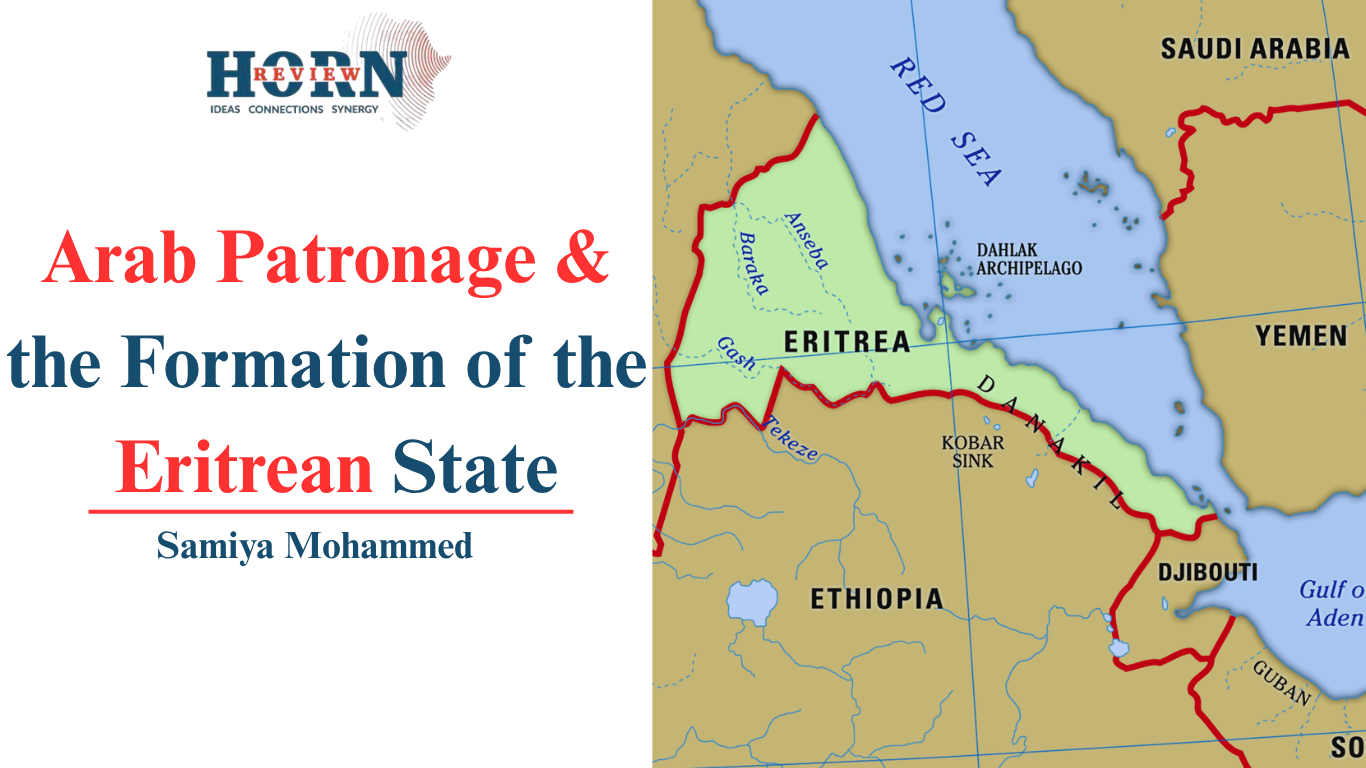
The formation of modern Eritrea presents an analytical challenge to scholars of African decolonization. Unlike many post colonial African states whose territorial boundaries came from the arbitrary cartography of European partition, Eritrea’s colonial experience produced an unusually concentrated institutional legacy. Italian rule spanning from 1882 to 1941 did not just impose external administration upon a passive population rather it actively constructed a territorial entity with defined borders, created new urban centers, established infrastructure networks and most for subsequent nationalist development forged a military class with specialized training and institutional loyalties.
This colonial inheritance however presents only one dimension of Eritrea’s foundational narrative. The other dimension comes from the Red Sea historical connections to the Arabian Peninsula and the broader Arab world, connections that were mobilized and intensified during the critical period of nationalist organizing in the late 1950s and early 1960s. The convergence of these two external forces Italian colonial state building and Arab political patronage produced a nationalist movement whose origins diverge meaningfully from the standard model of African anti colonial resistance.
Italian colonization of Eritrea commenced formally on 1 January 1890 when King Umberto proclaimed the territory as Italy’s colonia primogenital, the first born colony. The colonial administration particularly under the pre Fascist period pursued a strategy of institutional development that distinguished Italian Eritrea from many other African colonies. More consequentially for the disclosure of nationalist capabilities, the colonial state created a sinewy military apparatus drawing heavily upon local recruitment.
The Royal Corps of Colonial Troops established in 1891 incorporated Eritrean soldiers known as Ascari into the Italian military structure. These troops served with distinction in multiple campaigns including the First Italo-Ethiopian War and the Italo-Turkish War. By 1940 with approximately 182,000 Ascari were serving in Italian East Africa presenting a mobilization of Eritrean manpower within colonial military structures. This experience produced a cohort of Eritrean soldiers who acquired modern military training, operational experience and institutional knowledge that would later prove transferable to nationalist insurgency.
Hamid Idris Awate who had served as an Ascari in the Italian colonial army and received military training in Italy provides one example. He fought in Italian operations during the Battle of Keren and later used that background in local defense activities. During this period Eritrean political parties and associations emerged articulating competing visions for the territory’s future. The United Nations resolution of September 1952 established a federal arrangement linking Eritrea to Ethiopia under the sovereignty of Emperor Haile Selassie. This arrangement granted Eritrea nominal autonomy its own administrative and judicial structures, flag, and control over domestic affairs while reserving foreign affairs, defense, finance and transportation to the imperial government.
The other important patronage is The Eritrean Liberation Front which was formally established in Cairo in July 1960 though its origins lie in the preceding years of exile organizing and diplomatic cultivation. The founders of the ELF were primarily Eritrean Muslim intellectuals and students who had established themselves in Egypt then the center of Arab nationalist politics under Gamal Abdel Nasser’s leadership. Idris Mohammed Adem came to light as the principal founder joined by other exiled figures who shared both a commitment to Eritrean independence and an orientation toward the Arab world as a source of political and material support. The choice of Cairo as the site for the ELF’s founding was not incidental. Egypt under Nasser had positioned itself as the vanguard of pan Arabism and anti-imperialist struggle providing support to liberation movements across Africa and the Middle East. For Eritrean exiles Egypt offered not only sanctuary but also training facilities, media platforms and diplomatic access. As early as 1960 Egypt began funding military training for Eritrean revolutionaries at facilities in Alexandria where future leaders learned tactics influenced by the Algerian National Liberation Front’s successful guerrilla campaign.
The Arab League’s involvement provided a broader regional shell for Eritrean nationalist aspirations. In April 1962 Arab League member states including Syria, Iraq, Libya, Kuwait, and Yemen pledged their support to the ELF. These states perceived interests in the Red Sea region and the Suez Canal as well as religious solidarity with Eritrea’s Muslim population which they understood as part of the broader Arab and Islamic world. Sudan sharing a border with Eritrea proved particularly valuable as a logistical base allowing the ELF to ship weapons and organize military operations from Sudanese territory. The ideological framing of the ELF during its early years reflected this Arab patronage. The movement adopted pan Arab discourse and presented the Eritrean struggle within the context of Arab anti- colonial resistance. This orientation was not just some strategic posturing however it came organically from the composition of the exile leadership and the social base from which the ELF initially drew support. The early ELF was predominantly Muslim in its membership and leadership and its founders genuinely identified with the Arab nationalist project.The dual parentage of Eritrean nationalism Italian colonial military inheritance combined with Arab political patronage distinguishes Eritrea from many other African liberation movements. A comparative perspective illuminates this distinctiveness. The road of nationalist mobilization in Ghana, Kenya, Mozambique, or South Africa typically involved anti colonial parties emerging from indigenous political associations, labor unions or pan African congresses. These movements often framed their struggles within the ideology of pan-Africanism emphasizing solidarity among African peoples against European colonial rule.
Eritrea’s nationalist origins followed a different logic. The ELF’s founding in Cairo its reliance on Egyptian military training, its mobilization of Arab League diplomatic support and its early pan Arab ideological orientation all positioned the movement within a regional framework that transcended the African continent. The Arab world not the African continent provided the ELF’s primary international allies during its formative years. This orientation was not just tactical but reflected the social composition of the early nationalist leadership and the historical connections between Eritrea’s lowland Muslim populations and the Arabian Peninsula. The historical evidence suggests that Eritrea’s path to statehood and its early nationalist identity were shaped to a substantial degree by external forces specifically the institutional and military legacy of Italian colonialism and the organizational and ideological patronage of Arab states. This convergence produced a nationalist movement whose origins diverge meaningfully from the standard model of African anti-colonial resistance which typically emphasizes indigenous political mobilization, pan-African solidarity and opposition to European colonial rule.
The Italian colonial experience provided Eritrea with its territorial boundaries, its modern infrastructure, its military training institutions and a cohort of soldiers for instance by Hamid Idris Awate who possessed the expertise. The British interregnum and the Arab states led by Egypt under Nasser supplied the organizational launch pad, training facilities, diplomatic recognition and material support that enabled the ELF to transition from exile politics to armed insurgency. This hybrid foundation situates Eritrea within the reality of post colonial state formation in the Horn of Africa. The Italian colonial state that created Eritrea as a territorial unit trained the soldiers who would fight for the so called independence while the Arab patrons who supported that struggle did so from a regional identity that transcended the African continent.
In truth, Eritrea did not emerge as an African nation fighting for continental liberation. It emerged as an Arab backed secessionist exception whose foundational momentum owed far more to pan Arabism than to Pan Africanism. This hybrid external parentage makes Eritrea the clearest outlier in post-colonial African history with a state whose very birth certificate was written outside the African continent.
By Samiya Mohammed, Researcher, Horn Review