
21
Apr
The Horn in 2026: A Year of Elections
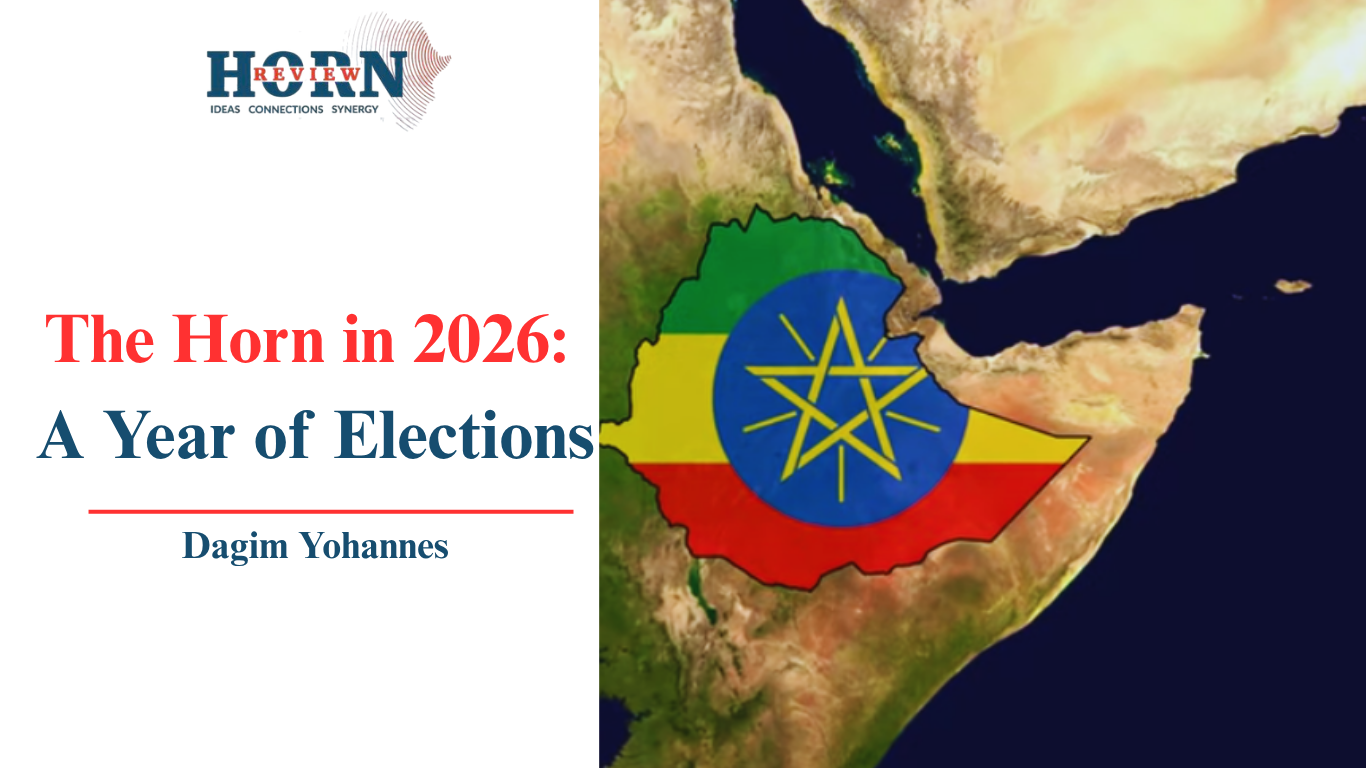
The 2026–2027 electoral cycle in the Horn of Africa is not a story of democratic renewal. It is a revealing moment where the region’s underlying political architecture is exposed under pressure. Across Ethiopia, Djibouti, Somalia, and Somaliland, elections are unfolding within systems defined less by open competition and more by controlled continuity, security constraints, and strategic calculation. What is at stake is not simply who wins, but whether these states can maintain coherence, legitimacy, and stability under intensifying internal and external strain. At a structural level, these elections sit at the intersection of three forces: entrenched incumbency, unresolved conflict, and geostrategic competition. Together, they create a political environment where electoral processes are less about transformation and more about regime preservation, elite bargaining, and crisis management.
Yet, to frame this electoral cycle solely through the lens of constraint risks obscuring an equally important dynamic: adaptation under pressure. While the region’s political systems remain structurally tilted toward continuity, they are not static. Across the Horn, states are quietly recalibrating their mechanisms of control, legitimacy, and elite coordination in response to internal strain and external scrutiny. In this sense, the 2026–2027 elections are not only a stress test of existing power structures, but also a window into how these systems evolve to sustain themselves over time.
One of the most defining characteristics of this electoral cycle is the persistence of incumbent entrenchment. Across the region, ruling elites are not entering elections on a level playing field. Instead, they operate within systems that structurally advantage continuity. Opposition parties are often fragmented, marginalized, or absent altogether, either due to repression, co-optation, or strategic boycotts. In Djibouti, this dynamic is most explicit. The expected continuation of President Ismail Omar Guelleh’s rule illustrates how elections can function as ritualized affirmations of power rather than mechanisms of accountability. Constitutional adjustments, including the removal of age limits, reinforce a system where political longevity is institutionalized. The result is not instability in the conventional sense, but a form of stagnation that gradually erodes institutional dynamism.
This pattern aligns closely with what can be understood as competitive authoritarianism, where formal democratic institutions exist but are systematically skewed in favor of incumbents. However, within the Horn context, such systems also perform a stabilizing function. By structuring competition within controlled limits, they reduce the likelihood of abrupt elite fragmentation, thereby preserving regime coherence in environments where the collapse of authority would carry significantly higher risks than its concentration.
Ethiopia presents a more complex variation. While formal multiparty competition exists, the structural imbalance between the ruling Prosperity Party and opposition actors is profound. In regions such as Oromia and Amhara, political space is narrowing, and opposition participation risks becoming symbolic rather than substantive. This creates the conditions for what can be described as de facto one-party dominance, even in the presence of electoral procedures. At the same time, Ethiopia’s trajectory should not be reduced to democratic backsliding alone. The post-conflict environment reflects a state engaged in a complex process of political recalibration, attempting, however unevenly, to renegotiate the balance between federal autonomy and central authority. Unlike more static systems in the region, Ethiopia’s federal arrangement remains a living and contested framework, one that continues to absorb, reflect, and reshape internal pressures. This dynamism, while a source of instability, also constitutes a form of institutional resilience rarely acknowledged in conventional analyses.
Somalia, meanwhile, operates within an entirely different model. Its indirect electoral system already limits popular participation, but the postponement to 2027 and disputes over universal suffrage reforms further complicate legitimacy. Here, elections are less about voters choosing leaders and more about elite negotiations within a fragmented federal structure. In this context, Somalia’s electoral model reflects a form of elite pact governance, where political order is sustained less through mass participation and more through negotiated settlements among key actors. While often criticized for its limited inclusivity, this system has also functioned as a pragmatic mechanism for preventing large-scale elite conflict, highlighting the complex trade-offs between representation and stability.
Elections in the Horn cannot be separated from the region’s persistent security challenges. Conflict is not an external disruption to electoral politics; it is embedded within it. Campaigning, voter mobilization, and even the basic logistics of voting are shaped by insecurity. In Ethiopia, the legacy of the Tigray war continues to reverberate, while tensions in Oromia and Amhara create an environment where the state’s primary concern is control rather than competition. Elections under such conditions of risk becoming instruments of consolidation rather than reconciliation. Instead of resolving grievances, they may harden them, particularly if large segments of the population feel excluded or coerced.
Somalia faces an even more acute security dilemma. The continued presence of Al-Shabaab fundamentally undermines the feasibility of inclusive elections. Beyond the physical threat, the group’s ability to exploit political fragmentation poses a deeper structural risk. Electoral disputes between the federal government and member states such as Puntland and Jubaland do not occur in isolation; they directly affect the coherence of counterinsurgency efforts. A divided political elite weakens the state’s capacity to confront armed actors, creating a feedback loop where insecurity and political fragmentation reinforce each other. Even in relatively stable contexts like Djibouti, security considerations shape political behavior. The regime’s emphasis on stability, partly driven by its strategic location near the Bab al-Mandab, justifies tight control over political space. In this sense, security becomes both a genuine concern and a political instrument.
Beneath these political and security dynamics lies an equally decisive but often underexplored dimension: political economy. Across the Horn, the durability of incumbency is reinforced not only through institutional control, but through the strategic distribution of economic resources. Patronage networks, access to state rents, and control over key economic corridors play a central role in shaping electoral outcomes. In Djibouti, revenues linked to port infrastructure and foreign military presence underpin regime stability. In Ethiopia, large-scale development projects and state-linked economic networks contribute to the consolidation of political authority. These material foundations ensure that elections are not merely political contests, but extensions of deeply embedded economic structures.
Another structural feature defining this electoral cycle is institutional fragility. Electoral timelines are frequently adjusted; constitutional frameworks remain contested, and the relationship between central and regional authorities is often unresolved. Somalia exemplifies this dynamic. The postponement of elections reflects deeper disagreements over the nature of the political system itself. The move toward universal suffrage, while normatively appealing, is viewed by some federal member states as a centralizing project that undermines their autonomy. This tension exposes a fundamental contradiction: the attempt to build a modern electoral system on top of an unresolved federal settlement. Somaliland’s delay of parliamentary elections to 2027 similarly highlights the fragility of institutional timelines, even in comparatively more stable political environments. While not experiencing the same level of conflict as Somalia, it still grapples with resource constraints and political contestation that affect electoral credibility. Ethiopia’s federal system faces its own institutional strains. The balance between central authority and regional autonomy remains unsettled, and elections at risk becoming arenas where these tensions are expressed rather than resolved.
However, not all institutional rigidity translates into systemic weaknesses. In cases such as Djibouti and, to a lesser extent, Somaliland, the predictability of political timelines, even when delayed or tightly managed, contributes to a degree of continuity that stands in contrast to more volatile contexts. These systems, while limited in competitiveness, provide structural anchors within a region otherwise characterized by uncertainty.
The Horn of Africa’s electoral cycle cannot be understood without considering its geostrategic context. The region’s proximity to the Red Sea and its role in global trade routes make it a focal point for external powers. Elections, therefore, are not purely domestic events; they are embedded in a wider geopolitical landscape. Djibouti’s importance as a hub for military bases and maritime access means that external actors often prioritize stability over democratic reform. This creates an environment where authoritarian continuity is not only tolerated but indirectly reinforced. The calculus is clear: predictable governance is valued more than political openness. Ethiopia’s size and regional influence amplify the stakes of its elections. Any instability has immediate spillover effects, affecting neighboring states, migration patterns, and regional security arrangements. External actors engage with Ethiopia not just as a national polity but as a cornerstone of regional order. In Somalia, international involvement is even more direct. Electoral processes are supported, monitored, and sometimes mediated by external partners. While this involvement can enhance technical capacity, it also complicates sovereignty, as political outcomes are shaped by both domestic and international considerations.
Across the region, the contraction of civic space is a recurring theme. Media restrictions, limits on political organizing, and the marginalization of opposition actors reduce the credibility of electoral processes. This is not merely a normative concern; it has tangible political consequences. When elections are perceived as predetermined or exclusionary, they fail to generate legitimacy. Instead of reinforcing trust in institutions, they deepen public skepticism. Over time, this can lead to political disengagement or, more dangerously, to the normalization of extra-institutional forms of contestation. In Ethiopia, the risk is particularly acute. If key regions perceive the electoral process as unrepresentative, it could exacerbate existing grievances and undermine efforts at national cohesion. In Somalia, unresolved disputes over electoral frameworks risk producing parallel claims to legitimacy, further fragmenting the state.
Equally important is the question of perception. The legitimacy of elections in the Horn is not determined solely by procedural integrity, but by how political processes are interpreted by increasingly aware and youthful populations. As expectations of participation expand, even constrained electoral systems must contend with the risk of disengagement or dissent. Over time, the gap between formal processes and public perception may prove as consequential as institutional design itself.
The 2026–2027 electoral cycle in the Horn of Africa is best understood not simply as a moment of constraint, but as a complex interplay between control and adaptation. These elections are unlikely to produce transformative political change, yet they remain critical arenas through which regimes manage pressure, negotiate elite interests, and sustain varying degrees of legitimacy. While structural weaknesses, ranging from conflict to institutional fragility, continue to shape outcomes; they coexist with forms of resilience embedded within political practice, economic systems, and regional dynamics. The central question, therefore, is not whether these elections will deliver democracy in its ideal form, but whether they can maintain sufficient coherence to prevent systemic rupture. In navigating this precarious balance, the Horn is not merely enduring a cycle of elections; it is revealing the evolving logic of political survival in one of the world’s most strategically significant regions.
By Dagim Yohannes, Researcher, Horn Review

RELATED
Posts
2
Sep
Drought, Flood, and War: The Greater Horn’s Narrowing Room for Failure
A moderate to strong El Niño is now settling over...
2
Sep
AQAP Mediation and the Normalization of Cross Sectarian Jihadi Logistics
The relationship between the Houthi movement in Yemen and...
2
Sep
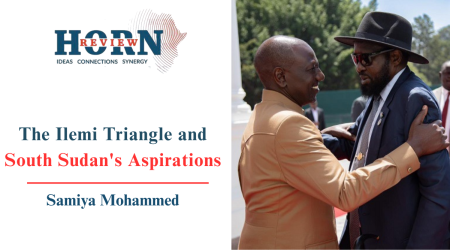
The Ilemi Triangle and South Sudan's Aspirations
The recent pronouncements by South Sudan's Vice President Taban...
2
Sep
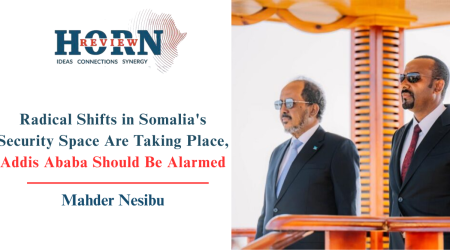
Radical Shifts in Somalia's Security Space Are Taking Place, Addis Ababa Should Be Alarmed
The presidency of Hassan Sheikh Mohamud, who returned to Villa...
31
Aug
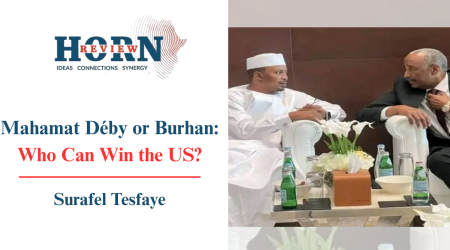
Mahamat Déby or Burhan: Who Can Win the US?
On August 20, 2026, Sudanese warplanes and drones pursued a...
31
Aug
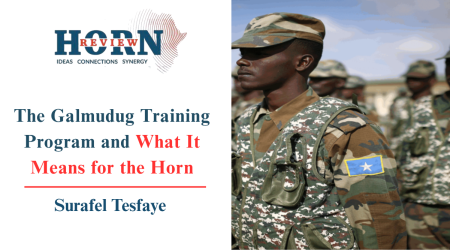
The Galmudug Training Program and What It Means for the Horn
In August 2026, approximately 3,000 Somali soldiers graduated from the...
31
Aug
Saudi Arabia's Recalibrated Engagement in Sudan and the Red Sea
The presentation of diplomatic credentials is ordinarily a procedural formality...
31
Aug
The Eritrean Regime’s Human-Trafficking Industry
For more than two decades, Isayas Afeworki’s regime has presented...
30
Aug
The Red Sea Transformation and Ethiopia’s Maritime Renaissance
The formation of the Horn of Africa is undergoing a...