The 2026 launch of SOMTURK marks a significant shift in Turkey’s involvement with the Horn of Africa. It transforms a relationship that started with humanitarian aid into one focused on controlling maritime areas. What began as Turkey’s response to the 2011 famine has developed into a structured system. This system now gives a Turkish-affiliated entity exclusive rights to license, monitor, and enforce regulations within Somalia’s extensive Exclusive Economic Zone.
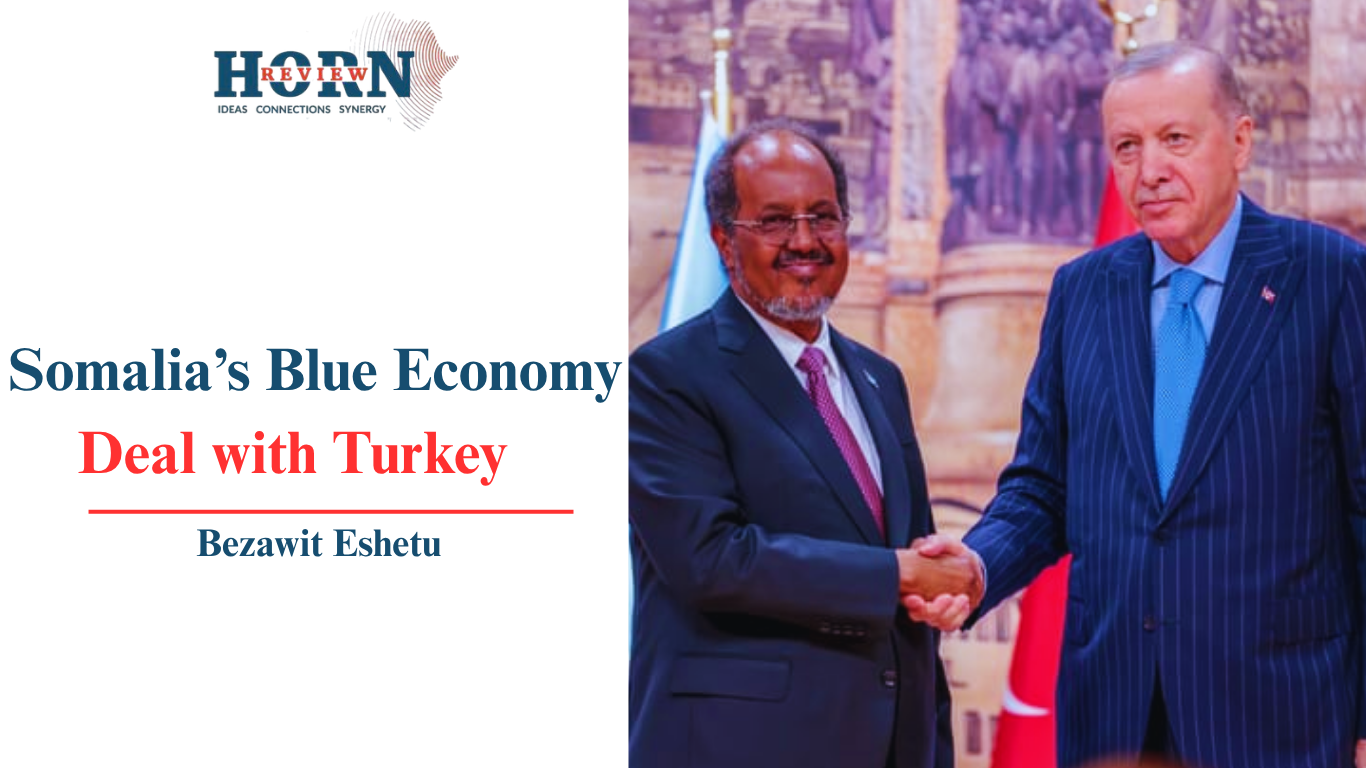
The Strategic Cooperation and Service Agreement, signed in Ankara on December 17, 2025, formed SOMTURK as a joint venture registered in Somalia and led by OYAK, Turkey’s Armed Forces pension and investment fund. This move goes beyond a simple fisheries agreement. It puts into practice the February 2024 Defense and Economic Cooperation Framework Agreement, linking security assistance to revenue in a way that reshapes how middle powers gain strategic benefits from vulnerable states.
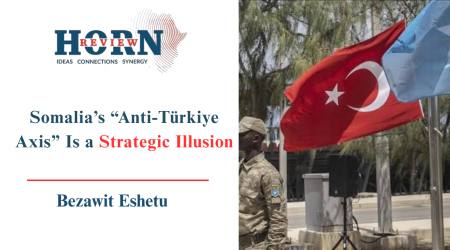
This evolution shows a careful Turkish strategy of layered influence. Humanitarian support in 2011 paved the way for long-term infrastructure deals, including managing Mogadishu’s port and airport. By 2017, the establishment of TURKSOM, Turkey’s largest overseas military base, shifted focus to training Somali forces, resulting in over 15,000 trained troops, including naval and special operations members. Each of these steps created dependencies that the 2024 framework and its maritime extensions from 2025 to 2026 now capitalize on.
While earlier aid was presented as a selfless effort, the deal in 2024 explicitly ties Turkish naval training, joint patrols, intelligence sharing, and equipment transfers to a 30 percent share of marine revenue generated in the EEZ. This connection, where security is supported by the revenue coming from the waters being secured, sets this model apart from traditional donor-recipient dynamics and from the more exploitative strategies of other external players.
At the center of this setup is OYAK’s unique role. Being a military pension fund with over 30 billion dollars in assets and close ties to Turkey’s defense industry, OYAK is neither a regular business nor just a government agency. Its leaders, including individuals with military backgrounds, ensure that financial choices match Ankara’s strategic aims. By placing this entity in charge of Somalia’s fisheries governance, issuing all permits, registering vessels, and monitoring sustainability rules across 825,000 square kilometers, Turkey has created a self-reinforcing system.
Somali government shortcomings, worsened by illegal fishing that costs hundreds of millions every year, are managed through external governance. Yet this setup gives Turkish fishing fleets priority access while also embedding Turkey’s military presence more deeply into Somali functions. The result is a business-driven security approach that blurs the lines between public and private, and between military and civil roles, more effectively than Western capacity-building programs or Chinese debt-funded infrastructure projects.
This shift strengthens Turkey’s Blue Homeland doctrine beyond the Mediterranean. Once focused on land borders, Ankara has gradually shifted its attention to maritime power. The Gulf of Aden and western Indian Ocean are now new areas of focus, positioning Turkish forces near crucial routes that handle about 10 percent of global oil trade. With Houthi disruptions to the north and sporadic piracy in the south, Somalia’s coastline provides Turkey with a forward operating site without the full appearance of a foreign base.
Joint patrols and vessel traffic management under SOMTURK enhance real-time awareness of maritime activities, while the maritime transport agreement signed in February 2026 improves ports and formalizes seafarer qualifications. This arrangement integrates Somali workers into global supply chains with Turkish oversight. The 2026 rollout indicates Turkey’s rise as a lasting maritime player, with influence likely to extend beyond the ten-year frame of the 2024 agreement.
However, it’s important to see SOMTURK primarily as a defensive measure. Israel recognized Somaliland, solidifying an alliance between Israel and the United Arab Emirates around port access and maritime control. This partnership directly threatened Turkey’s growing hold in the Indian Ocean by giving Israel a secure sea outlet and elevating Somaliland’s informal independence into a strategic base for Turkey’s rivals.
The 30 percent revenue share for OYAK highlights deeper neo-colonial implications. Rather than being a self-sufficient investment, this arrangement resembles a deal where Somalia trades control of its maritime areas in exchange for protection it cannot provide. Comparing this to Turkey’s parallel offshore oil activities adds clarity.
In February 2026, the state-owned Turkish Petroleum Corporation sent its deep-sea drilling vessel to begin work at the Curad 1 well, targeting deep-water blocks under terms that critics argue allow significant cost recovery before Somalia sees meaningful royalties. Fisheries revenue flows 30 percent to Turkey through SOMTURK’s licensing monopoly, while oil exploration follows a similarly lopsided framework. Together, these deals raise a sharp question: Is Somalia developing a stable state, or is it becoming a Turkish company town where resource profits support a foreign military presence while local capacity remains perpetually sidelined?
Turkey’s goals reach further than resource extraction into clear hard power projection. The construction of a large spaceport and missile testing site near Kismaayo on the Indian Ocean coast shows Ankara’s broader ambitions. These facilities, which cover hundreds of square kilometers, allow Turkey to develop and test strategic capabilities, like micro satellite launch systems, that would not be feasible in the crowded Mediterranean.
Somali land thus becomes more than a safe partner; it turns into a global launchpad, enabling Turkey to project power and expand its defense capabilities well beyond NATO’s watch. This aspect reshapes the entire partnership. Turkey is not merely assisting Somalia in securing its waters; it is using Somali territory to boost its status as a middle power with global influence.
Internal struggles in Somalia worsen these external challenges and are closely connected to the upcoming election crisis in April 2026. Centralizing resource authority under the federal government and SOMTURK has sparked strong opposition from Puntland and other regions with a history of autonomy over coastal waters. These areas have pulled back from supporting Mogadishu’s electoral process based on one person, one vote. President Hassan Sheikh Mohamud seems to see SOMTURK’s revenue as a way to bypass resistant regions and strengthen his power before the contentious elections. Without clear measures that ensure coastal communities see real benefits, this deal risks reviving old grievances that led to piracy.
Al Shabaab has already labeled the partnership as a foreign occupation, a view that complicates counter-insurgency efforts. The perception of a military-linked foreign company managing a core asset of sovereignty raises accusations of neo-colonialism, even as Somali officials promote the pact for its job creation and infrastructure benefits.
The maritime domain also plays a crucial role in Somalia’s fight against Al Shabaab. While the insurgency mainly focuses on land, the sea has become essential for smuggling arms, fighters, and money. Joint Turkish-Somali patrols aim to disrupt these supply routes, particularly any connections to Houthi networks amidst instability in the Red Sea.
By securing the maritime routes and generating independent revenue, this deal may allow federal forces to focus on land offensives. However, it also introduces new risks of proxy conflicts. Regional rivals might try to destabilize the partnership precisely. Therefore, SOMTURK represents a dual strategy: it seeks to undermine the insurgency financially while the ground campaign continues.
Thus, SOMTURK is not just a fisheries deal; it is Turkey’s bid to turn humanitarian influence into durable maritime power. By tying security to revenue and governance to access, Ankara gains leverage while Somalia risks trading sovereignty for capacity. The pact’s real measure will be whether it strengthens Somali statehood or quietly deepens dependency under the language of partnership.
By Bezawit Eshetu, Researcher, Horn Review