For decades, the Horn of Africa has been defined as a war prone region, fragile institutions, and lingering border disputes. However, by a repetitive cycle, as now the region has reached a pivotal tipping point where local instability is no longer contained within its own borders. Today, the Horn’s domestic crises are being structurally absorbed into a volatile global security system concentrated along the Red Sea and the Middle East. As maritime chokepoints and energy corridors become the primary points of great power competition, the internal fractures of the Horn are no longer just “local problems” they are the new frontlines of a broader global struggle for strategic control
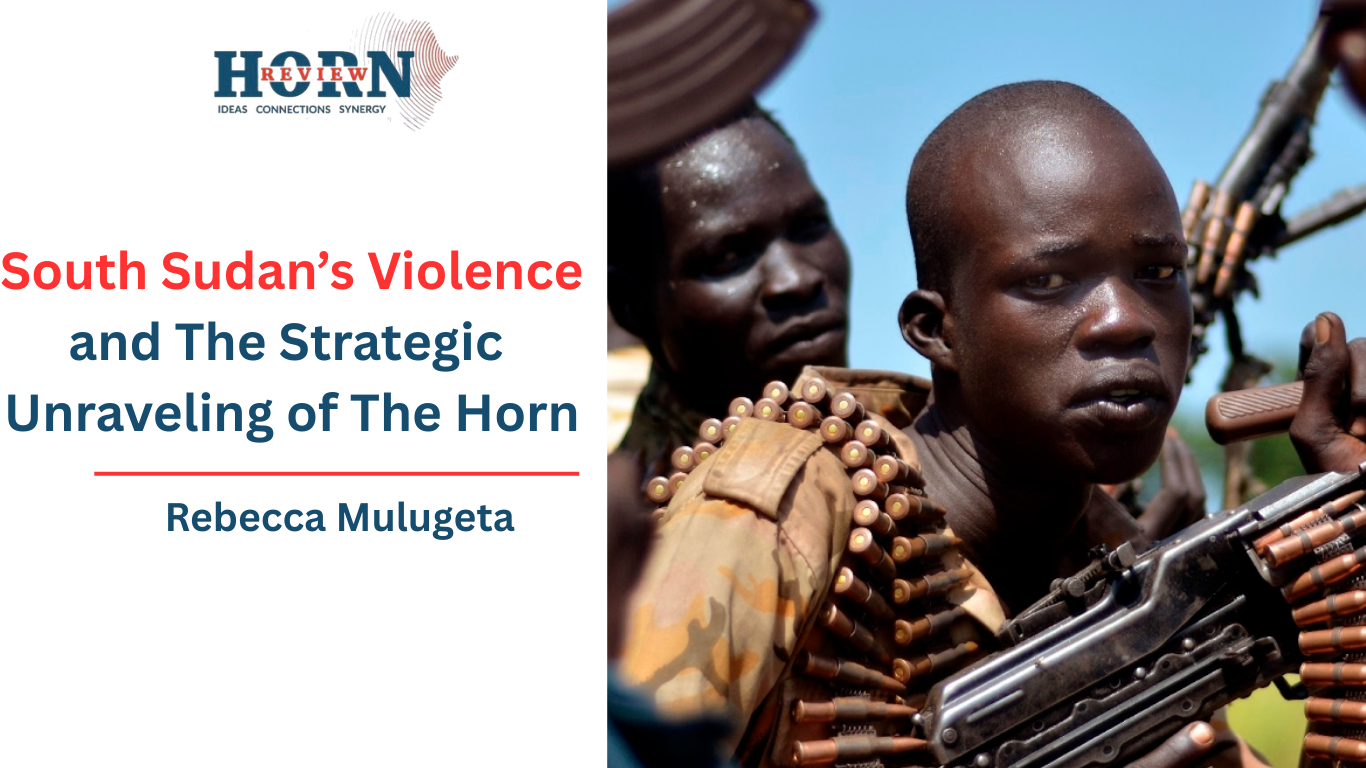
South Sudan has remained politically fragile since its independence. The optimism that accompanied the birth of the world’s newest state quickly gave way to internal power struggles that exposed deep divisions within the country’s political elite and security structures. The civil war that erupted in 2013, devastated the country and produced one of the most severe humanitarian crises on the African continent. Although the 2018 peace agreement halted large-scale fighting, Armed groups remain active in multiple regions, state institutions remain weak, and the security sector remains deeply fragmented.
The violent incidents reported this week in parts of northern South Sudan demonstrate the continuing volatility of this environment. Clashes involving armed groups and local militias have resulted in significant casualties and displacement. While localized violence has occurred periodically even after the peace agreement, the timing of this escalation raises particular concern. The country now faces renewed instability at a moment when the broader regional environment is already destabilized by the ongoing war in Sudan.
Sudan’s geographical position places it at the center of several interconnected regional systems. It borders South Sudan and Ethiopia, while also possessing a long coastline along the Red Sea. When conflict destabilizes a country of such strategic importance, the consequences inevitably extend beyond its borders, arms trafficking, and militia movements become more difficult to control.
The recent escalation of violence in South Sudan must be understood in connection with the broader instability happening in neighboring Sudan. Although the two states formally separated in 2011, their political, economic, and security systems remain deeply interconnected. South Sudan’s economy still depends heavily on oil exports that must travel through pipelines crossing Sudanese territory before reaching ports on the Red Sea. As the war in Sudan continues to weaken institutions and disrupt state authority, these structural linkages further affect South Sudan to growing economic and political pressure. At the same time, instability along the long and porous border between the two countries creates space for armed actors to move across frontier areas where government control is limited.
In this environment, the surge of violence inside South Sudan cannot be entirely separated from the conflict dynamics developing in Sudan. As Sudan’s war fragments authority and allows militias and irregular forces greater operational freedom, cross-border interactions between armed groups, political actors, and local communities become more likely. Such conditions risk intensifying South Sudan’s internal tensions while also opening pathways through which violence could interact with the broader Sudanese conflict. If these dynamics deepen, instability in South Sudan may not remain confined within its borders but could gradually feed into the wider regional crisis centered in Sudan, adding another layer of pressure to an already fragile security landscape across the Horn of Africa at the time war being international.
At the same time, Ethiopia is confronting regional security challenges following the devastating Eritrea pressure around its region. Eritrea’s involvement in the Tigray region has been particularly consequential for Ethiopia’s long-term security. The persistence challenge coming from the Eritrean side creates a scenario in which external shocks could have disproportionate effects. Instability in Sudan deepens and begins to influence the broader regional environment, multiple security pressures can affect Ethiopia’s borders. These pressures could include managing border instability with Sudan, and responding to Eritrea’s strategic posture in the region.
The cumulative effect of these overlapping dynamics is to increase the overall fragility of the Horn of Africa’s security architecture. Each conflict within the region interacts with others through political alliances, economic dependencies, and geographic proximity. As a result, escalation in one area can produce cascading effects across neighboring states.
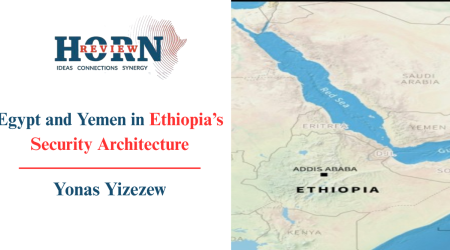
This interconnected vulnerability becomes even more significant when external geopolitical pressures are taken into account. This region occupies a strategic position along the Red Sea, facilitating a substantial share of global trade. The importance of this corridor increases whenever tensions affect other key chokepoints such as the Strait of Hormuz, through which a significant proportion of global oil exports passes.
Conflicts across the Middle East have heightened international concern about the security of these maritime routes. As a result, global and regional powers have expanded their military and political engagement around the Red Sea basin. Naval deployments, military bases, and strategic partnerships have proliferated as states seek to protect commercial shipping and energy flows. While these initiatives are often framed in terms of security cooperation, they also reflect broader competition for influence in a strategically vital region.
Our region’s internal conflicts have transcended local rivalries to become structural components of a volatile global security matrix. The instability in South Sudan and the catastrophic fragmentation of the Sudanese state are no longer isolated crises; they are nodal disruptions affecting the Red Sea’s maritime corridors and energy transit routes. As major powers driven by the follow the money principle intensify their scrutiny of these vital trade arteries, local domestic friction is increasingly absorbed into a broader pattern of systemic instability. This intersection of internal fragility and external strategic pressure ensures that even minor localized shocks in the Juba and Khartoum can trigger disproportionate regional consequences, turning internal border disputes into high-stakes global flashpoints.
Furthermore, the strategic landscape is being fundamentally reshaped by the evolving dynamic and the Sudan of regional frontiers. With the regional tensions aftermath still yielding unresolved security questions, any further shocks from the Sudan conflict such as the movement of autonomous militias or the disruption of critical infrastructure threaten to activate latent tensions in the region. The violence in South Sudan and Sudan must be treated as a singular, transformative event that is rewriting the rules of border security and political alliances across Northeastern Africa. In this transitional world, maintaining regional stability requires navigating a complex web where infrastructure contracts and currency choices are as decisive as traditional diplomacy and military deterrence.
Taken together, these dynamics illustrate how the region is entering a period in which the boundaries between internal and external conflict are becoming increasingly blurred. The region’s strategic location along global maritime corridors ensures that local crises cannot be separated from wider geopolitical developments. At the same time, the persistence of unresolved internal tensions means that external pressures can easily interact with domestic political struggles.
The recent escalation of violence in South Sudan is therefore not simply another episode in the country’s turbulent history. It is part of a broader pattern in which instability across the Horn is becoming more interconnected at a moment when the region itself occupies a more prominent position within global strategic competition. Understanding this convergence will be essential for anticipating the future trajectory of conflict.
By Rebecca Mulugeta, Researcher, Horn Review