Many scholars ask that, Do current U.S. strategic maneuvers from the politics in Maduro in Venezuela to heightened tensions with Iran increasingly reflect a complex global balancing act rather than isolated regional disputes? This shift in United States geopolitical strategy suggests a dual-track strategy: maintaining the structural integrity of the dollar-denominated financial system while responding to the expanding economic footprint of China and the de-dollarization initiatives teamed by the BRICS bloc. By prioritizing engagement with resource-rich nations, the United States seeks to secure global energy and mineral supply chains, a move that functions as both a safeguard for Western economic stability and a competitive response to the growing influence of the east axis. Consequently, modern diplomatic and economic friction can be viewed as a systematic effort to navigate a multi-polar world where the control of critical resources and the flow of global capital are the primary levers of international power.
This time China’s rise accelerated this reassessment. China built deep relationships with resource-rich countries across the Middle East, Africa, and Latin America. These ties were often pragmatic rather than ideological: long-term supply contracts, infrastructure investment, and trade arrangements designed to ensure stability and predictability. Yet, taken together, they produced something larger than bilateral economic cooperation. They began to form an alternative economic geography, one less centered on Western markets and financial systems.
It is within this context that U.S. strategic behavior must be understood. United States actions in recent years, particularly under the administration of Donald Trump, reflect not only responses to specific regional crises but a broader effort to preserve systemic influence in an increasingly competitive environment. This does not mean that the United States seeks confrontation everywhere, nor that it mechanically “targets” countries. One can question here, Does it, rather, prioritize engagement or pressure in places where three elements intersect: critical resources, strategic geography, and growing alignment with China or China-linked economic networks?
Energy remains the most visible pillar of this competition. Despite global conversations about energy transition, oil and gas continue to underpin industrial production, military logistics, and financial flows. Countries that control major energy supplies therefore occupy a strategic position far beyond their borders. Over the past decade, China has emerged as a major buyer of oil from states that are either sanctioned or politically distant from the West. This includes long-standing producers such as Iran and Venezuela, whose crude has often reached Chinese refineries at discounted rates through complex shipping and payment arrangements.
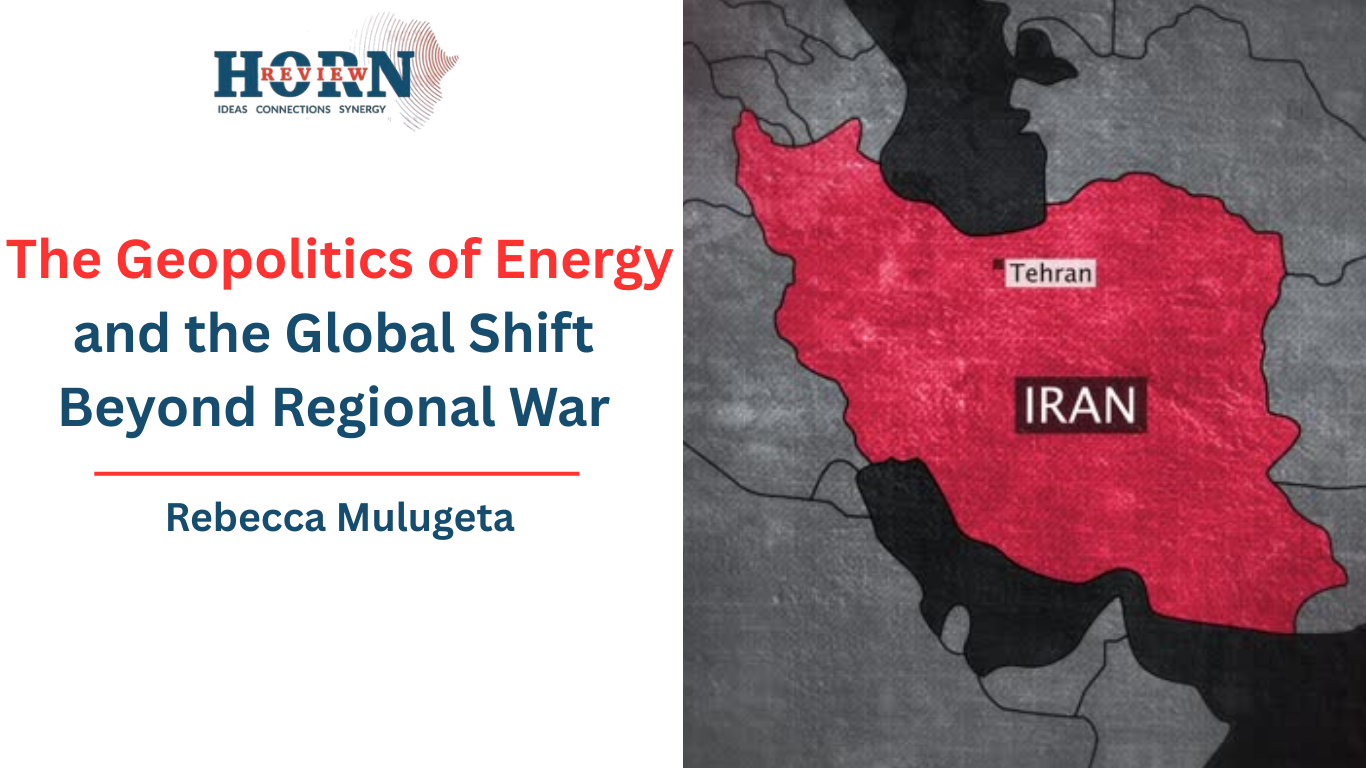
The case of Iran illustrates how regional conflict and global competition overlap. On the surface, tensions involving Iran are framed around nuclear concerns, regional rivalries, and security dynamics involving Israel and Gulf states. Yet beneath these layers lies a quieter economic reality. Iranian oil exports, constrained by sanctions, have increasingly flowed eastward, with China playing a central role as a buyer. These flows not only provide Iran with revenue but also contribute to China’s energy security, reducing its exposure to market volatility and Western regulatory pressure.
Even though Iran and us have many constrained relations and changing of regime in Iran is the main concern since before, From a U.S. perspective, sanctions and maritime enforcement aimed at Iran serve multiple purposes. They signal opposition to Iranian regional behavior, but they also disrupt energy networks that benefit China. Limiting Iran’s ability to export oil outside dollar-based systems constrains both Tehran’s autonomy and Beijing’s access to low-cost energy. China’s careful diplomatic posture, marked by calls for restraint and stability, reflects its interest in preserving these energy links while avoiding escalation that could threaten shipping routes such as the Strait of Hormuz.
A similar pattern can be seen in Venezuela. Once a major supplier to U.S. markets, Venezuela gradually reoriented its oil exports toward China as political relations with Washington deteriorated. In return for loans, investment, and diplomatic backing, Caracas supplied crude that helped fuel Chinese industry. Over time, these arrangements reduced Venezuela’s reliance on Western markets while strengthening China’s presence in Latin America’s energy landscape. U.S. pressure on Venezuela, including sanctions and legal actions targeting oil shipments, therefore operates within a broader context: reasserting influence over a critical energy producer that had become deeply embedded in China-centered trade networks.
Beyond oil, minerals have emerged as another strategic fault line. The global shift toward electric vehicles, renewable energy, and advanced technologies has dramatically increased demand for cobalt, copper, lithium, and rare earth elements. Few countries are as central to this transformation as the Democratic Republic of Congo. Its vast mineral reserves are essential for modern supply chains, and Chinese firms have invested heavily in mining and processing infrastructure there.
Some scholars who are the next country in the frame of the west in this international realm? Which country will be seated under the microscope of the west? Some are asking to analyze this, and analyse this let see the path of the money like we did in the above. China’s role in the DRC is often described in purely economic terms, but its implications are strategic. Control over upstream mineral supply translates into downstream industrial advantage, particularly in battery production and advanced manufacturing. For the United States, this raises concerns not about competition per se, but about concentration and dependency. U.S. engagement in the DRC increasingly emphasizes governance, transparency, and diversification of partnerships, reflecting an effort to reduce single-actor dominance in critical supply chains rather than to exclude China outright.
Turkey’s unique strategic geography as the bridge between Europe, Eurasia, and the Middle East makes it a central pillar in global energy and security architectures, particularly as it pursues an increasingly independent foreign policy that balances NATO commitments with expanding ties to the China-Russia economic axis. While Ankara’s participation in Chinese-led infrastructure and Eurasian trade initiatives reflects its regional ambitions, it creates a “strategic drift” concern for Washington, which views Turkey as a critical gatekeeper for corridors linking the Mediterranean, Red Sea, and Central Asia. Consequently, U.S. engagement with Turkey is a calculated effort to manage this alignment, recognizing Ankara’s autonomy while striving to preserve the cooperative frameworks necessary to maintain Western influence over these pivotal global crossroads.
In Latin America, geography and politics converge in Colombia. Colombia’s importance lies in its role as a regional anchor, its energy production, and its proximity to Venezuela. As China expands its economic footprint across Latin America through infrastructure, trade, and technology investment, maintaining strong ties with Colombia allows the United States to sustain influence in a region undergoing gradual realignment. Colombia’s strategic value is less about rivalry and more about balance, ensuring that no single external power dominates key trade routes and energy networks in the hemisphere.
The Gulf region adds yet another layer. States such as Qatar play outsized roles due to their control over energy exports and their diplomatic reach. Asian markets, particularly China, have become increasingly important destinations for Gulf energy. As a result, relationships in the Gulf are no longer solely defined by Western demand. For the United States, sustaining influence in this region remains essential not only for security reasons but for maintaining leverage over global energy flows that underpin the broader financial system.
Financial dynamics tie these regional cases together. The growing efforts by the BRICS countries to expand trade in national currencies and develop alternative payment mechanisms reflect a shared desire to reduce vulnerability to sanctions and financial pressure. While these initiatives do not yet constitute a replacement for the dollar, they represent a meaningful shift toward diversification. Energy and resource trade sit at the heart of this process, as settling oil, gas, and mineral transactions outside dollar-based systems gradually weakens the financial leverage traditionally associated with currency dominance.
For the United States, this trend reinforces the strategic importance of resource-rich states. Influence over oil producers, mineral suppliers, and transport corridors helps sustain the dollar’s central role by keeping key commodities embedded in established financial systems. This does not imply a rigid effort to enforce unipolarity at all costs, but rather an attempt to shape the pace and direction of change. The Trump administration’s emphasis on economic nationalism, sanctions, and transactional diplomacy reflects one approach to this challenge, prioritizing leverage and control in a world perceived as increasingly competitive.
The emerging pattern of heightened West attention reveals a strategic focus on nations where critical resources, pivotal geography, and China-linked economic networks intersect, making states like Iran, Venezuela, the DRC, Turkey, and the Gulf nations central to a broader global containment effort. Rather than pursuing total isolation, the west aims to shape the unfolding multipolar environment by influencing key node energy markets, mineral supply chains, and financial systems to prevent any rival from consolidating uncontested control over the foundations of global trade.This system are thus in a transitional world where the struggle for systemic organization is fought quietly through infrastructure, contracts, and currency choices, implying that localized crises are often symptoms of a deeper, long-term competition to define the architecture of the future global order.
By Rebecca Mulugeta, Researcher, Horn Review