
Security In The Red Sea and The Case for an Inclusive Maritime Order
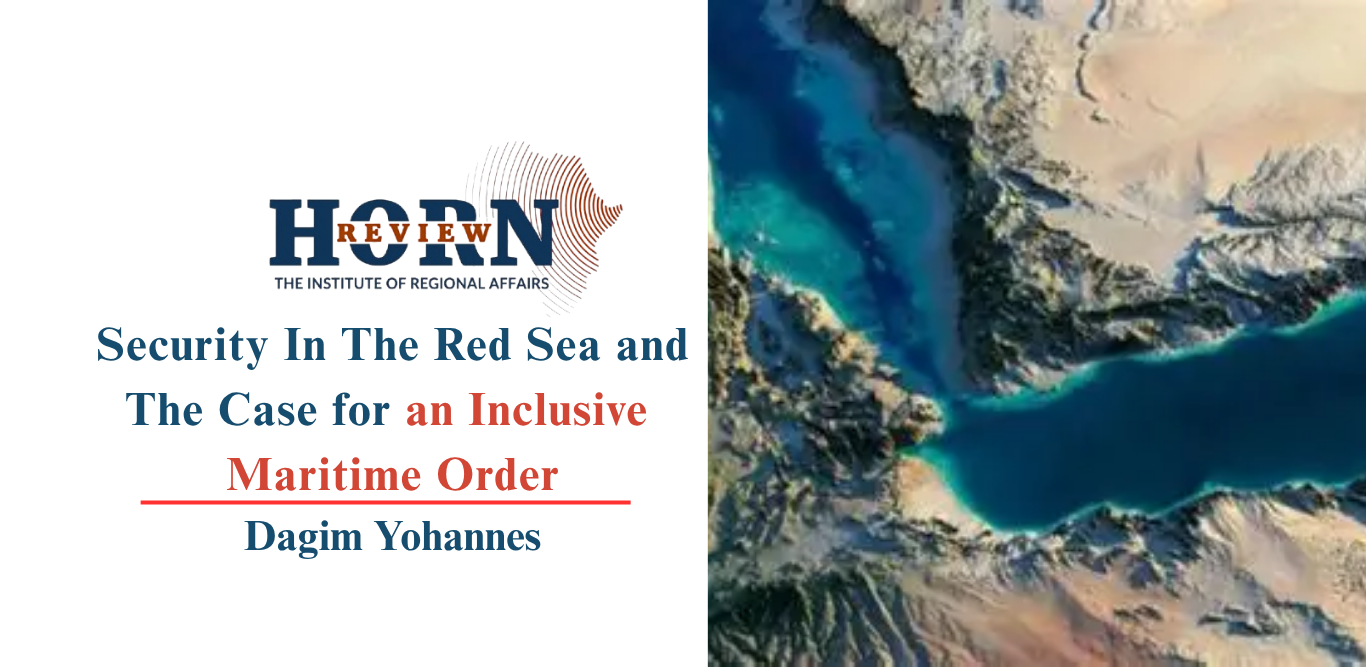
The Red Sea and the Gulf of Aden constitute a strategic nexus connecting the Mediterranean, the Indian Ocean and the wider global trading system. Their security is consequently inseparable from the stability of the Horn of Africa, the institutional capacity of neighbouring states and the resilience of international supply chains. Disruptions to commercial navigation, whether arising from armed attacks, piracy, geopolitical confrontation or institutional fragility, generate consequences that extend far beyond the immediate theatre of instability.
Within this strategic environment, attempts to conceptualise Red Sea governance as the exclusive preserve of a select group of littoral states risk confusing territorial jurisdiction with the broader responsibilities of maritime security. Coastal states possess sovereign rights and jurisdiction recognised under international law; those rights must be respected. Yet sovereignty over territorial waters does not translate into an exclusive entitlement to determine the entire security architecture of a maritime corridor whose stability affects landlocked economies, international shipping and distant trading partners alike.
Ethiopia’s case rests on precisely this distinction. Its geographical position, demographic scale, economic significance and dependence on maritime transit establish compelling grounds for substantive participation in regional deliberations concerning navigation, commercial resilience and maritime-security cooperation. Excluding Ethiopia from such arrangements would disregard the interconnected character of contemporary security, in which the vulnerabilities of one state can rapidly become the liabilities of an entire region.
An effective Red Sea security order must therefore move beyond narrow geographical formalism towards a model of differentiated but shared responsibility. Littoral states would retain their sovereign prerogatives, while landlocked countries and other materially affected partners would contribute according to their capabilities, interests and agreed institutional mandates. Such an approach would neither diminish coastal sovereignty nor confer unilateral privileges upon Ethiopia. Rather, it would align the distribution of security responsibilities with the realities of regional interdependence.
International Law and the Rights of Landlocked States
International law provides an important foundation for this approach, although its provisions must be interpreted with precision. The United Nations Convention on the Law of the Sea (UNCLOS) recognises the right of landlocked states to access to and from the sea for the purpose of exercising the rights conferred by the Convention. Part X further provides for freedom of transit through the territories of transit states, subject to mutually agreed terms and modalities. These provisions establish a legal basis for negotiated maritime access and transit arrangements; they do not, however, confer automatic rights to territorial sovereignty, a coastline or a naval presence in another state’s waters.
The distinction is consequential. Ethiopia’s geographical circumstances do not extinguish its legitimate maritime interests, but the realisation of those interests must proceed through negotiated agreements, reciprocal commitments and respect for the sovereignty of coastal neighbours. Its objective should therefore be the institutionalisation of dependable access and meaningful participation in cooperative maritime security, rather than the assertion of unilateral legal entitlements unsupported by international law.
UNCLOS also recognises the importance of cooperation in the management of semi-enclosed seas. Article 123 calls upon states bordering such seas to coordinate their activities and, where appropriate, to cooperate with other interested states and international organisations in matters including resource management, environmental protection and scientific research. Although this provision does not establish an unrestricted right to participate in every aspect of maritime governance, it reinforces the broader principle that the management of interconnected marine environments benefits from structured cooperation.
For Ethiopia, these legal principles offer a constructive basis for diplomacy. Its substantial reliance on Red Sea trade gives it a compelling interest in the security of maritime approaches, the predictability of transit arrangements and the continuity of commercial navigation. The appropriate response is to translate that interest into durable bilateral and multilateral frameworks that recognise the rights of coastal states while ensuring that Ethiopia’s economic and security concerns receive institutional consideration.
The governing principle should be straightforward: coastal sovereignty and the legitimate interests of landlocked states are not mutually exclusive; they must be reconciled through law, negotiation and reciprocal benefit.
Precedents for Mutually Beneficial Maritime Access
International practice demonstrates that geographical constraints need not condemn landlocked states to permanent logistical vulnerability. Across regions, governments have employed bilateral agreements, dedicated port facilities, transport corridors, customs arrangements and long-term commercial concessions to establish more predictable access to maritime trade.
The 1965 boundary agreement between Jordan and Saudi Arabia, for example, reconfigured territory in the Gulf of Aqaba region and expanded Jordan’s coastline. Although rooted in a particular historical and territorial context, the agreement illustrates how negotiated settlements can reshape geographical constraints where the parties identify compatible strategic interests. It should not be treated as a template readily transferable to the Horn of Africa, but it demonstrates the possibilities and limitations of diplomacy in addressing questions of territorial access.
A more directly applicable model lies in the development of transport and port corridors linking landlocked economies to coastal infrastructure. Arrangements associated with the Port of Nacala and Malawi illustrate how dedicated terminal capacity, improved rail and road connections, streamlined border procedures and coordinated logistics can generate reciprocal economic benefits. The coastal state gains transit revenue, investment and employment, while the landlocked partner obtains more reliable access to international markets.
Comparable mechanisms could form the foundation of a more durable Ethiopia–coastal state partnership. Long-term port-utilisation agreements, dedicated terminal concessions, bonded logistics facilities, preferential commercial arrangements and integrated transport corridors could reduce Ethiopia’s exposure to logistical disruption while generating tangible economic returns for host countries. Where mutually acceptable, such agreements could incorporate joint investment, infrastructure development and coordinated security protocols.
The essential consideration is reciprocity. Maritime access must not be framed as a zero-sum contest between Ethiopia and its coastal neighbours. Properly designed agreements can transform geographical proximity into a source of shared prosperity, giving coastal states a material interest in Ethiopia’s economic success while reducing the vulnerabilities associated with uncertain or excessively concentrated transit arrangements.
Such arrangements would also provide a practical foundation for a more structured Ethiopian contribution to regional maritime security. Participation could include information-sharing, logistical assistance, coordinated threat assessments, capacity-building and other forms of cooperation negotiated with the relevant coastal authorities. Any naval deployment or operational presence would require an appropriate legal basis and the consent of the state concerned. These safeguards are not impediments to cooperation; they are the conditions that make it legitimate and sustainable.
Historical Experience and Ethiopia’s Maritime Reorientation
Ethiopia’s contemporary maritime predicament must also be understood in its historical context. Before Eritrea’s independence in 1993, Ethiopia possessed a coastline of approximately 700 kilometres and maintained a naval force with facilities associated with Massawa, Assab and the Dahlak Islands. Its maritime institutions formed part of a broader national security structure, connecting coastal defence, naval training and the protection of strategic approaches.
The loss of direct access to the sea fundamentally altered Ethiopia’s strategic environment, but it did not eliminate the country’s dependence on maritime commerce. Nor did it diminish the regional consequences of instability along the Red Sea and the Gulf of Aden. The resulting asymmetry between Ethiopia’s continental economic significance and its dependence on infrastructure located beyond its sovereign territory remains a central feature of the country’s strategic calculations.
Historical experience, however, should inform contemporary policy without dictating it. The restoration of Ethiopia’s maritime role cannot simply replicate the institutional arrangements of an earlier era, nor can historical possession of a coastline constitute a contemporary legal claim to territory belonging to another sovereign state. The circumstances of the region have changed, as have the legal and diplomatic conditions under which maritime cooperation must now operate.
What remains relevant is the strategic lesson: a state whose prosperity depends heavily on maritime access has a compelling interest in the stability, predictability and security of the systems through which that access is exercised. Ethiopia’s long-term objective should therefore be to develop the economic, diplomatic and institutional capabilities necessary to protect its maritime interests through mutually agreed arrangements.
The deterioration of security across parts of the Red Sea and the Gulf of Aden makes this objective increasingly consequential. Threats to commercial shipping, attacks by armed non-state actors and the strategic competition surrounding vital maritime chokepoints expose the limitations of fragmented security responses. No single coastal administration, particularly one operating under substantial institutional and resource constraints, can be expected to neutralise every threat to a corridor of such international importance.
Nevertheless, Ethiopia’s demographic and economic scale should not be mistaken for an automatic capacity to provide maritime security. Effective naval operations require specialised personnel, sustained financing, maritime surveillance, logistics, training, command structures and operational experience. A credible Ethiopian contribution would therefore require a carefully sequenced programme of institutional development, supported by diplomatic cooperation and realistic assessments of national resources.
The strategic objective is not to substitute Ethiopian predominance for coastal-state authority. It is to ensure that Ethiopia’s substantial stake in the corridor is matched by an appropriate, lawful and operationally credible contribution to its security.
Regional Security Contributions and Maritime Responsibility/
Ethiopia’s record of involvement in regional security provides a relevant foundation for this endeavour. Its participation in African Union missions in Somalia, including sustained operations against Al-Shabaab, has demonstrated the extent to which its national security is intertwined with the stability of neighbouring states. Ethiopian diplomacy has also contributed to regional mediation efforts, including the 1972 Addis Ababa Agreement that ended the first Sudanese civil war and diplomatic engagement surrounding Sudan’s political transition in 2019.
These experiences do not automatically establish a claim to maritime authority. They do, however, demonstrate that Ethiopia has substantial experience in security cooperation and a direct interest in preventing instability from spreading across the Horn of Africa. Extending that experience to maritime-security initiatives would be a logical development, provided it is guided by clear mandates, institutional preparedness and the consent of relevant partners.
A modern Ethiopian maritime strategy should consequently integrate several mutually reinforcing priorities: dependable commercial access, diversified transit arrangements, maritime-domain awareness, cooperation against transnational threats and the development of specialised naval capabilities where economically and strategically justified. These objectives should be pursued incrementally, with an emphasis on professional competence, regional confidence-building and transparent legal arrangements.
The wider Horn of Africa would benefit from an approach that treats maritime security as a shared regional public good rather than an instrument of geopolitical exclusion. Coastal states would retain control over their sovereign waters, while Ethiopia could contribute resources, expertise and institutional capacity to cooperative initiatives serving the interests of all participants.
Such a framework would also reduce the risk that maritime access becomes a recurring source of bilateral tension. By embedding cooperation within durable agreements, the parties could replace episodic political bargaining with predictable mechanisms for resolving disputes, financing infrastructure and responding to emerging threats.
The Strategic Case for International Engagement
For international partners whose commercial prosperity depends on uninterrupted navigation through the Bab el-Mandeb and the southern Red Sea, an inclusive regional security architecture is a matter of practical strategic interest. The deployment of distant naval forces can provide important protection against immediate threats, but external intervention alone cannot substitute indefinitely for capable regional institutions, resilient transport networks and sustained political cooperation among neighbouring states.
Ethiopia could become a more consequential contributor to this architecture, particularly through its diplomatic influence, economic weight and experience in regional security operations. Its participation would be most effective if embedded in a broader framework involving coastal governments, regional organisations and international partners, with clearly defined responsibilities and respect for the sovereignty of every participating state.
International support should therefore prioritise the conditions that make cooperation viable: infrastructure investment, technical assistance, professional training, maritime information-sharing and the strengthening of regional mechanisms for crisis prevention. Any support for the development of Ethiopian naval capabilities should be assessed against clear objectives, available resources and the need to build confidence among neighbouring countries.
The purpose of such engagement would not be to establish an Ethiopian sphere of influence over the Red Sea. It would be to create a more balanced distribution of responsibility for protecting a maritime corridor whose security is indispensable to regional development and global commerce.
An Ethiopia that enjoys predictable maritime access, maintains constructive relations with coastal neighbours and contributes proportionately to regional security would offer international partners a more sustainable basis for cooperation than a regional order characterised by mistrust, fragmented responsibilities and recurring disputes over access.
From Strategic Interest to a Durable Regional Order
Ambassador Redwan Hussein’s remarks at the Tana High-Level Forum point towards a fundamental proposition: the security of the Red Sea must be organised around the realities of interdependence rather than the restrictive logic of geographical exclusion. The corridor’s importance to global commerce, coupled with the interconnected vulnerabilities of the Horn of Africa, makes inclusive cooperation a strategic necessity rather than a diplomatic courtesy.
For Ethiopia, the implications are clear. Its maritime interests must be pursued through international law, negotiated access arrangements, sustained investment in national capabilities and a foreign policy that treats coastal neighbours as indispensable partners rather than obstacles to be overcome. For littoral states, a more engaged Ethiopia offers opportunities for infrastructure development, expanded trade, shared security initiatives and a broader distribution of the responsibilities associated with regional stability.
The international community, meanwhile, has an interest in supporting arrangements that are both operationally effective and politically legitimate. A maritime security order that excludes a major regional economy risks leaving important vulnerabilities unaddressed; one that disregards coastal sovereignty would generate new sources of instability. The challenge is to construct an institutional framework capable of avoiding both extremes.
Ultimately, the future of Red Sea security will depend less on assertions of exclusive entitlement than on the ability of regional states to reconcile legitimate national interests within a common strategic framework. Ethiopia’s case is strongest when grounded in that principle: not a demand for privileges beyond international law, but a compelling argument for meaningful participation commensurate with its economic exposure, regional responsibilities and capacity to contribute.
The Red Sea is too strategically consequential to be governed through exclusion, and its security too interdependent to be sustained by fragmented responsibility. An inclusive, legally grounded and mutually beneficial maritime order one that respects coastal sovereignty while recognising the legitimate interests of landlocked states is therefore not merely desirable. It is essential to the long-term stability of the Horn of Africa and the uninterrupted functioning of one of the global economy’s most critical maritime arteries.
By Dagim Yohannes, Researcher, Horn Review

RELATED
Posts

2
Nov
National Ownership or Premature Abandonment in Somalia's Dangerous New Phase
The Ugandan drawdown from Lower Shabelle, the political crisis...

2
Nov
Eritrea’s Egypt Strategy and the Cost of Isolation
Why has Eritrea deepened its strategic partnership with Egypt while...
2
Nov
As Eritrea Continues to Orchestrate Attacks from Its Territory, Ethiopia Retains Its Inherent Right to Self-Defence
Ethiopia's security concerns with Eritrea extend well beyond the presence...

31
Oct
After 33 Years in Power, Isaias Still Mistakes Dictatorial Rule for Global Relevance
Among the participants at the third instalment of the much-publicised...

31
Oct
Isaias Afwerki’s AU Paradox: Disavowal and Hypocrisy
Isaias Afwerki’s categorical dismissal of the African Union (AU) as...

29
Oct
Red Sea Security Cannot Be Left to a Few States
At the 12th Tana High-Level Forum on Security in Africa,...

29
Oct
What the Galgala Strike Tell Us About the UAE Somalia and Al Shabaab
The United Arab Emirates has conducted its first reported...

29
Oct
Who Controls the Next Election and Why Al Shabaab Is the Real Beneficiary
There is a dangerous comfort in the way Somalia's security...

29
Oct
Could Libya be a Decisive Frontier to Ethiopia's North-Africa Strategy?
Ethiopia’s renewed engagement with Libya is neither sentimental nor accidental...
29
Oct
The Red Sea's Strategic Downgrade: How Political Instability is Eroding Chokepoint Centrality
What makes the present Red Sea moment strategically significant is...